The quick answer
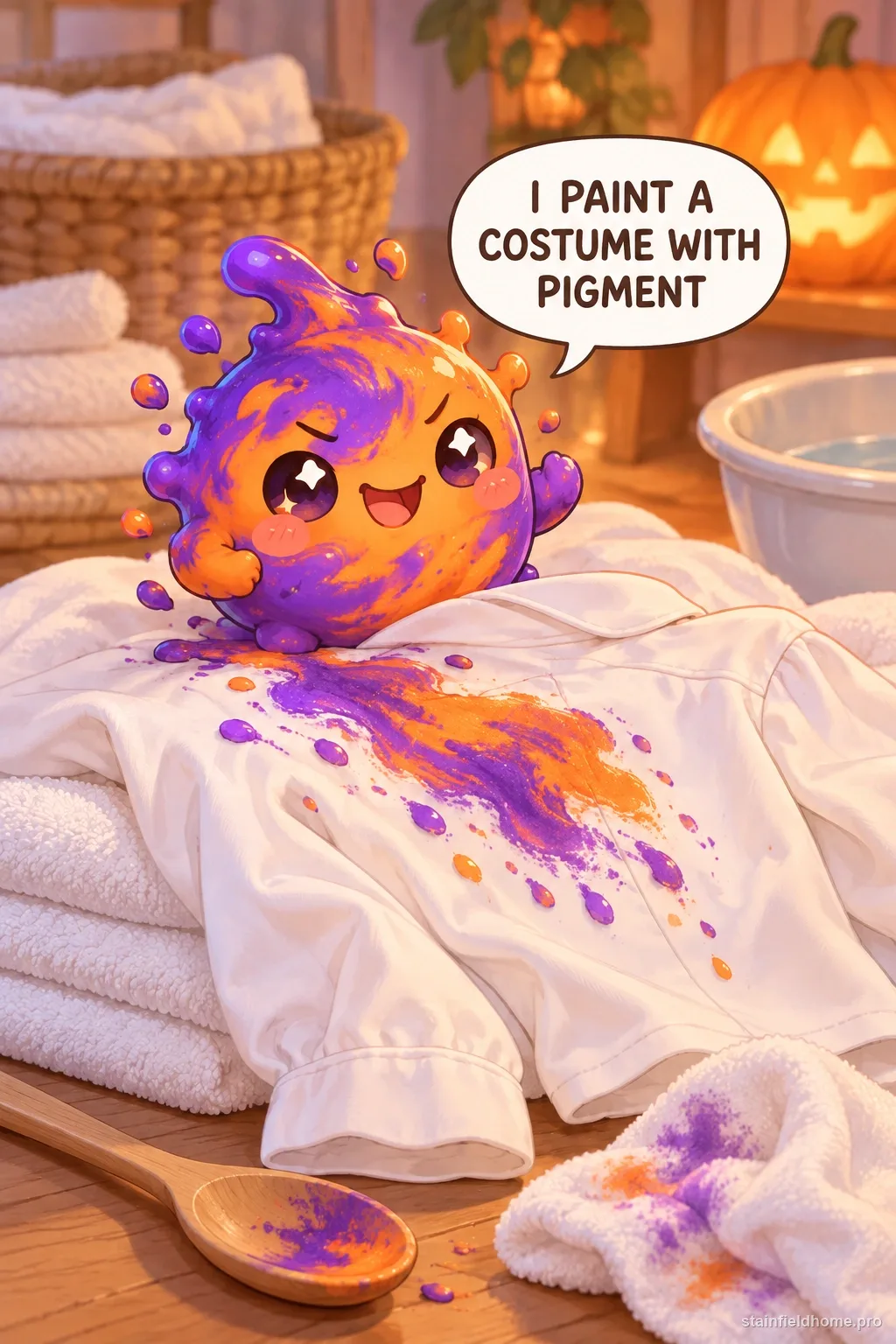
Remove excess face paint, identify whether it is water-based or oil/grease-based, and pretreat the fabric before laundering. Water-based paint usually responds to detergent and a prewash stain remover, while grease paint needs more attention to the oily binder. Do not put the garment in the dryer until all visible pigment is gone.
What you’ll need
- face-paint package or ingredient information
- dull spoon
- white towels
- prewash stain remover
- liquid laundry detergent
- soft brush for sturdy washable fabrics
- care label
Water-based or grease paint — check the tube
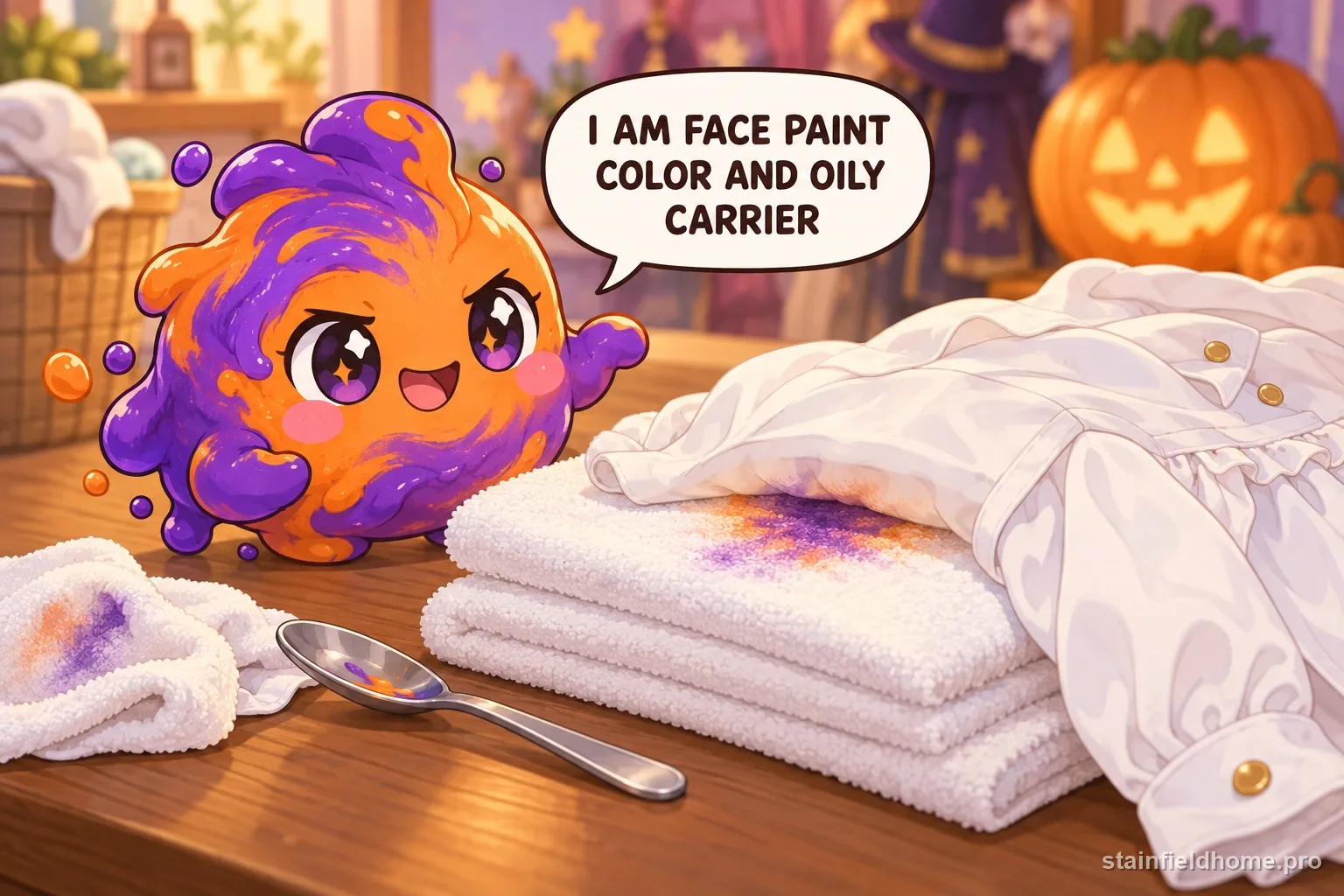
Costume face paint comes in two types and they behave very differently on fabric. Water-activated cake paints (Snazaroo, Mehron Paradise) are wax-and-pigment that you apply with a wet brush or sponge; on clothes they are mostly a pigment stain. Grease paints and cream makeups (Ben Nye, Mehron cream) carry pigment in oil or wax and leave a greasy, heavily colored mark.
The package will say 'water-based' or 'water-activated' versus 'creme' or 'grease.' If you do not know, treat it as grease paint — the extra degreasing step will not hurt a water-based stain.
First moves for any face paint
- 01
Scrape off any thick smear with a spoon edge, lifting rather than wiping.
- 02
Lay the stain face-down on a stack of white paper towels so treatment pushes pigment out, not deeper.
- 03
Blot the back of the fabric with a damp white cloth to move loose pigment onto the towels.
- 04
Do not run it under hot water and do not rub aggressively yet.
Water-based paint
Work a prewash stain remover or liquid detergent into the mark, front and back, and let it sit 10-15 minutes. On sturdy cotton, a soft brush helps push detergent through the weave. Then wash on the warm setting the care label allows with normal detergent.
Snazaroo notes its paints are designed to wash out of most fabrics with normal laundering; a pretreat plus one wash clears the majority of water-based marks. Air-dry and check before using the dryer.
Grease and cream paint
The oil binder has to be broken before the pigment will move. Rub a grease-cutting dish soap directly into the dry stain and let it sit 20-30 minutes. For a heavy mark, a pretreatment with a solvent-type stain remover (Grease Relief, Shout Advanced) or a dab of rubbing alcohol on a white cloth from behind lifts more pigment — test colorfastness on a seam.
Then launder warm with detergent. Repeat the dish-soap step before drying if a greasy tint remains; grease paint usually needs two cycles.

Stubborn color on white versus colored clothes
On white or colorfast cotton, an oxygen-bleach soak (OxiClean, or a color-safe bleach) for a few hours before washing removes most residual pigment from either paint type. Some costume paints also contain glitter or metallic particles that are separate — lift those with tape before washing.
On dark or delicate fabric, accept that a faint shadow may remain and stop before you damage the dye. A trace mark on a costume is a fair outcome; a bleached patch is not.
White greasepaint, black paint, and glitter
The hardest colors are white and black. White clown and skull base is heavily pigmented wax and needs two or three dish-soap-and-warm-wash cycles; be patient rather than aggressive. Black face paint carries the most pigment of all and often leaves a grey cast on light fabric even after the oil is gone — an oxygen-bleach soak on white cotton is usually what finally clears it.
Glitter and metallic flakes mixed into costume paint are a separate problem: they are plastic, not pigment, and washing just moves them around the load. Lift glitter off with the sticky side of packing tape or a lint roller before you wet the garment, then treat the paint stain underneath.

Sequins, elastic, and costume-only fabrics
A washable label does not mean every trim can take the same treatment as the main fabric. Test detergent and any stain remover on an inside seam, especially on dark satin, metallic knits, elastic, glued-on appliques, and inexpensive costume fabrics that may bleed or distort when wet. Keep the treatment on the stained panel and support it on a white towel so pigment does not transfer to a lining or another color block.
For sequins, beads, feathers, or glued decorations, do not scrub with a brush or soak unless the maker allows it. Work a small amount of mild detergent into the fabric between decorations with a cotton swab, blot with a damp cloth, and let it air-dry flat. If the care label says dry-clean only, the garment is silk, acetate, velvet, or has a bonded finish, lift loose paint without wetting and take it to a cleaner. Tell them whether the paint was water-activated, grease-based, or alcohol-activated; do not apply rubbing alcohol at home because it can dissolve dyes, adhesives, or decorative coatings.
If the paint dried or already went through a dryer
First decide whether the remaining mark is a raised crust, an oily ring, or color embedded in the fibers. Lift a crust gently with a spoon; do not scrape across delicate fabric. For a greasy ring, repeat the dish-soap pretreatment and rinse before laundering. For pigment on sturdy colorfast cotton, use a labeled prewash remover or oxygen bleach only if the garment label permits it, following the product dose and soak time. Check the stain while the garment is still damp and repeat a gentle cycle if it has visibly improved.
A hot dryer can make complete removal unlikely, particularly for red dye or synthetic costume fabric. Avoid escalating to chlorine bleach, nail-polish remover, or repeated alcohol applications: those can strip the garment color or damage fibers while leaving the pigment. Stop when a test area starts to lighten, the fabric texture changes, or the paint has faded as far as another safe cycle can take it.
If you cannot identify the paint, do a tiny water test at the edge rather than soaking the whole costume. Color that dissolves into the damp cloth suggests a water-reactivated pigment; a persistent slick halo suggests an oily binder. This is only a practical clue, not a guarantee, so keep the hidden-seam test and care label in control of the next step.
When the costume has fake blood or mixed makeup
A red syrupy mark beside face paint may be fake blood rather than the paint pigment. Blot away the syrup, flush the fabric from the back with cool water, then use laundry detergent and the care-label wash temperature. Do not treat fake blood as grease paint by default: oil-based theatrical blood exists, but many costume formulas are water-based and a degreaser alone will not release their dye. Read the product label if it is available and spot-test any stain remover before use.
For a costume with several colors, handle each stain type separately and keep a white towel between layers. Pick off loose glitter before wet cleaning and avoid dragging a cloth from a dark painted area across a pale panel. If the colors begin to bleed into the towel, stop, rinse the treated area with cool water, and let a professional cleaner assess the piece rather than making the color run larger.
Keeping it off next year
- Let face paint fully set for a few minutes after application before anyone gets dressed or hugs.
- A costume collar or a bib-style scarf takes most of the transfer on kids.
- Blot transfers the same night — dried-in grease paint is far harder in the morning.
- Do costume makeup after the costume is on, not before, when practical.
Common questions
FAQ
The package does not say if it is water- or oil-based. What do I do?
Treat it as grease paint: rub in a grease-cutting dish soap and let it sit 20-30 minutes before washing. The degreasing step does no harm to a water-based pigment stain, and skipping it on an oil-based one is the usual reason a face-paint mark survives the wash.
Can I use hot water to get the color out faster?
No. Heat — hot water, the dryer, an iron — sets the pigment and, in grease paint, bakes in the oil. Use the warm setting the care label allows, pretreat properly, and line-dry until you have confirmed the stain is completely gone.
There is still a faint colored shadow after two washes. Now what?
On white or colorfast cotton, soak it in oxygen bleach for a few hours and wash again. On colored or delicate fabric, stop — you are into diminishing returns and risk fading the garment. A faint trace on a costume piece is an acceptable result.
Sources reviewed
Keep reading
Related guides
Printer toner on Washable clothing
How to Remove Printer Toner From Clothes
Remove loose printer toner from clothing with dry handling and cold water before heat melts the resin powder into the fibers.
Set-in grease on Washable clothing
How to Remove Set-In Grease Stains From Clothes After Washing and Drying
Dried-in cooking oil and grease marks need a surfactant built to cut oil, warm water, and a few patient rounds—here is a repeatable way to lift them from washable cotton and poly-blend clothing.

Slime on Carpet
How to Remove Slime From Carpet Without Damaging the Fibers
Lift dried or fresh slime out of carpet fibers with an ice-and-scrape method plus a vinegar or rubbing alcohol rinse, without soaking the backing or bleaching the color.

Essential oil and reed-diffuser oil on Finished wood furniture
How to Remove Essential Oil and Diffuser Stains From Wood Furniture
Blot a diffuser-oil spill on finished wood, use a cautious absorbent step, and recognize when the finish needs a furniture repair professional.