The quick answer
Do not rub toner into the fabric and do not use hot water, an iron, or a hot dryer. Shake or brush off as much dry powder as possible, then wash the garment in cold water according to its care label. HP specifically warns that hot water sets toner into fabric.
What you’ll need
- disposable paper or drop cloth
- soft dry brush
- vacuum with suitable fine-particle handling if available
- cold water
- laundry detergent
- white towels
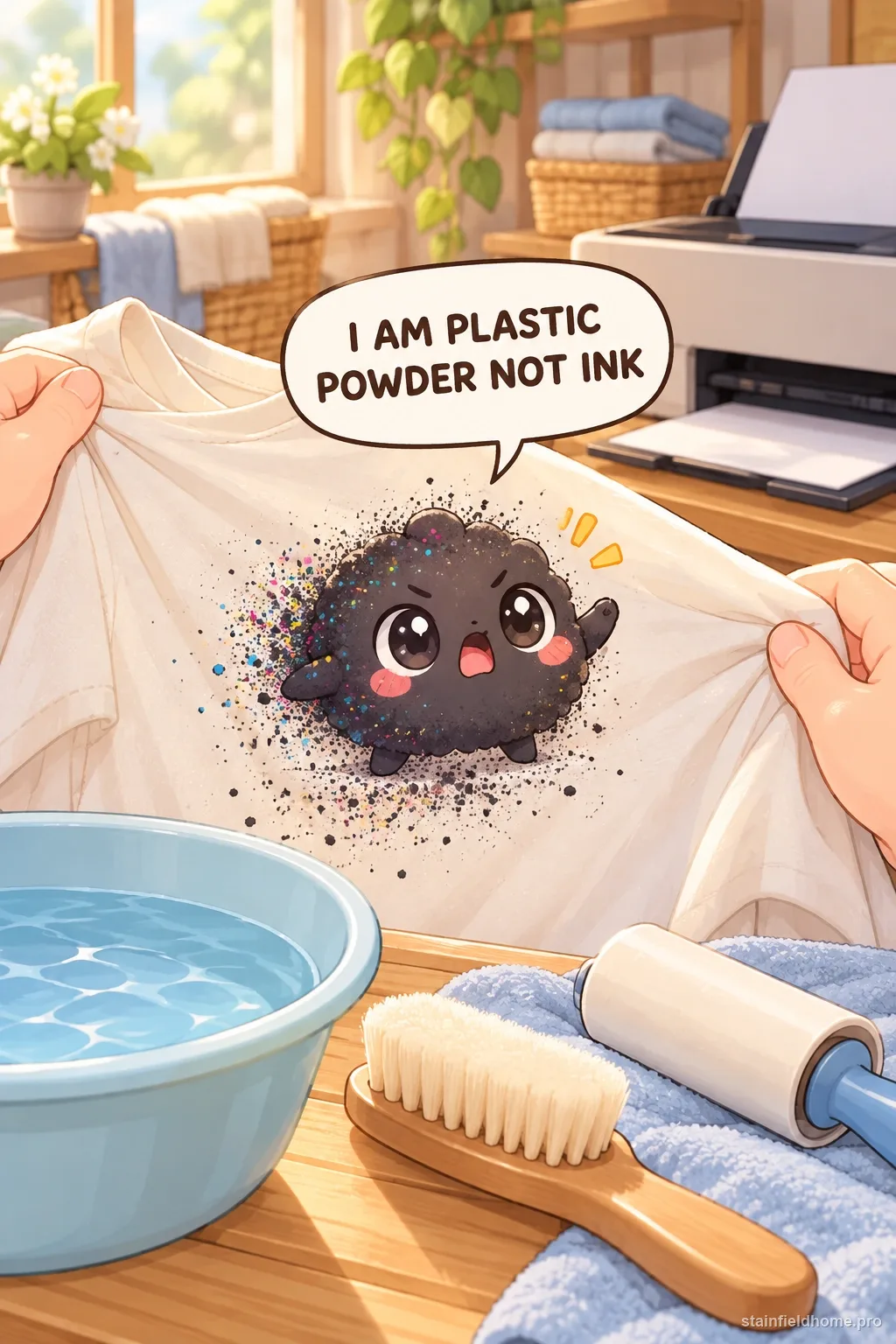
Toner is plastic powder, not ink
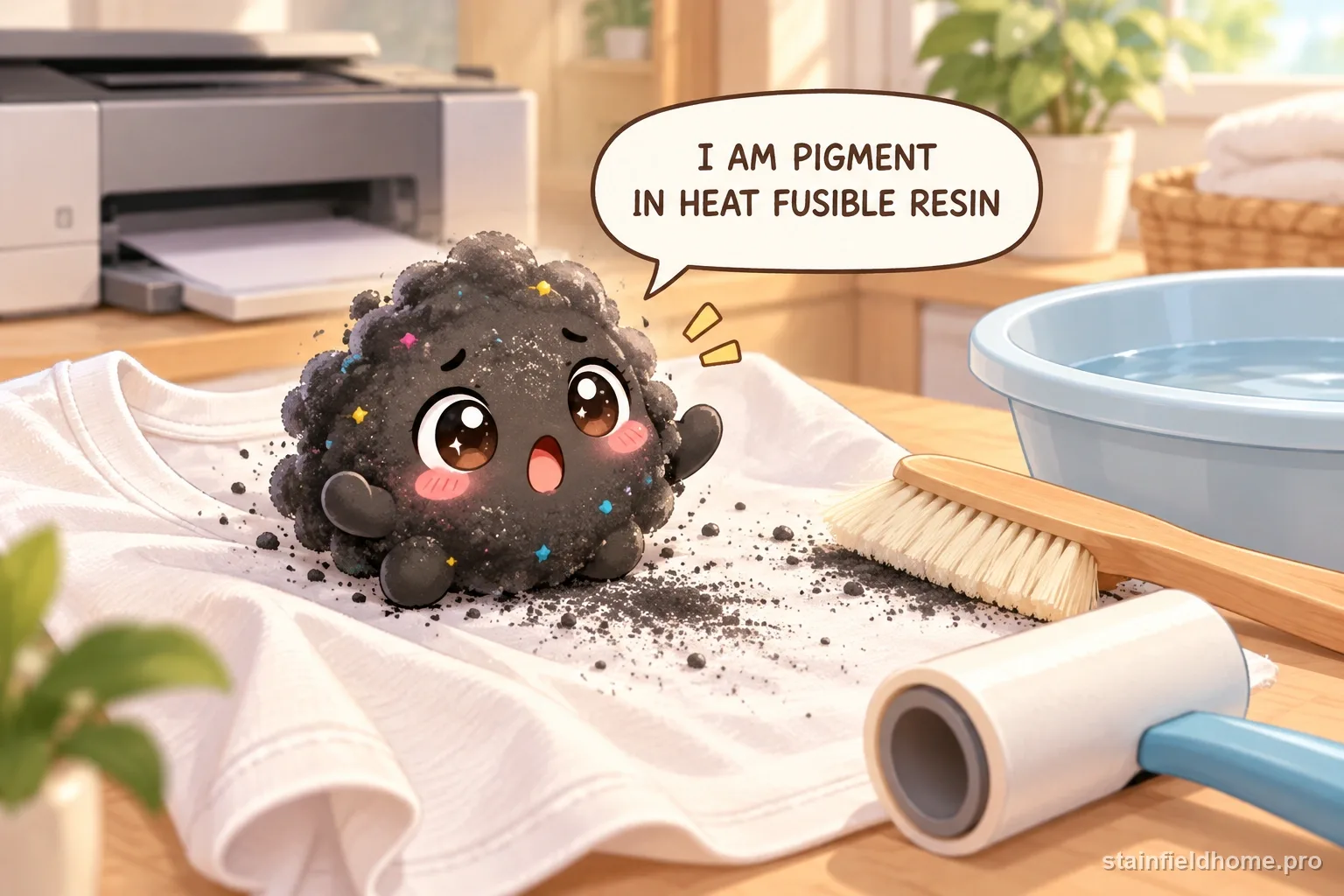
Toner is a dry powder of finely ground pigment bound in a plastic resin. A laser printer works by using heat to melt that resin onto paper. That is the one thing you must not do to your clothes: any heat — hot water, a dryer, an iron, even a warm room over time — fuses the toner permanently into the weave.
While it is still dry powder sitting on the surface, it is very removable. The whole strategy is to get the loose powder off without heat and without pressing it in, then wash cold.
Get the dry powder off first
- 01
Take the garment outside or over a trash can. Do not brush toner off over a carpet or sink.
- 02
Shake the garment hard to drop the loose powder.
- 03
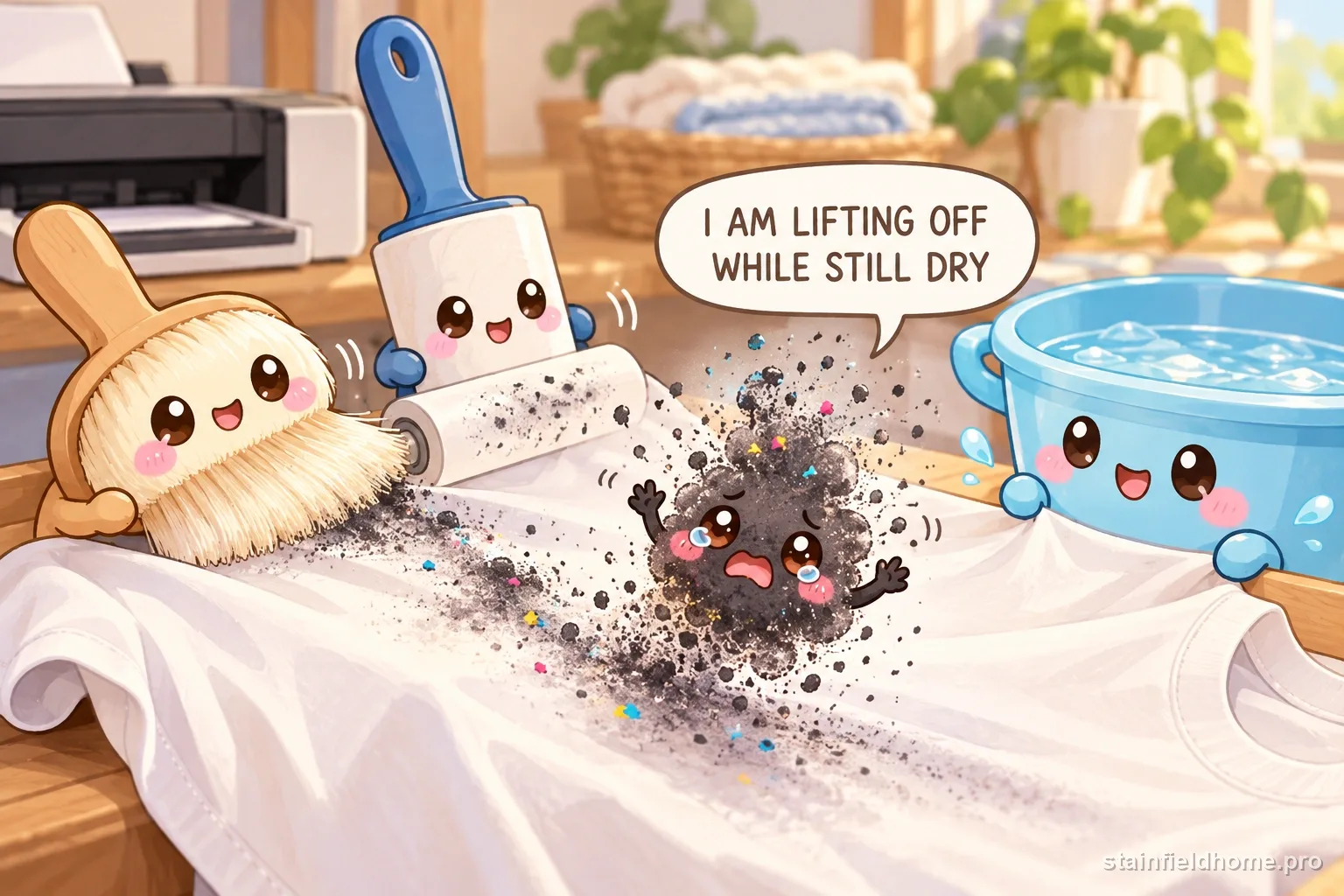
Hold the fabric taut and flick a soft dry brush outward — away from the fabric — do not rub in circles.
- 04
If you have a vacuum, hold the nozzle just above the fabric, not touching, and let suction pull powder out of the weave.
- 05
Use a strip of tape or a lint roller to lift what is left on the surface.
Cold water, then wash
Once the loose powder is gone, rinse the back of the stain under cold running water to push remaining particles out the way they came in. Then dab a little liquid detergent onto the mark, let it sit a few minutes, and wash the garment on the coldest effective cycle with normal detergent.
Check the stain before it goes anywhere near the dryer. If any grey shadow remains, treat and wash again — line-dry until it is completely clean.
A colored toner smear that has been rubbed in
If the toner was already ground into the fabric — someone brushed at it, or it went through a warm wash — you are now dealing with melted resin and pigment. A pretreatment with a small amount of isopropyl (rubbing) alcohol on a white cloth, dabbed from behind the fabric with a clean towel underneath, can lift some of it. Test a hidden seam first for colorfastness.
Follow with detergent and a cold wash. Fully heat-set toner, especially on synthetics, may not come out completely — but alcohol plus repeated cold washing is the best chance.
What makes it permanent
- Hot or even warm water — HP's own safety data sheet says hot water sets toner into fabric.
- The clothes dryer — heat fuses the resin; always line-dry until the stain is confirmed gone.
- Ironing the area, or the garment sitting pressed under other laundry in a warm space.
- Rubbing the dry powder, which grinds particles deep into the weave before you have removed the easy 90 percent.
Color toner and synthetic fabric are the hard cases
Black toner on white or light cotton is the most forgiving combination — dry removal plus a cold wash usually clears it. Color toner (cyan, magenta, yellow) carries dye that can tint the fabric even after the resin particles are gone, so expect to pretreat with rubbing alcohol and wash cold two or three times.
Fabric matters just as much. On cotton and linen the resin sits in a breathable weave and rinses out; on polyester, nylon, and fleece the melted resin bonds to the fiber itself, so a toner mark that went through any warmth is often permanent on synthetics. Treat synthetic garments fast and keep them far from heat.

Handling a leaking cartridge
- Wear gloves and work over newspaper; toner is an irritant and stains everything it touches.
- Wipe a leaking cartridge with a dry paper towel, then a cloth barely dampened with cold water — never a wet cloth on the cartridge contacts.
- Bag the cartridge before carrying it through the house.
- Wash toner off skin with cold water and soap; warm water can help it stick.
Common questions
FAQ
Can I use warm water since it is 'just powder'?
No. Toner is pigment in a plastic resin that melts with heat, and HP's safety data sheet specifically warns that hot water sets it into fabric. Use only cold water for rinsing and washing, and line-dry — never tumble-dry — until the stain is completely gone.
I already brushed at it and now it is smeared. Can I still fix it?
Maybe. The toner is now partly ground in, so dab it from behind with a little rubbing alcohol on a white cloth (test a seam first), then pretreat with detergent and wash cold. Repeat before drying. Toner that has been heat-set in a warm wash or dryer may not come out fully, especially on synthetics.
Is spilled toner dangerous to handle?
Toner is a nuisance dust and mild irritant rather than highly toxic. Wear gloves, avoid breathing the powder, work over newspaper, and clean it up with a dry then cold-damp cloth. Wash it off skin with cold water and soap — warm water makes it cling.
Sources reviewed
Keep reading
Related guides

Halloween face paint on Washable clothing
How to Remove Halloween Face Paint From Clothes
Remove Halloween face paint by identifying water- versus oil-based makeup first, then pretreating without heat-setting pigment.

Set-in grease on Washable clothing
How to Remove Set-In Grease Stains From Clothes After Washing and Drying
Dried-in cooking oil and grease marks need a surfactant built to cut oil, warm water, and a few patient rounds—here is a repeatable way to lift them from washable cotton and poly-blend clothing.

Slime on Carpet
How to Remove Slime From Carpet Without Damaging the Fibers
Lift dried or fresh slime out of carpet fibers with an ice-and-scrape method plus a vinegar or rubbing alcohol rinse, without soaking the backing or bleaching the color.

Essential oil and reed-diffuser oil on Finished wood furniture
How to Remove Essential Oil and Diffuser Stains From Wood Furniture
Blot a diffuser-oil spill on finished wood, use a cautious absorbent step, and recognize when the finish needs a furniture repair professional.