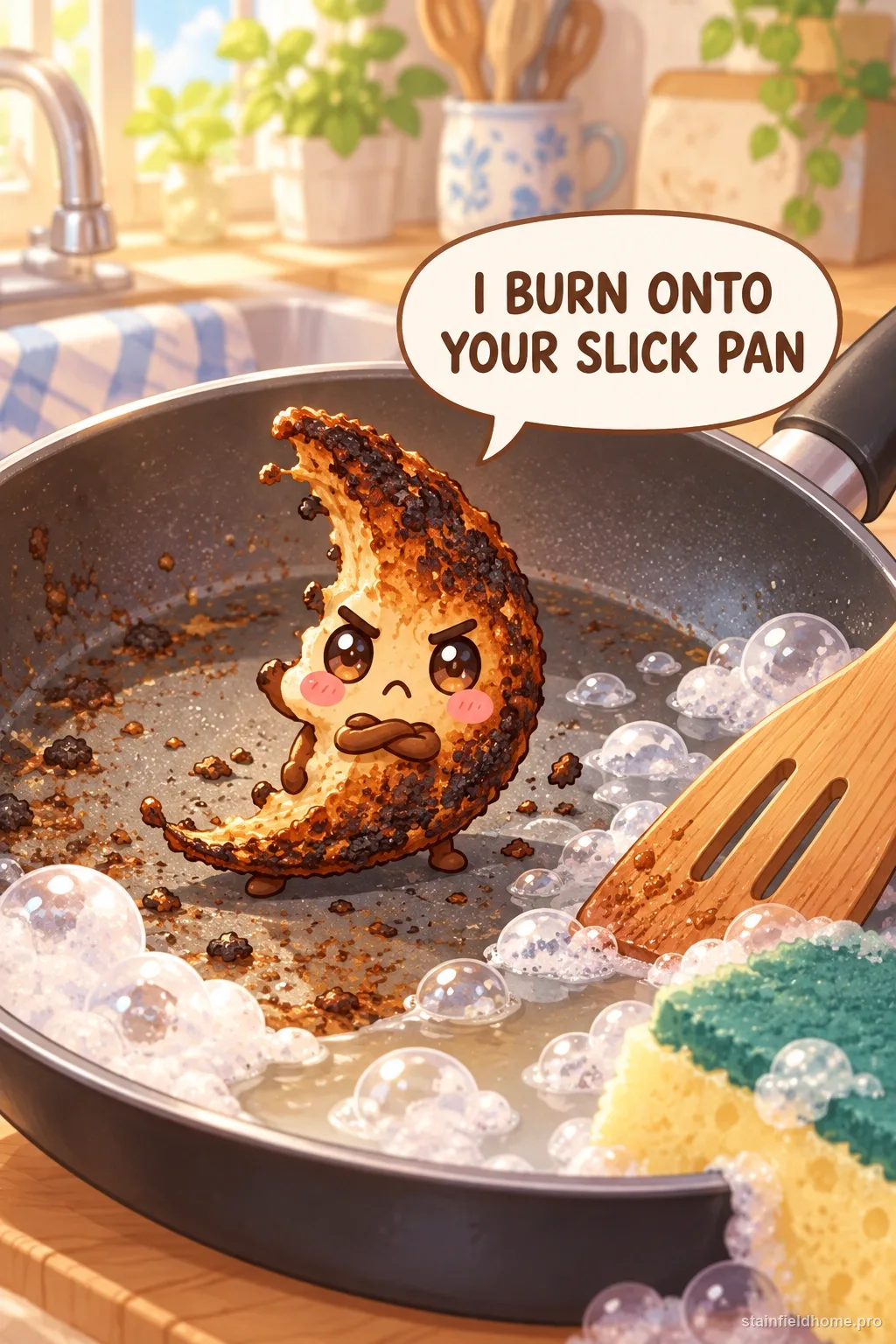
The quick answer
Let the nonstick pan cool, soak it in warm water with dish detergent, and loosen residue with a soft sponge or nylon tool. For stubborn burnt food, follow the pan maker's approved baking-soda or simmering method if one is provided. Never use steel wool, metal scraping tools, or harsh abrasive cleaner on a nonstick coating.
What you’ll need
- warm water
- dish detergent
- soft sponge
- nylon or silicone spatula
- baking soda if approved
- soft nylon brush
- dry towel
The coating is the constraint
A nonstick pan's PTFE or ceramic coating is only microns thick. Every scratch is permanent, exposes the metal underneath, and spreads. So the goal with burnt food is to make it let go on its own through soaking and mild chemistry — not to power through it. The methods that work on a stainless or cast-iron pan (steel wool, a metal scraper, scouring powder, self-clean oven) will destroy a nonstick pan.
Also let the pan cool before adding water. Thermal shock — cold water into a hot nonstick pan — warps the base so it no longer sits flat, and can craze the coating.
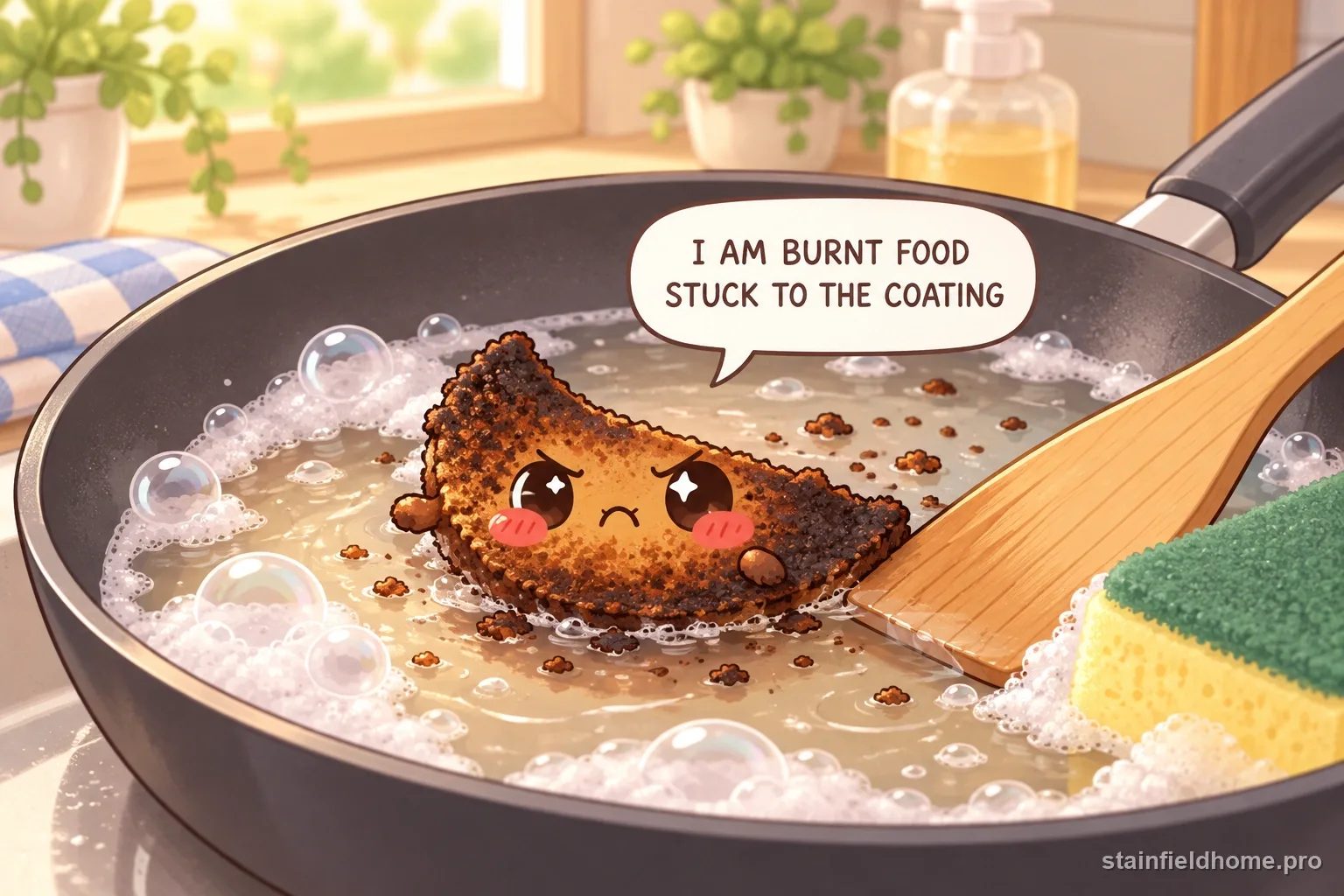
Soak-first routine
- 01
Let the pan reach room temperature.
- 02
Add warm water and a good squirt of dish detergent, enough to cover the burnt area.
- 03
Leave it 30 minutes to a few hours — most burnt residue releases with time alone.
- 04
Push the softened food off with a wooden, nylon, or silicone tool, working flat, not digging.
- 05
Wash with a soft sponge. For a thin scorched film that remains, a soft nylon brush and a little more detergent usually finishes it.
The simmer method for stuck-on spots
If soaking is not enough, put a half-inch of water and a few drops of dish soap in the pan and bring it to a gentle simmer on low for 5-10 minutes. The moving hot water works under the residue the way deglazing does. Add a tablespoon of baking soda only if your pan's manufacturer approves it — some ceramic and reinforced coatings tolerate it, others list it as too abrasive.
Let it cool, then wipe out the loosened food. Repeat rather than escalating to anything abrasive.
Brown haze and loss of nonstick performance
A brown or bronze haze across the whole cooking surface is usually carbonized oil — a thin baked-on layer from overheating or cooking-spray buildup, not burnt food. A baking-soda paste (if approved) or a nonstick-safe cleaner like a dilute Bar Keepers Friend for Cookware, used gently with a soft cloth, can lighten it.
If food has started sticking where it never did, that haze is often why — and once you remove it, some performance returns. If the coating is visibly scratched, flaking, or bubbled, though, the pan is done; a damaged nonstick pan should be replaced rather than nursed.
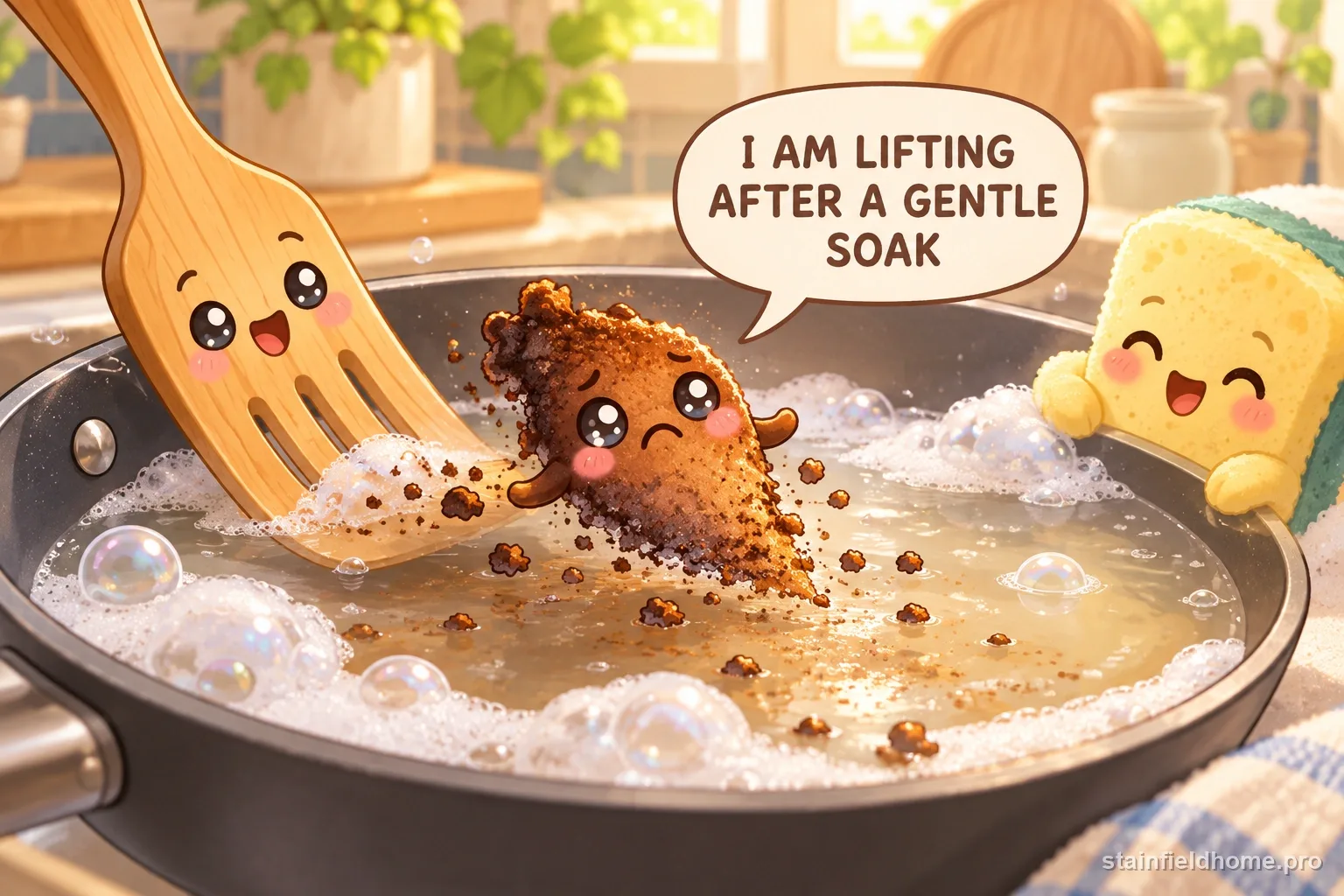
Match the rescue to the burnt-on pattern
A small island of food usually needs time, not force: cool the pan, cover the spot with warm soapy water, and let the softened edge lift with a nylon spatula. A thin sugary or starchy layer across the bottom may respond to a low simmer with water and a few drops of detergent, followed by a full cool-down and soft wipe. A uniform bronze haze or sticky feel across a ceramic pan points more toward carbonized oil than a single burnt meal; follow that pan maker's specific deep-clean method instead of repeating long soaks.
If you have a PTFE-coated pan and its manual does not approve baking soda, skip the paste even if it is recommended for a different brand's ceramic surface. If the residue is on the outside bottom rather than the cooking face, use only a cleaner labeled for that exterior material. Never put oven cleaner, a self-cleaning cycle, or a metal scraper on the coated interior. Cleaning advice written for stainless steel or cast iron does not transfer safely to a coated pan.
If the first wash did not change the stain
Do not let the pan's appearance push you into a harsher scrub. After the first cool soak and wash, dry it and check whether the mark has an edge you can feel, whether color transfers to a white cloth, and whether the coating is smooth. A raised spot that softens is still food and can be treated with another warm soak. A flat, unchanged mark may be cooked-on oil film or coating discoloration; use only the manufacturer's named method for the pan's exact coating.
Avoid running a pan through repeated high-heat cycles to burn residue off. High heat can damage the coating and can overheat an empty pan; it also makes a household cleaning job harder to control. If the maker's instructions do not offer a safe method for the remaining patch, contact the manufacturer or replace a damaged pan rather than experimenting with oven cleaners, abrasive powders, or a power tool.
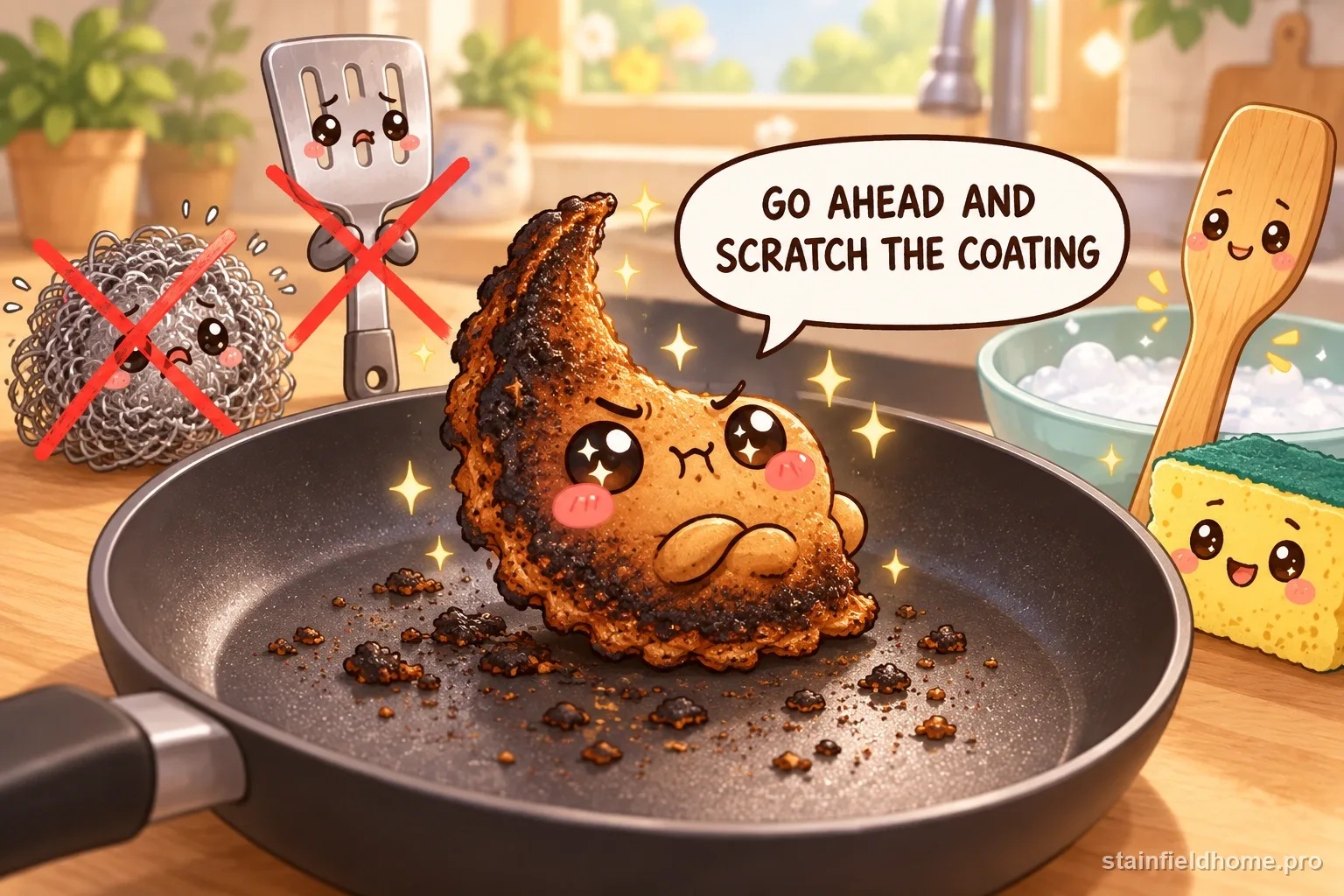
Check whether residue or coating damage remains
After washing and drying, inspect the pan under a bright light. Food residue is raised, patchy, or transfers to a white cloth; coating wear looks like a smooth but permanently dull area, scratches, blisters, or flakes. Do not keep scrubbing a smooth damaged patch in hopes of making it slick again. A nonstick pan with peeling or blistered coating should be retired, and loose fragments should not be put back into food.
If the surface is intact but still releases poorly after approved cleaning, the coating may simply be worn or heat-damaged. A cleaning treatment can remove carbonized oil but cannot rebuild a coating. Use the pan only within its maker's temperature guidance and replace it when the cooking surface is visibly failing or no longer performs reliably.
A black patch that stays in place after a gentle soak may be discoloration in the coating rather than loose food. If the mark is smooth and does not transfer, stop before you abrade the finish; check the pan's manual or contact the manufacturer with the model name for its approved deep-clean method.
What ruins nonstick pans
- Steel wool, metal scourers, and scouring powder — instant permanent scratches.
- Metal utensils and knives against the surface, including 'just to lift the burnt bit.'
- Cold water into a hot pan — warps the base and crazes the coating.
- High, empty preheating and aerosol cooking spray — both cause the brown carbonized haze that then makes food stick.
- The dishwasher, for many nonstick pans — check the maker; detergent and heat degrade some coatings.
Ceramic nonstick and PTFE clean a little differently
Traditional nonstick (Teflon-type PTFE) is smooth and slick, and burnt food usually pops off after a soak with almost no help. Its enemy is scratching and overheating. Baking soda paste is off-limits for many PTFE pans.
Ceramic nonstick (a sol-gel silica coating) is harder but more porous and slightly textured, so food can key into it and it loses slickness faster with oil buildup. Ceramic tolerates a gentle baking-soda paste better than PTFE, and a periodic clean with a ceramic-cookware cleaner to strip carbonized oil helps restore release. Either way, check your specific pan's care sheet — the two coatings have different approved-cleaner lists.
Cooking so it does not burn on
- Use low to medium heat — nonstick is not made for high-heat searing.
- Add a little oil or butter even in a nonstick pan; a dry hot surface scorches sugars and proteins fast.
- Deglaze or soak right after cooking, while residue is soft.
- Retire a pan once the coating is scratched or peeling instead of scrubbing harder.
Common questions
FAQ
Can I use baking soda to scrub burnt food off a nonstick pan?
Only if your pan's manufacturer approves it. Baking soda is mildly abrasive — some ceramic and reinforced coatings tolerate a paste, others list it as too harsh. When it is allowed, use it as a soft paste with a sponge, not a dry scrub, and always try a plain soak or simmer first.
I poured cold water into the hot pan and now it wobbles. Can I fix it?
No. Thermal shock warps the pan's base so it no longer sits flat on the burner, and that is not reversible. It also stresses the coating. Always let a nonstick pan cool before washing. A badly warped pan heats unevenly and should be replaced.
The whole surface is brown and food started sticking. Is the pan ruined?
If it is a brown haze with no scratches, that is carbonized oil — clean it gently with an approved baking-soda paste or a nonstick-safe cookware cleaner and some nonstick performance usually returns. If the coating is scratched, flaking, or bubbled, the pan is finished and should be replaced.
Sources reviewed
Keep reading
Related guides

Spills and body oils on Bouclé sofas and chairs
How to Clean a Bouclé Sofa or Chair Without Flattening the Texture
Spot-clean a bouclé sofa or chair by its cleaning code, protect the looped pile from matting, and know which spills need a dry solvent instead of water.

Burnt-on grease and food residue on Air fryer basket
How to Clean Burnt-On Grease From an Air Fryer Basket
Break down baked-on grease in an air fryer basket with a soak and baking-soda paste, without scratching the nonstick coating or getting water near the heating element.
Permanent hair dye on Bathroom countertop
How to Remove Box Hair Dye From a Bathroom Countertop
Get permanent hair color off quartz, laminate, cultured marble, or sealed stone before it sets, using the mildest method the surface allows and never an abrasive pad.
Yellowed tape adhesive on Painted wall
How to Remove Yellowed Tape Residue From a Painted Wall
Take aged, hardened tape adhesive off painted drywall without pulling the paint, using warm heat, an oil to soften the gum, and the gentlest possible scrape.