The quick answer
Start with the shower head still installed. Run water, then rub flexible rubber spray holes with a finger if the manufacturer provides an easy-clean nozzle design. If mineral scale remains, follow the exact finish and model instructions. Delta allows a 50/50 white-vinegar-and-water soak for difficult deposits on certain non-Touch-Clean heads, while its Touch-Clean nozzles are designed to be wiped. Kohler likewise directs users of some models to rub mineral deposits from spray holes and inspect a screen washer if flow stays low. Rinse thoroughly, dry the finish, and stop if low pressure affects multiple fixtures or the finish begins to change.
What you’ll need
- Soft microfiber cloth
- Soft toothbrush or cotton swabs only when the manufacturer allows them
- Distilled white vinegar and water only when approved for the exact finish
- Small bowl or sturdy plastic bag for an approved soak
- Rubber band or tie positioned on the shower arm, not across delicate controls
- Adjustable wrench with a soft protective cloth if removal is manufacturer-approved
- Fresh plumber's tape only if the installation instructions call for it after removal
- The shower head model and finish care instructions
First decide whether the problem is the shower head or the water supply
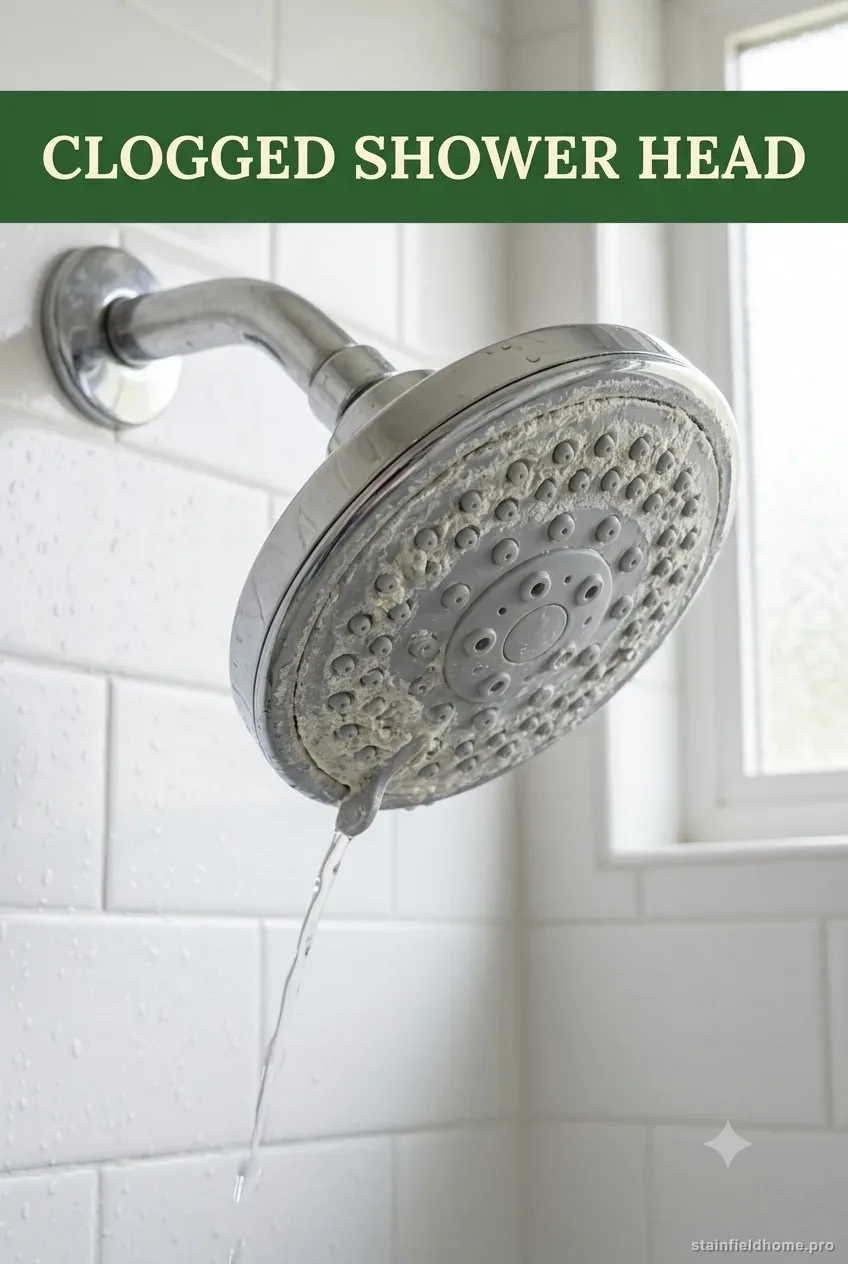
An uneven fan, sideways jets, or several dead spray holes often points to mineral deposits at the face. Uniformly weak flow can also come from debris at the inlet screen, a partially closed valve, pressure-balancing hardware, a kinked hose, household pressure, or a plumbing problem. Do not assume every low-flow shower needs an overnight vinegar bath.
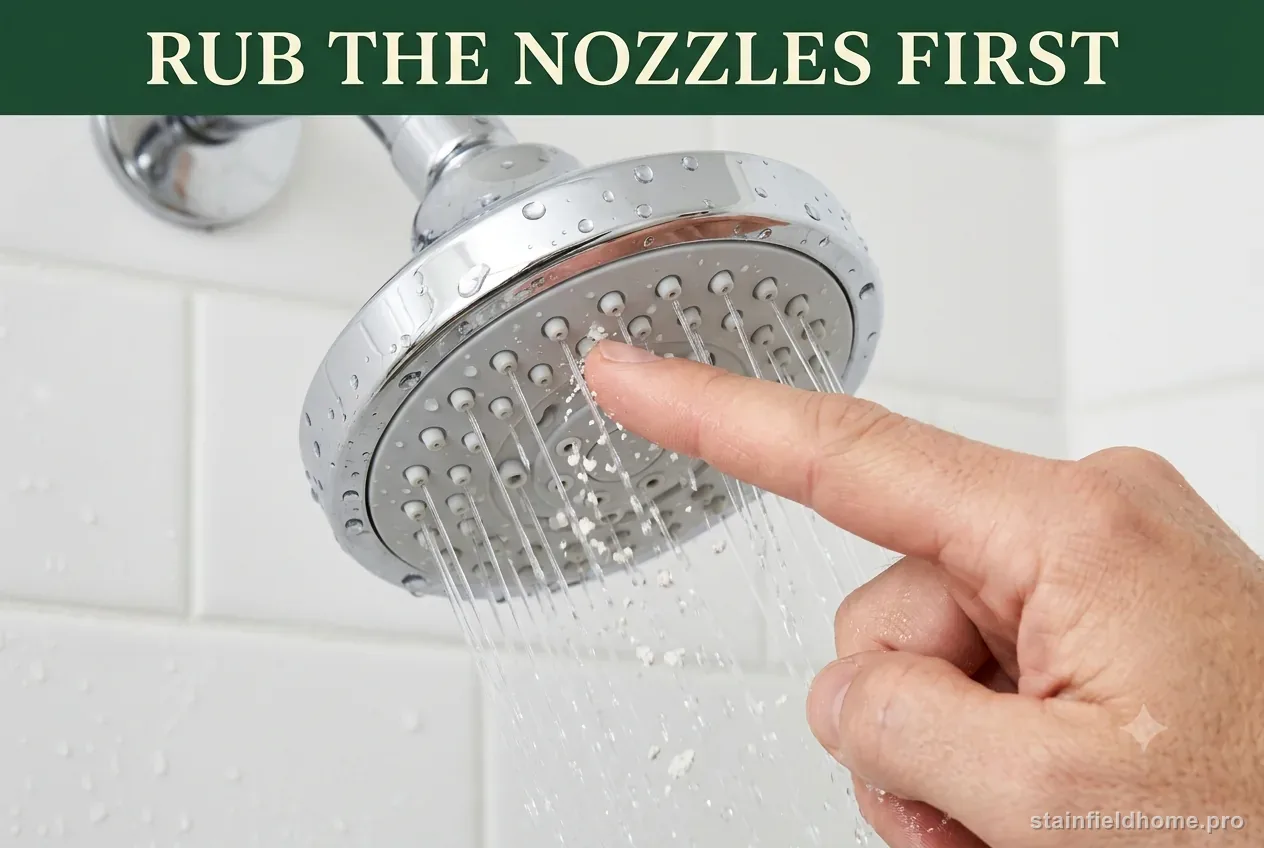
Run the shower and observe the pattern. If only a handful of holes misbehave, start at the face. Delta's Touch-Clean shower heads use soft rubber spray holes specifically designed so mineral residue can be wiped away. Kohler's homeowner guidance for some shower heads similarly says to run water and rub a finger back and forth over the spray holes to dislodge mineral buildup. This is the least aggressive first step because it does not expose the finish to acid.
If the entire shower is weak, compare a nearby faucet and, if practical, another shower. A drop affecting several fixtures needs plumbing diagnosis rather than repeated shower-head cleaning. If the head was recently installed and has always had weak flow, check the installation manual and debris screen; do not remove or drill a flow-control component simply to increase flow. Water-efficiency components are part of the designed product and may be required by code or certification.

Routine mineral removal: wipe the face before you soak anything
The visible chrome or decorative finish often needs more protection than the mineral scale itself. Delta advises gentle wiping and warns against abrasive products in its general finish-care guidance; its product support also distinguishes Touch-Clean nozzles that need no chemical soak from other heads where diluted vinegar can be appropriate. That distinction is exactly why a single 'tie on a bag of vinegar overnight' rule is too broad.
Drying after each use is preventative maintenance. Delta notes that mineral deposits form as water evaporates from the shower-head surface and recommends regular wiping with a damp nonabrasive sponge and buffing dry. Removing droplets does not change the minerals in the water, but it reduces the amount left behind on the face.
- 01
Turn on the shower briefly and note which nozzles are clogged or spraying sideways. Turn the water off.
- 02
Wipe the shower head with a damp nonabrasive cloth to remove soap film and loose scale from the finish.
- 03
If the head has flexible rubber or silicone spray holes designed for manual cleaning, rub each affected nozzle firmly with a finger as the manufacturer directs. Run water again to flush loosened particles.
- 04
For remaining surface deposits, use mild soap and water if permitted, then rinse and blot dry with a soft towel.
- 05
Only if the model instructions allow vinegar, prepare the specified dilution. Delta recommends a 50/50 mixture of white vinegar and water for difficult deposits on certain non-Touch-Clean shower heads.
- 06
Limit contact to the maker's instructions, rinse the head thoroughly with water, and dry the finish. Repeat a short approved treatment instead of extending the soak on your own.
- 07
Test the spray. If the face is clean but flow remains uniformly weak, move to the screen/debris diagnosis instead of adding stronger acid.
Light film versus heavy, established mineral buildup
Light buildup usually appears as white spots and partially blocked rubber nozzles. It often releases with finger-rubbing, mild soap, and a short approved vinegar contact. Heavy scale can bridge holes, coat a metal screen, or accumulate behind the face where a surface wipe cannot reach it. Treat the two conditions differently.
For an approved soak, protect the finish and use only the concentration and contact time allowed by the maker. If the shower head can stay installed, a bag may hold solution around the spray face, but secure it to the shower arm rather than loading the head or swivel joint. If removal is permitted, protect the finish from tools, support the shower arm so it does not twist inside the wall, and follow the installation manual when reinstalling. Kohler's general shower-head replacement guidance recommends protecting finished surfaces and using a 50/50 water-vinegar solution around calcified connections, while specific Kohler product guides may give their own nozzle and screen-cleaning procedure.
Do not assume a longer acid soak is better. Decorative finishes, coatings, seals, and internal parts vary. If two maker-approved cycles do not restore spray, inspect the inlet screen or request manufacturer support. Persistent scale inside a non-serviceable shower head may make replacement more sensible than escalating chemistry.
Check the screen washer or debris screen when the face is clean but flow is still weak
Many shower heads have a screen at the inlet that catches pipe debris before it enters small spray passages. Kohler's homeowner guidance for some models tells users to clean the spray holes first and then proceed to the screen washer if performance does not improve. Delta also describes a debris screen as a possible cause of low shower pressure. The exact access method varies, so locate the product manual before disassembly.
Turn off water at the fixture, remove the head only when the manual permits it, and note the order of the gasket, screen, and any flow-control components. Rinse loose debris from a removable screen and use only the soft cleaning method the manufacturer specifies. Do not puncture the screen, enlarge openings, or discard a part because it resembles a restrictor. Reassemble in the same order and check for leaks.
If rusty flakes or sediment repeatedly fill the screen, the shower head is showing you a supply-side problem. Debris may be coming from plumbing work, a water heater, well sediment, or corroding pipe. Repeatedly cleaning the screen treats the symptom. A plumber can evaluate the source when contamination returns quickly or affects other fixtures.
What not to use on a shower head
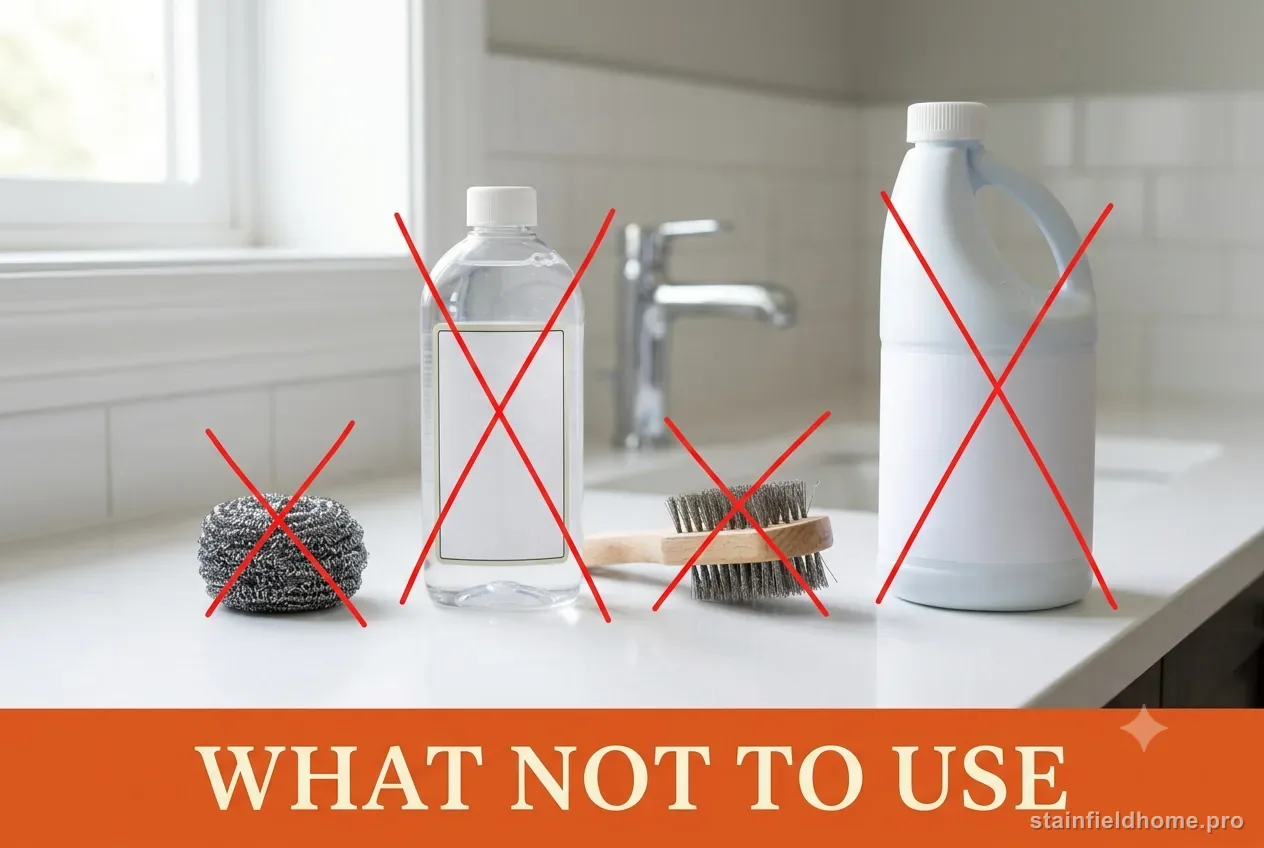
The finish is a thin engineered layer. Abrasion or prolonged acid exposure can turn removable white scale into permanent discoloration. Start with the nozzle design and the manufacturer instructions, not the strongest descaler in the cabinet.
- Do not soak a plated or specialty finish in full-strength vinegar or another acid unless the manufacturer explicitly permits that concentration and time.
- Do not leave a vinegar bag on overnight by default; prolonged acid contact can damage some finishes and seals.
- Do not use steel wool, abrasive powder, stiff metal brushes, razor blades, or gritty pads on decorative finishes or rubber nozzles.
- Do not use bleach as a mineral-scale remover when the manufacturer does not recommend it; scale is not solved by stronger disinfectant chemistry.
- Do not mix vinegar with bleach, peroxide, ammonia, or other bathroom cleaners.
- Do not clamp bare pliers directly on a finished shower head or twist the shower arm in the wall while removing the head.
- Do not remove, drill, or modify flow-control parts to troubleshoot a clog.
Tell mineral buildup from finish damage
Mineral scale usually feels raised or crusty and changes as it is wetted, rubbed, or treated. Finish damage behaves differently: peeling, pitting, a coppery base color showing through chrome, permanent cloudiness, or a patch that remains dull after all residue is rinsed and dried. Stop cleaning if the decorative layer changes. More acid will not restore plating.
Use a clean damp cloth and then dry the head. If a white film transfers or disappears while wet and returns after evaporation, some mineral residue remains. If nothing transfers and the surface is visibly etched, scratched, blistered, or discolored, photograph it and contact the manufacturer with the model and finish name. Warranty advice is more useful than another cleaning cycle.
Nearby natural stone deserves protection too. A vinegar bag can drip onto marble or limestone tile and etch it even if the shower head finish tolerates vinegar. Catch drips, remove bath products from the area, and rinse surrounding compatible surfaces promptly. The cleaning method has to be safe for the entire shower assembly, not only the nozzle face.
Prevent repeat clogging and know when to call a plumber
Wipe the shower head dry periodically, rub easy-clean nozzles before scale becomes thick, and clean the inlet screen only on the schedule and method the manufacturer allows. If your home has visibly hard water, rapid scale will also appear on faucets, glass, kettle elements, and fixtures. A water-hardness test can quantify the issue, but choosing a softener or treatment system is a plumbing and water-quality decision rather than part of shower-head cleaning.
Call a plumber when low flow affects multiple fixtures, when pressure changes suddenly, when the shower arm moves inside the wall, when the connection leaks after correct reassembly, or when sediment returns repeatedly. Contact the shower manufacturer when the finish is deteriorating, internal parts are not user-serviceable, or the spray pattern remains abnormal after the approved face and screen cleaning.
A good endpoint is objective: the spray holes are clear, the screen is clean if user-serviceable, the head is leak-free, and the finish is unchanged after drying. If those conditions are met but water pressure is still poor, cleaning has done its job and the remaining diagnosis belongs elsewhere in the plumbing system.
Common questions
FAQ
Can I leave a bag of vinegar on my shower head overnight?
Do not make overnight soaking the default. Use only the dilution and contact time approved for your exact brand and finish. Delta, for example, recommends a 50/50 white-vinegar-and-water method for certain difficult deposits but its Touch-Clean nozzles are designed to be wiped instead.
Why is my shower pressure still low after I cleaned the nozzles?
The inlet screen may be blocked, or the restriction may be elsewhere in the valve or household plumbing. Check the model's screen-cleaning instructions and compare other fixtures. Do not drill out a flow-control part to diagnose the problem.
Can vinegar damage a chrome shower head?
It can if the finish or exposure conditions are not compatible. Follow the manufacturer. Use the weakest approved method for the shortest approved time, rinse thoroughly, and stop if the finish changes after drying.
Sources reviewed
Keep reading
Related guides
Spills and body oils on Bouclé sofas and chairs
How to Clean a Bouclé Sofa or Chair Without Flattening the Texture
Spot-clean a bouclé sofa or chair by its cleaning code, protect the looped pile from matting, and know which spills need a dry solvent instead of water.
Burnt-on grease and food residue on Air fryer basket
How to Clean Burnt-On Grease From an Air Fryer Basket
Break down baked-on grease in an air fryer basket with a soak and baking-soda paste, without scratching the nonstick coating or getting water near the heating element.

Permanent hair dye on Bathroom countertop
How to Remove Box Hair Dye From a Bathroom Countertop
Get permanent hair color off quartz, laminate, cultured marble, or sealed stone before it sets, using the mildest method the surface allows and never an abrasive pad.
Yellowed tape adhesive on Painted wall
How to Remove Yellowed Tape Residue From a Painted Wall
Take aged, hardened tape adhesive off painted drywall without pulling the paint, using warm heat, an oil to soften the gum, and the gentlest possible scrape.