
The quick answer
Wash silicone bakeware first with hot water and dish detergent, using a soft nonabrasive sponge. For stubborn oily film, repeat a long hot-soapy soak and, if the manufacturer allows it, use a baking-soda paste or controlled low-temperature bake to loosen absorbed oil. Some yellow, orange, or brown color that has migrated into silicone may be permanent cosmetic discoloration rather than removable surface soil.
What you’ll need
- manufacturer care instructions
- hot water
- dish detergent
- soft sponge
- baking soda if permitted
- soft nylon brush
- clean towel
The two problems: sticky film and stained color
Silicone bakeware has two distinct issues that look similar. The first is a tacky, slightly greasy film that builds up because oils and cooking sprays are not fully rinsed away and then polymerize into a varnish-like layer in the oven. The second is discoloration — an orange, yellow, or brown tint from tomato, carrot, curry, or repeated high-heat baking that has migrated into the surface of the silicone itself.
The film comes off with the right degreasing. The color often does not, because silicone is slightly porous and absorbs pigment. Knowing which one you have saves you from scrubbing a permanent tint.

Diagnose the residue before choosing a treatment
Run a clean fingertip over the dry pan. A tacky or slick feel points to an oil film; a dry, cloudy veil that does not feel greasy may be mineral or detergent residue; a smooth orange or brown tint with no transfer is more likely absorbed pigment. Wash once with hot water and grease-cutting dish soap before trying anything stronger. If the haze remains, soak a small corner in diluted white vinegar for 15 minutes, rinse, and compare it with the untreated area. Improvement suggests mineral film; no change suggests pigment rather than removable dirt.
Do not use vinegar and baking soda together as a single cleaner. They react with each other and largely cancel out, while the fizz can make it look more active than it is. Use one method, rinse completely, then assess the result in good light. This small test prevents an acid soak from becoming a routine for an oily buildup that needs surfactant, or repeated scrubbing of color that has migrated into the silicone.
Treat white haze without scrubbing away the surface
If the silicone is not sticky but has a powdery white film, first rinse it under warm water and rub the film with a wet fingertip. A residue that dissolves or wipes away may be detergent or mineral film; wash once with a small amount of mild dish soap, then rinse longer than usual. If a cloudy patch remains, try a short diluted-vinegar soak on a test area, followed by a complete rinse. Acid can help with mineral deposits but does not degrease a tacky cooking-oil layer, so do not keep repeating vinegar when the surface still feels slick.
Avoid scouring pads and steel wool even when the white marks look stubborn. Abrasions can make the flexible surface harder to rinse and may leave a rough patch that catches food residue. If you cannot tell whether the change is residue or material wear, compare a cleaned spot with an undamaged area and follow the mold maker's care instructions before returning it to use.
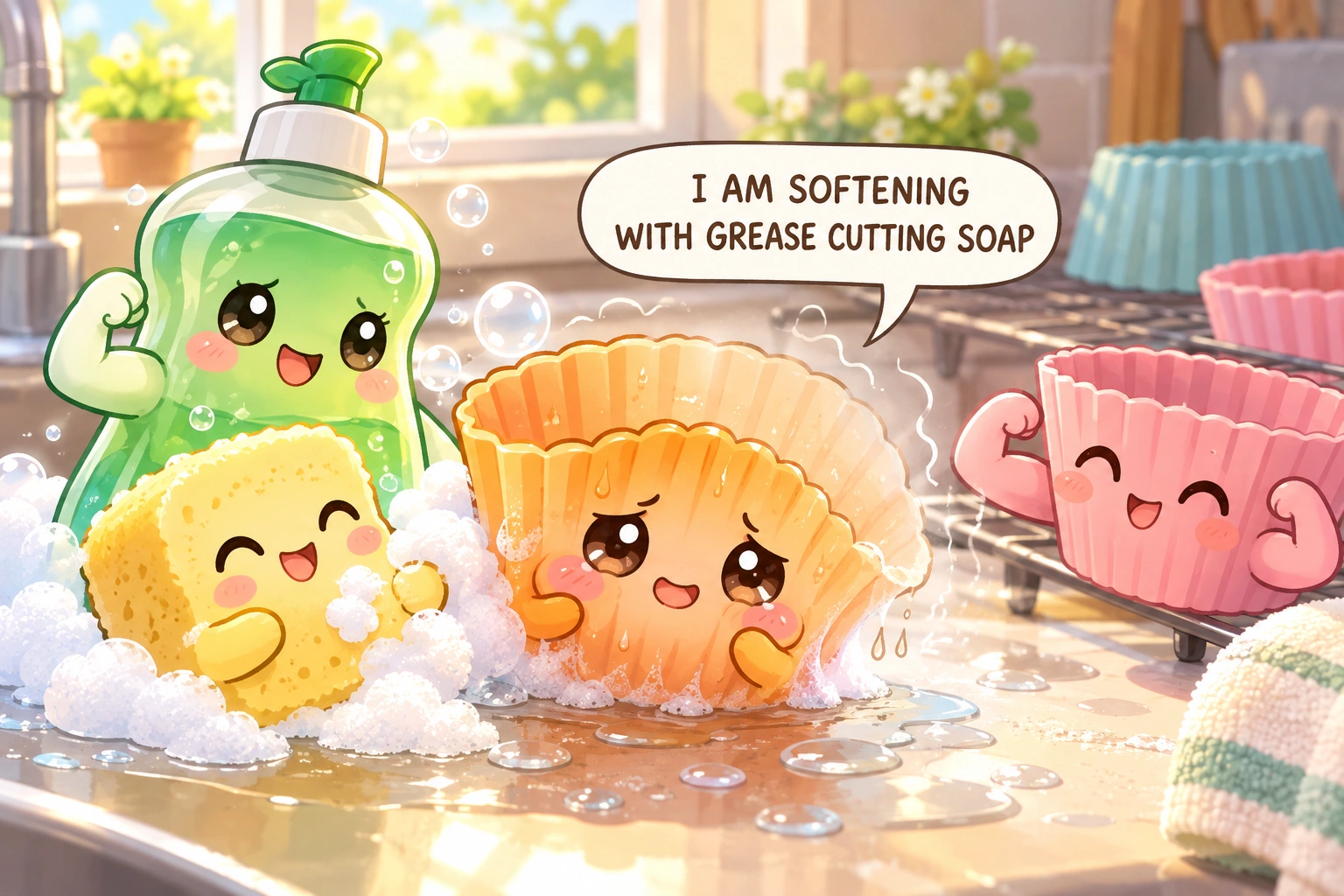
Strip the greasy film
- 01
Wash in the hottest tap water you can stand with a strong grease-cutting dish detergent and a soft sponge.
- 02
If it still feels tacky, fill the sink with very hot water and detergent and soak the piece 30-60 minutes.
- 03
Scrub again with a soft nylon brush, flexing the silicone so the film cracks off the folds and cavities.
- 04
For a persistent varnish layer, spread a paste of baking soda and a little water over it, leave 15-20 minutes, then scrub and rinse — if the maker permits baking soda.
- 05
Rinse extremely well; leftover detergent bakes into a new film next time.
The low-heat bake trick
Some manufacturers suggest baking clean, empty siliconeware at a low temperature (around 350 F / 175 C) for 10 minutes and then washing it while warm — the gentle heat softens absorbed oil so the next wash pulls it out. Check your brand's care page before doing this, and never exceed the piece's rated temperature.
Do not put a torch, a broiler, or a self-clean oven anywhere near silicone. Overheating it releases fumes and permanently degrades the material.
Discoloration that will not budge
If the piece is clean and non-greasy but still tinted orange or brown, that is pigment absorbed into the silicone. It is a cosmetic issue and, on food-grade silicone, not a safety one — the FDA treats properly made food-grade silicone as safe for repeated food contact.
You can try a longer baking-soda paste sit, an oxygen-bleach soak (if the maker allows), or simply a stint in direct sunlight, which fades some food pigments. But accept that a well-used silicone muffin pan often keeps a faint tan tint for life, and that is fine.

Never do these to silicone
- Cut food in a silicone mold or scrape it with a knife or metal fork — a nick becomes a permanent tear and dirt trap.
- Use steel wool, scouring powder, or a green abrasive pad — they roughen the surface so it grabs oil worse.
- Store it folded or crammed under heavy pans while damp — trapped moisture in the folds gets musty.
- Use it above its stated temperature rating, or under a broiler.
When to stop using the piece
A permanent tint alone is usually a cosmetic issue: if the piece is intact, does not smell scorched, and rinses clean with no oily feel, it can generally continue in use according to its maker's directions. Retire it if it is torn, cracked, deeply nicked, persistently tacky after repeated washing, or gives off a strong chemical or burnt odor during normal use. Damage creates places where food residue can remain, and a degraded piece may no longer behave as its original care instructions intended.
Before returning a cleaned mold to food use, rinse both faces and every cavity thoroughly, then air-dry it completely. Soap trapped in a fluted mold can bake into a fresh film; a damp folded baking mat can collect odor in storage. If several washes leave a detergent taste or smell, try one plain-water rinse cycle by hand and dry it separately rather than adding fragrance or stronger cleaner.
Silicone that has picked up a smell
Silicone is slightly permeable, so it absorbs strong odors — garlic, fish, curry, and the acrid smell of a piece that once got too hot. A smell without any greasy film is its own problem and does not respond to more dish soap.
Soak the piece in a solution of hot water and baking soda (about a quarter cup per quart) for a few hours, or in equal parts hot water and white vinegar, then wash and air-dry in the sun if you can. Repeat if needed. A baked-in scorched smell that survives several soaks usually means the silicone was overheated and degraded, and that piece should be retired.
Keeping bakeware clean longer
- Skip the cooking spray — silicone is already nonstick, and spray is the main cause of the sticky film.
- Wash it the same day, in hot water, before oils have a bake cycle to set.
- Air-dry fully, unfolded, before storing.
- Keep one set for savory, high-pigment cooking and another for pale baking if the tint bothers you.
Common questions
FAQ
My silicone bakeware feels sticky even after washing. Why?
That is a polymerized layer of oil and cooking spray that has baked on. Soak it in very hot water with a strong dish detergent for 30-60 minutes, scrub with a soft brush while flexing the silicone, and follow with a baking-soda paste if your maker allows. Then stop using cooking spray, which is what causes it.
Is orange or brown discoloration on silicone dangerous?
No. On food-grade silicone it is absorbed food pigment — a cosmetic change, not a breakdown of the material, and the FDA considers properly made food-grade silicone safe for repeated food contact. If the piece is also sticky, cracked, or gives off an odor when heated, replace it.
Can I boil silicone bakeware to clean it?
A hot soak is safer and usually enough. If you do boil it, keep it fully submerged so no part rests against the hot pot bottom, stay within the piece's temperature rating, and check your manufacturer's care guidance first — some approve boiling and some do not.
Sources reviewed
Keep reading
Related guides

Spills and body oils on Bouclé sofas and chairs
How to Clean a Bouclé Sofa or Chair Without Flattening the Texture
Spot-clean a bouclé sofa or chair by its cleaning code, protect the looped pile from matting, and know which spills need a dry solvent instead of water.

Burnt-on grease and food residue on Air fryer basket
How to Clean Burnt-On Grease From an Air Fryer Basket
Break down baked-on grease in an air fryer basket with a soak and baking-soda paste, without scratching the nonstick coating or getting water near the heating element.
Permanent hair dye on Bathroom countertop
How to Remove Box Hair Dye From a Bathroom Countertop
Get permanent hair color off quartz, laminate, cultured marble, or sealed stone before it sets, using the mildest method the surface allows and never an abrasive pad.
Yellowed tape adhesive on Painted wall
How to Remove Yellowed Tape Residue From a Painted Wall
Take aged, hardened tape adhesive off painted drywall without pulling the paint, using warm heat, an oil to soften the gum, and the gentlest possible scrape.