The quick answer
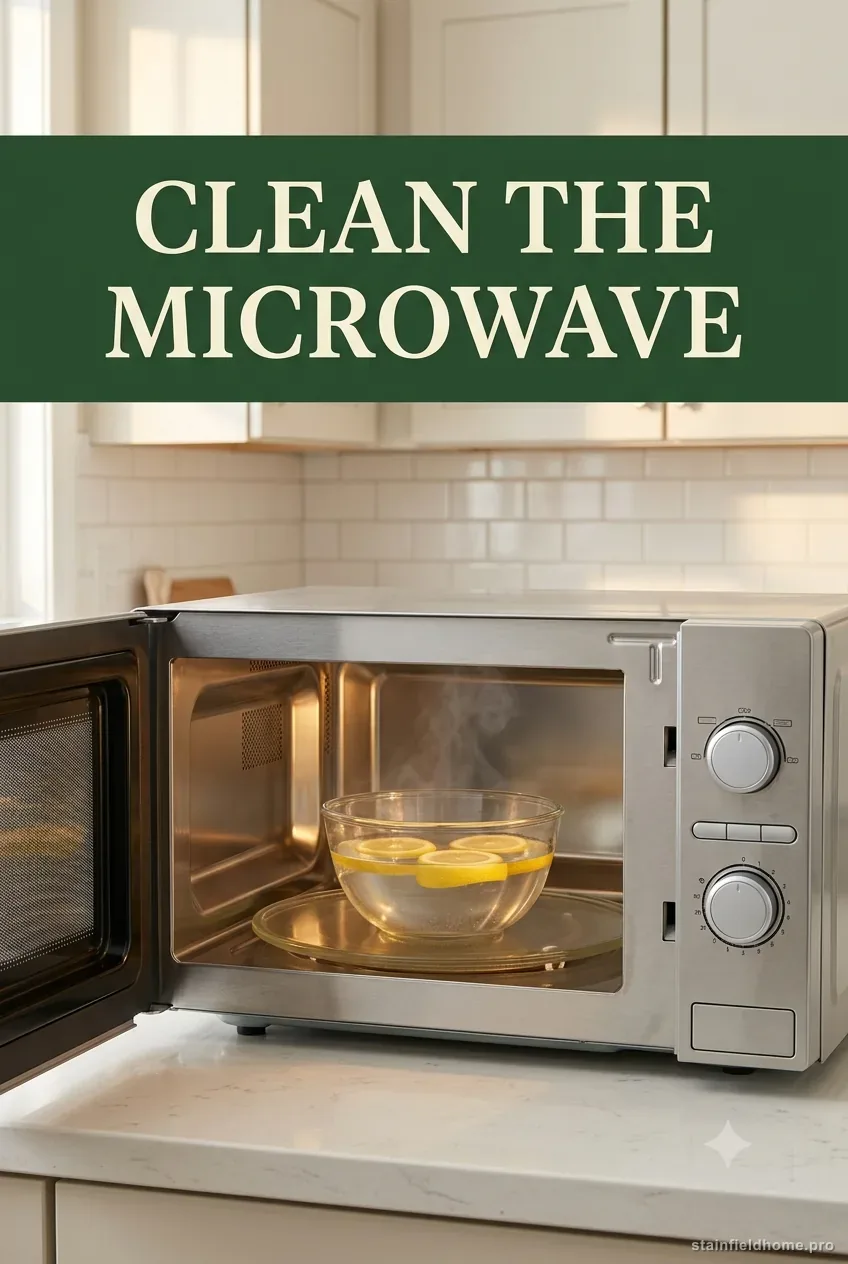
Turn the microwave off, let it cool, remove loose crumbs, and check the model manual. For ordinary soil, Whirlpool recommends mild soap and water with a soft cloth or sponge, followed by a clean-water rinse and thorough drying. For stuck-on splatter, steam from a microwave-safe cup or bowl of water can soften residue before wiping; Whirlpool gives a 2–5 minute water-heating method and Samsung gives model-specific steam-clean guidance. Keep liquids out of vents, do not use abrasive pads or harsh solvents, and do not remove the microwave inlet or magnetron cover just because it looks like cardboard.
What you’ll need
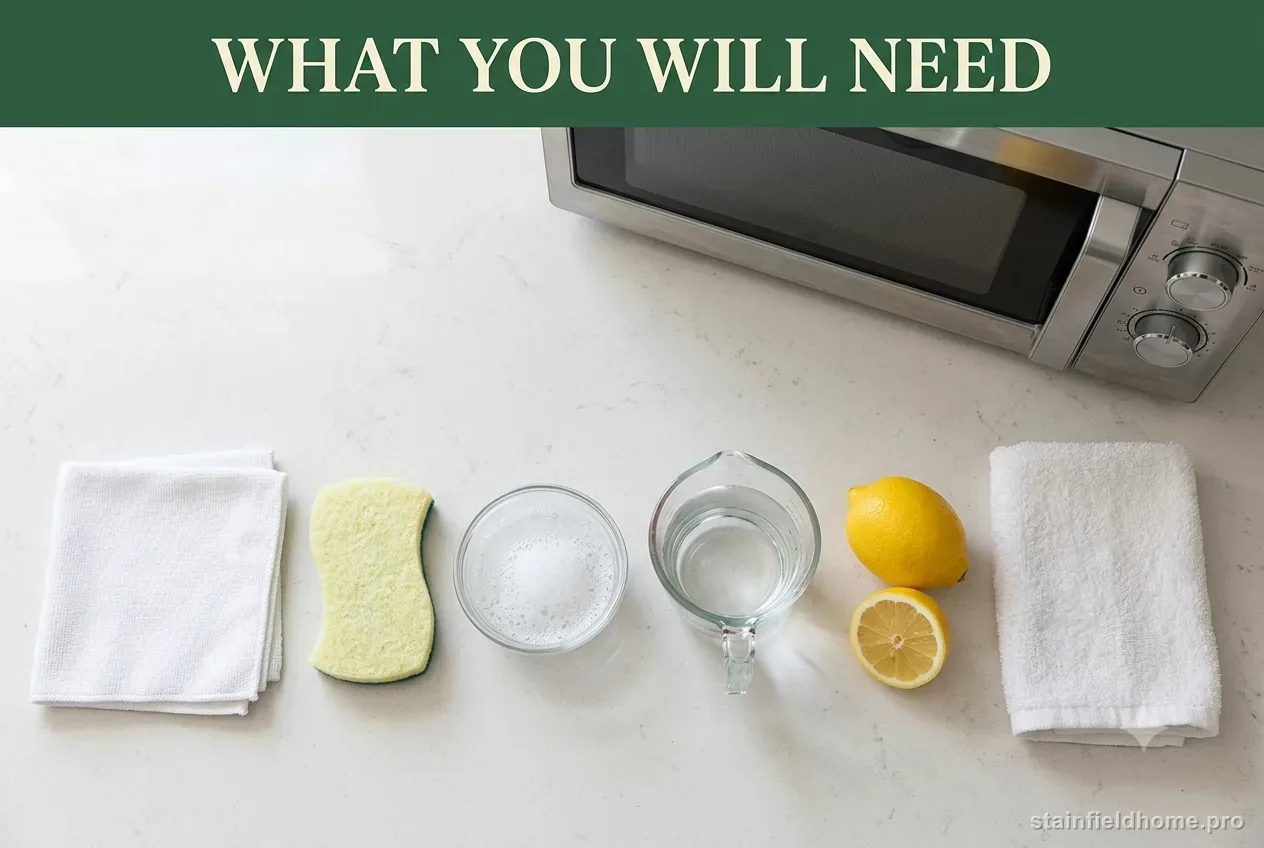
- Soft microfiber or cotton cloths
- Nonabrasive sponge
- Mild dish soap
- Clean water
- Microwave-safe cup or bowl
- Optional lemon juice or vinegar only when the manufacturer allows it for odor treatment
- Soft towel for drying
- The microwave model manual
Start with the model manual and identify the parts you should not remove
Microwave interiors look simple, but the cavity includes coatings, a door seal area, a turntable drive, vents, rack supports on some models, and a microwave inlet or waveguide/magnetron cover. That cover may look like a piece of cardboard or mica. Samsung specifically warns that the magnetron cover is a functional part of the microwave and should not be removed; it can be cleaned gently like the surrounding interior wall. Removing or damaging it can expose components to food splatter and lead to service problems.
Find the model number before deep cleaning. Combination microwave-convection ovens, over-the-range models, drawer microwaves, and countertop units can have different removable racks, coatings, steam-clean modes, and filter systems. If the manual provides a Steam Clean setting, use that procedure rather than improvising another heating time or chemical. Manufacturer guidance takes priority over a generic lemon-bowl trick.
Inspect before cleaning. Burned-through coating, exposed metal, a damaged door or latch, heavy arcing marks, a loose inlet cover, sparking that continues after soil is removed, or an electrical smell is not normal cleaning residue. Stop using the appliance and arrange service. Cleaning is appropriate for food splatter and ordinary odor; it is not a repair for damaged microwave shielding, electrical parts, or a failing door system.
Routine interior cleaning: remove crumbs, wash gently, rinse, and dry
Whirlpool's countertop-microwave guidance recommends mild nonabrasive soap and water for average soil, followed by a clean-water rinse and drying. It specifically warns against soap-filled scouring pads, abrasive cleaners, steel wool, gritty cloths, and recycled paper towels that can damage the cavity. Samsung likewise warns against abrasive cleaner, solvents such as alcohol, benzene, ammonia, paint thinner, steel wool, and bleach on its microwave finishes.
Pay attention to the roof of the cavity and the area behind the turntable. Greasy aerosol and sauce droplets can remain there after the obvious spill is wiped. A clean cavity helps reduce odor and also matters for operation: Whirlpool notes that soil buildup can contribute to arcing. The goal is not to sterilize the appliance with the strongest chemical available; it is to remove conductive food residue without damaging the coating.
- 01
Turn the microwave off and make sure the cavity and turntable are cool enough to handle. Follow the manual if it instructs you to unplug the appliance before cleaning.
- 02
Remove the glass turntable and roller ring if the model says they are removable. Lift out loose crumbs with a dry cloth rather than washing them into vents or the turntable drive.
- 03
Mix a small amount of mild dish soap with warm water. Dampen a soft cloth or nonabrasive sponge and wring it so it is wet but not dripping.
- 04
Wipe the ceiling, side walls, back wall, floor, and door interior with light pressure. Clean the microwave inlet cover gently without prying it off.
- 05
Wipe the door contact and seal areas so food cannot prevent proper closing, but do not saturate latch openings or vents.
- 06
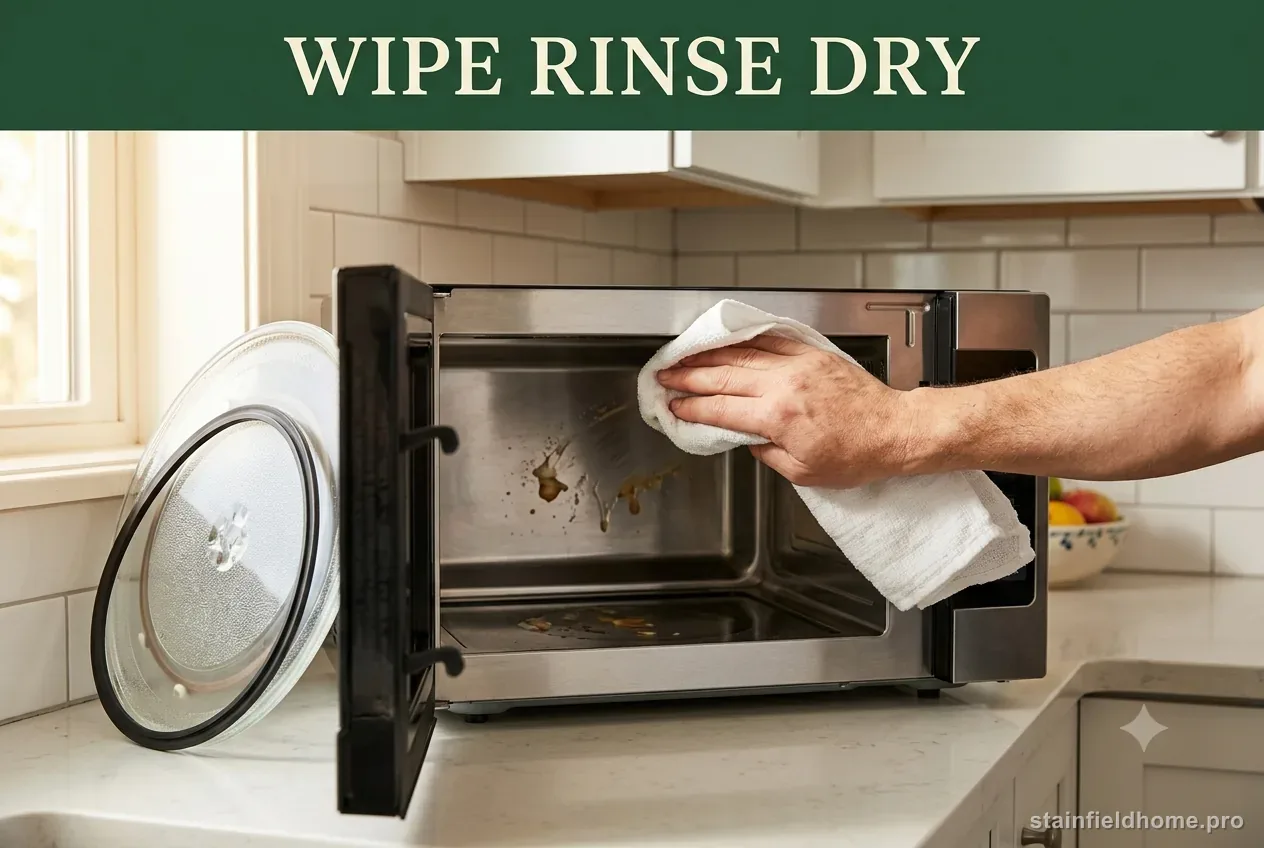
Use a separate cloth dampened with clean water to remove soap residue, then dry the cavity thoroughly with a soft lint-free cloth.
- 07
Wash the turntable and roller ring according to the manual. Reinstall them only when fully dry and correctly seated.
Fresh splatter versus baked-on or dried residue
Fresh splatter usually wipes away with mild soap and water once the appliance has cooled. Blot thick sauce first so it is not smeared over the cavity. Dried food needs moisture and time more than force. Whirlpool recommends heating one cup of water for roughly two to five minutes to create steam that softens heavy soil; Samsung describes a similar steam approach and notes that its exact water volume and heating time can vary by model.
Use a microwave-safe container with enough headroom to reduce boil-over. Heat only for the time allowed by your manufacturer, keep your face and hands away from escaping steam when opening the door, and use oven mitts if the container is hot. Let the steam loosen residue, then wipe with mild soap and a soft cloth. Repeat a short steam-and-wipe cycle if needed rather than scraping the cavity with metal or an abrasive pad.
A carbonized black spot that will not soften, a pit in the coating, or metal exposed beneath a burned area needs a different decision. Do not grind away the finish to make the mark look cleaner. Photograph the damage and check the manufacturer's service guidance. Continued arcing after normal residue has been removed should be treated as a service issue.
Handle odors after the food residue is actually gone
Odor control works best after physical soil has been removed. A bowl of lemon water cannot compensate for grease trapped under the turntable or splatter on the ceiling. Clean first, rinse, dry, then address the remaining smell. Whirlpool says lemon juice or vinegar may be used in a cup of water for odor removal on its applicable models, heated for two to five minutes, followed by drying with a microfiber cloth. Samsung also allows lemon juice in water for some manual steam-clean instructions.
Use that method only when it matches the model guidance. Do not spray undiluted vinegar around the cavity, pour essential oils into the microwave, or heat an uncovered bowl until it boils dry. Strong fragrances can mask odor without removing its source. If the smell is electrical, smoky after the cavity is clean, or associated with sparking, stop using the appliance and seek service instead of adding deodorizer.
For persistent food odor, inspect the roller ring, turntable hub area, rack supports, and door edges for residue. Over-the-range microwaves also have grease and sometimes charcoal filters, but those are separate maintenance items with model-specific schedules. Samsung, for example, distinguishes washable grease filters from charcoal filters that are replaced rather than washed. Do not assume cavity cleaning cleans the vent system.
Clean the turntable, roller ring, door, and inlet cover without damaging them
Glass turntables can be thermal-shock sensitive. Let a hot tray cool before placing it in water, and follow the manual on dishwasher safety. Samsung notes that many of its turntables are dishwasher safe but still warns against handling them immediately after cooking. Clean the roller ring periodically and make sure it returns to the correct track so the plate rotates smoothly.
Wipe the door glass with very mild soap and water and keep the door seal/contact area free of crumbs. Do not scrape the mesh, pry at the door layers, or pour cleaner into latch openings. A door that does not close properly is a safety and service issue, not something to solve by bending a latch.
Treat the inlet or magnetron cover with light pressure. Samsung states that it remains in place and can be cleaned like the interior wall with nonabrasive methods. If it is burned, warped, loose, cracked, or heavily carbonized, consult service guidance. Do not peel it away because it resembles packaging material.
What not to use inside a microwave
The cavity is a functional appliance surface, not an oven liner or stainless-steel sink. Harsh chemistry and aggressive scraping can damage coatings that are meant to stay smooth and intact. When a mild wash plus manufacturer-approved steam does not solve the problem, the next step is diagnosis, not a stronger internet recipe.
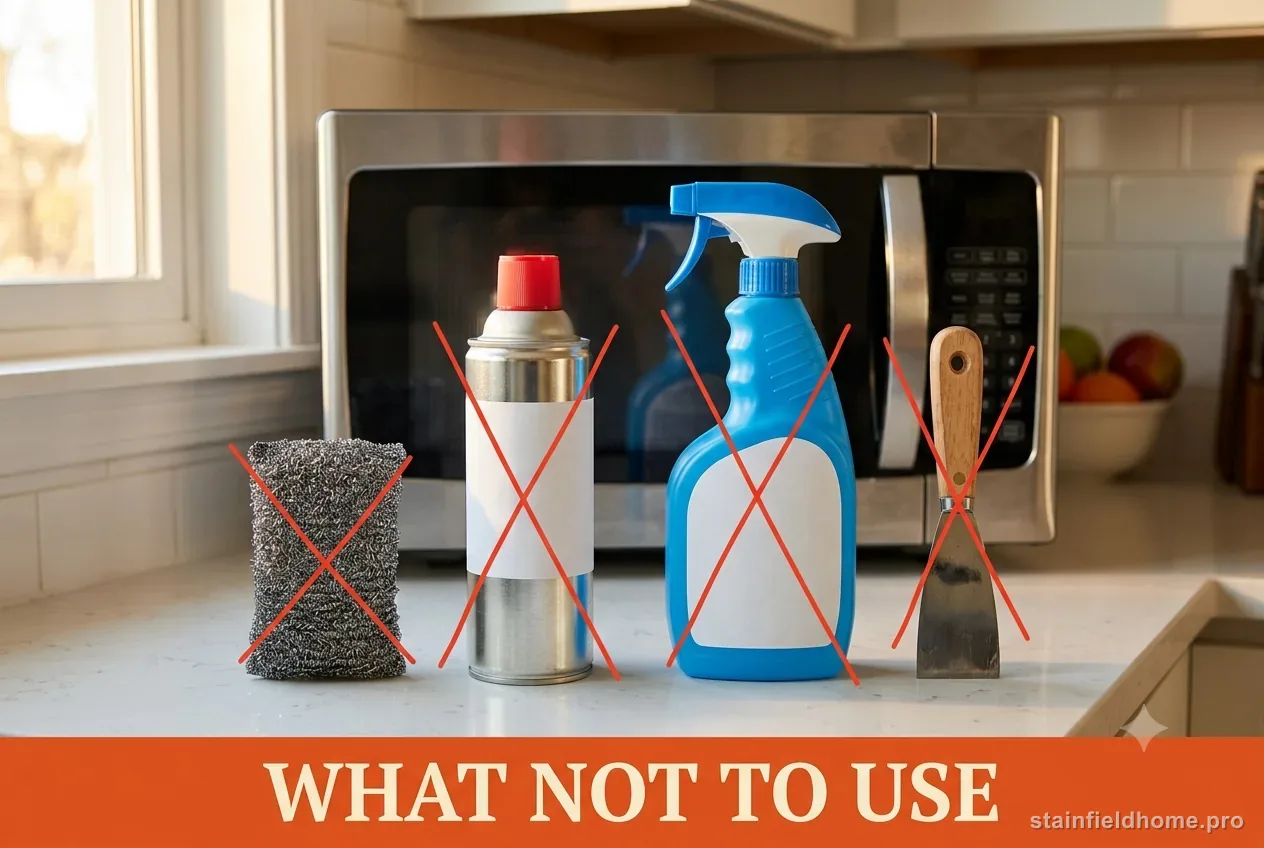
- Do not use steel wool, metal scouring pads, sharp scrapers, gritty powders, or abrasive sponges on the cavity coating.
- Do not use oven cleaner unless the microwave manufacturer specifically lists it for that model and surface.
- Do not use bleach, ammonia, alcohol, paint thinner, benzene, or other strong solvents when the manufacturer prohibits them.
- Do not spray cleaner directly into vents, latch openings, the control area, or the turntable drive.
- Do not remove the microwave inlet or magnetron cover simply because it looks like cardboard or a disposable sheet.
- Do not run the microwave completely empty; Samsung warns that empty operation can damage the appliance.
- Do not mix cleaners or heat a chemical solution whose label does not explicitly allow microwave use.
When to stop cleaning and request service
Stop using the microwave if it starts by itself, sparks with a clean cavity and appropriate cookware, has a damaged door or latch, shows burned-through cavity coating, has a damaged inlet cover, smells electrically hot, or makes a new abnormal noise. Samsung specifically treats a microwave that starts by itself as a fire hazard and advises unplugging it and requesting service. These conditions are outside routine cleaning.
Also request help when food has entered a non-user-serviceable vent or component, when a rack support is burned, or when the manual says a part is not removable. Do not open the cabinet: microwave ovens contain high-voltage components that are not a DIY cleaning area even after the appliance is unplugged.
For prevention, cover foods with a microwave-safe vented cover, wipe splatter after the cavity cools, clean the turntable regularly, and keep the door-contact area free of residue. Frequent light cleaning is safer than allowing a conductive, carbonized layer to build and then attacking it with an abrasive pad.
Common questions
FAQ
Can I clean a microwave with a bowl of lemon water?
Yes when the microwave manufacturer allows that steam-clean or odor-removal method. Use a microwave-safe container and the model's water volume and heating time, then wipe the softened soil. Do not substitute lemon steam for normal soap-and-water cleaning of the residue itself.
What is the cardboard-looking panel inside my microwave?
It may be the microwave inlet or magnetron cover, a functional part that protects internal components from splatter. Samsung specifically says not to remove it. Clean it gently in place and request service if it is damaged.
Can I use an oven cleaner inside a microwave?
Not unless the exact model manual explicitly permits it. Mild soap, water, a soft cloth, and manufacturer-approved steam are the safer default. Strong oven cleaners can damage cavity coatings and other components.
Sources reviewed
Keep reading
Related guides
Spills and body oils on Bouclé sofas and chairs
How to Clean a Bouclé Sofa or Chair Without Flattening the Texture
Spot-clean a bouclé sofa or chair by its cleaning code, protect the looped pile from matting, and know which spills need a dry solvent instead of water.
Burnt-on grease and food residue on Air fryer basket
How to Clean Burnt-On Grease From an Air Fryer Basket
Break down baked-on grease in an air fryer basket with a soak and baking-soda paste, without scratching the nonstick coating or getting water near the heating element.

Permanent hair dye on Bathroom countertop
How to Remove Box Hair Dye From a Bathroom Countertop
Get permanent hair color off quartz, laminate, cultured marble, or sealed stone before it sets, using the mildest method the surface allows and never an abrasive pad.
Yellowed tape adhesive on Painted wall
How to Remove Yellowed Tape Residue From a Painted Wall
Take aged, hardened tape adhesive off painted drywall without pulling the paint, using warm heat, an oil to soften the gum, and the gentlest possible scrape.