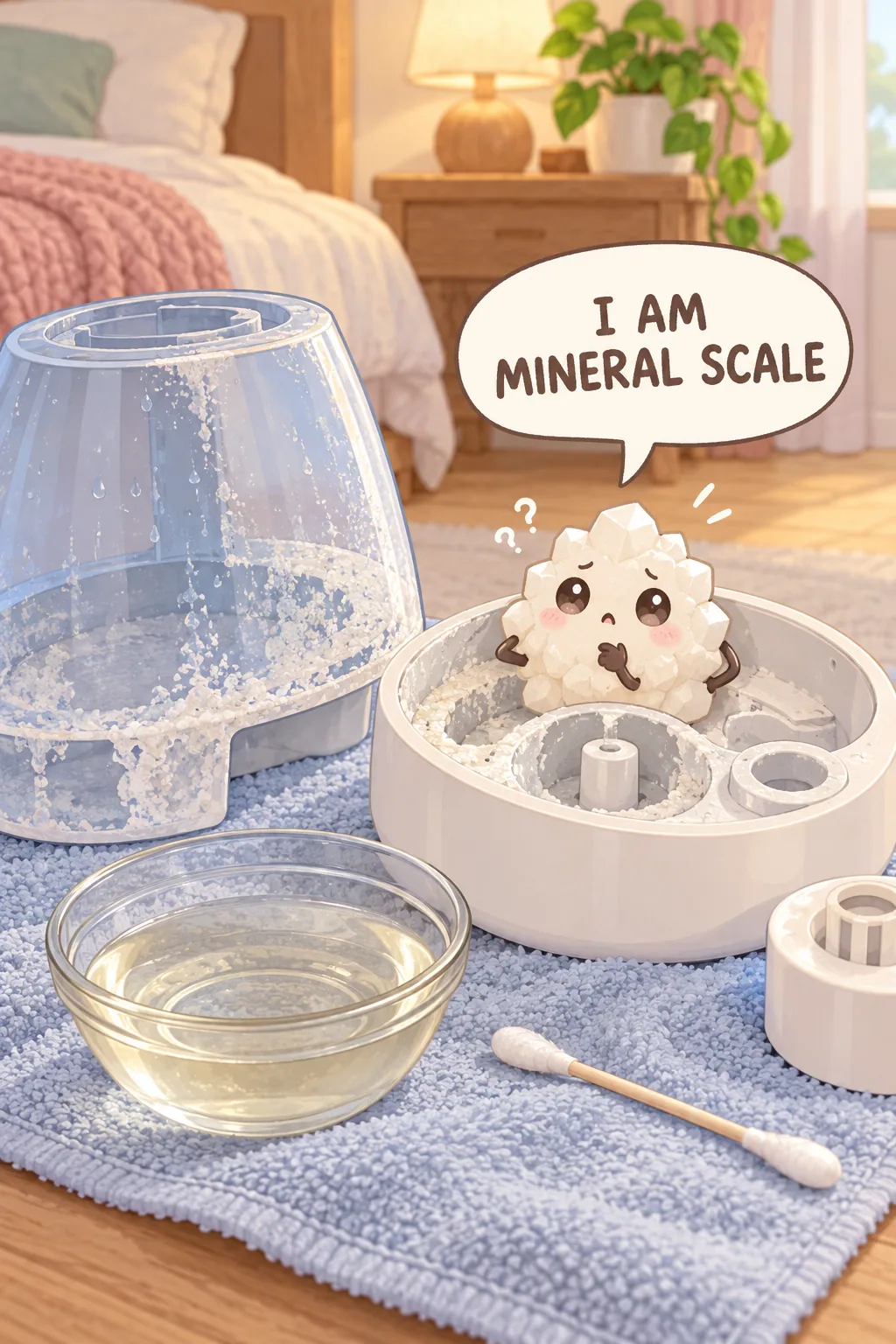
The quick answer
Turn the humidifier off, unplug it, and let any warm-mist model cool fully. Empty the tank and base, remove only the parts your manual says are detachable, and use the descaling method and soak time specified for your exact model. Many manufacturers allow distilled white vinegar on mineral scale, but filters, sensors, coatings, and electronics may need a different method. Rinse every treated surface until the vinegar smell is gone, then air-dry and reassemble. Never mix vinegar with bleach or run the unit while it contains cleaner.
What you’ll need
- Your humidifier’s owner’s manual
- Distilled white vinegar only if approved by the manual
- Soft cloth or cotton swab
- Clean water for thorough rinsing
- Towel and gloves if required by the product label
Recognize scale and check the exact model instructions
Hard-water minerals can dry into a white, chalky crust on a humidifier’s tank, reservoir, float, heating element, or ultrasonic nebulizer. The deposits can restrict moving parts or reduce mist output. They are different from mold or biofilm, which may look slimy, speckled, or smell musty; descaling and disinfecting are separate jobs and use different products.
Before opening the appliance, find the model number and owner’s manual. Humidifiers do not share a universal cleaning recipe: some have removable filters or mineral cartridges that must be taken out, some prohibit vinegar on specific parts, and some bases must never be submerged. Vicks and Honeywell both direct owners to follow the manual for the exact unit. If instructions are missing, look up the manufacturer’s official model page rather than guessing from another brand’s video.
Power down, empty, and disassemble only removable parts
Unplugging protects you from accidental activation while your hands are near water. Cooling also matters because a warm-mist element can remain hot after the unit is switched off. Do not scrape a heating element or ultrasonic plate with metal; a scratch or bend can compromise performance.
- 01
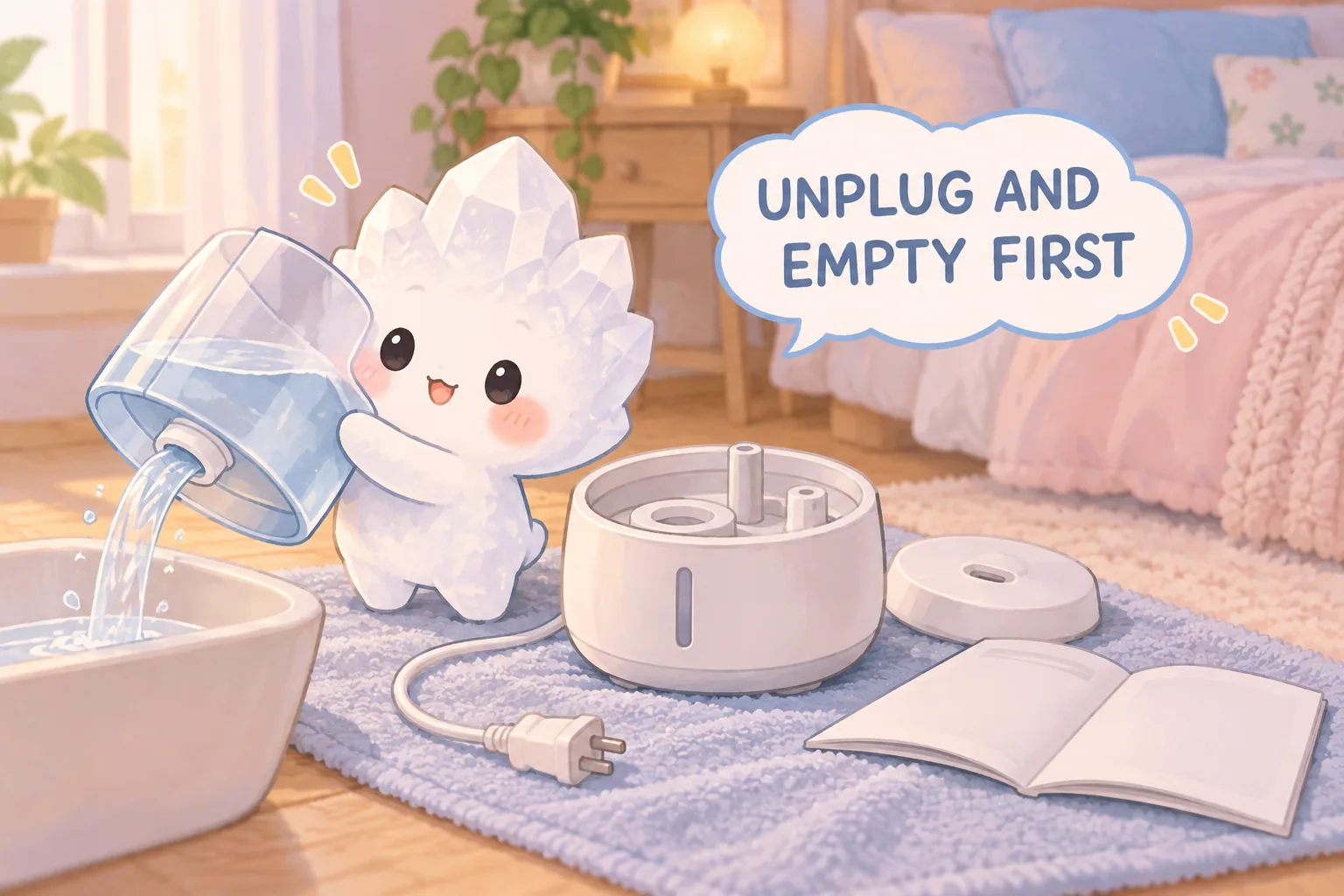
Switch the unit off and unplug it from the outlet. If it uses warm mist, wait until the water and heating area are completely cool.
- 02
Move it to a water-resistant counter near a sink. Remove the tank, pour out standing water, and drain the base only as the manual shows.
- 03
Remove the filter, demineralization cartridge, medicine cup, float, or other pieces only if the instructions identify them as removable for cleaning.
- 04
Keep the electrical cord, plug, motor housing, and any part marked non-immersible away from standing water.
Dissolve scale with the method approved for your humidifier
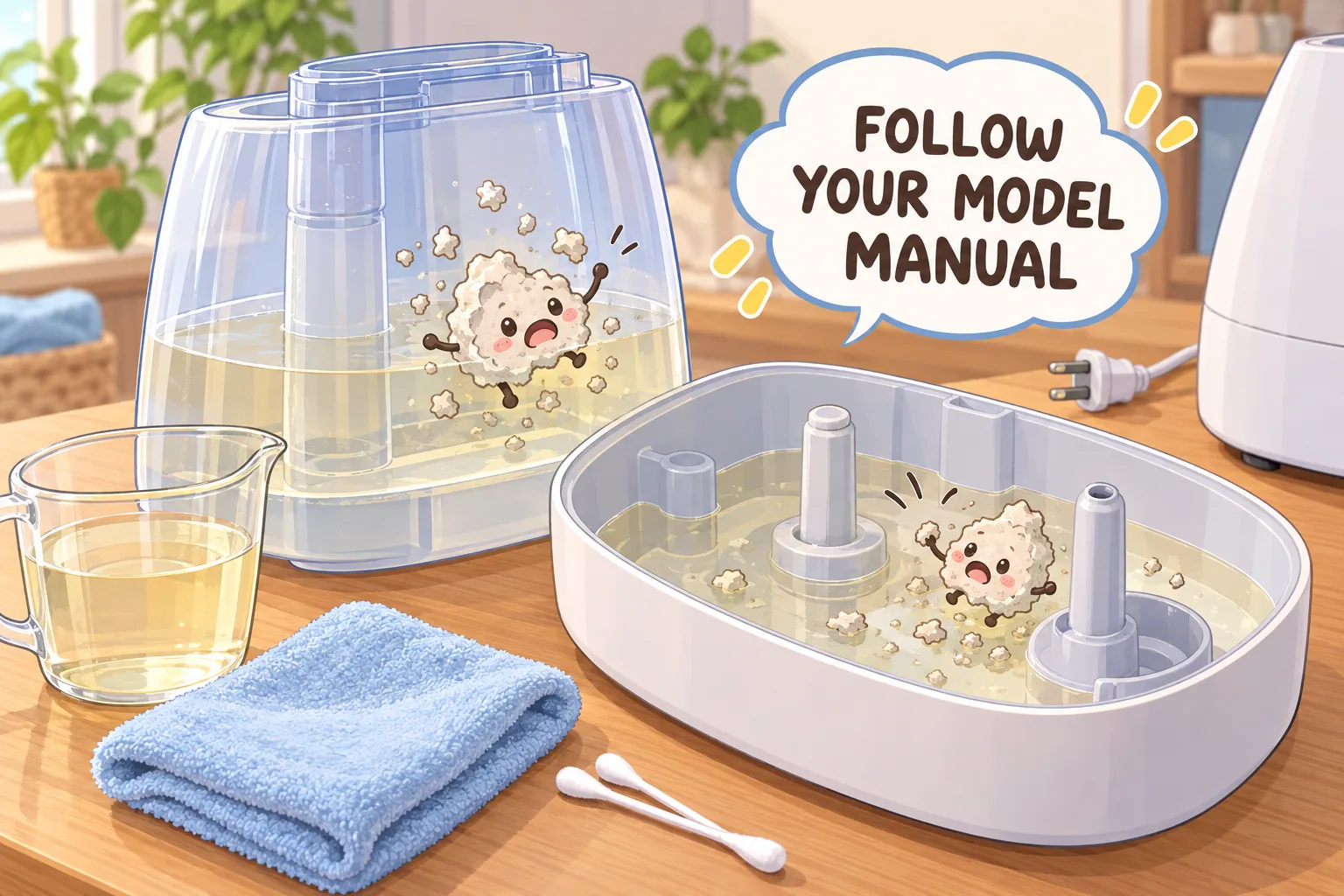
Many Vicks filter-free models specify distilled white vinegar for scale removal, with a measured soak followed by wiping and rinsing. Other models may require a manufacturer cleaner or a different treatment. Follow the exact volume, placement, and soak time from your manual; the vinegar amount for one tank is not a general recipe for every humidifier.
If vinegar is permitted, apply it only to the parts and areas named by the manufacturer. Use a soft cloth or cotton swab to lift loosened deposits around a sensor or nebulizer without pressing hard. Do not run the humidifier with vinegar in it, and do not immerse the entire base unless the manual explicitly says it is safe. If a deposit does not soften within the approved soak, repeat only within the stated instructions rather than escalating to a metal pick or abrasive pad.
Rinse thoroughly and let parts dry
Vinegar left in the reservoir can cause odor during operation and may affect components that were not designed for it. Do not plug the unit in until all external surfaces are dry and the appliance is correctly assembled. If water entered an electrical area, leave it unplugged and contact the manufacturer or a qualified service provider.
- 01
Pour the used solution into the sink as directed by the manual. Keep it separate from bleach, disinfectant, or other cleaners.
- 02
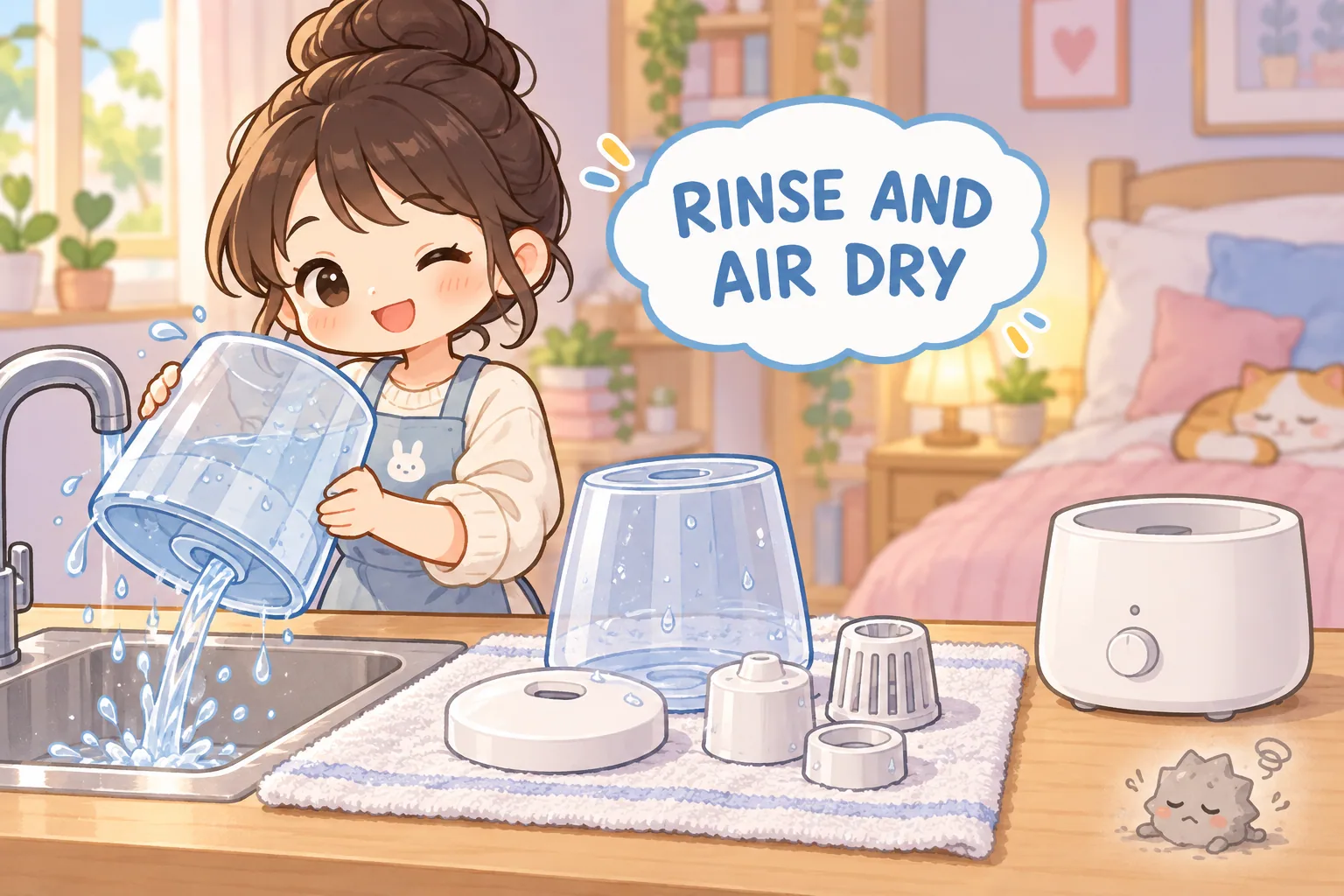
Rinse the tank and treated reservoir with clean water until no vinegar odor remains, following the manufacturer’s rinse procedure.
- 03
Wipe loosened scale with a soft clean cloth. Do not touch a delicate nebulizer with bare fingers if the manufacturer warns that oils can affect mist output.
- 04
Air-dry removable parts on a clean towel. Replace any filter or cartridge only when dry and according to its instructions, then reassemble the unit.
Keep descaling separate from disinfection
Scale removal addresses mineral deposits; it does not automatically sanitize the humidifier. If the manual also calls for disinfection, finish the descaling steps, rinse completely, and then start a separate disinfection procedure exactly as the manual describes. Never combine vinegar with bleach. Honeywell explicitly warns that descaling and disinfecting must be done separately, and CDC guidance says not to mix household cleaners because some combinations can release hazardous gases.
Do not use bleach in a humidifier unless the manufacturer provides a specific procedure for that exact model. A leftover filter, gasket, or accessory may be damaged by a chemical that is safe for the tank. Follow dilution, soak, ventilation, and rinse directions on both the manual and product label; do not improvise a stronger solution.
Prevent scale from returning and know when to replace a part
If scale reforms quickly, your tap water may contain more dissolved minerals. A compatible water source or approved cartridge may reduce buildup, but check the manual before changing water type. If output remains weak after a complete approved cleaning and a fresh filter, contact the manufacturer; a damaged transducer or heating element is not a stain to scrub away.
Make a routine of emptying the reservoir when you stop using the unit for the day, then letting accessible parts air-dry as the manual allows. This limits both dried mineral rings and stagnant water. Keep the cleaning record with the model number and note which products were used, so you do not accidentally repeat a chemical treatment before the unit has been rinsed. If the manual’s procedure leaves odor or visible residue, do not operate the humidifier until you have rinsed again or spoken with the manufacturer.
- Empty and rinse the tank regularly and do not leave standing water in a stored unit.
- Use distilled or low-mineral water only if the manufacturer recommends it for your model.
- Replace filters and demineralization cartridges on the manufacturer’s schedule; never descale a disposable filter unless its label permits it.
- Stop using a cracked tank, damaged float, corroded element, or sensor that no longer moves freely.
- Store the unit clean and completely dry when it will sit unused.
Confirm normal operation after cleaning
Before plugging the humidifier back in, inspect the tank cap, gasket, float, and removable tray for correct seating. A cap that is cross-threaded or a float installed backward can cause a leak or prevent the unit from sensing water correctly. Check the manual’s assembly diagram and make sure every part that was removed has been returned to its original position. The exterior, cord, plug, and controls must be dry. If liquid reached a motor housing, switch, or other electrical area, do not test the appliance; leave it unplugged and contact the manufacturer.
Fill the tank with the water type and amount the manual specifies, then set the humidifier on a level, water-resistant surface with open airflow around it. Run a brief supervised test in a room where a small leak can be noticed. Look for stable mist output, no unusual smell, no water around the base, and no warning light. Do not add essential oils, medication, or disinfectant unless the model explicitly supports it; those substances can damage plastic and may be dispersed into room air.
If performance is still weak, check the basic items the manual names: water level, filter orientation, cartridge replacement interval, and whether the unit is placed on a level surface. Scale may have been only one cause. A worn transducer, clogged disposable wick, faulty float, or damaged fan needs the manufacturer’s troubleshooting or service path. Do not open a sealed electrical base or scrape a component to restore output. A simple log of cleaning dates, filter changes, and water type helps distinguish recurring mineral buildup from a part nearing the end of its service life.
Common questions
FAQ
Can I clean every humidifier with vinegar?
No. Many manufacturers permit vinegar for scale on specific models, but parts, filters, coatings, and sensors vary. Check your exact model’s manual and use vinegar only where it is approved.
Can I mix vinegar and bleach to clean a humidifier?
Never. Descaling and disinfection are separate steps. Rinse completely between procedures and follow the humidifier manual; CDC advises against mixing household cleaners.
Can the humidifier run while vinegar is inside?
No. Use vinegar only as a stationary soak when the model’s instructions call for it. Drain, rinse until odor-free, dry, and reassemble before powering the unit.
Why does white scale keep coming back?
Minerals in water dry on the tank and base. Emptying water regularly and using a manufacturer-approved low-mineral water option or cartridge may slow deposits.
Sources reviewed
Keep reading
Related guides
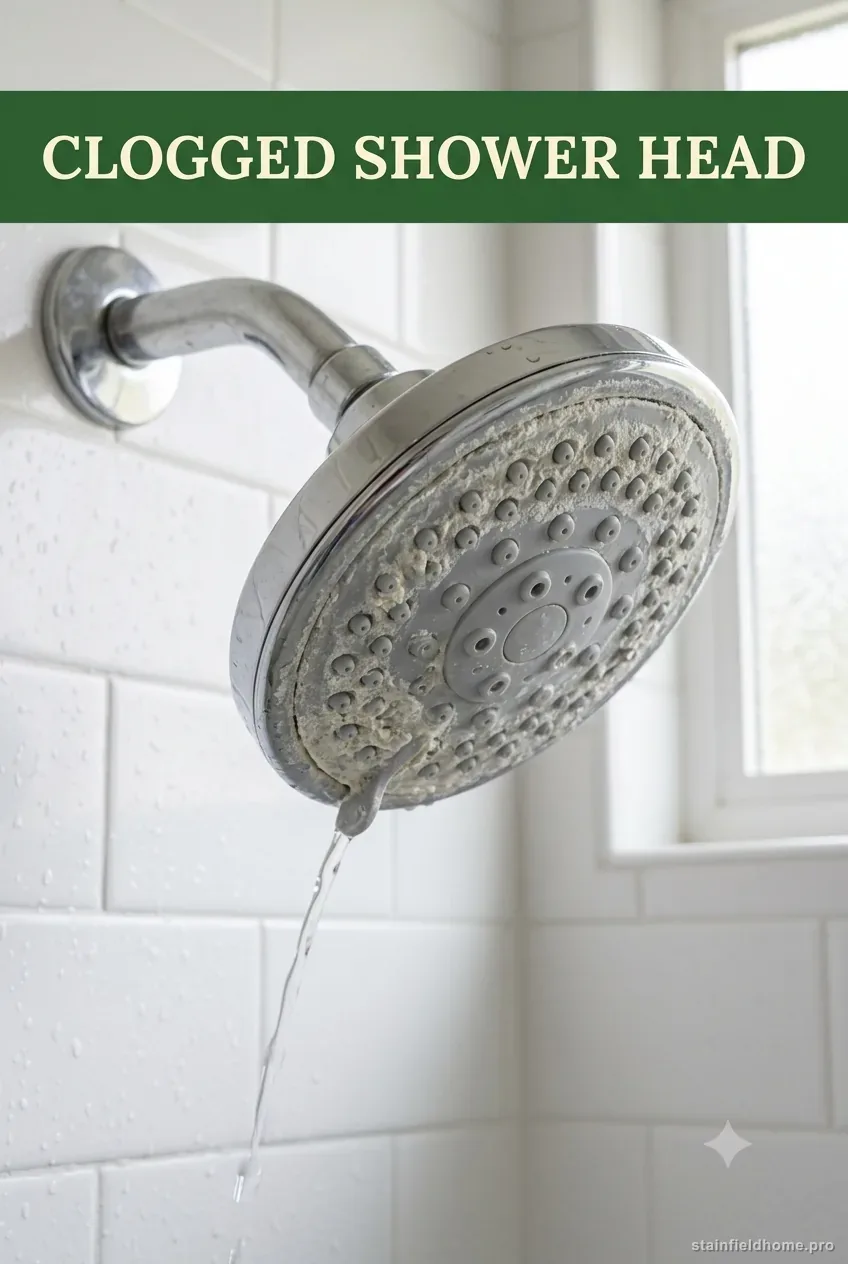
Mineral buildup on Shower head
Clogged Shower Head? How to Clear Mineral Buildup
Fix a weak or uneven shower spray by clearing mineral buildup from the head, checking its screen, and protecting rubber nozzles and the finish.

Baked-on grease on Roasting pan
How to Clean Baked-On Grease From a Roasting Pan
Lift baked-on grease from a roasting pan with a material-first method for stainless steel, enamel, and nonstick surfaces, without risky scrubbing.

Blueberry on Plastic cutting board
How to Remove Blueberry Stains From a Plastic Cutting Board
Fade blueberry pigment from a plastic cutting board with options matched to its condition; avoid damage and reduce marks from future berries.
Mold and biofilm on Reusable bottle straw and gasket
How to Clean Mold From Bottle Straws and Gaskets
Disassemble and deep-clean reusable bottle straws, valves, and silicone gaskets so biofilm is removed from hidden wet crevices.