The quick answer
Find the exact model manual and locate its Self Clean, Tub Clean, Clean Washer, or Pure Cycle instructions. Empty the drum and pockets around the gasket. Add only the product and dose the manual specifies—some Samsung Self Clean models require no cleaner for routine cleaning, while certain GE Self Clean models call for bleach or washing-machine cleaner in the basket. Close the door or lid, select the maintenance cycle, and let it finish without interruption. Then wipe the tub opening and gasket dry, clean the dispenser and accessible filter by the manual, and leave the door or lid and drawer open for airflow if the maker permits it. For established odor or suds, repeat only as directed. Never mix bleach with vinegar, ammonia, or another cleaner.
What you’ll need
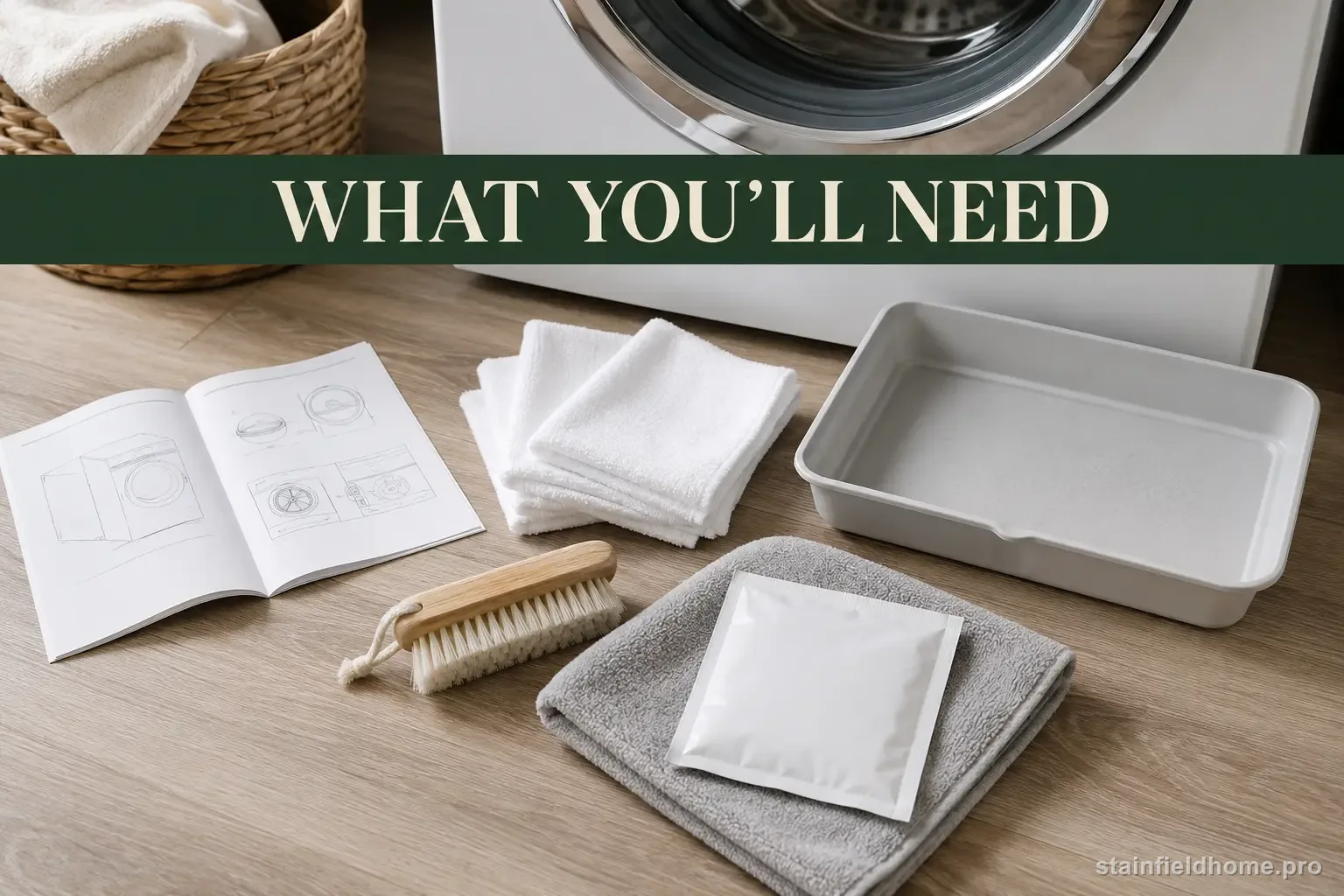
- The exact model number and current owner’s manual
- Clean white microfiber cloths
- A soft nonmetallic brush
- A shallow pan and absorbent towels if the manual includes pump-filter drainage
- The exact washer cleaner, liquid chlorine bleach, or no additive specified by the manual
- Gloves and room ventilation when required by the product label
Start with the model manual, not a universal cleaner recipe
Self-cleaning cycle names include Self Clean, Self Clean+, Pure Cycle, Tub Clean, Basket Clean, and Clean Washer. The label does not reveal the same chemistry across brands. Locate the model number on the door or lid opening, rear label, purchase record, or app, then download the current owner’s manual from the manufacturer. Read the entire maintenance section before placing anything in the machine.
Manufacturer differences are real. Samsung says its routine Self Clean cycle runs with an empty washer and no added cleaner, while it gives a separate bleach escalation for an existing mold smell. A GE UltraFresh front-loader guide instructs users to put a specified amount of liquid bleach or washing-machine cleaner directly in the empty basket before Self Clean. Treat those as model examples, not ingredients to combine. Your own manual decides the additive, location, dose, cycle, and follow-up rinse.
Inspect before running. Remove laundry and foreign objects, check the gasket folds without pulling or tearing them, and look for standing water, a loose drum paddle, a damaged door boot, corrosion, a leak, or a burning smell. Stop and arrange service for electrical odor, smoke, leaking, grinding, error codes that the manual does not clear, or a damaged seal. A hot cleaning cycle should not be used to diagnose a mechanical problem.
Routine light residue: run the maintenance cycle empty
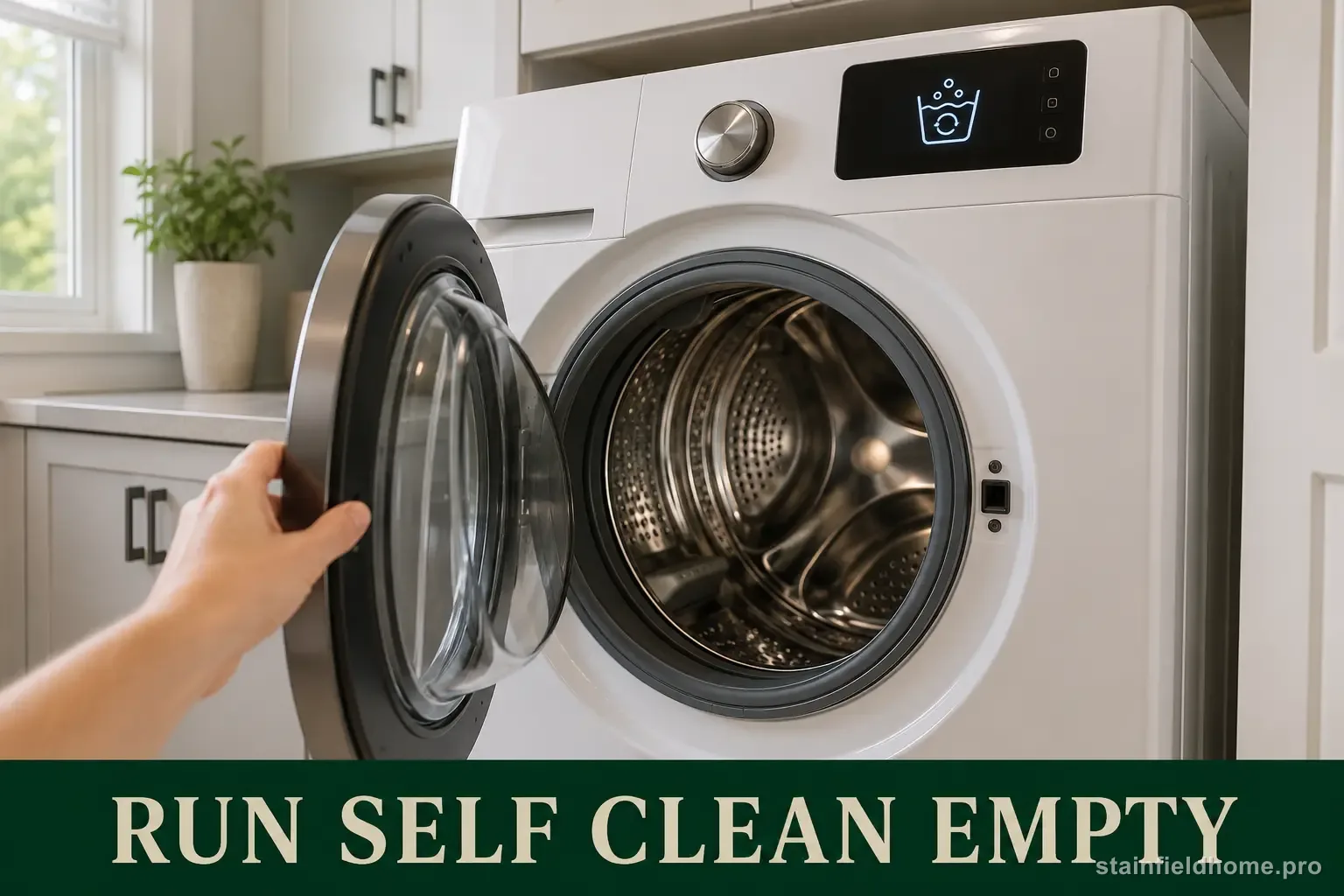
A maintenance cycle uses a programmed combination of water level, temperature, tumbling or agitation, and time to reach areas an ordinary clothing cycle may not clean well. Ordinary laundry detergent is not helpful here. It can create excess foam, leave new surfactant residue, interfere with sensing, and make the empty machine appear dirtier.
Cycle length varies widely. Samsung notes roughly one hour for some top-load models and about four hours for some front-load models; GE gives a different duration for its own design. Plan enough time and do not force the locked door. If power is interrupted, follow the manual’s restart instructions rather than selecting random drain or spin commands.
- 01
Empty the tub completely. Check the gasket lip, drum, and dispenser for a sock, tissue, coin, pet item, or pooled detergent.
- 02
Confirm the cycle name and additive instruction in the exact manual. Measure only the specified product; if it says no cleaner, add nothing.
- 03
Place the approved additive in the exact location named—basket, detergent compartment, bleach compartment, or another point. Do not assume the automatic dispenser will feed the maintenance cycle.
- 04
Close the door or lid, select Self Clean, Tub Clean, or the model’s equivalent, and press Start. Allow the full cycle to run without laundry and without interruption.
- 05
Wait for the machine to unlock on its own. If the water or metal is hot, allow the manufacturer’s cooling interval before touching the filter or interior.
- 06
Wipe the door glass, tub opening, lid underside, and accessible gasket dry with a clean cloth. Remove any loosened hair or lint without pushing it into a drain opening.
- 07
Run an extra rinse only when the manual requests one or residue remains and the manufacturer advises it. Then air the washer according to the care sheet.
Established odor, mold smell, or heavy suds needs a separate path
An established odor calls for diagnosis before extra chemistry. Smell the empty, dry washer, the dispenser, the front-loader gasket, and the nearby drain area separately. A stale detergent or mildew odor may come from residue in the washer. A sewage odor can point to a standpipe, drain, or trap problem. Burning rubber or electrical odor is a stop-and-service condition.
Follow the manufacturer’s odor-removal section exactly. If it names chlorine bleach, use only the stated type, amount, and compartment with the required ventilation and follow-up rinse. If it names a washing-machine cleaner, use a product compatible with the model and observe its label. Never add vinegar to a bleach routine, never mix two washer-cleaner brands, and never increase the dose because the smell seems strong.
Suds appearing during an empty clean can be old detergent releasing from hidden surfaces. Samsung and GE both discuss repeating the maintenance cycle when residue or suds remain, but use the frequency and additive directions for your model. Repeat without improvising additional detergent. If suds persist, check that the household uses high-efficiency detergent where required and reduce future dose according to the detergent label, water hardness, load size, and washer manual.
Visible mold embedded in a torn gasket, odor returning immediately after correct cycles, water that will not drain, or soil coming from behind a non-user-serviceable part needs manufacturer or appliance-service guidance. Do not dismantle the inner and outer tubs from an online video; doing so can create leak, electrical, balance, and warranty risks.
Clean the dispenser, gasket, lid, and user-accessible filter
The tub cycle does not automatically scrub every removable component. After the machine is off and cool, remove dispenser inserts only as the manual shows. Rinse them with warm water, use a soft nonmetallic brush in corners, and dry them. Wipe the drawer recess without flooding electrical or valve areas. Reinstall parts in the correct positions so detergent and softener dispense at the intended time.
On a front-loader, gently open the accessible gasket folds and remove hair, lint, and small objects. Use the manufacturer’s named cleaning solution; do not stretch the boot or push a tool through its drain holes. Wipe and dry all reachable surfaces. A stained gasket may remain discolored after it is clean. Tears, persistent black growth within the rubber, or water leaking at the door call for service.
Pump-filter access varies. Samsung, for example, describes a front-loader debris filter behind a lower access panel and warns that water after a hot cycle can cause injury. Follow the manual: allow cooling, unplug only when directed, place a shallow pan and towels, drain through the service hose if present, remove and clean the filter, inspect the accessible impeller without forcing it, and reseal both the filter and drain cap. Never open a generic panel just because another model has a filter there.
Top-load washers may have a removable lint filter, agitator dispenser, or no user-accessible pump filter. Clean only the listed components. Wipe the lid underside and tub ring where detergent splash dries, keeping liquid out of controls. Reconnect or restart only after every user-serviceable part is correctly seated and the floor is dry.
Adjust the routine for front-load and top-load designs
Front-loaders have a horizontal tub, a watertight door gasket, and often a lower pump filter. Moisture can remain in gasket folds and the dispenser after the load. Wipe the gasket and glass, remove trapped objects, and leave the door and drawer ajar only if the manufacturer permits it and the open door is safe from children, pets, and traffic.
Top-loaders have a lid, tub ring, and either an agitator or wash plate. Detergent and softener may collect under a dispenser cap or around the upper basket. Use the model’s removal directions; do not pry an agitator or pour cleaner down its center without instruction. Leave the lid open for drying only where the manufacturer approves and the appliance cannot be climbed into.
Automatic dispensers also need their own schedule. The Max line is capacity, not necessarily the dose for every load. GE notes that heavy residual suds may indicate excessive detergent and recommends adjusting automatic dispensing. Refill tanks with the compatible product, clean them as directed, and never mix different formulations in a reservoir unless its instructions explicitly allow it.
What not to use in or on a washing machine
A popular recipe can be chemically plausible and still be wrong for the machine. The safest method is the one validated for the appliance’s materials, sensors, water levels, and drainage path. More cleaner does not compensate for excessive detergent use or a blocked drain.
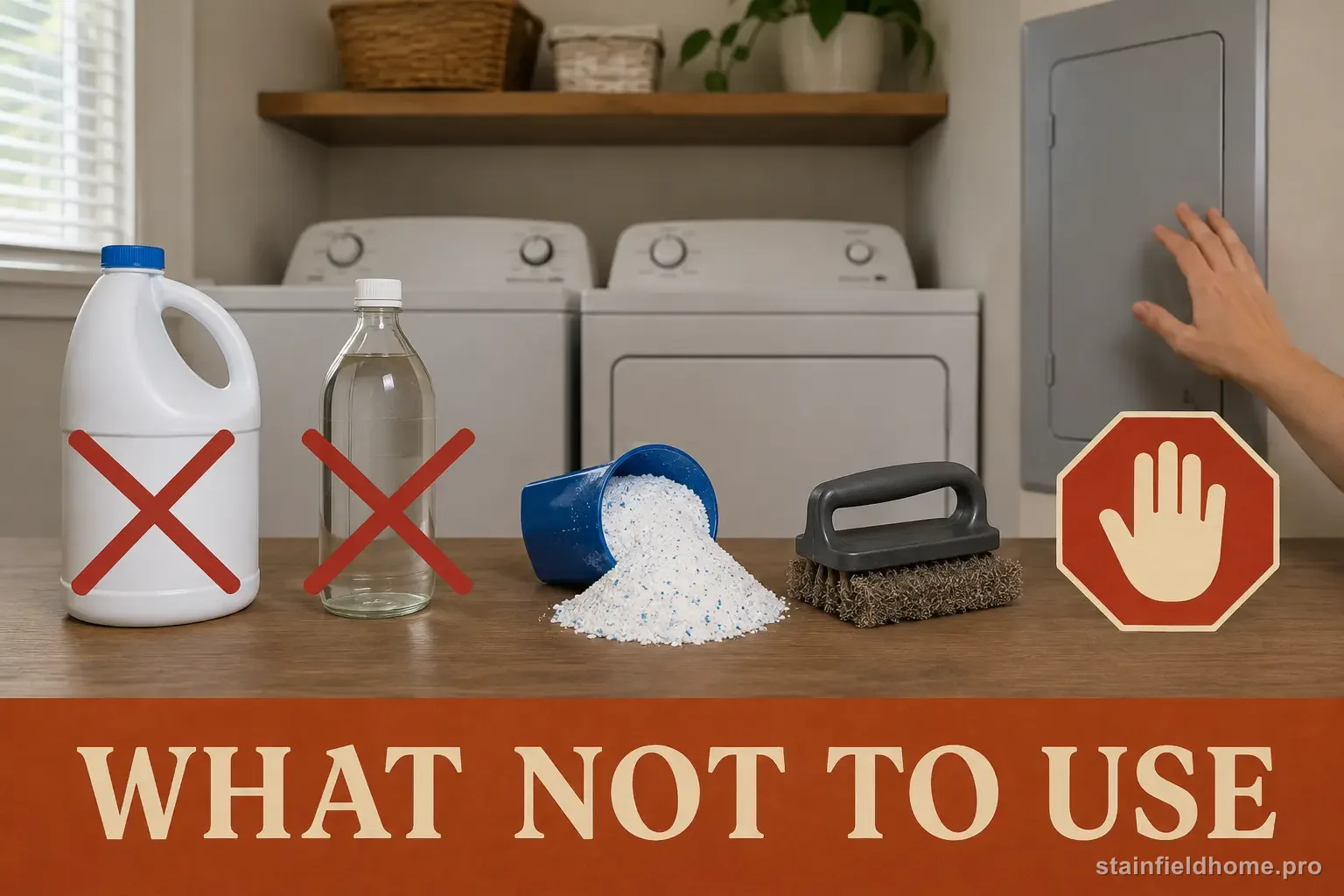
- Do not mix chlorine bleach with vinegar, ammonia, alcohol, peroxide, acids, or any other cleaner; dangerous gases or reactions can result.
- Do not add ordinary laundry detergent or fabric softener to a tub-clean cycle unless the manual specifically instructs it.
- Do not assume vinegar is safe for seals, hoses, metals, or the warranty; use it only when the exact model documentation permits it.
- Do not combine a washer-cleaner tablet with bleach or another branded cleaner.
- Do not use steel wool, abrasive powder, a pressure washer, steam cleaner, or sharp tool on the drum, gasket, drawer, or coated cabinet.
- Do not force a locked door, interrupt a hot cycle unnecessarily, or open a filter before the water has cooled and been controlled.
- Do not remove the agitator, inner tub, outer tub, cabinet, or electrical panel unless the manufacturer classifies the procedure as user maintenance for that model.
Prevent residue and know when to call for service
Run the maintenance cycle when the machine reminds you or at the interval in the manual. Samsung recommends at least monthly cleaning for some models and gives reminder counts that differ between top- and front-load designs; GE gives its own monthly or cycle-count guidance. Record the date if your panel does not track it.
Use the correct high-efficiency detergent where required and dose for water hardness, soil, and load—not by filling to Max automatically. Remove washed clothes promptly, wipe detergent spills, dry the gasket and glass, and air the door, lid, and drawer when the maker and household safety allow. Periodically inspect water hoses and the floor for seepage according to the appliance instructions.
Call authorized service for repeat drain errors, a leaking door or hose, grinding, unusual vibration after correct leveling, electrical or burning odor, a damaged cord, mold within a nonremovable seal, or odor that clearly comes from the household drain. A clean cycle is maintenance; it does not repair a pump, bearing, valve, control, plumbing trap, or torn gasket.
Common questions
FAQ
Do I add cleaner to the washing machine’s Self Clean cycle?
Only if the exact model manual says to. Some Samsung models run routine Self Clean with no additive; certain GE models direct users to add a specified bleach or washing-machine cleaner. The model instructions decide the product, dose, and location.
Can I use vinegar and bleach in separate parts of the same clean cycle?
No. Never put bleach and vinegar into the same cycle or machine residue path. Use only the single method specified by the washer manual, rinse as directed, and do not combine cleaners.
Why are there suds when the washer is empty?
A tub-clean cycle can release old detergent buildup. Follow the manufacturer’s advice about repeating the cycle, then check HE-detergent compatibility and reduce future dosing. Persistent suds or drainage trouble may need service.
Sources reviewed
Keep reading
Related guides
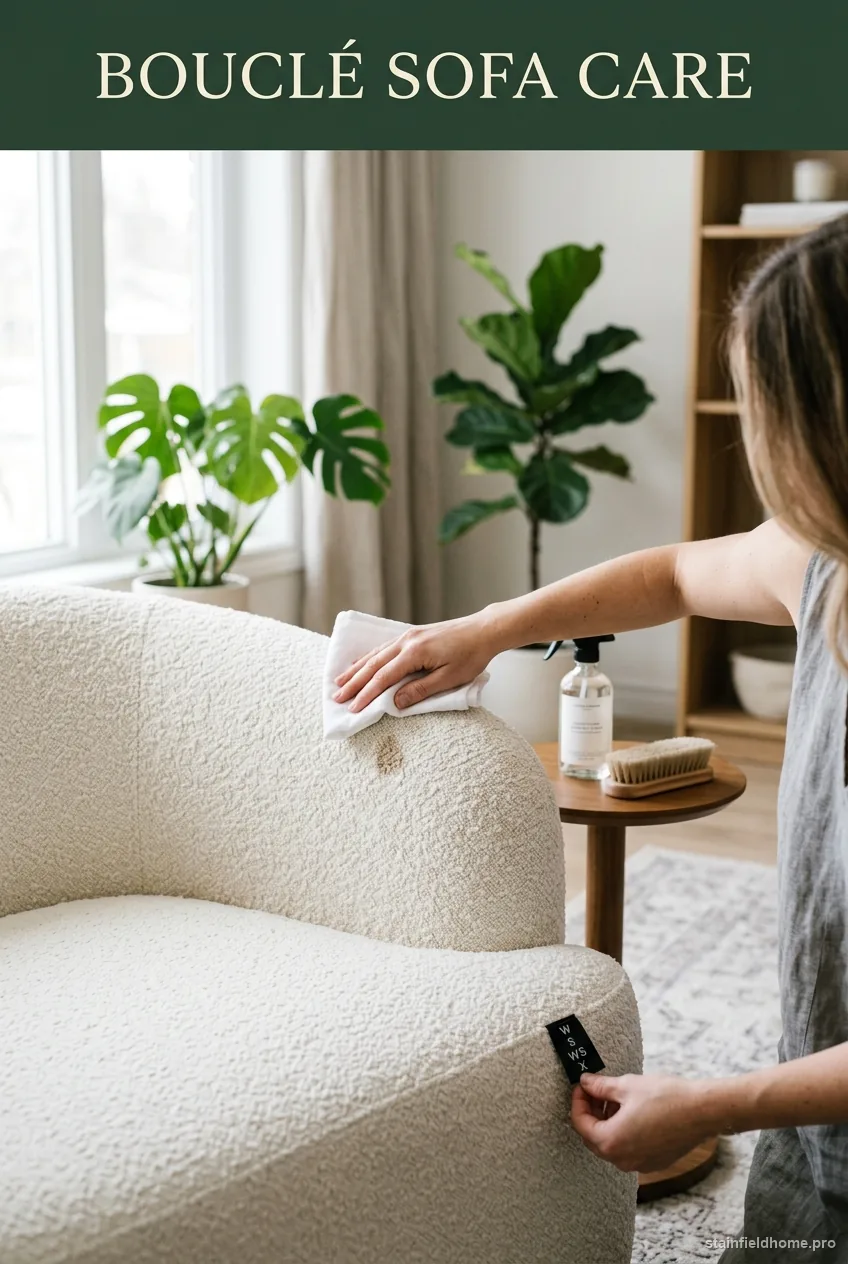
Spills and body oils on Bouclé sofas and chairs
How to Clean a Bouclé Sofa or Chair Without Flattening the Texture
Spot-clean a bouclé sofa or chair by its cleaning code, protect the looped pile from matting, and know which spills need a dry solvent instead of water.
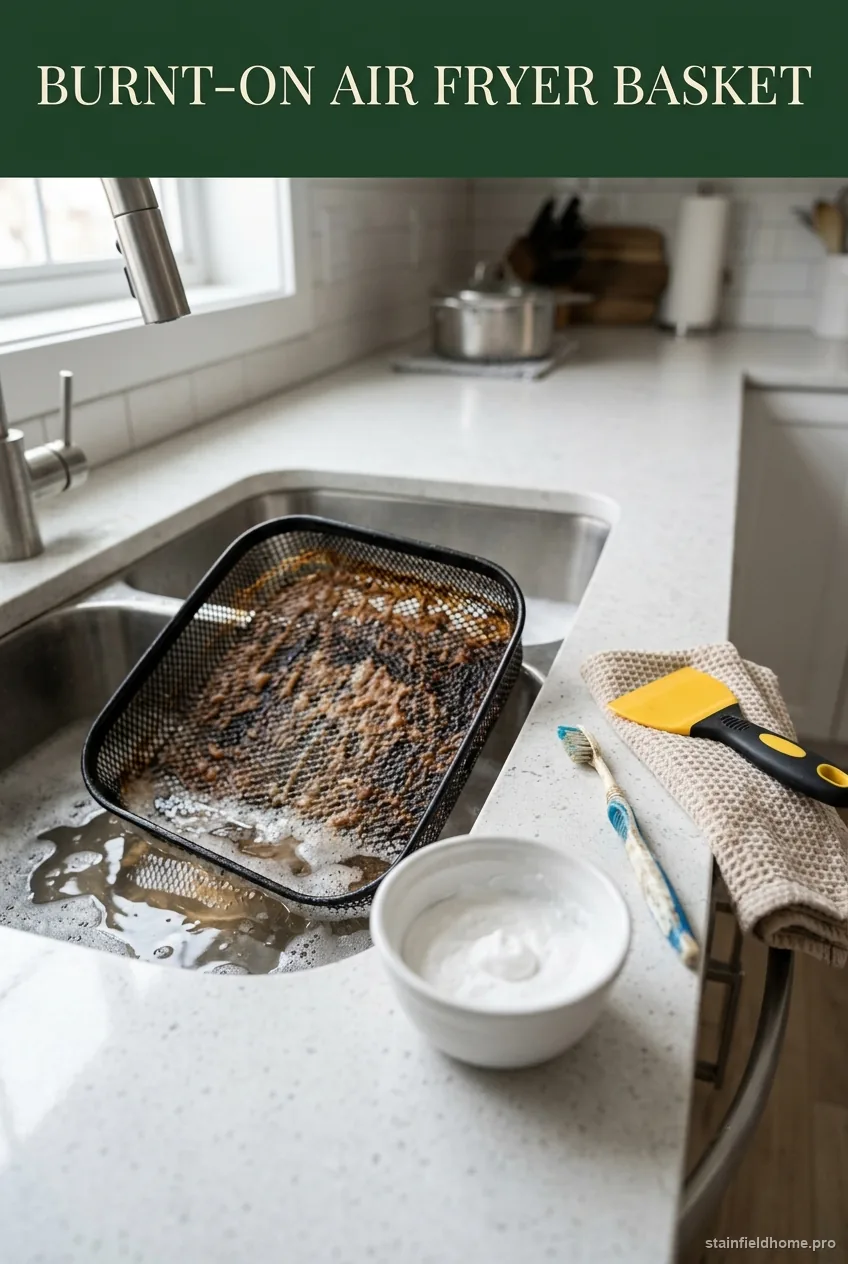
Burnt-on grease and food residue on Air fryer basket
How to Clean Burnt-On Grease From an Air Fryer Basket
Break down baked-on grease in an air fryer basket with a soak and baking-soda paste, without scratching the nonstick coating or getting water near the heating element.

Permanent hair dye on Bathroom countertop
How to Remove Box Hair Dye From a Bathroom Countertop
Get permanent hair color off quartz, laminate, cultured marble, or sealed stone before it sets, using the mildest method the surface allows and never an abrasive pad.

Yellowed tape adhesive on Painted wall
How to Remove Yellowed Tape Residue From a Painted Wall
Take aged, hardened tape adhesive off painted drywall without pulling the paint, using warm heat, an oil to soften the gum, and the gentlest possible scrape.