The quick answer
Scrape off any berry solids, then flush the stain from the back with cold water, never hot. For a fresh stain on sturdy cotton or linen, stretch the fabric over a bowl and pour boiling water through the back from a foot up. Otherwise pre-treat with white vinegar or lemon juice for fifteen minutes, then wash cold with an enzyme detergent. For anything left, soak in oxygen bleach for several hours. Do not put the item in the dryer until the stain is completely gone, because heat bonds the tannin permanently.
What you’ll need
- A spoon or dull knife
- Cold running water
- White vinegar or lemon juice
- Enzyme laundry detergent (ideally with pectinase)
- Oxygen bleach
- A kettle of boiling water and a heatproof bowl (for sturdy fabrics)
- A white cloth for checking transfer
Hi. I'm the berry juice on your shirt.
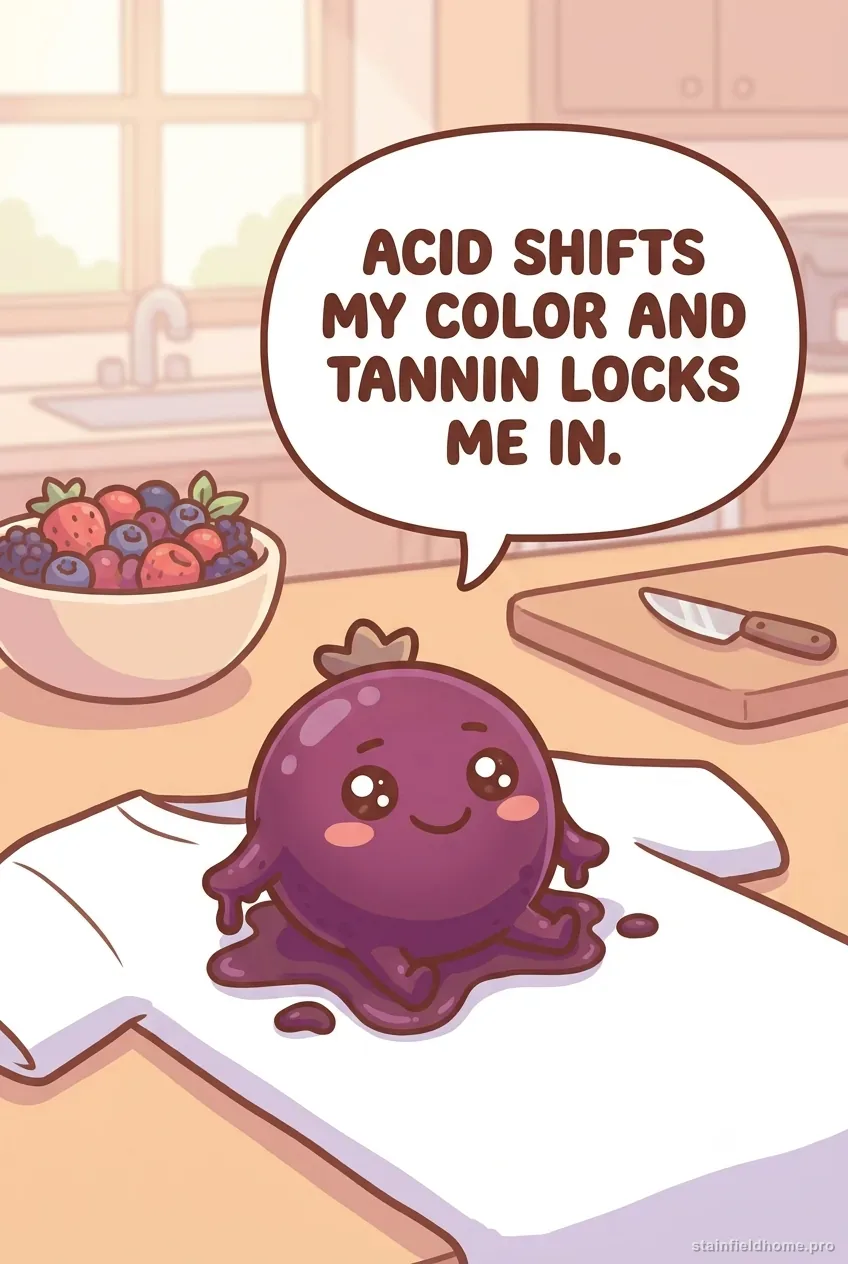
I'm the purple splash from a handful of blackberries or a spoonful of jam that missed the toast. My color is anthocyanin, a plant pigment that happens to be a natural pH indicator: dab acid on me and I turn red or pink, dab something alkaline on me and I shift toward blue, green, or grey. That colour-changing habit is useful to know, because it means the same stain can look different depending on what you have already put on it.
Behind the pigment, the darker berries, blackberry, blueberry, black raspberry, also carry tannin, the same fiber-grabbing compound that is in tea and red wine. Tannin is what turns a rinse-out stain into a set one. And berry juice usually carries sugar, which caramelizes under heat and helps lock everything in.
So the difficulty depends on the berry and the timing. A fresh strawberry smear is nearly all pigment and little tannin; it often rinses out cold. A dried blackberry stain that has been through a hot wash is pigment plus bonded tannin plus caramelized sugar, and that takes real work.

Can your fabric take boiling water?
Read the care label. The boiling-water method in the next section is only for sturdy cotton and linen that can take the heat, and only while the stain is fresh. Wool, silk, synthetics, and anything delicate skip it entirely.
Decide whether you are working on white or colored fabric. Whites can take an oxygen-bleach soak, a hydrogen-peroxide step, and sun. On colors, test any bleaching step on a hidden seam first and lean on enzyme detergent and repeated acid pre-treatments instead.
Keep the water cold for everything except the deliberate boiling-water flush. Hot tap water on an untreated berry stain sets the tannin and the sugar, which is the most common way people make it permanent by accident.
Rinse me from the back, cold
- 01
Lift off any berry pulp or skin with the edge of a spoon. Do not press it into the weave.
- 02
Turn the garment inside out and hold the back of the stain under cold running water, so the flow pushes the pigment out the way it came in rather than through the fabric.
- 03
Saturate the stain with white vinegar or lemon juice and let it sit fifteen minutes. The acid loosens the pigment and stabilizes it as the easier-to-remove red form.
- 04
Rinse again from the back with cold water, then rub a little enzyme detergent into the stain and leave it another fifteen minutes. If your stain treater contains pectinase, use that; berries are full of pectin and pectinase is made for exactly this.
- 05
Wash the item in cold water with an enzyme detergent, on its own or with a light load.
- 06
Air-dry and check in good light. If any purple, pink, or grey shadow remains, go to the set-stain section before you even think about the dryer.
The boiling-water trick, and when it works
For a fresh berry or fruit stain on cotton or linen that can take heat, this old method works almost unreasonably well. Stretch the stained fabric taut over a heatproof bowl and secure it with a rubber band so the stain is a flat drum surface. Put the kettle on, and once it is at a rolling boil, pour the water through the back of the stain from about a foot above it. The height gives the water force, and it flushes the pigment straight through and out before it can rebond.
The reason heat helps here but ruins the stain later is timing. On a fresh, untreated stain the pigment is still loose and the fast-moving hot water carries it away. Once the stain has dried, been rubbed in, or been through a warm wash, the tannin has already bonded to the fiber, and at that point heat only cooks the bond tighter. So: boiling water on a fresh stain, on sturdy cotton, poured through, yes. Boiling water on an old or already-washed stain, no.
Never use this on wool, silk, acetate, anything with spandex, or a garment that could shrink or that has a print. For those, stay with the cold-flush and acid method above.

If I've dried or been through the wash
A set berry stain is bonded tannin, and it needs oxidation and patience rather than more scrubbing. On white or tested colorfast fabric, mix a strong oxygen-bleach solution in warm, not hot, water and soak the whole item for several hours or overnight, then wash. Repeat the soak two or three times on separate days before giving up; each round lifts a little more.
For a faster attack on white cotton, mix one part dish soap with two parts 3% hydrogen peroxide, work it into the stain, and let it sit twenty to thirty minutes before rinsing and washing. Test this on colors first, because peroxide can lighten dye. An enzyme soak before the oxygen soak also helps, because the enzymes break down the sugar and pectin that are holding structure around the pigment.
Drying a treated white item in direct sun between rounds adds a real boost; UV light fades anthocyanin. A very old, dryer-set blueberry stain on colored fabric may only ever fade rather than disappear, and at some point a soft grey ghost is the honest final result.
Lemon, salt, vinegar, and white wine
Berry stains attract a lot of pantry remedies. Here is what each is actually worth.
Salt, poured onto a fresh spill, mostly just soaks up loose liquid. It is a fine first move at a picnic table when you have nothing else, but it does not remove the pigment; follow up properly at the sink.
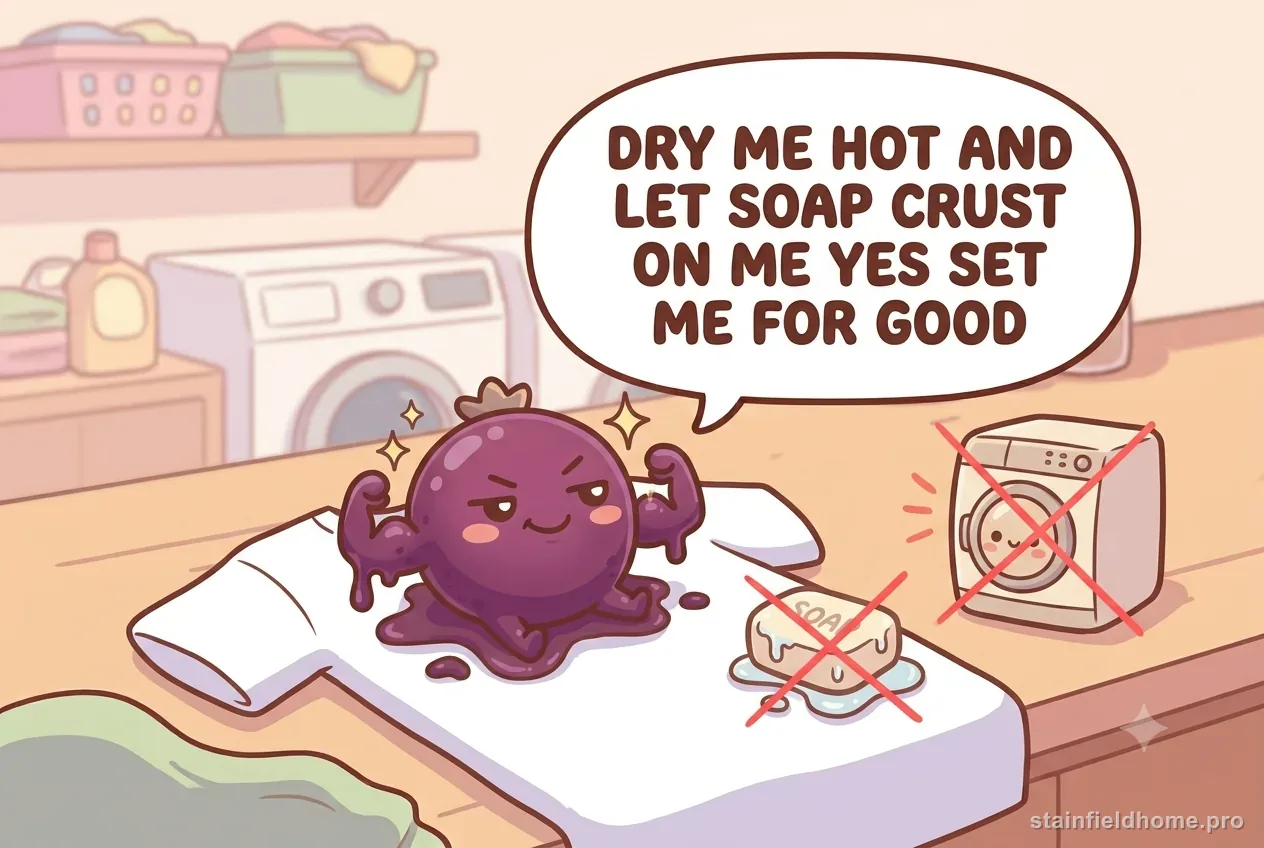
A bar of laundry soap or a heavy-duty pre-treat bar, rubbed into the wet stain, is a genuinely effective pre-wash step. Just do not let it dry on the fabric without rinsing, which can set the stain instead.
Ammonia, well diluted, shifts anthocyanin to its blue-green form and can help lift some stains, but it is risky on wool and silk, it can affect dyes, and it must never be mixed with any bleach. Rinse it out thoroughly.
Hydrogen peroxide is effective on whites, as covered above, and should be spot-tested on anything colored.
Rubbing alcohol on a cotton ball can carry off some pigment from a fresh spot on a colorfast fabric; test first.
Hairspray, the old ink trick, does nothing useful on a water-based berry stain and leaves a sticky residue. Skip it.
A milk soak is a folk remedy with very little behind it; the mild acidity of buttermilk is doing a weaker version of what vinegar does faster.
What turns juice into a set tannin stain
- Hot tap water or a warm wash on an untreated stain, which bonds the tannin and caramelizes the sugar
- The dryer before the stain is fully gone, which heat-sets whatever pigment is left
- Rubbing the stain hard, which drives the pigment deeper and frays the weave
- Chlorine bleach on colored fabric, which can turn a berry stain rust-brown instead of removing it
- The boiling-water method on an old stain, on wool or silk, or on anything synthetic
- Letting a bar-soap pre-treat dry on the fabric without rinsing it through
- Leaving a stained shirt in the laundry basket for a week, so a fresh stain becomes a bonded one
Cotton and linen versus wool, silk, and synthetics
Cotton and linen are the best case. They take the cold-flush and acid routine, they can handle the boiling-water flush while the stain is fresh, and whites among them take an oxygen soak and sun. Most fresh berry stains on cotton come out completely.
Polyester and poly blends hold the pigment more tightly and cannot take the boiling-water trick or very hot water. Lean on a long enzyme soak followed by an oxygen soak, repeated, and treat the stain the same day it happens, because polyester gives you a much smaller window.
Wool and silk get gentle handling only: cold water, a short soak in heavily diluted white vinegar, blotted not rubbed, then a cool rinse. No boiling water, no oxygen bleach, no ammonia. A set berry stain on wool or silk is a job for a dry cleaner, pointed out by name.
One quirk to expect on any fabric: because the pigment is a pH indicator, your stain may change color partway through treatment, going pinker with vinegar or greyer with detergent. That is normal and does not mean you have made it worse; keep working the stain and it will keep lifting.
Bibs, napkins, and quick rinses
Deal with me the same day. A fresh berry stain is loose pigment and rinses out; a week-old one is bonded tannin and fights back. If you cannot treat it properly right away, at least flush it with cold water from the back and keep it out of the dryer.
Keep an enzyme stain pen in the kitchen drawer and in your bag during berry season, and hit any splash within a minute or two.
When you are cooking with berries or eating them over a light-colored top, an apron or a napkin tucked at the collar does almost all the prevention there is. And check any berry-stained item in daylight before it goes anywhere near the dryer, because heat is the one step you cannot undo.
Common questions
FAQ
Does boiling water really remove berry stains?
Yes, on a fresh fruit or berry stain on sturdy cotton or linen. Stretch the fabric over a bowl and pour boiling water through the back from about a foot up; the force flushes the loose pigment straight out. It only works while the stain is fresh and never on wool, silk, synthetics, or a stain that has already dried or been washed, where heat sets it instead.
Why should I use cold water on berry stains and not hot?
Darker berries carry tannin that bonds to fibers under heat, and berry juice carries sugar that caramelizes when heated. Hot tap water or a warm wash on an untreated stain locks both in. The only heat that helps is a deliberate boiling-water flush through a fresh stain on sturdy cotton.
How do I remove a dried or set-in blueberry stain?
Soak the item in a strong oxygen-bleach solution in warm water for several hours or overnight, then wash, and repeat the soak two or three times on separate days. On white cotton, a paste of one part dish soap to two parts 3% hydrogen peroxide for thirty minutes also helps. An enzyme soak first breaks down the sugar and pectin holding the pigment in place.
My berry stain changed color while I was treating it. Did I ruin it?
No. Berry pigment is a natural pH indicator, so it turns pinker with acids like vinegar and bluer or greyer with alkaline cleaners like detergent or ammonia. The color shift is expected and does not mean the stain is set. Keep treating it and it will keep lifting.
Can I get a berry stain out after it has been washed and dried?
Sometimes, with repeated oxygen-bleach soaks and, on whites, a hydrogen-peroxide treatment and time in the sun. But the dryer heat-sets the tannin, so a dryer-set stain on colored fabric may only fade to a faint grey shadow rather than disappear completely.
Sources reviewed
Keep reading
Related guides

Sunscreen on Clothes
How to Remove Sunscreen Stains From Clothes
Sunscreen leaves two stains: a greasy one from its oils and a stubborn orange one where avobenzone meets iron in hard water. Cut the grease with dish soap and keep chlorine bleach and the dryer away.
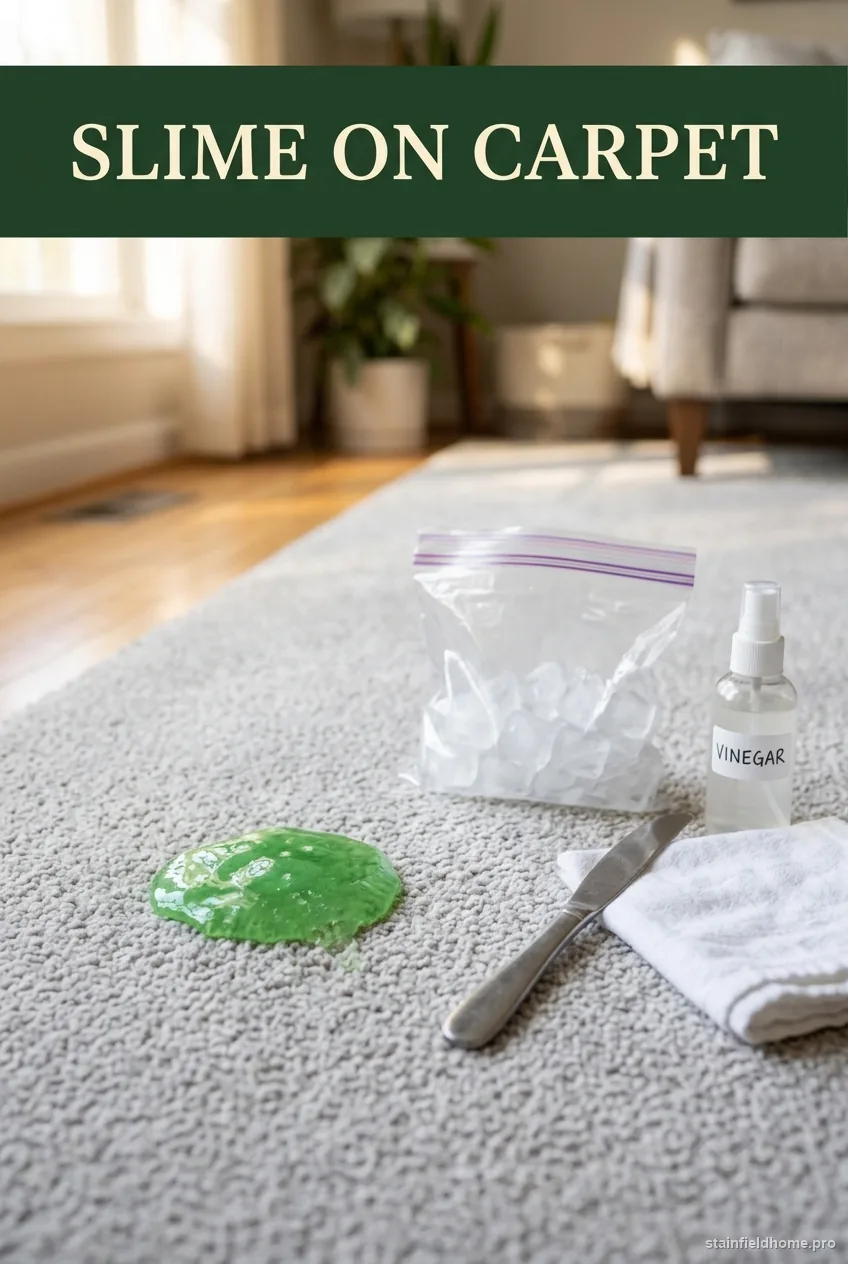
Slime on Carpet
How to Remove Slime From Carpet Without Damaging the Fibers
Lift dried or fresh slime out of carpet fibers with an ice-and-scrape method plus a vinegar or rubbing alcohol rinse, without soaking the backing or bleaching the color.
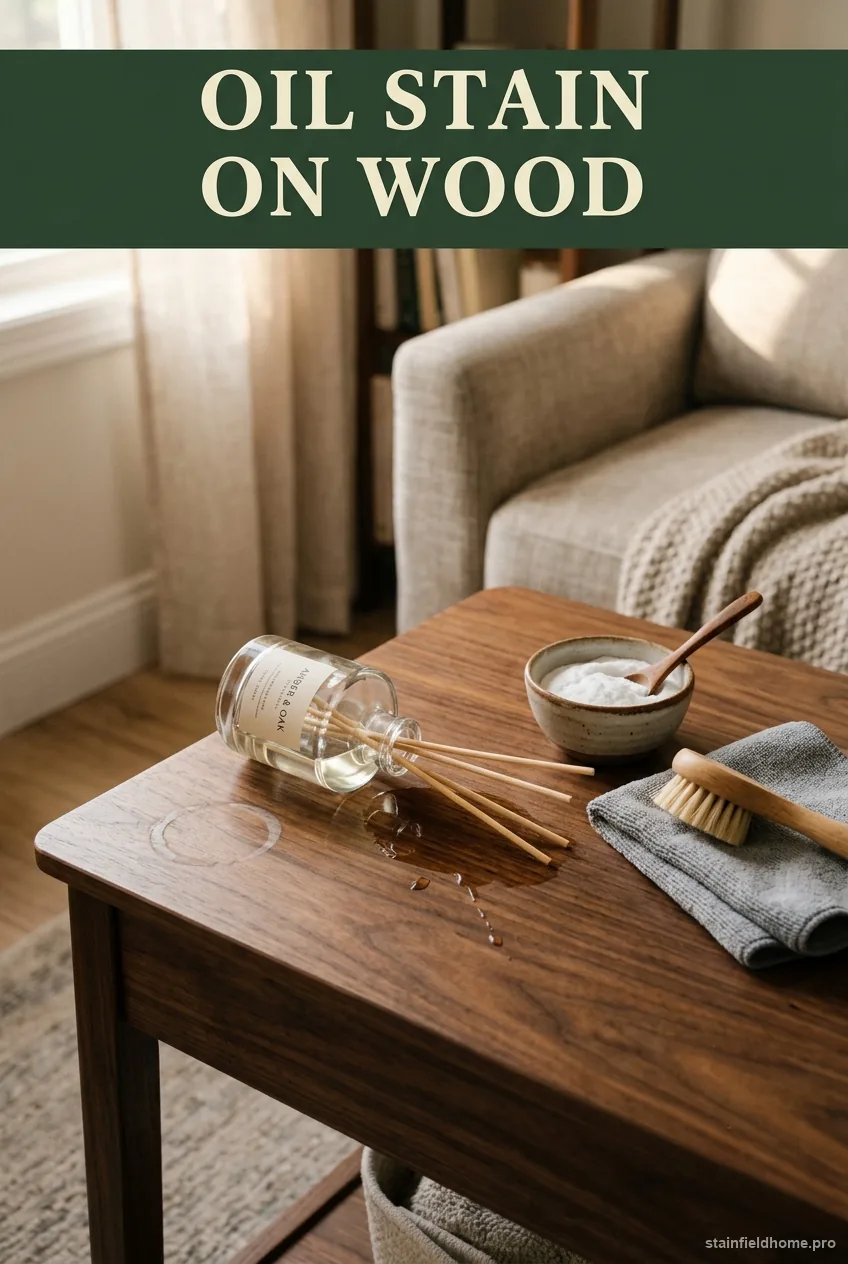
Essential oil and reed-diffuser oil on Finished wood furniture
How to Remove Essential Oil and Diffuser Stains From Wood Furniture
Blot a diffuser-oil spill on finished wood, use a cautious absorbent step, and recognize when the finish needs a furniture repair professional.
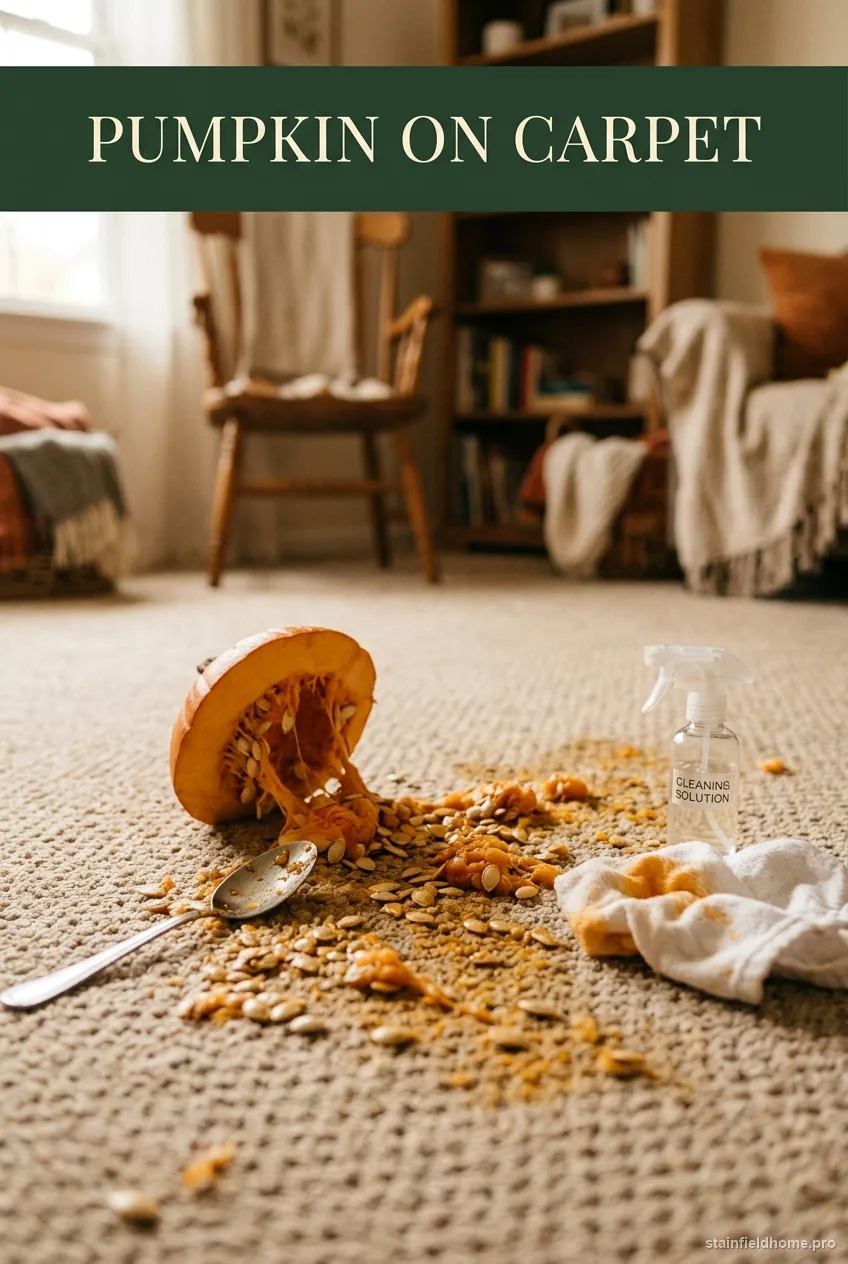
Pumpkin (carving, decorating, or puree) on Carpet
How to Remove Pumpkin Stains From Carpet
Remove pumpkin pulp and treat any remaining orange mark on carpet with a careful, low-moisture sequence that follows the carpet maker's guidance.