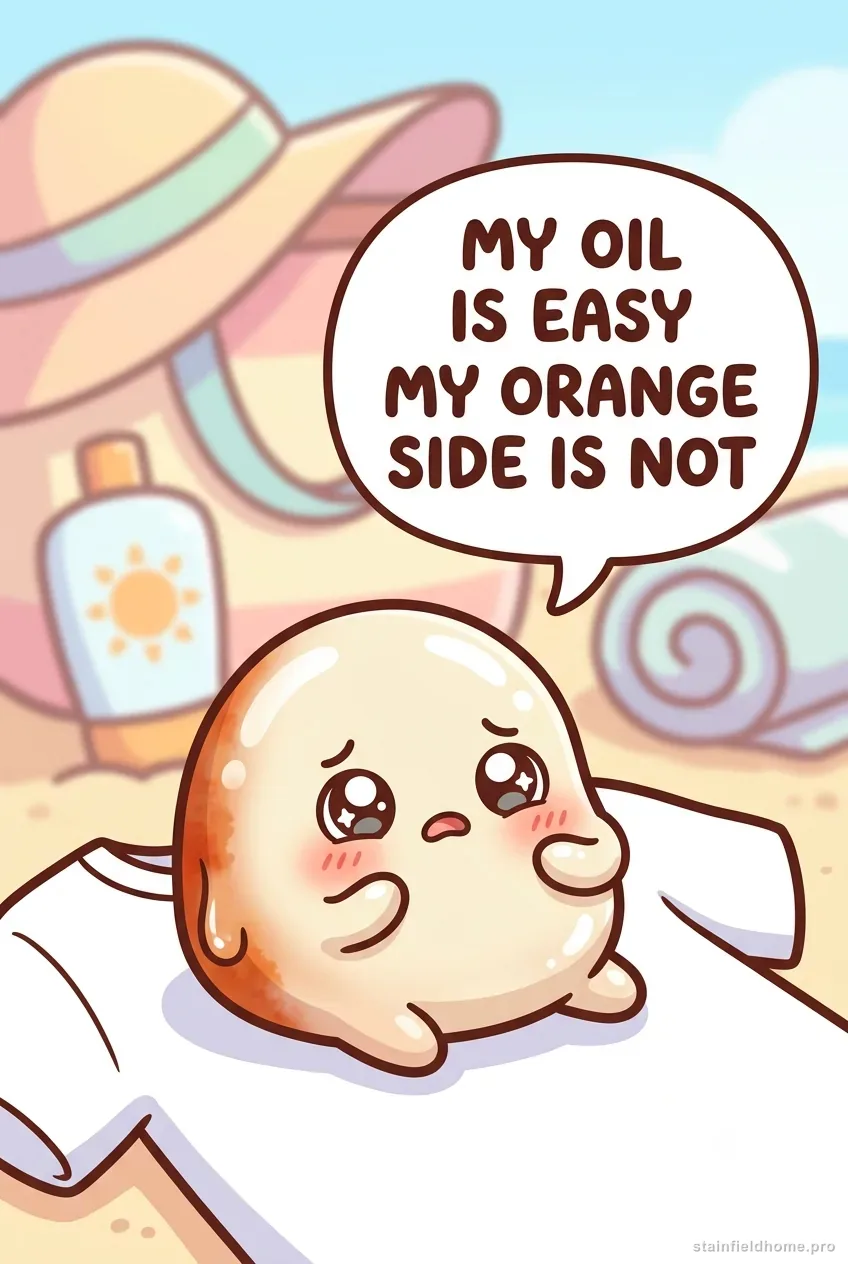
The quick answer
Scrape off the excess, then work grease-cutting dish soap into the stain and flush it from the back with the hottest water the care label allows. Wash right away and check before drying. For an orange or rust-colored mark, which is avobenzone reacting with iron in hard water, never use chlorine bleach and be cautious even with oxygen bleach; try repeated dish-soap-and-hot-water rounds, a fabric-safe rust remover on whites, or lemon juice and salt in the sun. Heat from the dryer turns a treatable stain permanent, so keep the item out of the dryer until it is completely gone.
What you’ll need
- A spoon or dull knife
- Grease-cutting liquid dish soap
- The hottest water the care label allows
- Oxygen bleach (for whites and tested colorfast fabric)
- A fabric-safe rust remover (citric or oxalic acid based)
- Lemon juice and table salt
- A white cloth for checking transfer
Hi. I'm the sunscreen on your shirt.
I leave two different marks and people usually only notice one of them at a time. The first is a greasy, slightly darker, translucent stain, or a chalky white cast if the sunscreen was a mineral formula. That is the oils, waxes, and emulsifiers that carry the sunscreen, plus zinc oxide or titanium dioxide if it was a mineral block. Ordinary grease-stain treatment handles it.
The second is the one that ruins clothes: a orange or rust-colored blotch, often on a white shirt or a swimsuit, that appears after washing rather than right away. That is avobenzone, a common chemical UV filter, reacting with iron dissolved in hard or well water. The reaction makes a rust-colored compound that bonds to the fabric, and it is far more stubborn than the grease.
Knowing which one you have matters, because the orange stain has a rule the grease stain does not: keep all bleach, and especially chlorine bleach, away from it, because bleach reacts with avobenzone and can turn a faint orange cast into a permanent dark brown one.
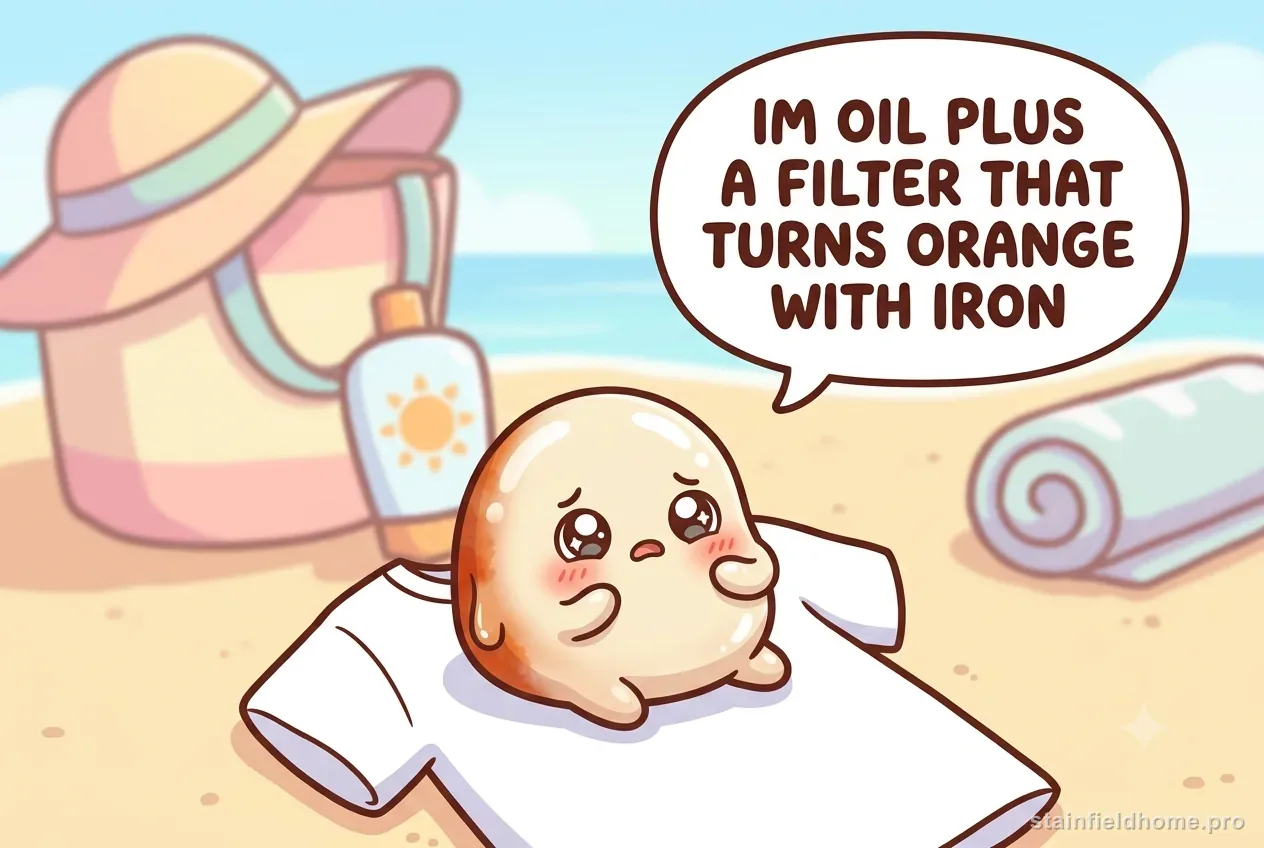
Greasy stain, orange stain, or both?
Check the care label for the hottest water the fabric can take. Grease needs heat to shift, so you want the top of that range, but never hotter than the label allows, and never hot water on the orange stain until the grease is gone.
Work out your water. If you are on a private well or your area has hard water, or if the stain only turned orange in the wash, iron is your problem and the plain grease method will not be enough. A final rinse in distilled or softened water, or treating and rinsing the stain fully before it goes in the machine, makes a real difference.
Never reach for chlorine bleach on a sunscreen stain, and test oxygen bleach on a hidden area first. Oxygen bleach is the usual recommendation for the orange discoloration, but some fabrics and formulas react to it by darkening instead of lightening, so a hidden-spot test tells you which way yours will go before you commit the whole garment.
The greasy stain: cut the oil first
- 01
Lift off any thick smear of lotion with the edge of a spoon. Do not rub it in.
- 02
Put a generous drop of grease-cutting dish soap directly on the stain, front and back, and work it in with your fingertips for a minute. Dish soap is built to break exactly this kind of oil.
- 03
Let the soap sit on the fabric for ten to fifteen minutes so it can surround the oil.
- 04
Turn the garment inside out and flush the stain from the back with the hottest water the care label allows, pushing the loosened oil out the way it came in.
- 05
Look at the spot in good light while it is wet. If it still looks greasy or darker than the fabric around it, repeat the soap and hot-water step before you go any further.
- 06
Wash the item on its own or with a small load, in the hottest safe water, with your normal detergent. Then air-dry it and inspect. Do not put it in the dryer until you are sure the stain is gone, because dryer heat sets any grease that is left.

The orange stain: the hard one
An orange or rust-colored mark is an iron stain as much as a sunscreen stain, so it responds to the tools that lift rust, not the ones that lift grease. Start by making sure the greasy component is dealt with using the dish-soap step above, because leftover oil shields the discoloration from anything you do next.
Then, on white or confirmed colorfast fabric, try a fabric-safe rust remover, the citric-acid or oxalic-acid type sold for well-water rust stains on laundry. Follow its label exactly, keep it off colored fabric unless the label clears it, and rinse very thoroughly afterward. A gentler acid route that is safe on more fabrics is to saturate the stain with lemon juice, sprinkle it heavily with table salt, and lay the item in direct sun for a few hours, re-wetting with lemon juice as it dries.
Oxygen bleach can work here, but only after your hidden-area test came back clean. If it did, mix a strong solution, submerge the stained area, and leave it six to eight hours or overnight. Repeat up to three times on separate days before deciding the stain is set. If at any point the orange goes darker or browner instead of lighter, stop; that fabric or that sunscreen is one of the ones that reacts badly, and more bleach will only make it worse.
Through all of this, keep the item away from the dryer, the sun-drying step aside, and away from hot water once the grease is gone. Heat is what converts a fading orange cast into a permanent one.
Dish soap, degreaser, and rust removers
Sunscreen-stain advice is all over the internet and some of it is actively harmful. Here is the honest read.
Chlorine bleach is the one to never use. It reacts with avobenzone and turns a light orange discoloration into a set brown mark. This is the single most common way people ruin a shirt trying to fix it.
Oxygen bleach is the standard recommendation for the orange stain and often works, but a real minority of fabric-and-sunscreen combinations darken under it instead. Always test a hidden area first, and stop if it goes browner.
A fabric-safe rust remover targets the iron half of the orange stain directly and is the most effective tool for it on whites, used strictly per its label.
Lemon juice and salt in the sun is a gentle acid-and-UV method that is safe on far more fabrics than the rust remover, though it can lighten dark dyes, so keep it to whites and light colors.
White vinegar as a soak or a rinse-aid helps a little with the mineral and iron film and is low risk; it will not clear a set orange stain on its own.
Rubbing alcohol and enzyme pre-treat sprays both help the greasy component on a fresh stain and do nothing for the orange. A baking soda paste absorbs fresh oil and is a fine first move on the beach, nothing more.
If it's already been washed and dried
A greasy sunscreen stain that survived a wash and a dryer cycle can usually still be saved, it just needs the dish-soap-and-hot-water routine repeated two or three times, with a soak in enzyme detergent in between. The dryer set the oil, but oil is still oil, and dish soap still breaks it.
An orange avobenzone stain that has been through the dryer is a different story, and it is worth being honest: heat-set iron discoloration is often permanent. You can try the rust-remover route and repeated acid-and-sun treatments, and you may lighten it, but a fully set orange mark on a favorite shirt sometimes just wins. The lesson for next time is to always check for it before the dryer, every single time.
What locks in the orange
- Chlorine bleach on any sunscreen stain, which reacts with avobenzone and sets a brown mark
- The dryer, or any hot appliance, before the stain is completely gone; heat fixes both the grease and the orange
- Hot water on the orange stain while greasy residue is still there, which drives the iron compound deeper
- Ignoring hard or well water, so the orange keeps re-forming every wash no matter how well you pre-treat
- Oxygen bleach on a fabric you did not test, when that fabric is one that darkens instead of lightening
- Rubbing the stain hard, which spreads the oil and frays the weave without lifting the discoloration
- Letting a beach towel or swimsuit sit balled up and damp in a bag for days before washing

Mineral versus chemical, cotton versus synthetic
On white cotton the grease comes out readily with dish soap and hot water, and the orange stain has the best odds because you can use the rust remover and a long oxygen soak. On colored cotton, skip the rust remover unless its label allows colors, lean on repeated dish soap and a tested oxygen soak, and accept that a faint orange shadow may stay.
Swimsuits, rash guards, and stretch fabric are usually nylon or polyester with spandex. They hold the oily filters stubbornly, they are heat-sensitive so you cannot use very hot water, and chlorinated pool water plus sunscreen makes the orange worse. Rinse them in fresh water the moment you are out, treat with dish soap the same day, and always air-dry.
Technical and UPF outdoor fabric often has a water-repellent finish that makes the sunscreen bead and sit on the surface, which is good, but also makes it resist water-based cleaning, so work the dish soap in well and give it a longer dwell.
The sunscreen itself changes the stain. Mineral formulas with zinc oxide or titanium dioxide leave more of a chalky white cast and far less orange, and they respond well to dish soap plus an oxygen soak. Chemical formulas with avobenzone are the ones that turn orange in hard water. Spray sunscreens spread a wider, thinner film that gets onto more of the garment; lotions leave a heavier, more concentrated blob.
Letting sunscreen soak in first
Put sunscreen on fifteen to thirty minutes before you get dressed, and rub it in until it is fully absorbed rather than leaving a wet film. Most fabric transfer is simply wet product rubbing off.
Blot any thick excess off your skin with a tissue before pulling clothes on, especially at the neckline, shoulders, and waistband where fabric meets skin.
Wash beach and pool clothes the same day rather than letting them sit damp in a bag. If you are on hard or well water, add a water softener to the wash or do a final rinse with distilled water, which is what stops the orange from forming in the first place.
If a mineral sunscreen works for your skin, it is the stain-friendly choice: it leaves a white mark instead of an orange one, and white marks come out.
Common questions
FAQ
Why did my sunscreen stain turn orange after washing?
Avobenzone, a chemical UV filter in most non-mineral sunscreens, reacts with iron dissolved in hard or well water to form a rust-colored compound that bonds to fabric. It usually appears after the wash rather than at the moment of the spill. Treat it as an iron stain, not a grease stain, and keep all bleach away from it.
Can I use bleach on a sunscreen stain?
Never chlorine bleach; it reacts with avobenzone and turns a light orange mark into a permanent brown one. Oxygen bleach is the usual recommendation for the orange discoloration but some fabrics darken under it, so test a hidden area first and stop if it goes browner instead of lighter.
How do I get a greasy sunscreen stain out of clothes?
Scrape off the excess, work grease-cutting dish soap into the mark, let it sit ten to fifteen minutes, then flush from the back with the hottest water the care label allows and wash. Check before drying and repeat if it still looks greasy, because dryer heat sets what is left.
Is a heat-set orange sunscreen stain reversible?
Often not fully. Once the dryer has set an avobenzone-iron stain it behaves like set rust. A fabric-safe rust remover and repeated lemon-juice-and-sun treatments may lighten it, but a fully set orange mark is sometimes permanent. Always inspect for it before drying.
Does mineral sunscreen stain less than chemical sunscreen?
It stains differently. Mineral sunscreen with zinc oxide or titanium dioxide leaves a chalky white cast rather than an orange one, and that white cast comes out with dish soap and an oxygen soak. It is the avobenzone in chemical sunscreens that causes the hard-to-remove orange discoloration.
Sources reviewed
Keep reading
Related guides
Berry juice on Clothes
How to Remove Berry Juice Stains From Clothes
Berry juice is anthocyanin pigment, a natural pH indicator, plus tannin that bonds to fibers. Flush it cold, shift it with acid, and finish with an oxygen soak. Heat is what makes it permanent.
Slime on Carpet
How to Remove Slime From Carpet Without Damaging the Fibers
Lift dried or fresh slime out of carpet fibers with an ice-and-scrape method plus a vinegar or rubbing alcohol rinse, without soaking the backing or bleaching the color.
Essential oil and reed-diffuser oil on Finished wood furniture
How to Remove Essential Oil and Diffuser Stains From Wood Furniture
Blot a diffuser-oil spill on finished wood, use a cautious absorbent step, and recognize when the finish needs a furniture repair professional.
Pumpkin (carving, decorating, or puree) on Carpet
How to Remove Pumpkin Stains From Carpet
Remove pumpkin pulp and treat any remaining orange mark on carpet with a careful, low-moisture sequence that follows the carpet maker's guidance.