The quick answer
Protect furniture and floors. Identify the paint sheen and whether the mark is dry soot or a greasy shadow. Lift loose soot with a dry soot sponge in light, one-direction strokes. Test any damp method in a hidden spot. If the finish tolerates it, use a barely damp soft cloth, then blot dry. Stop if paint transfers or burnishes.
What you’ll need
- Drop cloth
- Clean soft-brush vacuum attachment
- Dry chemical soot sponge
- White microfiber cloths
- Mild soap if paint maker permits
- Small bowl
- Clean dry towel
Tell candle soot from a wax mark or broader smoke damage
Candle soot usually looks like a fine gray or black smudge or plume above or beside a candle. It may brush off as dry powder at first, then leave a darker, slightly greasy shadow where particles have settled into textured paint. A wax drip is a separate raised material and should not be treated by rubbing it into the wall. If the mark is sticky, colored, or clearly wax, identify that material before following a soot method.
Check how much wall is affected and whether the mark is isolated. A small candle plume may be a surface deposit. Broad blackening, smoke throughout a room, a persistent odor, or soot from a fireplace or heating appliance may signal a larger problem that needs professional assessment. Do not dry-wipe a large soot field and spread particles across nearby rooms. Protect furniture and floors and limit disturbance until you know the source.
If the candle is still burning or the holder is warm, put the flame out safely and let the wax and container cool before moving anything. Do not clean around an active flame or place a drop cloth close to it. Once the source is cold, move the candle and holder away from the wall. If soot returns after cleaning, check drafts, wick length, and placement before making another pass.
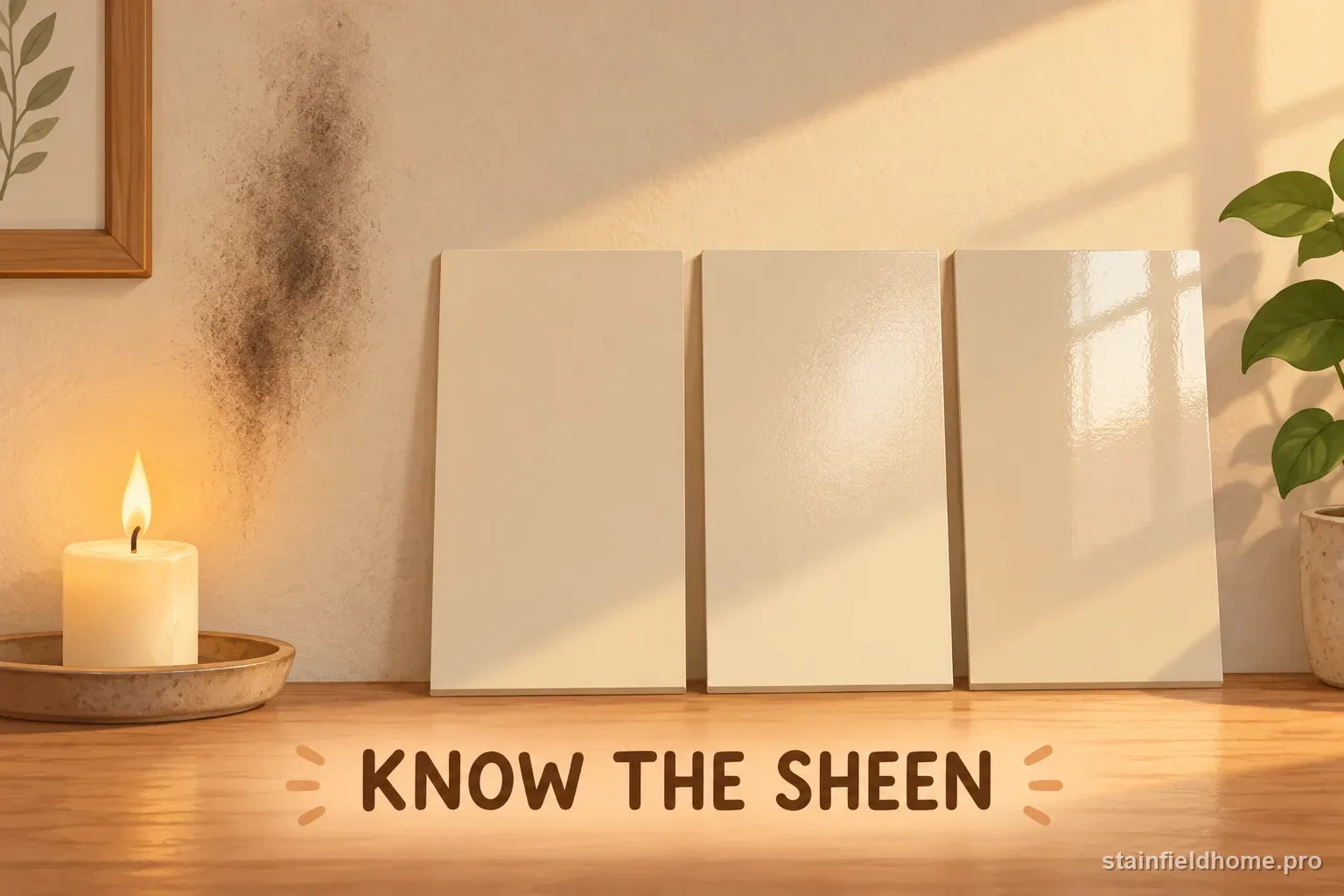
Paint finish matters as much as the stain. Flat and matte paint can burnish, lighten, or rub away more easily than a tougher satin or semi-gloss finish. Freshly painted walls may not be fully cured. If you know the paint brand or color, check its care guidance; if the coating is chalky, peeling, wallpapered, or unknown, avoid wet cleaning until the surface is assessed.
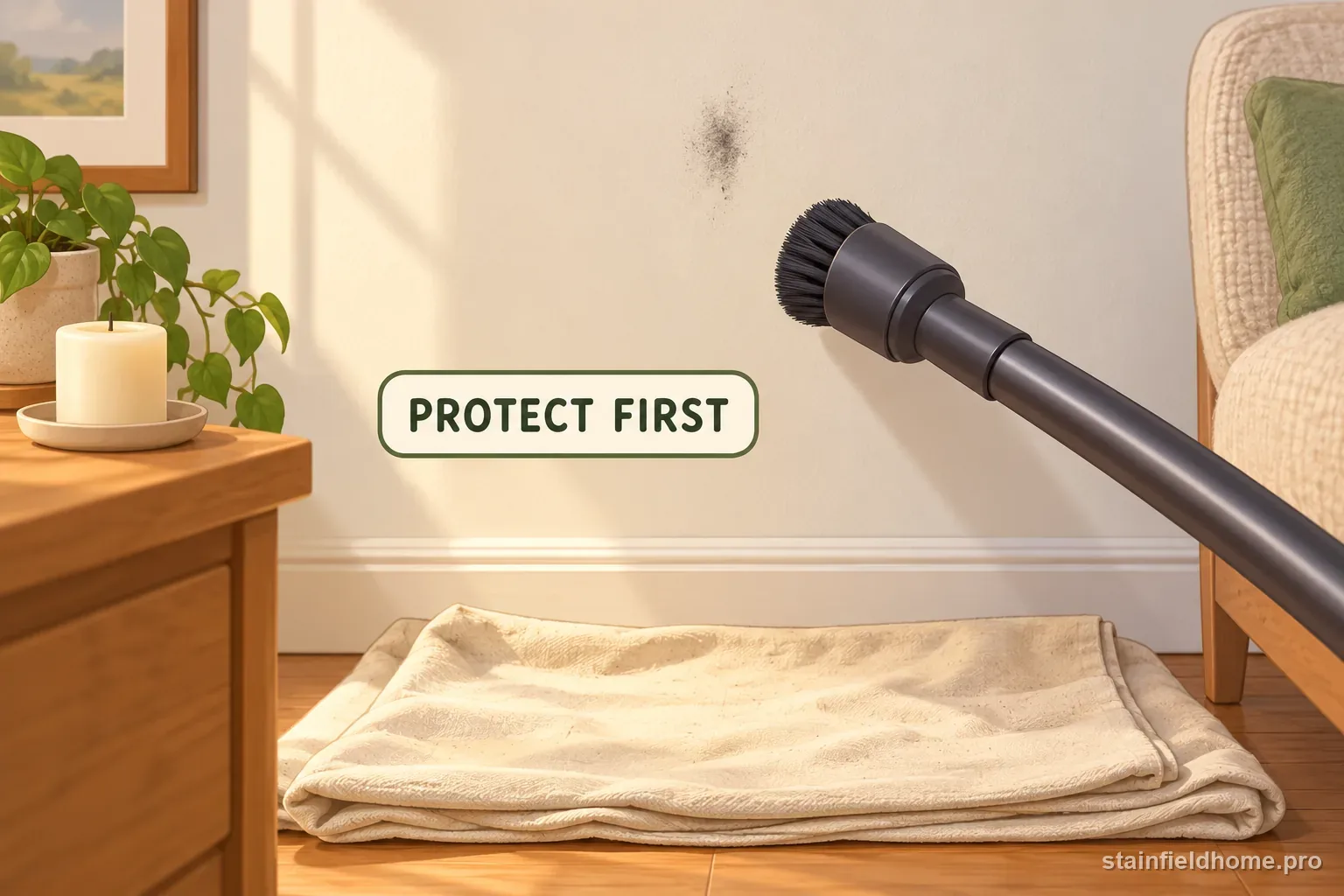
Protect the room and choose a low-risk first move
Move nearby objects or cover them with a washable sheet. Lay a drop cloth below the mark and keep a spare cloth ready for loose particles. If you use a vacuum, fit a clean soft brush and hold it just off the wall so the bristles do not grind soot into the paint. Work gently from the outer edge toward the center of a small mark, without dragging a hose or nozzle across the wall.
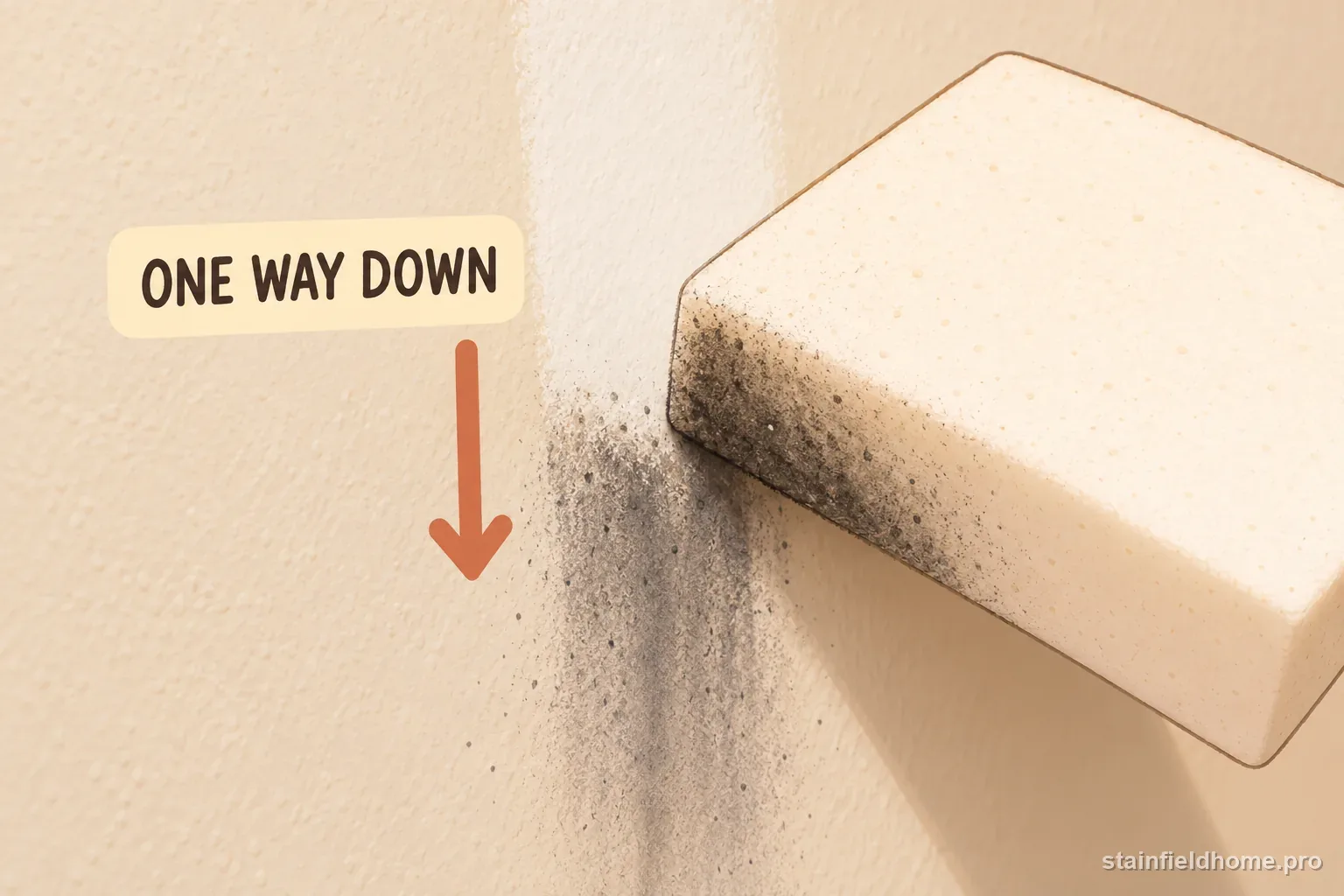
A dry chemical sponge, sometimes sold as a soot sponge, is designed to pick up dry particles without adding water. Use it clean and dry, following the sponge package directions. Do not wet it as if it were a kitchen sponge. Make light downward or short one-direction passes, and move to a clean sponge face each time. When a face turns dark, cut it away if the maker allows, or replace the sponge.
Do not start with a damp rag, spray cleaner, vinegar, ammonia, baking-soda paste, or a melamine sponge. Moisture can turn loose soot into a smear, and abrasive rubbing can change the paint sheen before the stain lifts. The dry first step is not just a general cleaning preference: it lets you remove the transferable powder before deciding whether the remaining shadow needs a carefully tested damp method.
| What you see | Safer next step | Avoid |
|---|---|---|
| Loose gray powder | Lift gently with a dry soot sponge | Damp cloth or broad wiping |
| Small dark shadow | Test paint, then mild damp cloth if allowed | Strong degreaser or scrubbing |
| Flat or matte paint | Use very light pressure and minimal moisture | Magic Eraser or repeated passes |
| Fresh, chalking, or peeling paint | Stop and ask the paint maker | Any wet cleaning or abrasion |
| Large soot area or odor | Contact a qualified restoration cleaner | Treating it like a spot stain |
Lift dry soot before you try a wet cleaner
Stand close enough to control the sponge but do not lean a heavy hand against the wall. Start above the visible mark and draw the dry sponge down in short, overlapping strokes. Keep each pass moving in one direction. Avoid a circular motion, which can spread soot sideways or polish one patch of matte paint. Check the sponge often and change to an unused surface before returning to a cleaner part of the mark.
If you use a soft brush attachment instead, let suction collect loose particles and keep the tool just off the surface. Do not press the brush into textured paint or sweep with a broom. A brush can push soot into pits and grooves, especially if its bristles are stiff or dusty. For a textured wall, work more slowly and stop if the brush catches, sheds bristles, or moves the finish.
After the dry pass, pause and inspect the wall under indirect light. If the soot has lifted without smearing and the paint still looks uniform, continue only as needed. If a gray shadow remains, do not keep rubbing with a loaded sponge. A faint remnant may be embedded in the paint, and repeated dry abrasion can enlarge a dull or shiny patch even when some black color comes away.
Use a purpose-made dry soot sponge, not a wet kitchen sponge, melamine block, or ordinary household eraser. A soot sponge collects particles on its surface, so pressing harder after it turns gray may redeposit them. Follow its package for trimming or cleaning the block. Keep the sponge dry and store it separately after use. If it crumbles, sheds, or leaves a pale deposit on the paint, stop and check the wall before trying again.
Test a hidden area and a small part of the stain
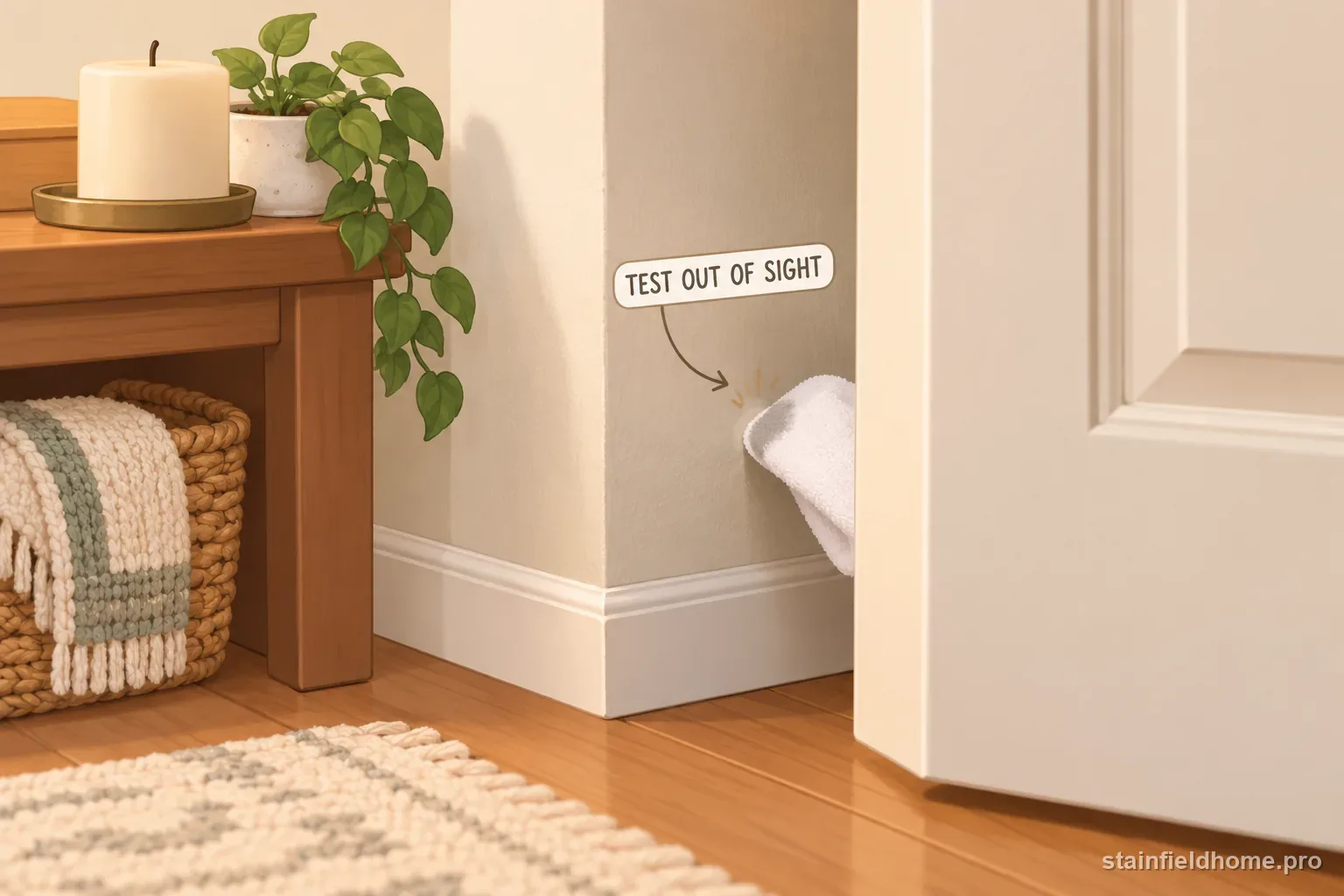
Choose an inconspicuous area behind a door or near furniture, but use the same paint and finish as the stained section. First test a clean white cloth with plain water, wrung until barely damp. If the paint maker allows a mild soap solution for that finish, test it separately with a fresh cloth. Apply only light pressure, then blot the test patch dry and wait until it looks fully dry before judging the color and sheen.
Look for paint pigment on the cloth, a lighter or shinier patch, tackiness, streaking, or a roughened surface. Any of these is a stop signal. A wet wall can look darker temporarily, so do not judge the color until it dries. If you cannot identify the paint finish or the test spot changes, skip wet treatment and ask the paint maker or a painter what the coating can tolerate.
If the hidden test is clean and unchanged, repeat it at the very edge of the soot shadow. Check whether a small amount transfers to the cloth or the smudge starts to lighten. Do not treat the whole plume until this second test passes. Keep the cleaner simple and make one change at a time; switching between vinegar, alcohol, degreaser, and dish soap can leave residues and make paint damage harder to diagnose.
Use a barely damp cloth only for a paint-safe shadow
If the dry sponge removes most of the soot and your test passes, mix only the mild cleaner allowed by the paint maker. Sherwin-Williams and Benjamin Moore describe gentle, low-moisture cleaning for painted walls, but their routine wall-care advice does not guarantee that every matte, aged, or specialty finish will tolerate a soot treatment. When in doubt, the paint label or manufacturer takes priority over a generic recipe.
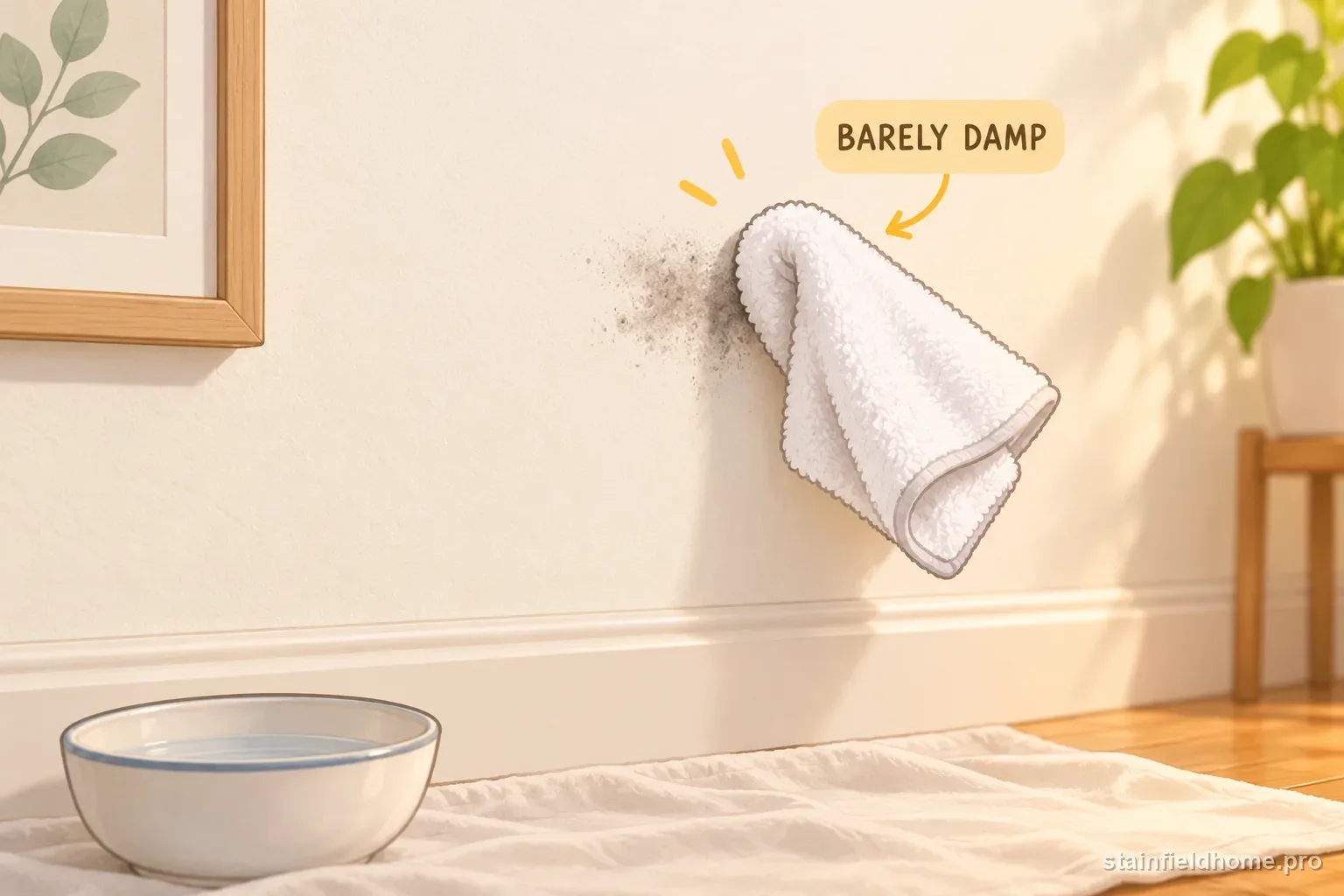
Dampen a clean white microfiber cloth and wring it thoroughly. It should feel cool and barely damp, not drip. Press or make a short gentle pass over a small section at the edge of the mark, using a clean cloth face each time. Do not spray the wall directly. Keep water away from seams, outlets, switches, and unsealed edges; do not let it run down the wall or sit on drywall.
If the soot lightens without color transfer or a sheen change, repeat once with a fresh cloth. Then wipe the area with a second cloth dampened with plain water only if the cleaner directions call for rinsing. Blot dry promptly with a soft towel and let the wall air-dry before checking. If the mark smears, the finish looks different, or moisture darkens the drywall, stop and let it dry instead of adding more solution.
Check the wall after drying and decide whether to stop
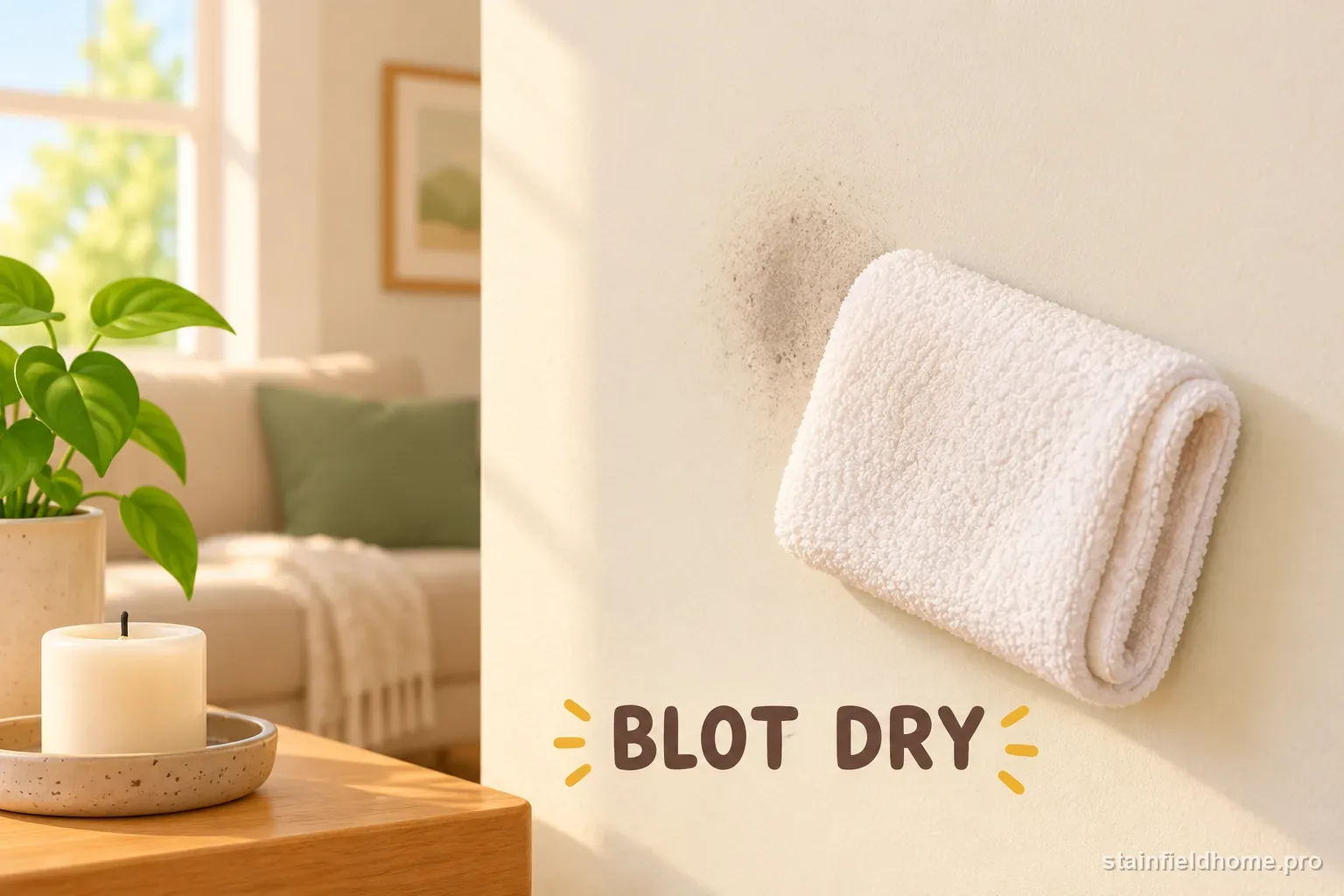
Look at the spot from several feet away once the wall is completely dry. Compare the color and sheen with an untouched area at the same height. A pale halo may be cleaner residue, paint burnishing, or a shadow remaining under the finish; adding more pressure will not tell you which one it is. Keep a note of the cloth, cleaner, and number of passes you used in case you need advice from the paint manufacturer.
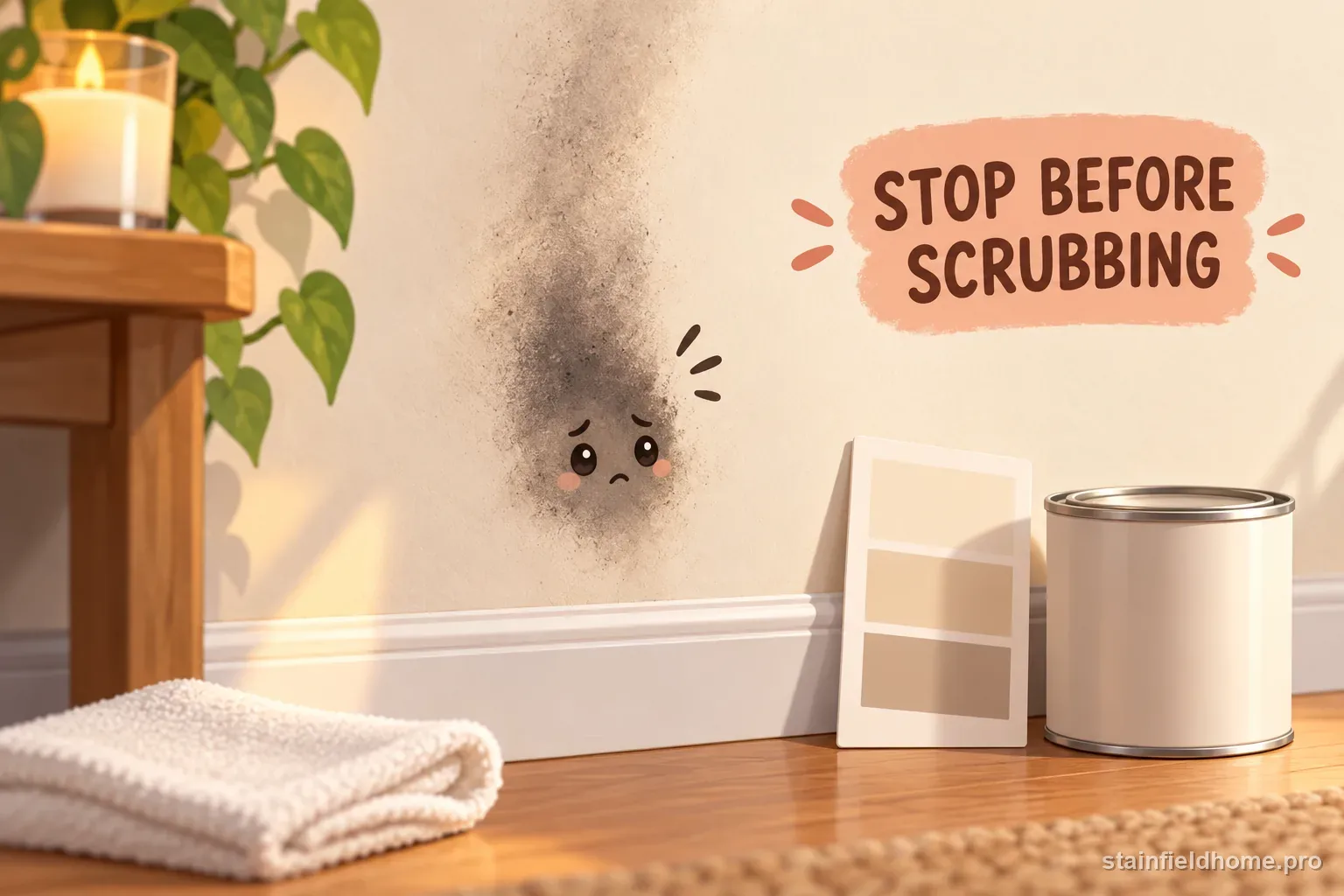
Stop if paint color transfers, the surface becomes shiny or dull, a raised texture changes, the wall feels soft, or the stain gets larger. Also stop after a dry sponge and one gentle damp pass if the soot shadow remains. Repeating the same action can wear the finish without removing pigment that has bonded to it. For a stubborn isolated shadow, a painter may recommend a compatible stain-blocking primer and a small paint touch-up.
Call a qualified restoration cleaner for broad soot, smoky odor through a room, soot on porous or damaged surfaces, or residue from a fire beyond one candle. Wear appropriate protection and follow product labels if a professional directs a small home cleanup; do not dry-brush a heavy deposit into the air. If anyone has symptoms or the source may involve an appliance, stop cleaning and address the source before cosmetic work.
If cleaning removes paint or leaves a permanent shadow, do not paint directly over loose soot. A painter may first seal a clean, dry surface with a stain-blocking primer suited to the existing wall and apply a matched topcoat. Test a small repair because fresh paint can dry to a different sheen or color than an older wall. For a large plume, a visible room, or uncertain smoke source, get an assessment before deciding between cleaning and repainting.
Prevent candle soot without damaging the wall
A plume often builds gradually, so inspect the wall near frequently used candles before a gray band becomes obvious. Keep candle holders on stable, heat-resistant surfaces and away from drafts such as open windows, fans, and vents. The National Candle Association advises trimming the wick to about one-quarter inch before each use; follow the candle maker's instructions and keep a burning candle in view.
If a candle flame flickers strongly or leaves soot on the holder or nearby wall, extinguish it safely and let the wax cool before checking the wick and placement. Do not move a candle while the wax is liquid. A clean wall does not solve a soot-producing candle or a ventilation problem, so fix the source before repainting or cleaning again.
For walls that need frequent cleaning, keep the paint maker, sheen, and color information with household records. Use the least abrasive method that works, and test before cleaning a broad area. If cleaning changes the sheen, a small carefully matched touch-up may be more even than another round of scrubbing.
Common questions
FAQ
Does Dawn dish soap remove candle soot from walls?
A mild soap solution may help with a small remaining shadow after dry soot is lifted, if the paint maker allows it. Test first and use a barely damp cloth.
Should I wet a wall before removing soot?
No. Remove loose soot with a dry soot sponge first. Moisture can smear particles, so test a damp method only after the dry pass and only if the paint finish allows it.
Can I use a Magic Eraser on candle soot?
Avoid it as a first step. Melamine foam is abrasive and can dull flat or matte paint. Use a dry soot sponge and test the finish before any damp cleaning.
Can I paint over candle soot?
Do not paint directly over residue. After cleaning and drying, ask a painter about a compatible stain-blocking primer if a shadow remains or the finish is damaged.
How do I keep candle soot from coming back?
Follow the candle maker's directions, trim the wick as recommended, and keep the candle away from drafts. Extinguish it if the flame smokes or soot appears.
Sources reviewed
Keep reading
Related guides

Crayon on Painted wall
How to Remove Crayon From a Painted Wall
Remove waxy crayon from painted walls with a small finish test and mild cleaning, avoiding scuffs and shiny patches on flat paint.
Permanent marker on Painted wall
How to Remove Permanent Marker From a Painted Wall
Fade permanent marker on painted walls with controlled dabbing and a finish test; switch to stain-blocking primer if cleaning risks paint.

Yellowed tape adhesive on Painted wall
How to Remove Yellowed Tape Residue From a Painted Wall
Take aged, hardened tape adhesive off painted drywall without pulling the paint, using warm heat, an oil to soften the gum, and the gentlest possible scrape.
Wood smoke soot on Brick fireplace
Remove Wood Smoke Soot From Brick
Lift wood-smoke soot from a brick fireplace with careful dry-first steps, a small test, and clear stop points for mortar, finish, and creosote.