The quick answer
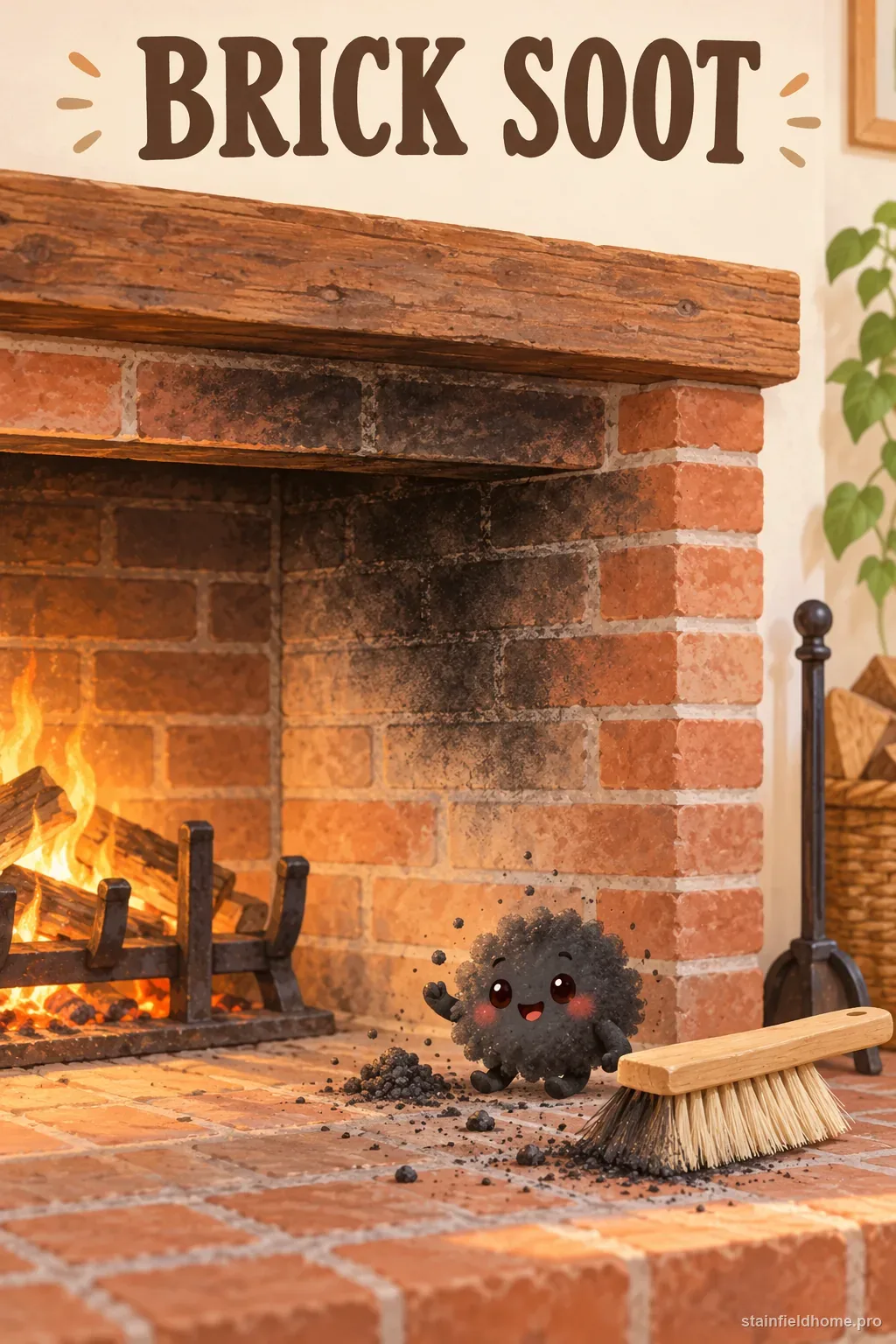
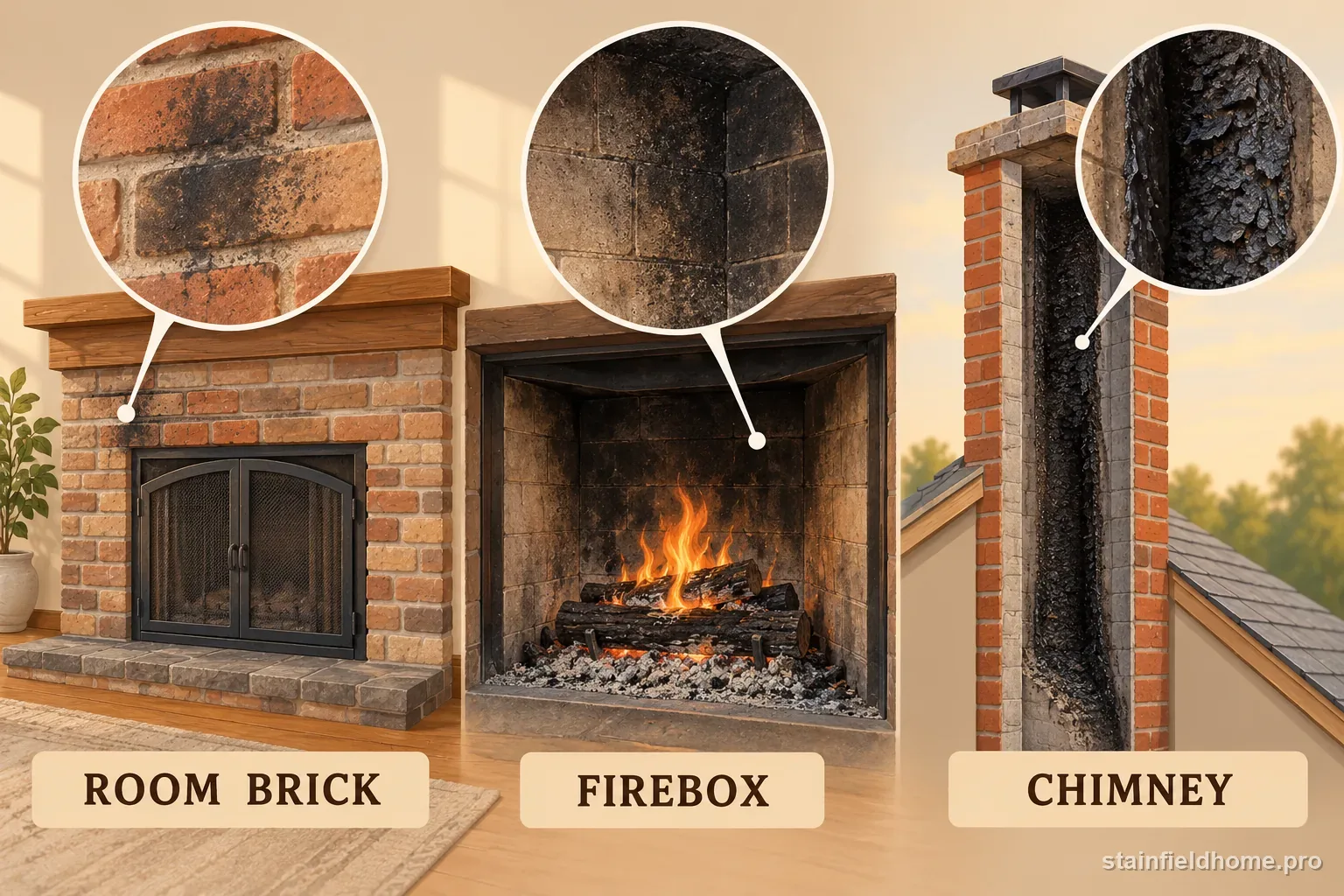
Let the fireplace cool and identify whether soot is on room-side brick, in the firebox, or chimney. Vacuum loose residue with a soft brush attachment without pressing it into masonry. Test a hidden brick and mortar spot, then try a barely damp cloth with mild detergent only if it passes. Avoid acids, wire brushes, and pressure washing. Call a professional for damaged mortar, historic brick, heavy deposits, or creosote.
What you’ll need
- Drop cloth and gloves
- HEPA vacuum with soft brush attachment
- Soft natural-bristle brush
- White microfiber cloths
- Small bowl of clean water
- Mild pH-neutral detergent if the test allows
- Eye protection
Identify the soot and the kind of brick first
Wood smoke leaves fine black or gray particles that may sit loosely on the face of a brick, collect in mortar joints, or settle as a broader film. A dark mark above the mantel or around a fireplace opening may be surface soot, but dark material deeper in the firebox or flue belongs to fireplace maintenance. Cleaning the visible brick does not clean the chimney, and this guide is only for small, superficial residue on accessible masonry.
Look closely without rubbing. A loose powder that transfers to a dry white cloth is different from a shiny, sticky, tar-like deposit, a white mineral crust, or a damp mark. Do not scrape, lick, or use a solvent to identify it. If soot is widespread after a fire, smoke odor has entered the room, or the fireplace has not been inspected after a chimney fire, stop and contact a qualified restoration or chimney professional.
Next, note whether the surface is unpainted clay brick, painted brick, glazed brick, sealed masonry, or a soft historic surface. Mortar can be weaker than the brick itself. Old lime mortar, crumbling joints, colored mortar, and previously sealed or coated surfaces need special care. If you cannot tell what finish is present, ask the fireplace or brick manufacturer before using liquid cleaner. A method safe for plain modern brick may dull glaze, lift paint, or loosen a fragile joint.
| What you see | Likely situation | Safer response |
|---|---|---|
| Dry gray film | Light surface soot | Vacuum gently, then test a small spot |
| Shiny sticky black deposit | Possible creosote or tar | Do not wash; call a chimney professional |
| White crust or fuzzy growth | Mineral residue or another issue | Avoid acids and get the material identified |
| Soft, cracked, or sandy joints | Weak or damaged mortar | Skip wet cleaning and consult a mason |
| Paint, glaze, or sealer | Coated masonry | Check coating maker directions and test first |
Let the fireplace cool and protect the room
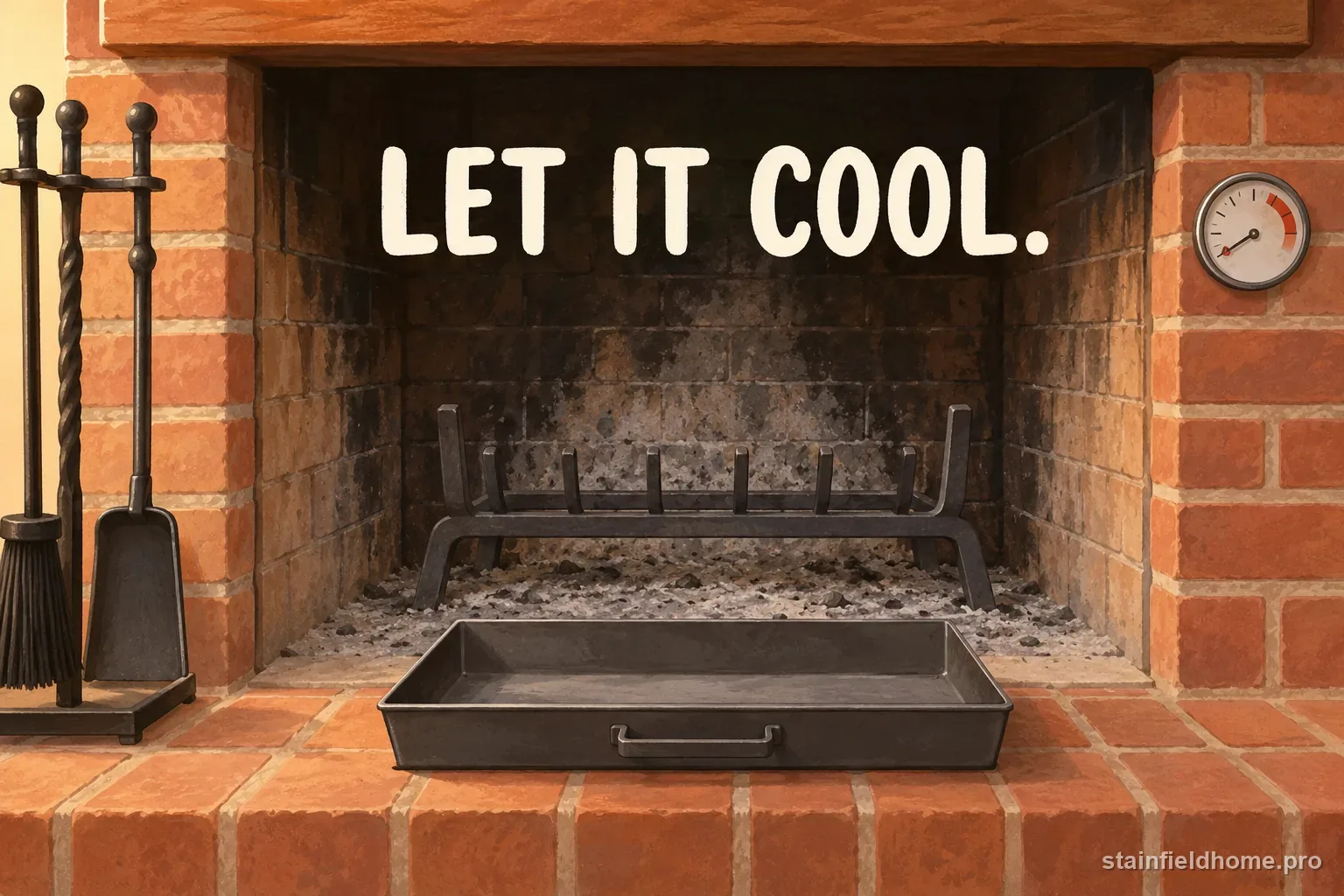
Do not start while embers, ash, or masonry are warm. Make sure the fire is fully out and the fireplace has cooled to room temperature. If there is any doubt, wait longer. Remove decorative objects from the mantel and cover nearby flooring and furniture with a drop cloth. Soot travels easily, so close doors to adjacent rooms and keep pets away while you work.
Wear gloves and eye protection, and avoid creating a cloud. Fine soot can irritate eyes and airways. Do not use a household fan that blows across the fireplace. If you are sensitive to dust or there is more than a light household film, leave the work to a restoration cleaner with appropriate containment and equipment. A small cosmetic job should not spread black dust through the home.
Take a clear photo before cleaning and note the affected area. That record helps you compare the result after it dries and can help a professional identify whether the discoloration is soot, a coating change, or masonry damage. If you see loose mortar, flaking brick, a water leak, or a large area of residue, do not brush it away for a better-looking photo; document it from a safe distance and arrange an assessment.
Remove loose soot without grinding it into the pores
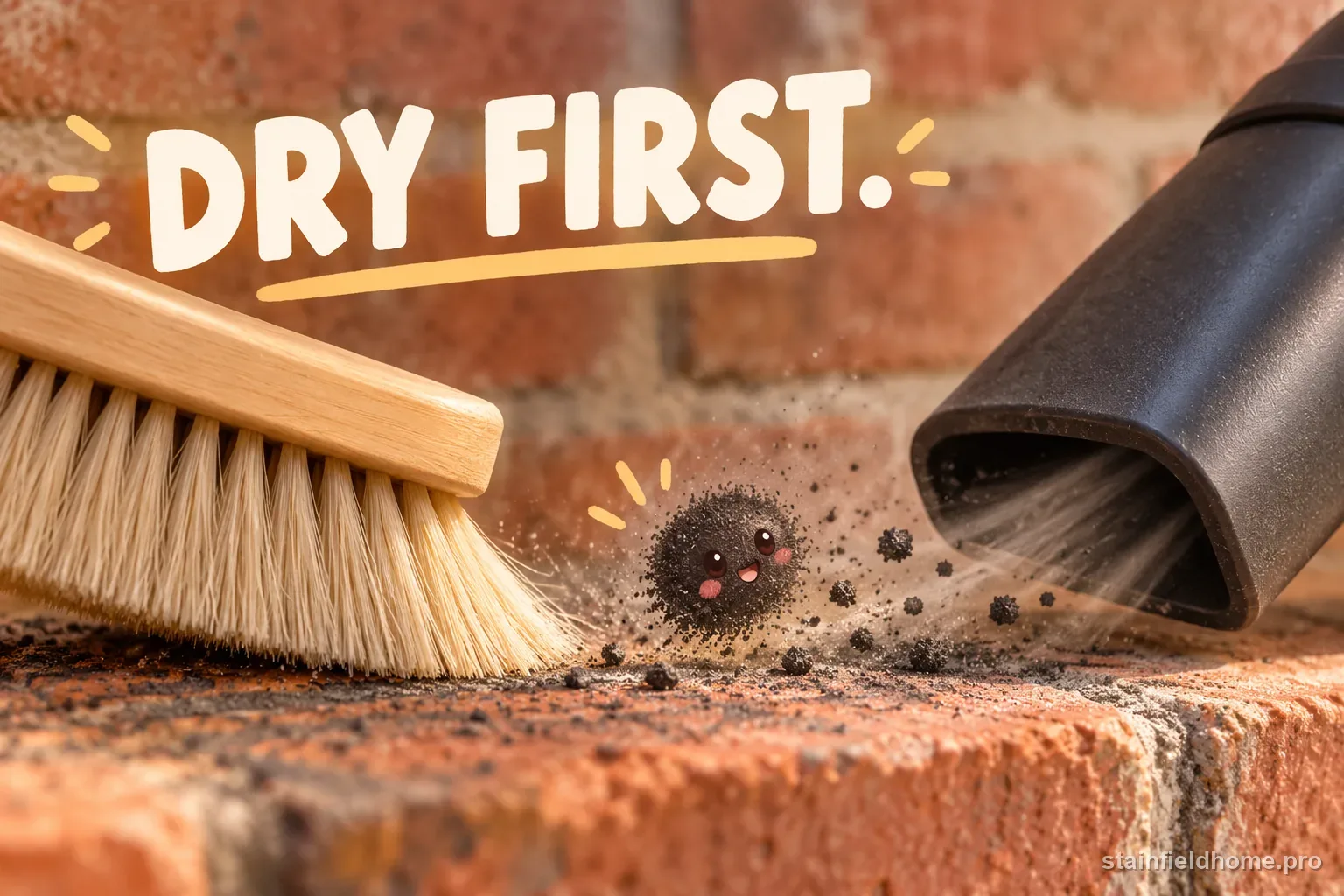
Start only with loose, accessible material. Use a vacuum fitted with a soft brush attachment and hold the nozzle close enough to collect particles without scraping the brick. Work from the top of a small area downward so falling dust is captured as you go. Keep the brush moving lightly; pressing it against the surface can push soot into pores or abrade a coating. Empty and clean the vacuum according to its manufacturer instructions afterward.
For a small mark that is clearly dry, a clean soft natural-bristle brush can guide particles toward the vacuum nozzle. Use light strokes and change direction only if the residue lifts easily. Do not use a wire brush, stiff scrub brush, sanding pad, abrasive sponge, or melamine foam. These can scratch brick faces and wear away mortar. If dry brushing makes a smear, pushes powder deeper into a joint, or releases more dust than you can capture, stop and use a restoration professional.
Avoid wiping dry soot with a damp rag at this stage. Moisture can turn loose particles into a dark smear and spread the mark beyond its original edge. Do not use an ordinary dry eraser or a chemical soot sponge unless its manufacturer specifically approves it for your brick and finish; products sold for other surfaces may change the appearance of masonry. If the dry method removes the visible residue, pause and inspect rather than automatically adding soap and water.
Test a hidden brick and mortar joint
Before any wet cleaning, choose a discreet area with the same brick, mortar, and finish as the mark. Test both the brick face and a mortar joint because they can respond differently. Dampen a white cloth with plain water and wring it until it is barely damp. Press gently for a few seconds, then lift it straight away. Do not rub back and forth. Check whether color, grit, or a surface coating transfers to the cloth.
Let the test spot dry fully and compare it with the surrounding area in good light. Look for a lighter or darker patch, a change in gloss, roughness, softened mortar, or a new white residue. Wet brick often looks darker until dry, so wait before judging. If the test changes the surface or the cloth picks up brick color, stop. Do not try to correct a test patch with stronger chemicals or more scrubbing.
If the water-only test passes, repeat on a tiny part of the soot mark. This checks whether the deposit can be lifted without smearing or leaving a halo. If water alone lightens the soot, use it sparingly and blot with a clean cloth. If the deposit smears or the mark grows, stop and let the area dry. Do not wet a broad section of masonry; porous brick can absorb liquid and cleaner residue may remain below the surface.

Try a small, low-moisture wash only if the test passes
For a stubborn but clearly superficial shadow, use only a mild detergent that is compatible with the fireplace surface. Follow the product label and the brick or coating maker’s directions. Mix a small amount in clean water; a concentrated or strongly alkaline cleaner is not better. Do not use dish powders, scouring cleansers, oven cleaner, bleach, ammonia, vinegar, or an improvised chemical blend. Never combine bleach with ammonia or acids.
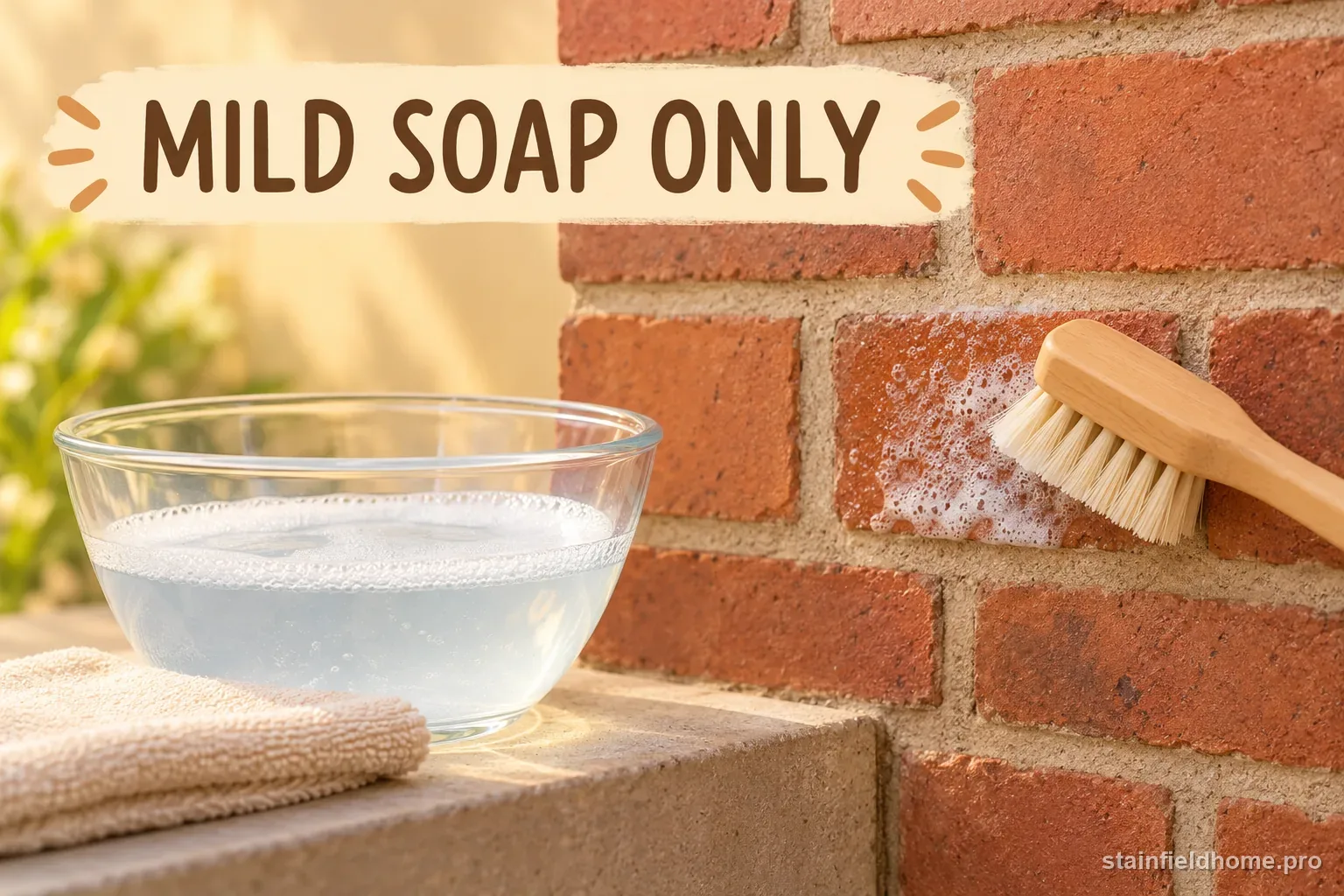
Dampen a soft cloth or natural-bristle brush and wring it well. Work on a small patch, starting at the edge of the stain and moving inward with gentle, short strokes. Keep liquid from running into the firebox, onto metal trim, or into cracks and joints. Rinse the cloth often in a separate bowl of clean water, then use a fresh cloth face so you are not redistributing soot. Do not spray cleaner directly onto the brick.
The Brick Industry Association recommends the gentlest method that effectively cleans masonry and warns that improper chemicals and abrasive methods can stain or damage brick and mortar. Its technical cleaning guidance addresses masonry at a broader scale, so it is not a home recipe for every fireplace. Follow the specific brick maker’s instructions. Avoid acids, particularly muriatic acid, and do not use a pressure washer or abrasive blasting as a DIY shortcut. If one mild pass does not help, pause instead of escalating chemicals.
Rinse residue carefully and let the masonry dry
If the soot has lightened and the test remains unchanged, wipe the small section with a second cloth dampened with plain water. Use just enough moisture to pick up cleaner residue; do not pour water over the brick or saturate the joints. Blot with a dry white cloth and allow the area to air-dry naturally. Keep the fireplace unused until the masonry is fully dry and the cleaner directions permit normal use.
Inspect only after drying. A damp patch may look darker, and a pale edge can be leftover cleaner, mineral deposit, or a change to the brick’s surface. Do not assume another chemical will fix it. Compare your after-photo to the original and check both the face and the joints. If the spot remains but the masonry looks unchanged, a professional may be able to identify a suitable localized treatment. If the surface looks etched, gritty, or uneven, stop all cleaning.
Do not apply a sealer or paint to hide the mark before identifying the cause. A coating can trap residue or change how the brick dries and breathes. If water has entered the firebox, wait until it is dry and inspect the mortar before using the fireplace. For large deposits, smoke damage after a house fire, or a stain that returns, arrange a professional evaluation instead of repeating a wet cycle.
Know when to stop and call a masonry or chimney professional
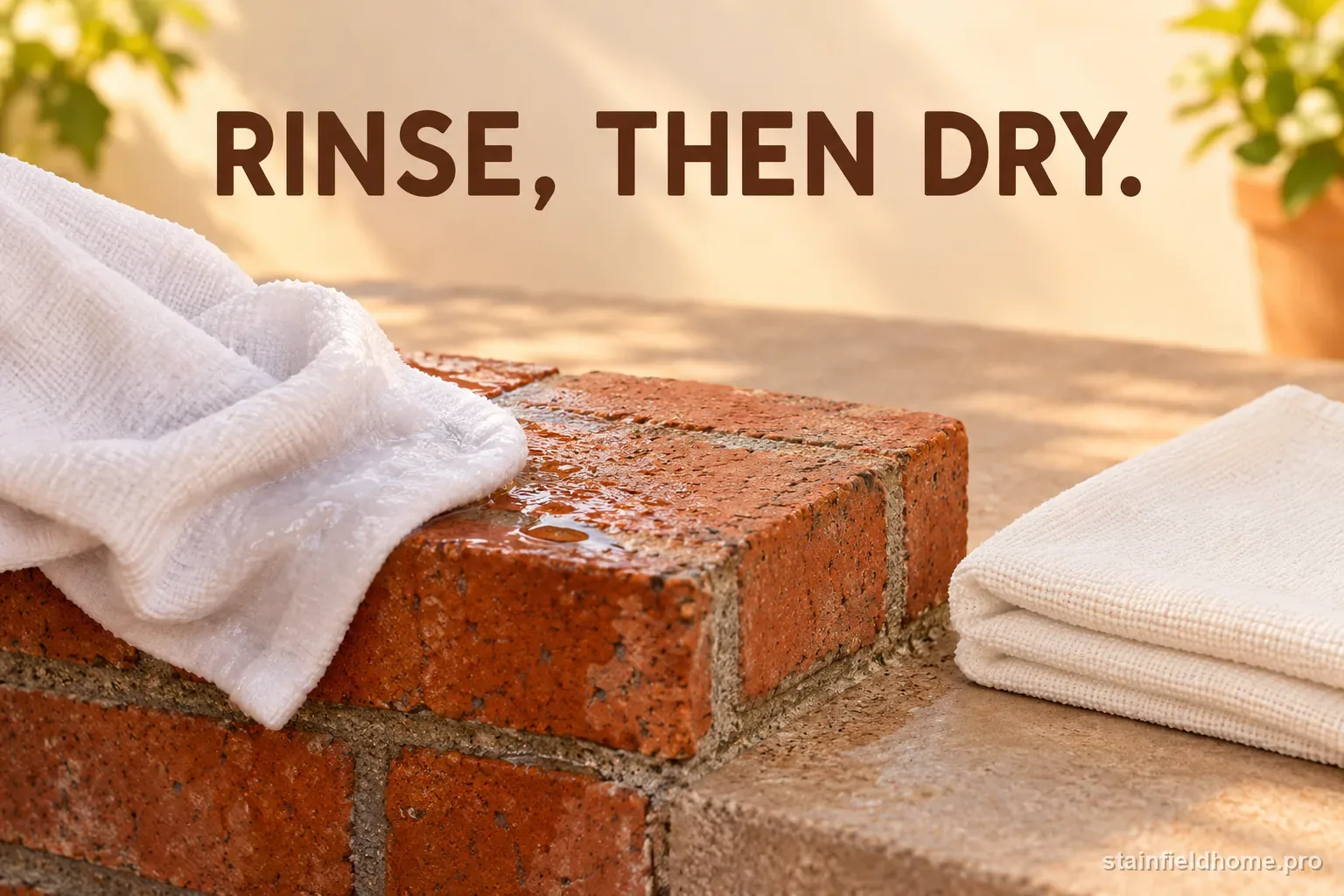
Stop if mortar crumbles, cracks, or comes away on the brush; if brick flakes, changes color, or develops a chalky film; or if the mark spreads during cleaning. Stop when the surface is painted, glazed, sealed, or historic and you cannot confirm a compatible method. Brick Industry Association guidance notes that harsh chemicals, overly aggressive cleaning, and pressure can damage masonry, and recommends professional guidance when existing conditions or prior treatments are uncertain.
Contact a chimney professional for deposits inside the firebox, smoke shelf, or flue that look glossy, tarry, thick, or difficult to remove. Surface soot on the room-side brick is not a substitute for a chimney inspection. The Chimney Safety Institute of America advises professional inspection and maintenance for fireplace systems; a chimney sweep can determine whether deposits are ordinary soot or creosote and whether cleaning is needed. Do not scrape or wash chimney deposits yourself.
Call a fire restoration service when soot covers a large area, smoke odor persists, residue followed a chimney or house fire, or it has reached porous furnishings and air pathways. Restoration work may require controlled containment and specialized equipment. A mason or restoration specialist can also assess historic brick, weak mortar, uncertain coatings, and persistent stains. A visible improvement from a small cleaning test does not prove the rest of the surface or chimney is safe to treat the same way.
Prevent smoke marks and handle a stubborn shadow sensibly
Use dry, seasoned firewood and operate the fireplace according to its manufacturer instructions. Keep the damper open while a fire is burning and make sure the flue draws properly. Have the chimney inspected and maintained on the schedule recommended by a qualified professional. If smoke spills into the room, stop using the fireplace until the cause is checked; cleaning the brick will not fix a draft or venting problem.
Keep a small soot mark from becoming a broad plume by checking the surround after use and removing loose surface dust with a soft vacuum attachment once the masonry is fully cool. Do not routinely wash brick, since repeated moisture and scrubbing can wear the joints and leave residues. Keep fireplace tools and ash containers from rubbing against the surround, and address water intrusion or damaged mortar before it spreads.
If a light shadow remains after one gentle tested cleaning, give the masonry time to dry and reassess in daylight. Do not make repeated passes with stronger solutions. A qualified masonry cleaner can identify whether the remaining color is embedded soot, a mineral change, or a finish difference and recommend a controlled spot treatment. For a historic or coated fireplace, seek that advice before using any proprietary cleaner, poultice, or sealing product.
Common questions
FAQ
Can I use vinegar to remove soot from brick?
Avoid vinegar as a DIY brick cleaner. Acidic cleaners can affect brick and mortar, and an unknown coating may react. Start with gentle dry removal and a hidden test; consult a masonry professional for a persistent mark.
Will dish soap clean smoke stains on a brick fireplace?
A mild detergent may help a small surface shadow if the brick and mortar test passes. Use little moisture, work in a small area, rinse residue with a barely damp cloth, and dry promptly.
Can I pressure wash fireplace brick?
No. Pressure can erode the brick face and mortar, and it can drive water and soot deeper. Leave pressurized masonry cleaning to trained professionals with a surface-specific plan.
How do I tell soot from creosote?
Loose, dry gray or black dust on room-side brick may be surface soot. Shiny, sticky, tar-like deposits inside a firebox or flue may be creosote. Do not handle uncertain chimney deposits; call a chimney professional.
When should I call a professional for fireplace soot?
Call for heavy or widespread residue, persistent smoke odor, damaged mortar, historic or coated brick, suspected creosote, or soot after a fire. A surface wipe cannot assess chimney condition.
Sources reviewed
Keep reading
Related guides
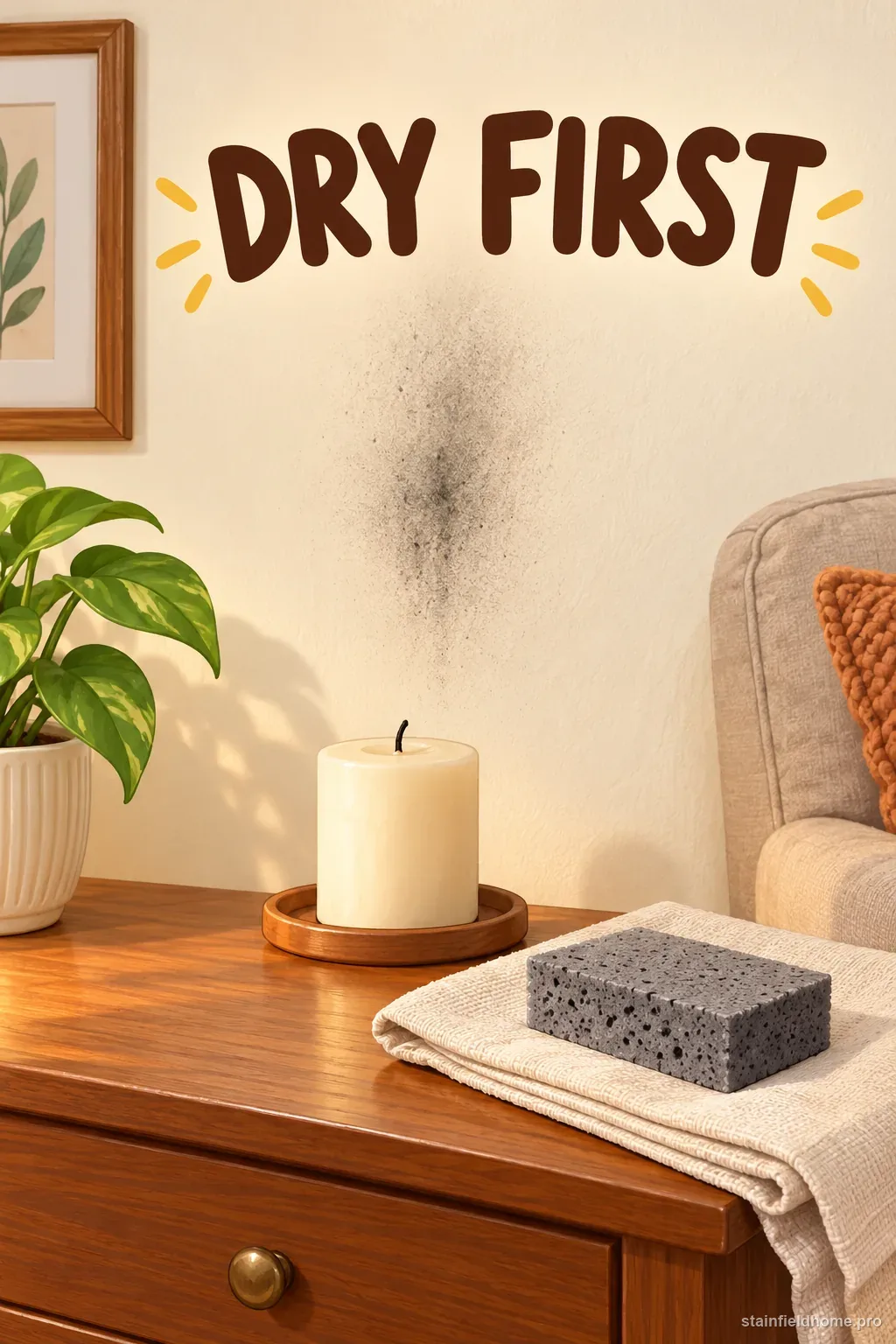
Candle soot on Painted wall
Remove Candle Soot Stains From a Painted Wall
Remove candle soot from painted walls with a dry-first method. Check paint sheen, test gently, limit moisture, and stop before the finish changes.

Essential oil and reed-diffuser oil on Finished wood furniture
How to Remove Essential Oil and Diffuser Stains From Wood Furniture
Blot a diffuser-oil spill on finished wood, use a cautious absorbent step, and recognize when the finish needs a furniture repair professional.

Wood stain product on Skin and hands
How to Remove Wood Stain From Skin and Hands
Remove oil- or water-based wood stain from skin with gentler steps; avoid harsh solvents and repeated scrubbing that irritate skin.

White water ring on Wood table
How to Remove a White Water Ring From a Wood Table
Treat a white water ring on a finished wood table without sanding; learn when gentle warmth may help and when a dark ring means deeper damage.