The quick answer
Blot standing tree water immediately with a dry cloth and remove the stand. Once the floor is dry, check whether the mark is pale and cloudy, dark in the grain, or rusty from the stand. Clean only with the floor maker's finish-approved product and a barely damp cloth. Skip heat, vinegar, oil, abrasives, and bleach. Stop for dark marks, swelling, lifted finish, or a recurring wet area.
What you’ll need
- Dry white cloths
- Soft microfiber cloth
- Floor maker's approved wood cleaner
- Protective tree-stand mat
- Fan for gentle room airflow
Stop the spill and identify the floor
Tree-stand water can contain dissolved minerals, dirt, sap, needles, fertilizer, or metal residue from the stand. A simple puddle may leave no mark if removed promptly, but water that sits at a seam or beneath a mat can haze the finish, discolor the wood, swell an engineered plank, or loosen an edge. Start by stopping the source. Empty or stabilize the stand, move the tree only if you can do so safely, and keep the spill from spreading under furniture or a rug.
Find out whether the floor is solid hardwood, engineered wood, laminate, or a wood-look surface. Check the product or installation records for the finish type and approved cleaner. Factory-finished polyurethane, oil-finished wood, wax, and site-finished planks do not share one universal stain remedy. If you rent or cannot identify the floor, contact the landlord or flooring maker before using a repair product. A surface that looks like wood may have a thin veneer or printed wear layer that cannot be sanded like solid boards.
The National Wood Flooring Association advises cleaning spills immediately with a dry or slightly damp cloth, avoiding wet and steam mops, and choosing a cleaner made for the floor finish. That guidance is a useful baseline, not a guarantee for every engineered floor or specialty coating. For an active puddle, begin with the dry cloth step. For a mark that remains after drying, diagnose it before applying anything else.
Blot standing water without spreading it
Avoid paper towels with a rough printed surface if grit is mixed into the spill. Do not use a wet mop, spray bottle, steam cleaner, or bucket of soapy water to flush the area. More water can reach joints and edges where it is difficult to dry. Never combine floor products with bleach, ammonia, vinegar, or another cleaner. Mixing household chemicals can release harmful fumes, and strong or acidic liquids can dull or damage a floor finish.
If the spill has reached an adjacent rug, remove the rug so trapped moisture is not held against the floor. Do not place the wet rug back until both surfaces are dry. If water has entered a floor vent, reached an outlet, or spread across a large area, prioritize safety and contact the appropriate building or restoration professional rather than continuing with spot cleaning.
- 01
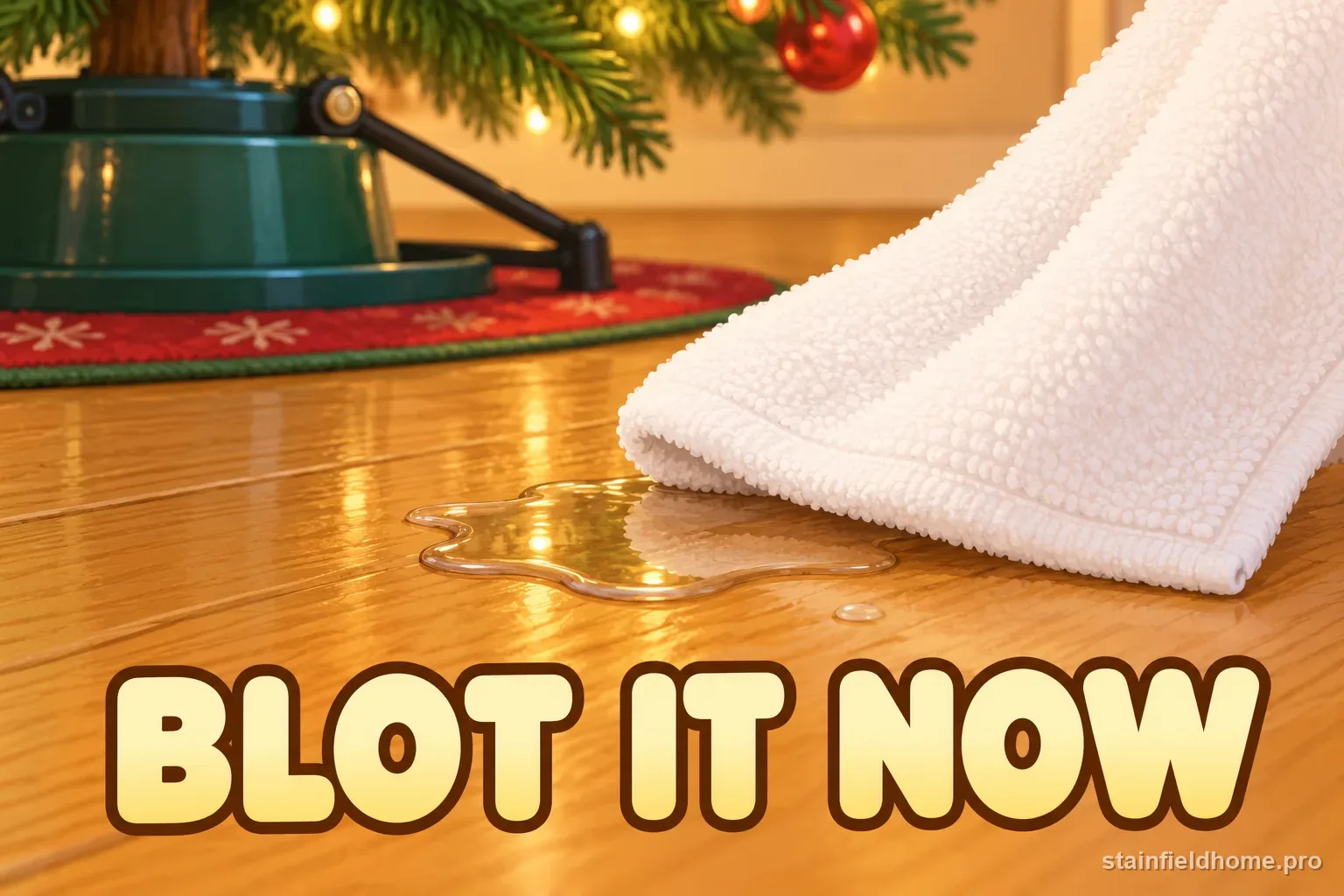
Use a soft, dry, absorbent cloth to press into the puddle and lift it. Work from the outer edge toward the center, switching to a dry area of cloth as it becomes wet.
- 02
Remove the tree stand and any wet barrier if they can be moved without dragging metal or grit across the floor. Wipe the underside dry before setting the stand elsewhere.
- 03
Use a second dry cloth to pick up water from seams and around the stand feet. Do not push liquid into the joints or scrub the grain.
- 04
If needles, soil, or grit are present, pick them up gently before wiping so they do not scratch the finish.
Let the floor dry, then read the mark
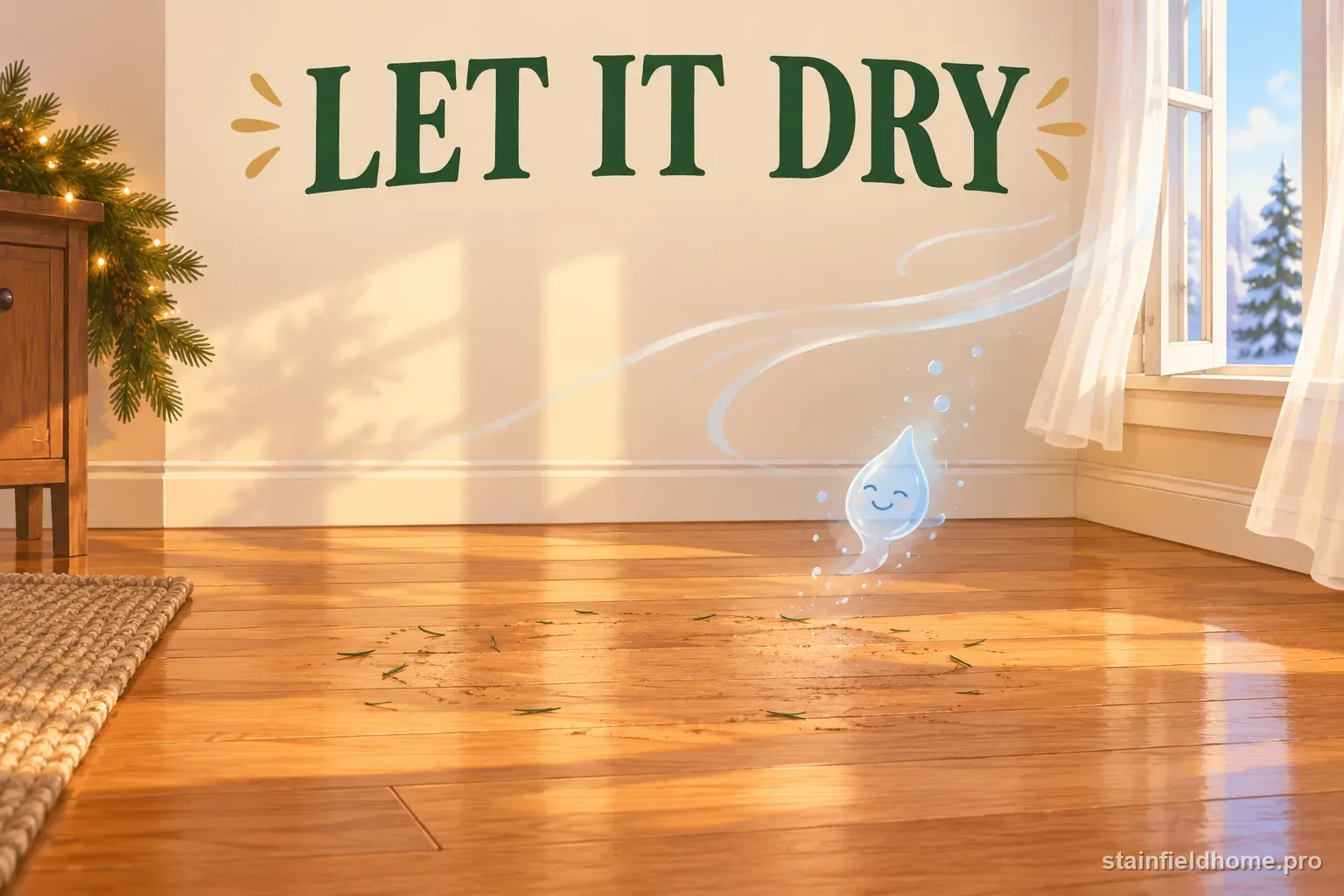
After the surface water is gone, let the area dry with normal room airflow. A fan can move air across the floor, but do not aim a heat gun, hair dryer, iron, radiator, or steam at it. Rapid heat can stress the finish or wood and may make a small repair more visible. Keep the tree stand and any rug away until the floor is dry to the touch and no moisture is visible at seams.
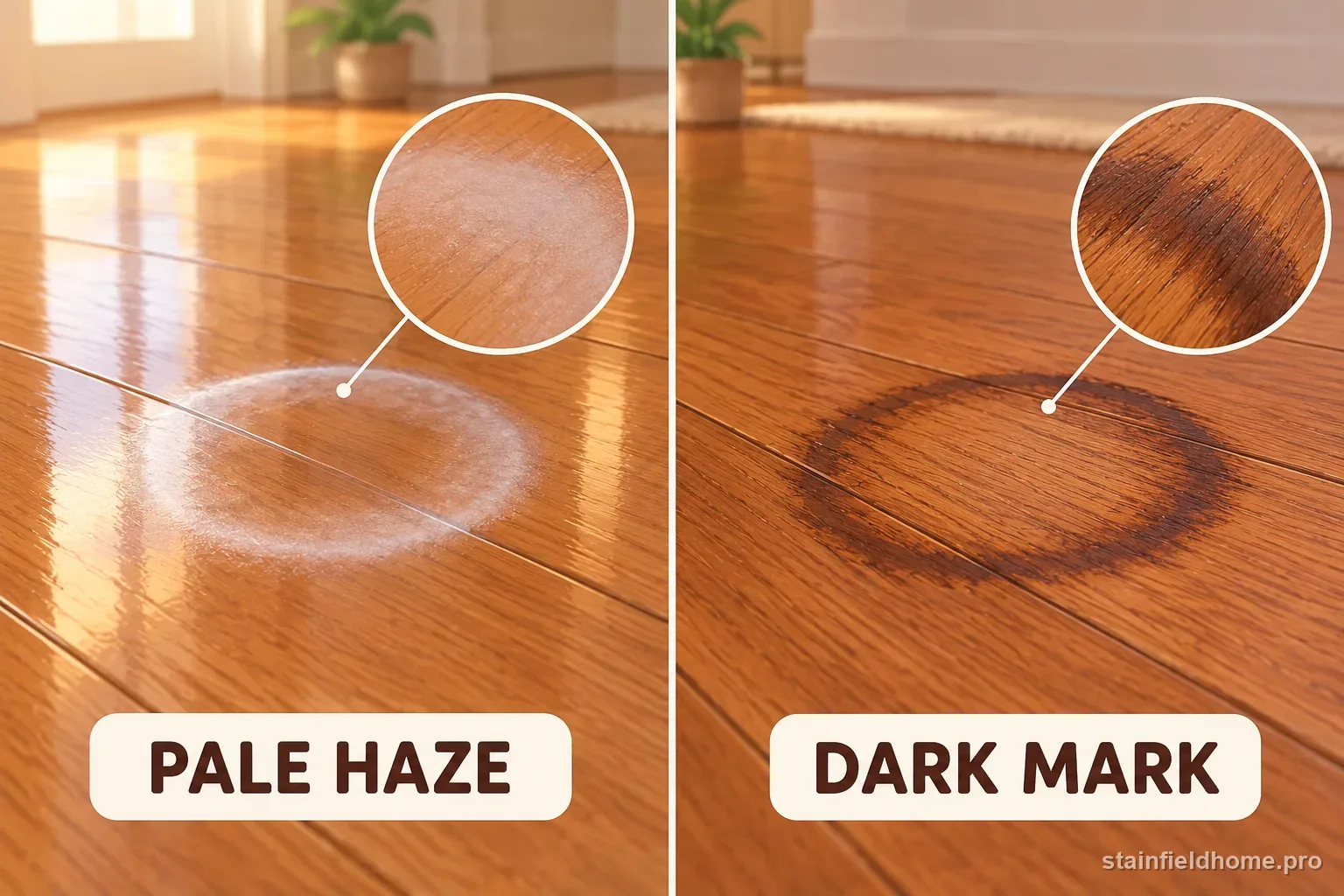
Inspect in daylight and from more than one angle. A pale white or cloudy ring may be moisture trapped in or affecting the top finish. A gray, brown, or black spot can mean that water has penetrated farther into the wood or reacted with material at the stand. A rusty orange transfer may come from a metal foot or fastener rather than the tree water itself. Raised edges, cupping, a soft spot, cracked finish, or boards that feel different are signs of physical damage, not ordinary surface soil.
Do not scrape or sand to test how deep a mark is. Photograph it and compare it with a dry section of the same plank. If the mark is changing, expanding, or returning after the area seems dry, there may still be moisture beneath the surface. A flooring professional can assess that before a cosmetic cleaner makes the edge harder to evaluate.
| What you see | Likely issue | Next step |
|---|---|---|
| Wet puddle, no mark | Active surface spill | Blot dry and monitor the seams |
| White or cloudy ring | Finish haze or trapped moisture | Dry fully, then use approved cleaner only |
| Dark brown or black area | Deeper wood discoloration or damage | Stop and ask a flooring professional |
| Orange or rusty transfer | Stand corrosion or residue | Do not abrade; check floor maker guidance |
| Swelling, cupping, soft edge | Moisture damage beneath the surface | Keep dry and arrange professional inspection |
Clean light residue with the approved floor product
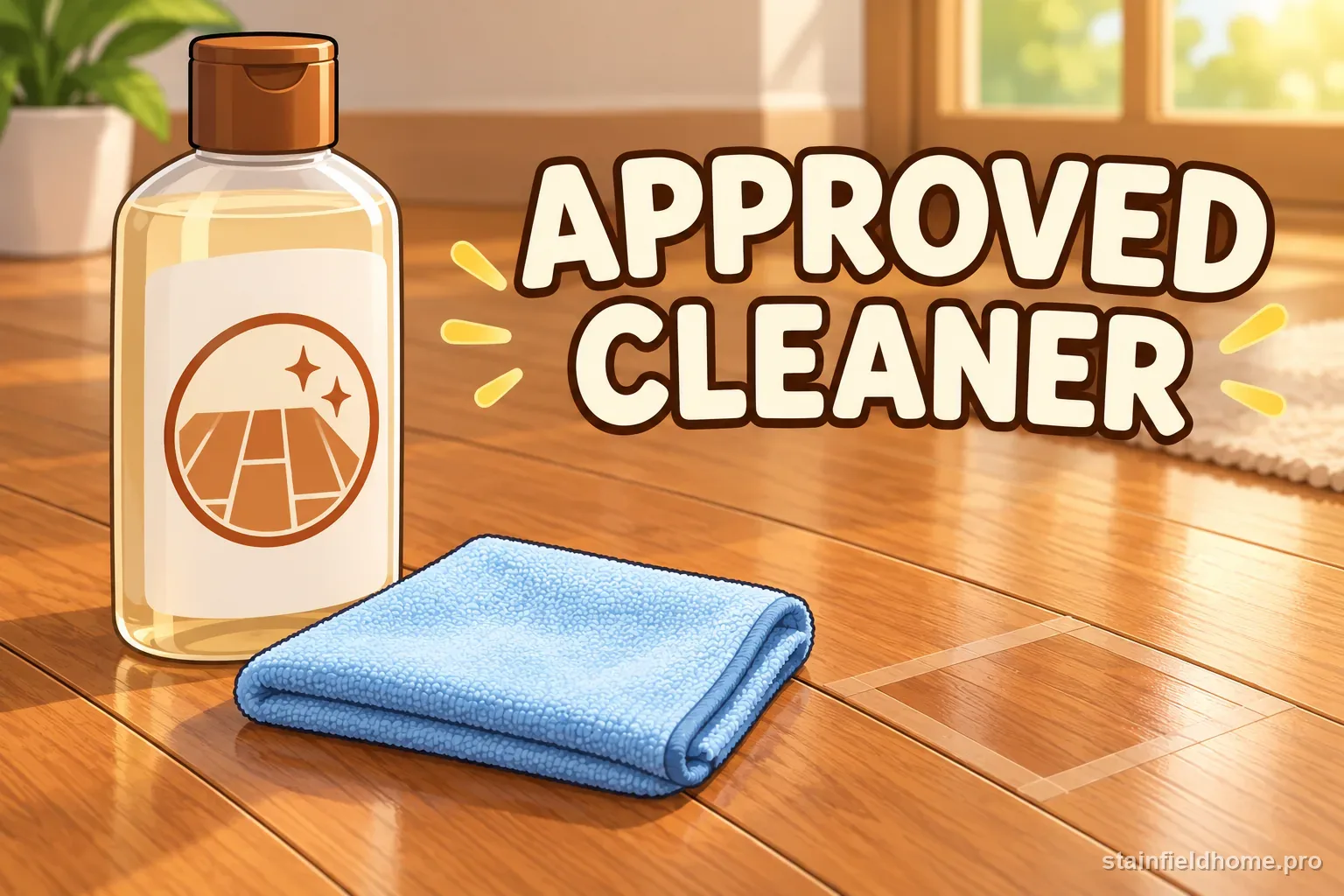
If the mark appears to be surface residue, the boards feel flat and sound, and the floor maker permits damp cleaning, use the product specified for that finish. Apply it to a microfiber cloth rather than pouring it on the floor. The cloth should be barely damp, not wet enough to leave a bead or trail. Make one small pass along the grain and wipe the area dry with a clean cloth.
Bona's tree-care article recommends its hardwood cleaner for floors compatible with that product after needles are removed. The NWFA likewise says to use a cleaner made for the finish. Those recommendations do not mean every Bona product or wood cleaner is suitable for every surface. Read the floor label and product directions, and test in an inconspicuous spot if the maker allows testing. If the floor has a wax or oil finish, use only its specific care product.
Do not use a generic all-purpose spray, furniture polish, vinegar and water, dish soap, rubbing alcohol, mineral spirits, or a scouring pad to chase the ring. A cleaner for one floor finish can leave haze on another, and a household acid or solvent may dull the protective layer. Avoid adding wax or polish unless the floor maker says that product is compatible; buildup can make later repair difficult.
If there is no visible improvement after one careful, approved cleaning pass, stop. Repeating the same pass with more pressure can turn a removable surface residue into a scratched or dull patch. Let the floor dry completely and reassess before deciding whether the mark is actually in the finish.
Handle a white haze without home heat hacks
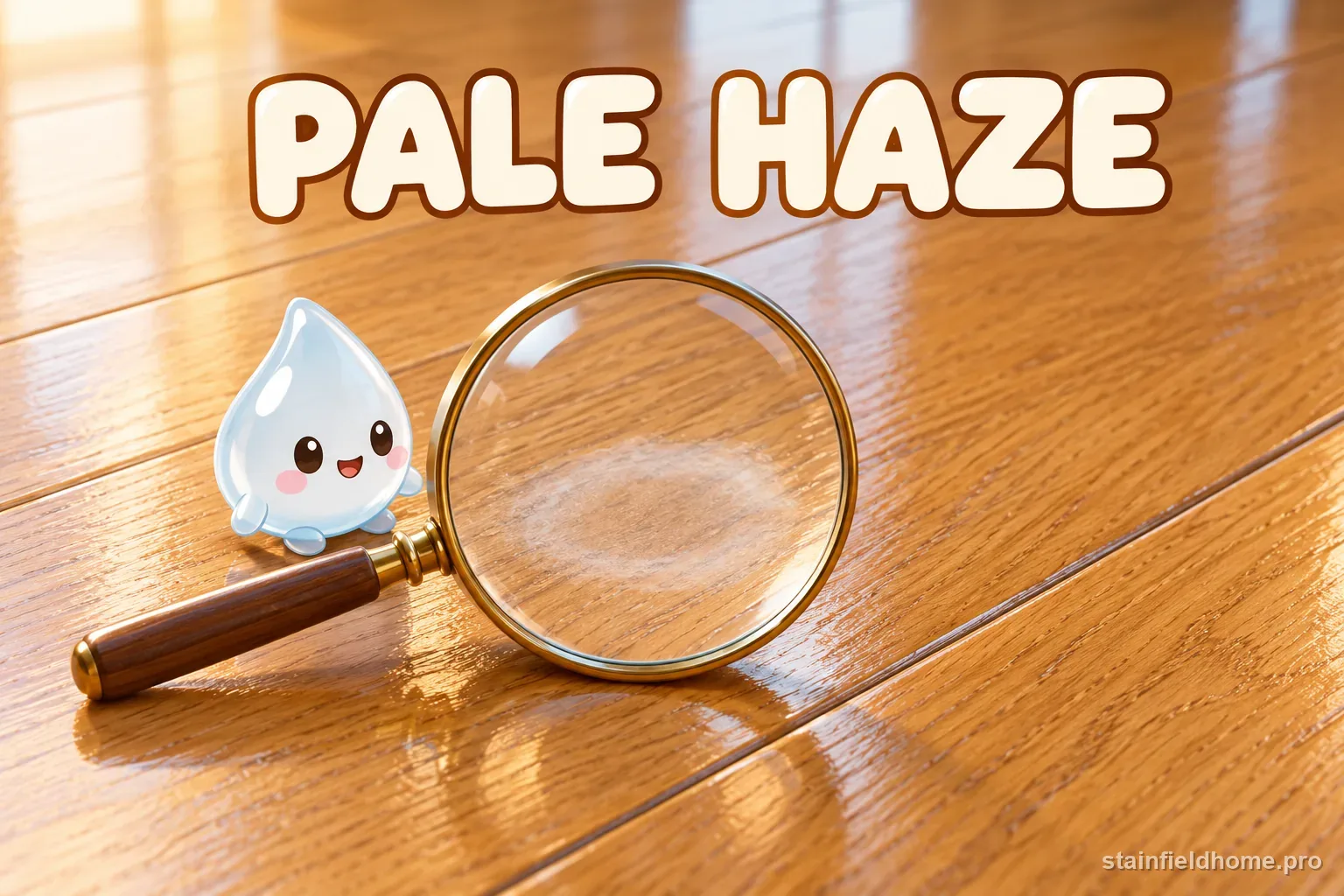
A white or cloudy ring can suggest moisture affected the clear finish, but appearance alone cannot identify the coating or prove that a household remedy will work. Some online guides recommend an iron, hair dryer, mayonnaise, toothpaste, baking soda, or oil. Those methods are not universal floor-care instructions. Direct heat can soften or discolor a finish, while oils and abrasives can leave residue or change the sheen. Do not try them on an unknown floor, a new finish, a veneer, or a coated engineered plank.
If a dry, maker-approved cleaner does not remove a light haze, review the warranty and care instructions or ask the flooring manufacturer for a finish-specific repair option. A professional may be able to assess whether the mark is in the coating and whether a maintenance recoat is suitable. Do not apply a floor polish or stain marker as a cover-up unless the manufacturer approves it; a mismatched sheen can make a small ring stand out more.
If the haze is accompanied by a sticky film, smell, or discoloration that transfers to a cloth, tell the professional what was in the stand water and what products have touched the floor. Sap and mineral or fertilizer residues may need a different assessment from plain water. Do not mix treatments to see which one works.
Stop for dark marks, rust, or board changes
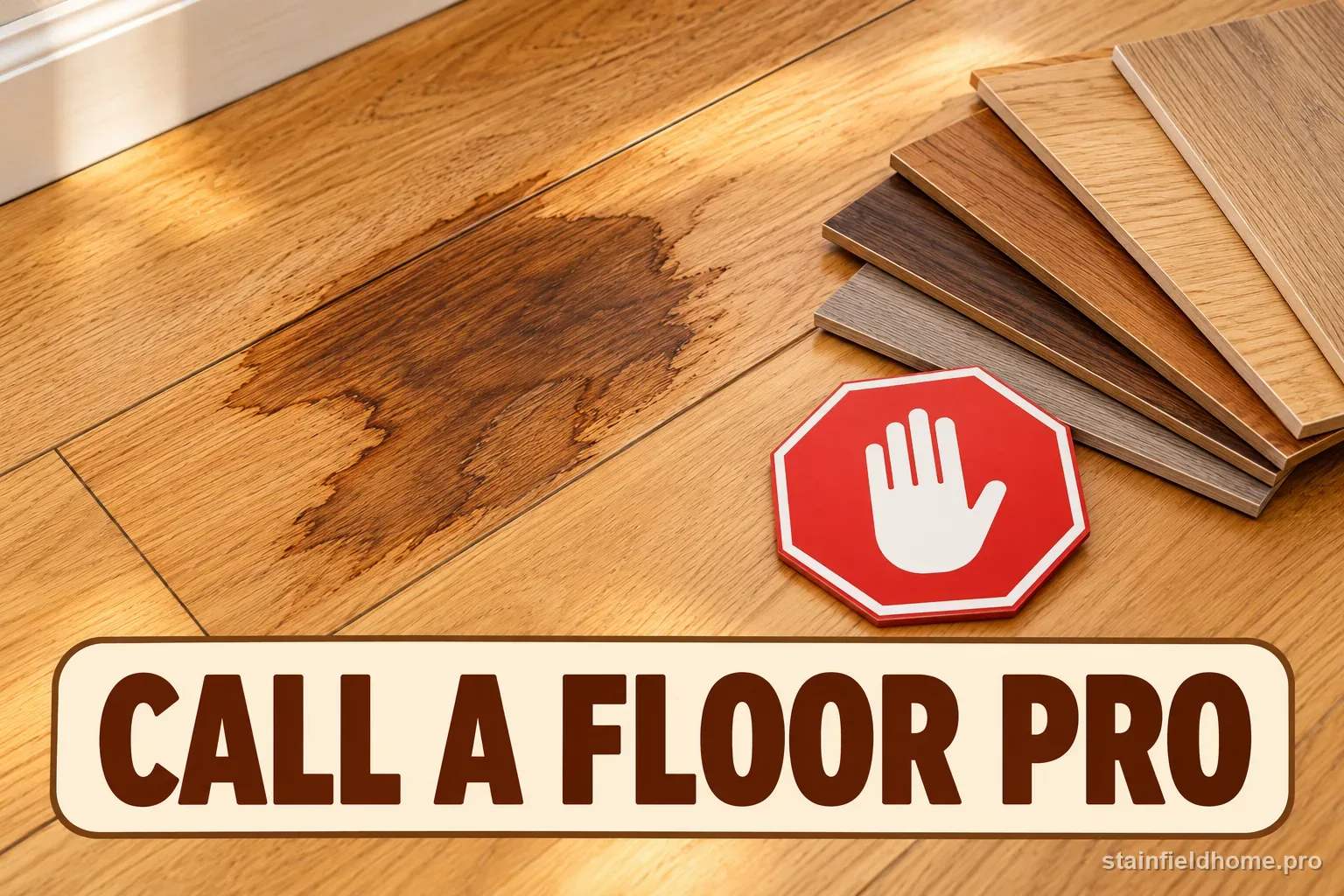
A dark stain is different from a pale haze. It can reach below the finish into the wood, where a surface cleaner cannot simply wash it away. Repair may involve removing and replacing finish, a controlled wood treatment, sanding, refinishing, or board replacement. These steps can create color and sheen differences and require knowledge of whether the product is solid, engineered, stained, sealed, or factory coated.
Rust-colored water or a ring at the stand foot may come from corrosion, mineral buildup, or a reaction between moisture and material on the floor. Do not attack it with steel wool, vinegar, peroxide, bleach, or an abrasive powder. Those products can scratch the finish or change the wood color. Lift only loose grit with a soft dry cloth and keep the area dry while you ask the floor maker or a qualified wood-floor professional how to proceed.
Arrange prompt professional assessment if boards swell, cup, separate, feel spongy, develop a musty odor, or remain damp around the edges. Also call if the stain is dark or spreading, the finish is peeling, the flooring is under warranty, or you do not know whether it is laminate or engineered wood. Do not sand a small spot yourself; removing too much finish or veneer can turn a local mark into a larger repair.
Check again after the first pass
Once the approved cleaning pass is dry, inspect the same area in consistent light. Compare the color, sheen, and texture with a nearby section. If the ring has faded and the floor feels unchanged, leave it alone rather than polishing repeatedly. A faint shadow may be in the finish or wood, and stronger rubbing will not reliably remove it.
If the mark looks darker after drying, or the board edge has risen, stop surface cleaning. Take a fresh photo and note when the leak happened, how long water stood, whether the stand was metal, and what cleaner was used. This information helps the flooring professional separate finish haze, wood staining, rust, and moisture below a board.
If you notice only a removable film and the maker's directions permit another pass, use the same approved product and a clean microfiber cloth once more, with very light pressure. Do not switch to a stronger chemical after the first pass. If there is no clear improvement, move from cleaning to assessment rather than adding heat, abrasion, or a home bleach mixture.
Prevent water and stand marks next season
Before setting up a live tree, place a fitted, waterproof tree-stand mat on a clean, dry floor. Bona and Slaughterbeck Floors both recommend a barrier to help protect hardwood from water, sap, needles, and stand scratches. Choose a mat that fits beneath the full stand and does not have a rough or gritty underside. Check it each time you water the tree so moisture is not trapped underneath.
Use a stable stand, keep its reservoir below the rim, and wipe splashes immediately with a dry cloth. Check the floor around the tree daily, especially near stand legs and seams. When removing the tree, lift the stand rather than sliding it, pick up needles before walking over them, and dry the floor before placing rugs or furniture back.
Save the floor maker's care page with your holiday supplies. Knowing whether the surface is solid, engineered, oiled, waxed, or factory finished makes it easier to respond quickly and avoid an internet remedy that is incompatible with your particular floor.

Common questions
FAQ
How do I remove a fresh Christmas tree water spill?
Blot it promptly with a dry cloth, remove the stand, and pick up water near seams without scrubbing. Let the floor dry before checking for a mark.
What does a white ring under a tree stand mean?
A pale or cloudy mark can indicate moisture affected the finish, but it does not identify the coating. Dry the area and use only the cleaner approved for that floor.
Can I use vinegar on a hardwood water stain?
Avoid vinegar unless the floor maker explicitly approves it for your finish. Acidic cleaners can dull or damage some protective coatings.
How do I remove a dark water mark from wood flooring?
A dark mark may extend into the wood below the finish, so household surface cleaning is unlikely to fix it. Stop and ask a flooring professional to assess the board and finish.
Can I iron a water ring out of a wood floor?
Do not apply an iron or direct heat to an unknown floor. Heat can affect the finish, veneer, or engineered layers; ask the maker for an approved repair method.
Sources reviewed
Keep reading
Related guides

White water ring on Wood table
How to Remove a White Water Ring From a Wood Table
Treat a white water ring on a finished wood table without sanding; learn when gentle warmth may help and when a dark ring means deeper damage.
Winter de-icing salt on Hardwood floors
Remove Winter Salt Stains From Hardwood Floors
Remove winter salt residue from hardwood with a finish-safe, low-moisture method, and learn when a pale haze or dark mark needs a flooring pro.
Ballpoint ink on Finished wood
How to Remove Ballpoint Ink From Finished Wood
Lift ballpoint ink from finished wood with a small, tested cleaning area; protect the clear coat and stop before rubbing dulls the finish.
Wood stain product on Skin and hands
How to Remove Wood Stain From Skin and Hands
Remove oil- or water-based wood stain from skin with gentler steps; avoid harsh solvents and repeated scrubbing that irritate skin.