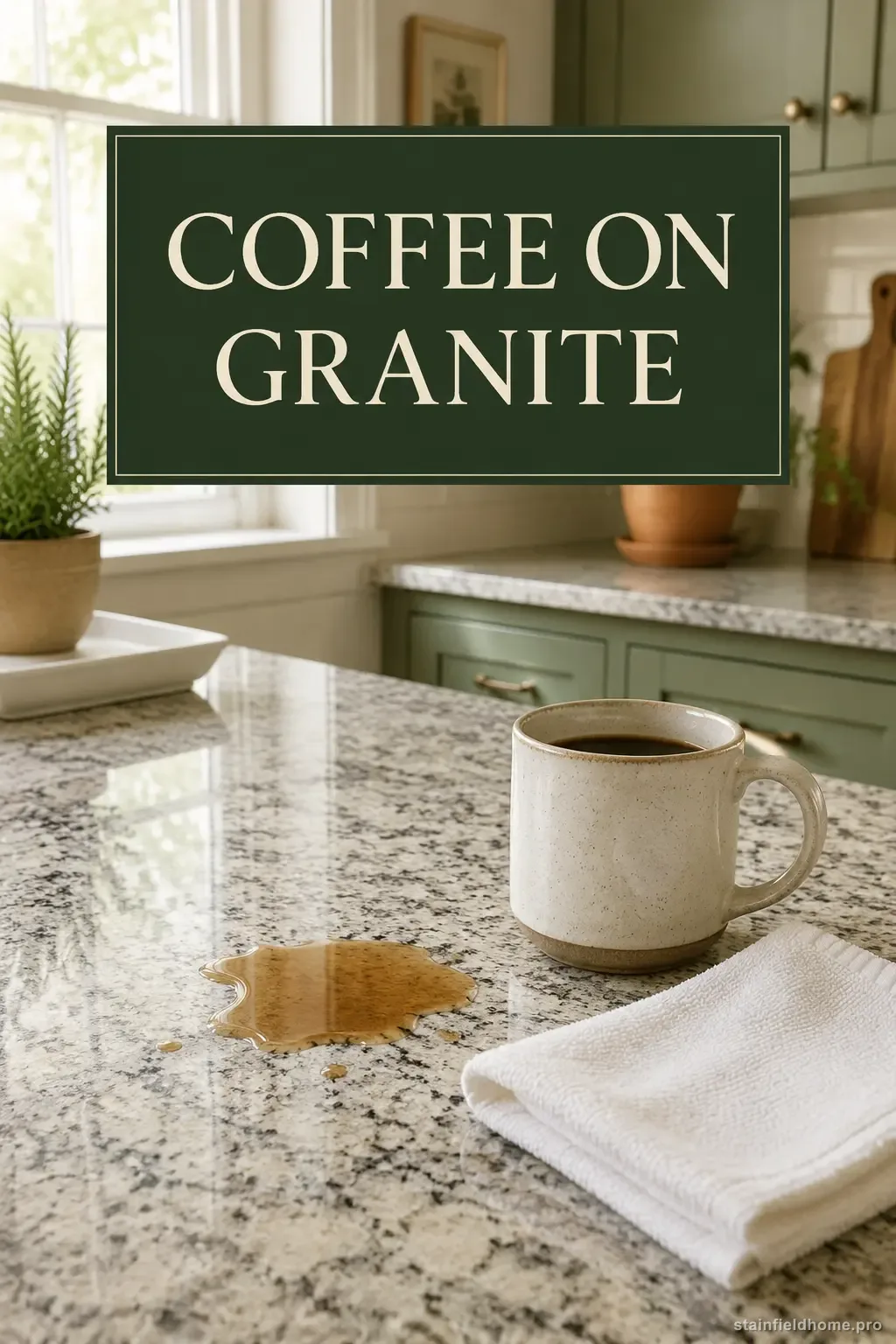
The quick answer
Blot fresh coffee instead of wiping it outward. Wash the spot with a soft cloth, plain water, and a small amount of pH-neutral stone cleaner or mild soap; rinse several times and dry completely. If a brown shadow remains after the granite is fully dry, use a poultice labeled for organic stains on natural stone or call a stone-care professional. Do not reach for vinegar or lemon juice.
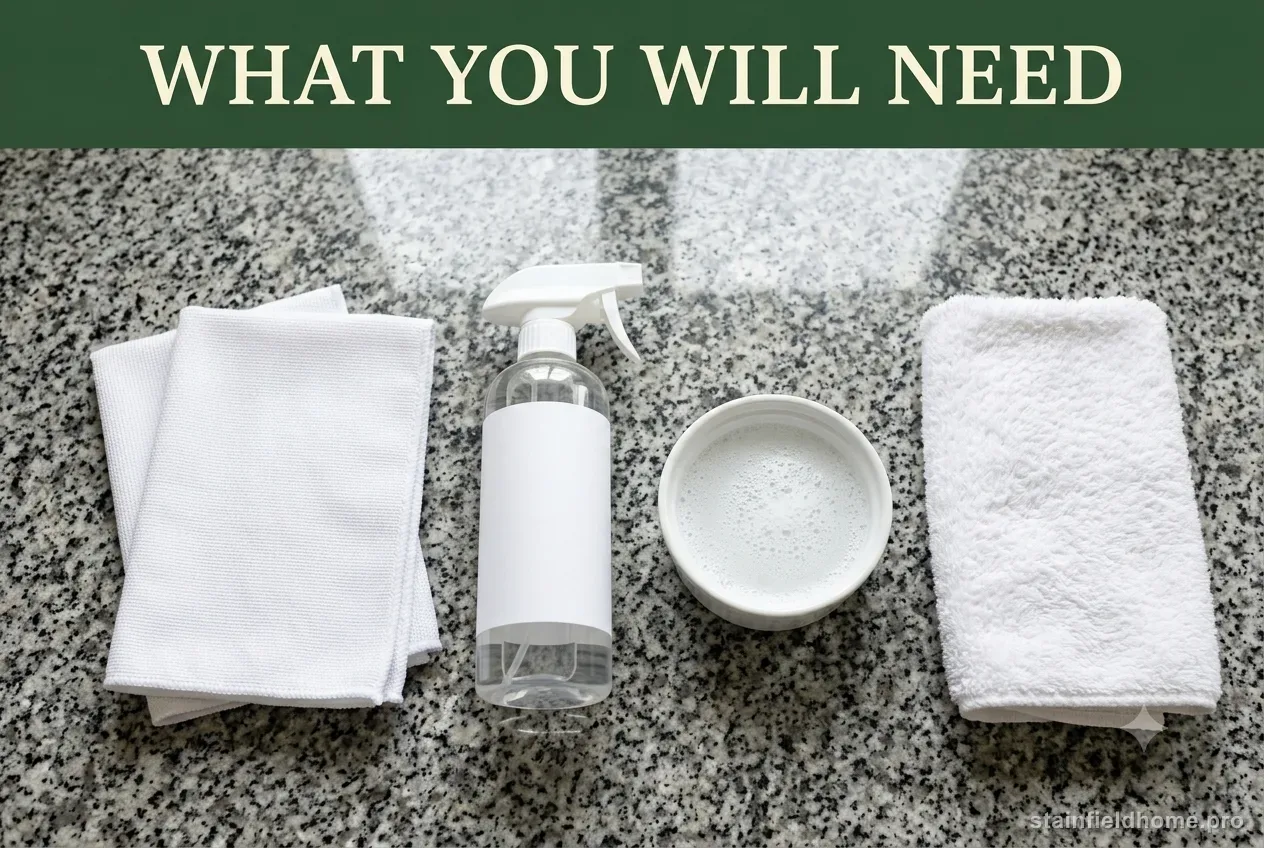
What you’ll need
- White paper towels or a clean white microfiber cloth
- Plain water
- pH-neutral cleaner labeled for natural stone, or a small amount of mild soap
- A second cloth for rinsing
- A dry soft towel
- An organic-stain poultice labeled for granite, only if needed
Make sure it is a stain, not moisture or etching
Granite varies in porosity, finish, color, and sealer condition. A dark patch immediately after a spill may simply be moisture in the stone or sealer. Clean it, dry it, and give it time to return to the surrounding color before escalating to stronger treatment.
Coffee is an organic staining material. It commonly leaves a pinkish-brown or brown cast when it penetrates. An etch mark is different: it looks dull or feels rough because the finish changed. Granite is generally more acid-resistant than marble, but countertops may include acid-sensitive minerals or resin, and nearby grout or other stone may not be granite. A cleaner cannot polish an etched area back to its original finish.
For freshly spilled coffee
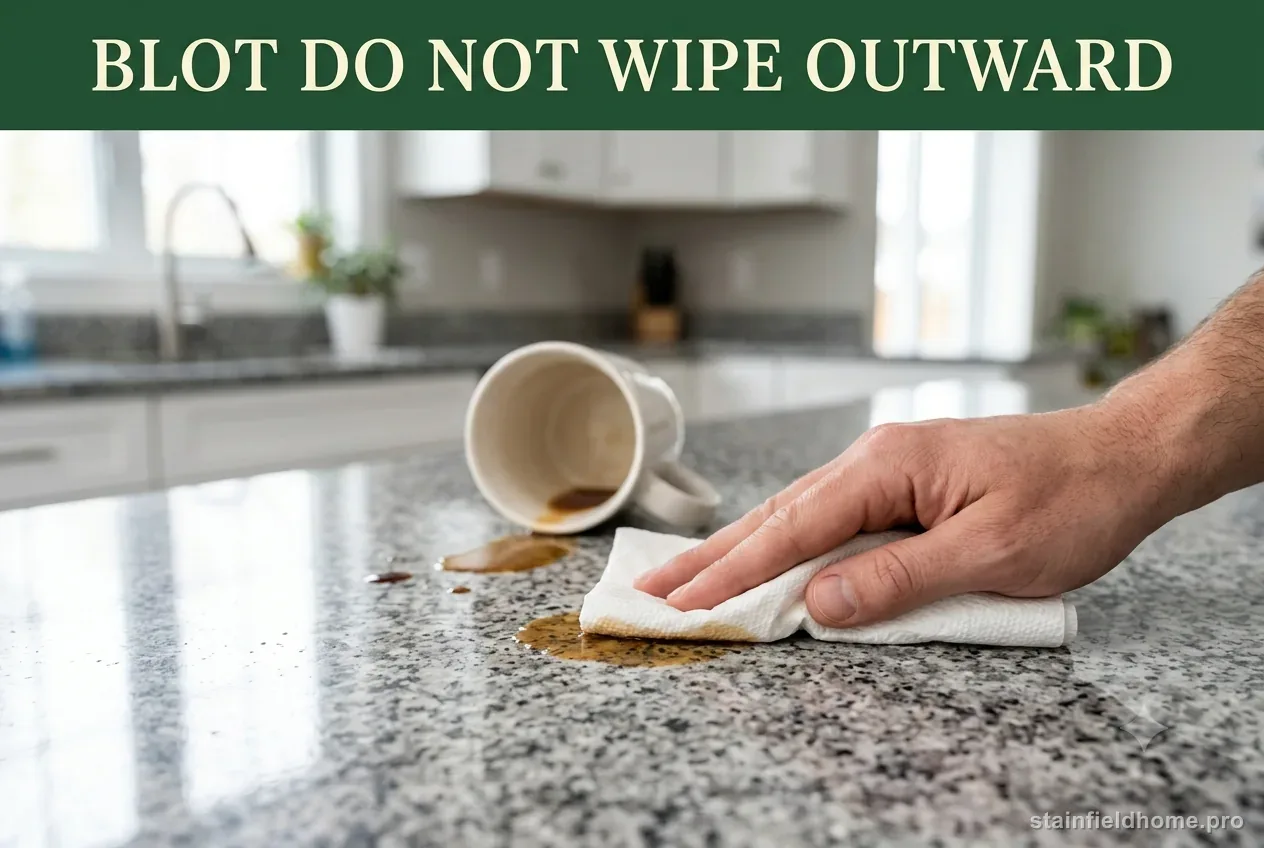
The Natural Stone Institute recommends blotting spills rather than wiping, then flushing with plain water and mild soap, rinsing several times, and drying thoroughly. That sequence is enough for many fresh coffee spills, especially on a well-maintained sealed surface.
- 01
Lift the mug and blot the spill with white paper towels. Do not sweep the coffee across the counter or into seams.
- 02
If the drink contained cream or sugar, keep blotting with fresh material until no liquid remains. Those additions leave their own residue.
- 03
Dampen a soft cloth with plain water and a small amount of pH-neutral stone cleaner or mild soap. Wipe the affected area gently.
- 04
Rinse the cloth and wipe several times with plain water so cleaner and coffee residue do not remain in the stone’s texture.
- 05
Dry the counter thoroughly with a clean soft towel. Check the area again after it has fully air-dried.
For a dried ring or an old brown shadow
Begin with the same mild cleaning and full drying cycle. Dried coffee on top of the sealer can soften and wipe away without a poultice. Repeat once rather than jumping immediately to a stronger chemical.
If the discoloration remains after the stone is dry, the stain may be below the surface. A poultice works by holding an appropriate cleaning liquid in an absorbent material so dissolved stain can be drawn out as it dries. Choose a prepared poultice specifically labeled for organic stains and compatible with granite. Follow its thickness, dwell time, ventilation, protective-equipment, and rinse instructions exactly. Test first in an inconspicuous place, particularly on dark or resin-treated stone.
The Natural Stone Institute lists hydrogen peroxide-based treatment for organic stains, but concentration and stone color matter. Do not improvise with hair developer, ammonia, or a homemade chemical blend if you cannot confirm compatibility. A stone fabricator or restoration professional is the safer next step for dark granite, a large stain, an unknown finish, or a countertop still under warranty.
Avoid these common granite mistakes
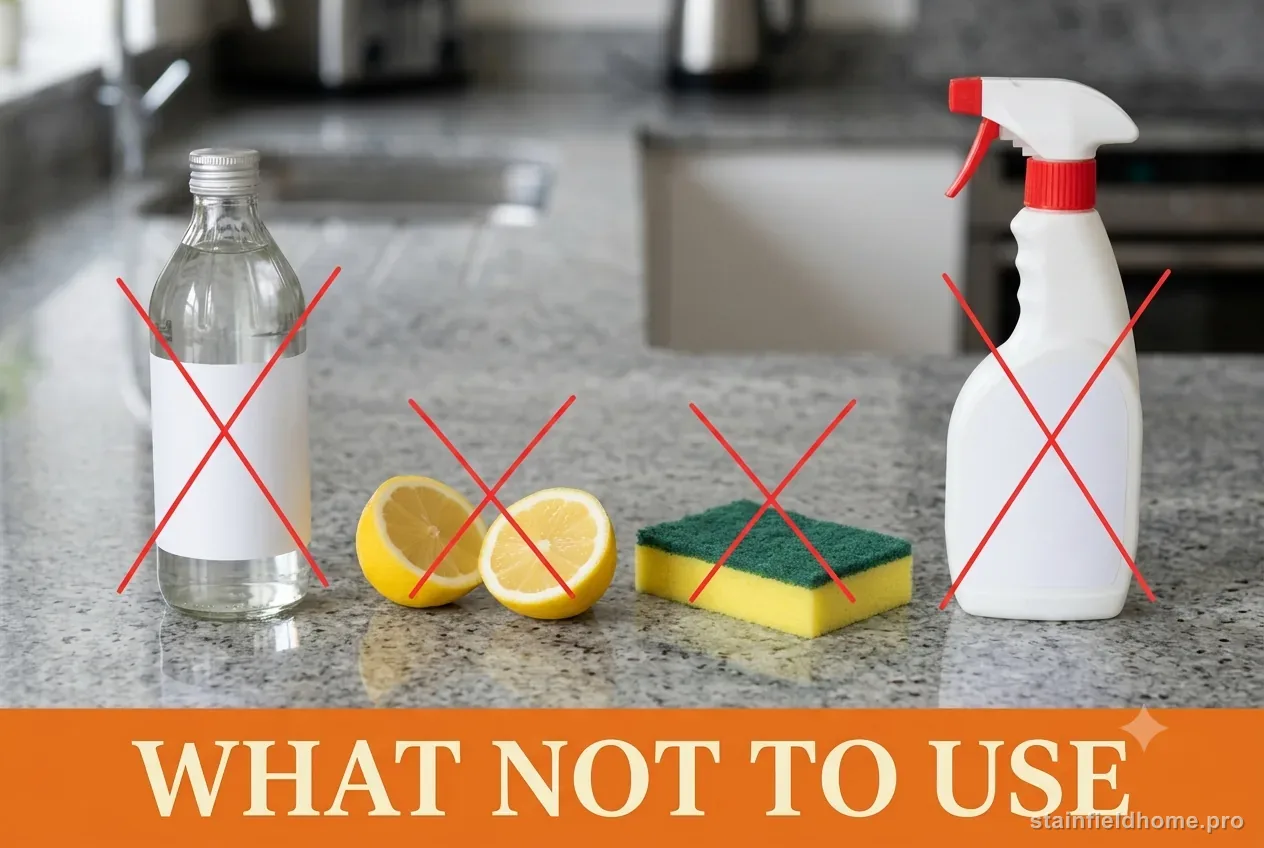
- Do not use vinegar, lemon juice, bathroom descaler, or another acidic cleaner as a default stain treatment.
- Do not scrub with steel wool, abrasive powder, or the rough side of a kitchen sponge on a polished finish.
- Do not mix bleach and ammonia. The combination creates dangerous gas.
- Do not cover a wet area with appliances or a cutting board; trapped moisture makes it harder to judge the result.
- Do not assume a sealer makes stone stain-proof. Sealer buys response time, but spills still need prompt cleanup.
Know when the sealer may need attention
One coffee mark does not automatically mean the entire counter needs resealing. Watch how plain water behaves on the same high-use area. If clean water repeatedly darkens the granite quickly and takes a long time to disappear, ask the installer or a stone professional whether the sealer is due for evaluation. Different stones and sealers have different schedules, so a universal yearly rule is not reliable.
Do not apply a new sealer over a stain or while the stone is damp. The discoloration should be resolved and the surface prepared according to the sealer manufacturer’s directions first.
Account for finish, edges, and stone construction
Polished, honed, and leathered granite do not show residue in the same way. A polished surface makes a dull patch obvious; a honed surface may hold fine residue in its texture; a leathered finish can trap sweetened coffee in low points. Use a soft cloth and several controlled rinses rather than an abrasive pad. Judge color only after the surface and its texture are fully dry. A flashlight held at a low angle can reveal dried sugar or cleaner film that looks like a stain from above.
Pay special attention to seams, sink rims, backsplash joints, faucet bases, and the unfinished underside of an overhang. These areas may contain grout, caulk, adhesive, or exposed stone that responds differently from the sealed top. Blot liquid away from the joint instead of pushing it into the gap. If coffee has entered a failed seam or swollen the substrate, a fabricator should assess the assembly; surface cleaning cannot repair loose caulk or a damaged support layer.
Some counters sold under broad trade names contain resin-treated natural stone, engineered sections, or mixed materials. Keep the invoice or installer record with your care information. When the exact material is unknown, stop after mild soap, water, thorough rinsing, and drying. A stone-specific poultice is a later step only after compatibility is established, not a universal treatment for every speckled countertop.
Separate coffee pigment from milk, sugar, and old residue
Black coffee mainly leaves moisture and brown organic color. A latte, flavored creamer, or syrup adds fat, protein, and sticky sugar. After blotting, use a very small amount of mild soap or pH-neutral stone cleaner to break up that surface residue, then rinse more than once. If the counter feels tacky after drying, cleaner or sugar remains; do another plain-water wipe and dry before considering a poultice.
For an old ring beneath a coffee machine, first move the appliance and inspect the entire footprint. Condensation, hard-water deposits, rust from a metal foot, and coffee may overlap. Do not treat all four as coffee. Mild cleaning can remove surface grime and show the true pattern. A brown mark aligned with a metal screw may be rust, while a pale crust at the edge is more consistent with mineral deposit. Each requires a compatible stone treatment and may warrant professional identification.
Run a final check after 24 hours with the area uncovered. A dark patch that becomes steadily lighter is often retained moisture. A stable colored shadow may be a penetrated stain. A rough or differently reflective patch indicates a finish problem. Identifying which of those outcomes you have prevents unnecessary chemical treatment and gives a stone professional a much clearer description if help is needed.
Prevent another coffee ring
Use a coaster or small tray at the coffee station, especially beneath insulated tumblers that collect drips. Wipe around the coffee maker daily so sweetened splashes do not sit unnoticed. Keep a pH-neutral stone cleaner in the kitchen and save the stone and sealer paperwork; knowing the exact finish is more useful than a universal internet recipe.
Common questions
FAQ
Will baking soda remove coffee from granite?
A random paste is not the best first step. Start with blotting, pH-neutral cleaning, rinsing, and full drying. For a penetrated stain, use a poultice specifically labeled for organic stains on granite.
Can I use vinegar on a granite coffee stain?
No. Acidic cleaners are unnecessary for coffee and can affect some stone components, nearby grout, or the finish. Use a natural-stone-safe, pH-neutral cleaner.
Why is the granite still dark after cleaning?
It may still be damp. Let the uncovered area dry completely before deciding that pigment remains. A persistent brown shadow after full drying is more likely to need a stone-safe poultice or professional treatment.
Sources reviewed
Keep reading
Related guides

Coffee on Car seat
How to Remove Coffee Stains From a Car Seat
Coffee on a car seat is tannin, plus milk and sugar if you take it that way. Lift the brown with soap, break down the dairy with enzymes, and keep the foam under the fabric from getting soaked.

Coffee on Jute or sisal rug
How to Remove Coffee From a Jute or Sisal Rug
Blot coffee from jute or sisal without soaking the plant fibers, causing browning, spreading rings, or weakening the rug backing.
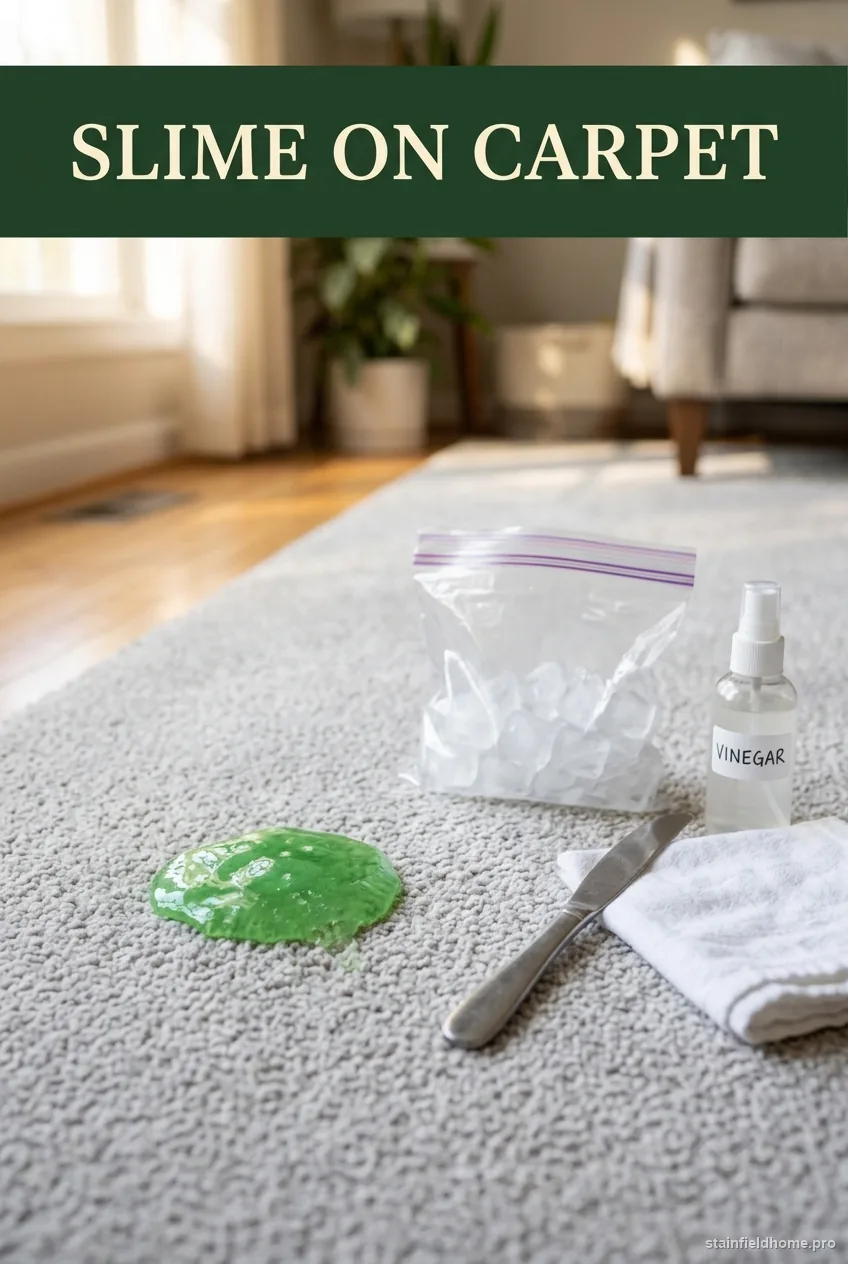
Slime on Carpet
How to Remove Slime From Carpet Without Damaging the Fibers
Lift dried or fresh slime out of carpet fibers with an ice-and-scrape method plus a vinegar or rubbing alcohol rinse, without soaking the backing or bleaching the color.
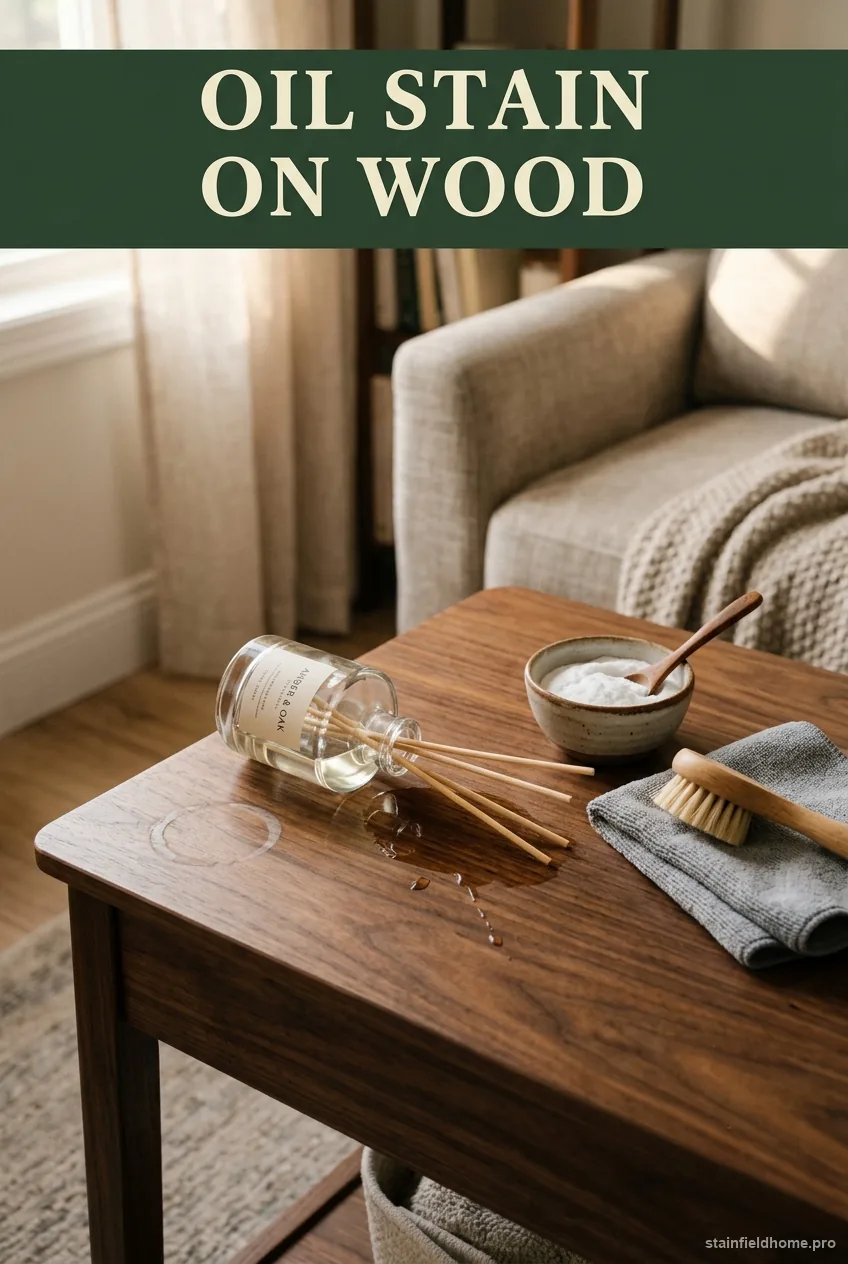
Essential oil and reed-diffuser oil on Finished wood furniture
How to Remove Essential Oil and Diffuser Stains From Wood Furniture
Blot a diffuser-oil spill on finished wood, use a cautious absorbent step, and recognize when the finish needs a furniture repair professional.