The quick answer
Blot up the spill immediately with a dry cloth, pressing straight down and working from the outside in. Mix one part white vinegar, two parts water, and a few drops of dish soap, apply it lightly to the stain, wait a few minutes, and blot. Follow with an enzyme upholstery cleaner if the coffee had milk or sugar. Rinse by blotting with clean water, press dry with a towel, and dry the seat with a fan and the windows open. Keep the liquid to a minimum, because the foam under a car seat holds water for days and turns musty, and never use hot water, which sets the tannin.
What you’ll need
- Dry white cloths or paper towels
- White vinegar
- Grease-cutting dish soap
- An enzyme cleaner labeled for upholstery
- Baking soda
- A spray bottle
- A dry towel and a fan
Hi. I'm the coffee on your car seat.
I'm the brown fan-shaped stain that bloomed across your seat when the cup jumped out of the cupholder on a corner. My color is tannin, the same plant compound that stains teeth and mugs, and it grabs onto fabric fibers within minutes. That is the part you always have to deal with.
If you take your coffee with milk or cream, I also left fat and milk protein behind, which go rancid and smell if they are not broken down. If you take sugar, there is a residue that dries tacky, attracts dirt, and turns a faint mark grey over the next week. Black coffee is just tannin and is the easiest version of me; a sweet, milky latte is the hardest.
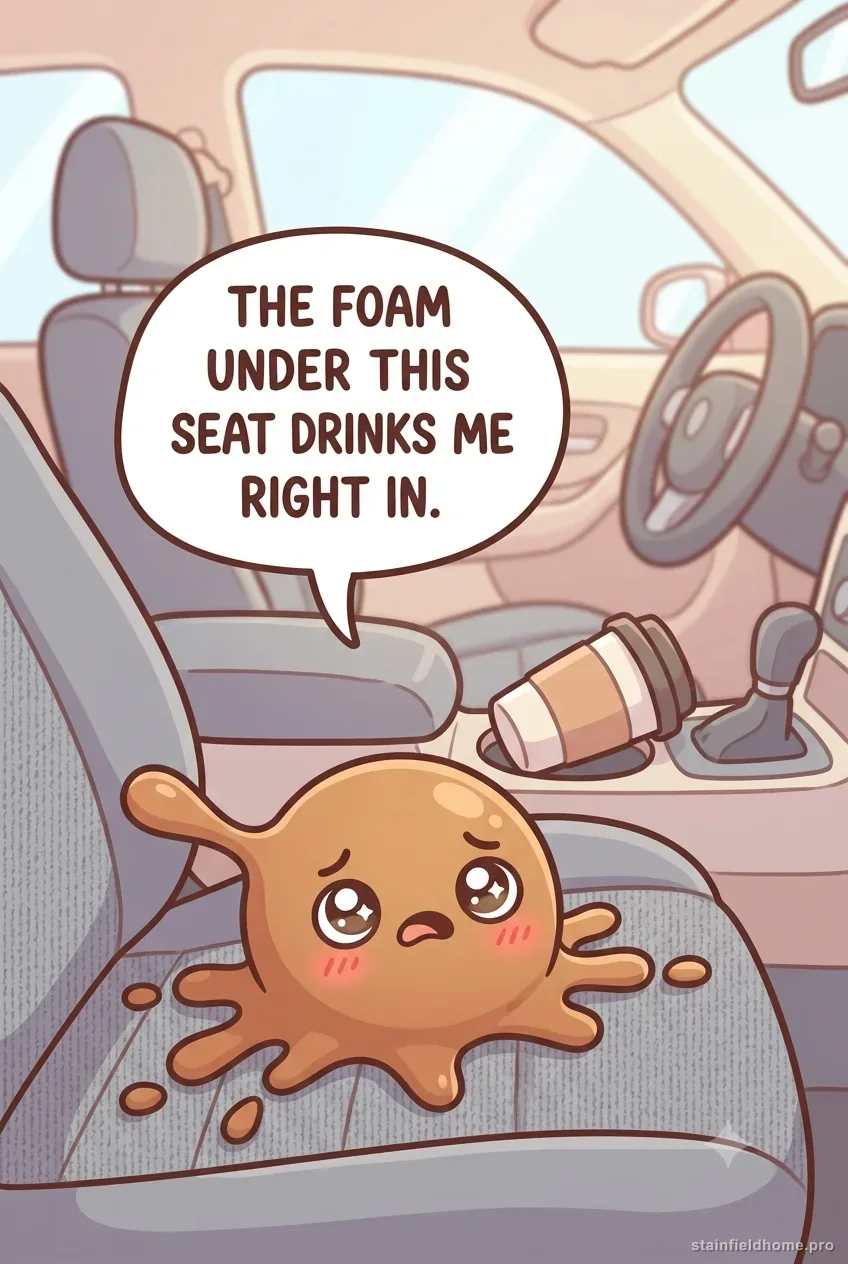
What makes a car seat different from a couch is what sits underneath. Below the fabric is a thick block of foam, and in a closed-up car that foam dries slowly. Soak it while cleaning me and you trade a coffee stain for a musty smell that lasts for months. The whole method below is built around using as little liquid as possible.

Cloth seat or leather seat?
Work out your seat type first. Cloth and velour seats take the full method below. Leather and vinyl seats do not: for those, wipe me off with a barely-damp cloth and a drop of soap while I am fresh, then use a leather conditioner, and skip the enzymes and soaking. Suede and Alcantara take only a barely-damp microfiber cloth, blotted never rubbed, with the nap brushed back afterward.
Be careful with perforated, ventilated, or heated and cooled seats. There are fans, heating elements, and wiring directly under that fabric, so never spray heavily or use an extractor; a damp cloth is the limit. Water that runs down through the perforations can kill a seat heater.
Test any cleaner on a hidden part of the seat, low on the base or on the back, before you put it on the stain. Automotive fabric is dyed, and a strong cleaner can pull the color.
Blot me before I soak in
- 01
Press a dry cloth or a stack of paper towels onto the spill and lean on it so it wicks up as much liquid as possible. Lift, move to a dry section, and press again. Do not rub; rubbing drives me into the weave and the foam and widens the stain.
- 02
If you have baking soda handy and the spill is large, sprinkle a thin layer over the wet area, give it two or three minutes to pull up liquid, then vacuum or brush it away. This is optional but it means less to blot.
- 03
Mix a cleaning solution: one part white vinegar, two parts water, and a few drops of dish soap, in a spray bottle or a cup. The vinegar works on the tannin and the soap lifts the milk fat.
- 04
Lightly mist or dab the solution onto the stain from the edge inward. Damp, not wet. Let it sit three to five minutes.
- 05
Blot with a clean, barely-damp cloth, turning to a fresh area constantly. Repeat the mist, wait, and blot cycle until the cloth stops picking up brown.
- 06
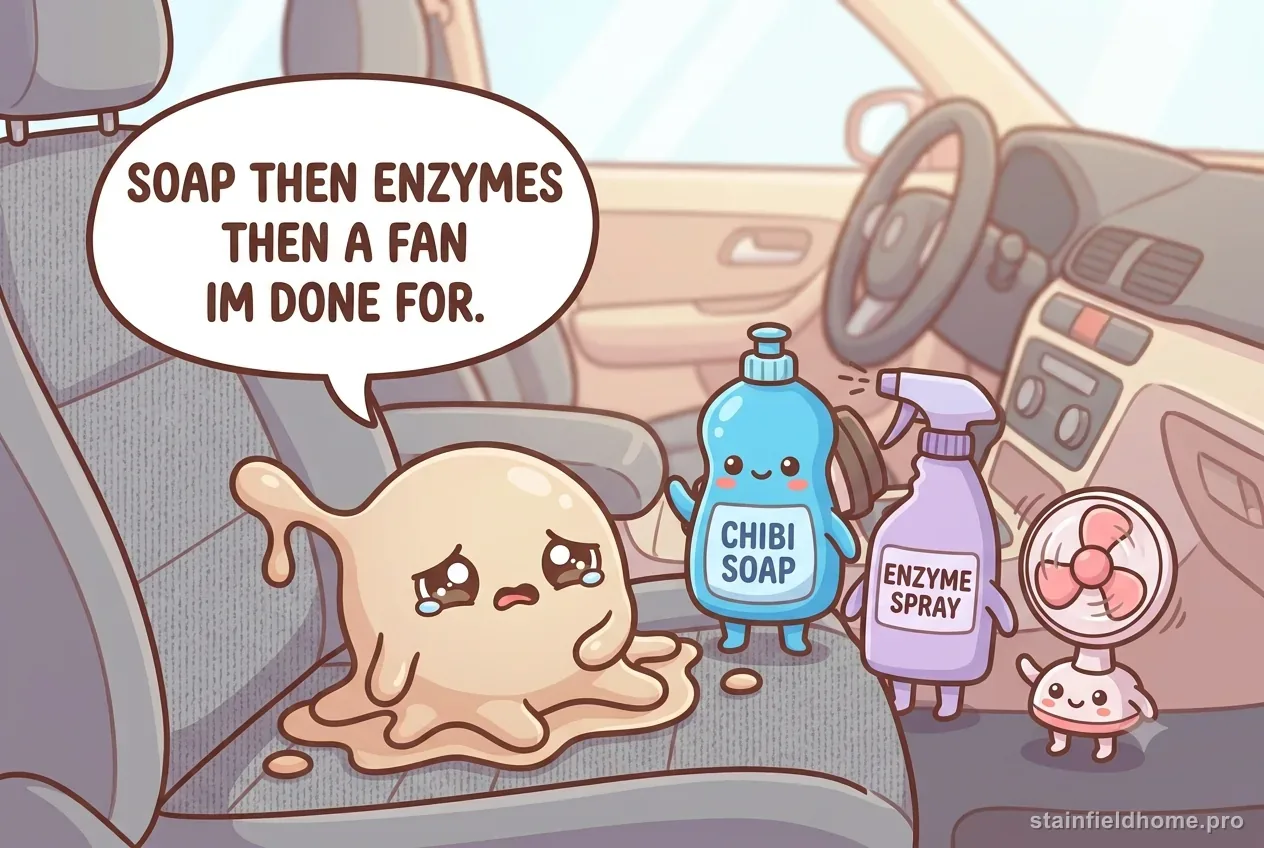
If the coffee had milk or sugar, work an enzyme upholstery cleaner into the spot now and give it the full dwell time on the label, often ten minutes or more. Enzymes digest the dairy and sugar that soap leaves behind, and they are what prevents a smell later.
- 07
Blot with a cloth dipped in plain cool water and wrung out, to rinse the cleaners out of the fabric. Anything left in dries stiff and re-attracts dirt.
- 08
Press the area hard under a dry towel to pull moisture up out of the foam. Stand on the towel if you need to.
- 09
Dry the seat with a fan pointed at it and the windows cracked, or park in the sun with the doors open. Do not close the car up until the seat is dry all the way through, which can take several hours.
If the stain has already dried
A coffee stain you find days later is tannin that has fully bonded, plus, if it was milky, a faint rancid note. It can still come out; it just needs more rounds. Re-wet the stain with the vinegar-water-soap solution and give it a longer dwell, around ten minutes, before blotting.
For a stubborn dried stain, make a paste of three parts baking soda to one part water, spread it over the mark, and leave it to dry for thirty minutes to an hour before brushing and vacuuming it off. Then go back to the solution-and-blot cycle. Two or three full rounds, with drying in between, clear most dried coffee; a very old stain on light fabric may also need the oxygen-bleach step in the ring section below.
Club soda, vinegar, and the myths
Car forums are full of coffee-stain recipes. Here is the honest read on each.
The vinegar, water, and dish soap mix above is the one that genuinely works and is safe on automotive cloth. Make it your default.
A baking soda paste is a real help on a stubborn or dried stain and doubles as a deodorizer. Worth doing.
Club soda is a mild version of the plain-water blot; the carbonation does very little. It will not hurt, but it is not doing much.
Hydrogen peroxide at 3 percent can lighten a tannin ghost on a light grey or beige seat, but it can also bleach a colored seat, so test it on a hidden spot and keep it well away from dark fabric.
A commercial foaming upholstery or interior cleaner is fine; follow its label, work it with a soft brush, and still blot and dry as above. It is not better than the vinegar mix, just more convenient.
A melamine (magic eraser) sponge pills and fuzzes automotive cloth and can leave a worn patch. Skip it on fabric seats.
Shaving cream and WD-40 both get suggested and both leave residues of their own on a seat. Don't.
If I left a brown ring behind
A tan outline after the seat dries is tannin still in the fibers. Blot it again with the vinegar solution, then with a mix of one tablespoon white vinegar in a cup of water, rinsing with plain water and drying between tries.
A ring at the outer edge of the cleaned area, rather than where the coffee was, is a water mark from over-wetting. Lightly dampen the whole panel out past that ring with plain water and blot it dry evenly, feathering the edge so there is no hard line, then dry with the fan.
A spot that still feels slightly tacky is leftover sugar; that needs another enzyme pass, not scrubbing. For a last trace of color on light cloth, a very dilute dab of oxygen-bleach solution, tested on a hidden spot first, usually finishes it.
Getting the coffee smell out
If your car smells of stale coffee or goes musty a day after you cleaned, one of two things happened: the milk residue was never fully broken down, or the foam got too wet and is drying slowly. Both are fixable.
For milk smell, go back in with the enzyme cleaner, give it a long dwell, blot, and dry. Enzymes are the only thing that actually removes the odor rather than masking it.
For damp-foam mustiness, get the seat properly dry first, with a fan and open doors for a few hours or a day parked in the sun with the windows cracked. Then sprinkle baking soda over the seat, leave it overnight, and vacuum it out. A tub of moisture absorber or a bag of activated charcoal left in the car for a few days handles the rest.
If the smell keeps returning no matter what, water reached deep into the foam and mildew has started. That needs a detailer with an extractor and a proper drying setup, because you cannot get airflow into the middle of a seat cushion from the outside.
What sets the brown for good
- Soaking the seat or running an extractor hard over it, which pushes me and the water into the foam and, on some seats, toward the wiring
- Hot water or a steam cleaner on an untreated stain, which sets the tannin and cooks the milk protein into the fabric
- Rubbing hard, which frays and pills automotive cloth and spreads the stain wider
- Leaving milk and sugar residue untreated, so it goes rancid, turns tacky, and pulls in dirt
- An all-purpose spray with bleach or a strong solvent, which strips the seat's dye
- Closing the car up while the seat is still damp, which grows mildew in the foam
- Over-wetting the edges and leaving a hard water ring instead of feathering it out
- Stopping after one pass; a milky coffee stain usually needs two or three

Cloth, leather, perforated, and vinyl
On standard cloth and velour seats the method above works as written; the discipline is using less liquid than feels right and drying the seat fully. Thick plush velour holds water longer, so lean harder on the fan and give it more time.
Leather and vinyl seats are the opposite: no soaking, no enzymes, no vinegar. Wipe me up with a damp cloth and a drop of gentle soap while I am fresh, dry the spot, and condition it. A set stain in leather is a job for a leather cleaner, not a fabric method.
Suede and Alcantara take only a barely-damp microfiber cloth, blotted straight down, with the nap brushed back afterward. Anything wetter leaves a ring, and a real stain goes to an auto detailer. Perforated, ventilated, and heated or cooled seats need the gentlest version of everything: a damp cloth only, no spray, no extractor, and careful drying so nothing runs down into the holes.
My cousins on a car seat vary. Black coffee is just tannin and often lifts with the vinegar mix alone. A latte or flat white leans hard on the enzyme step for the milk. An energy drink or a soda adds bright dye and far more sugar, so expect a longer enzyme treatment, a careful rinse, and possibly the oxygen-bleach step for the color. Tea is my near-twin and comes out exactly the same way.
A commute without the spill
A travel mug with a sealing lid, the kind that actually clicks shut, stops almost every version of me. The flimsy push-on coffee-shop lid does not count.
Keep a few cloths and a small spray bottle of the vinegar-water-soap mix in the door pocket or the trunk, so you can blot a spill in the first minute, which is the difference between a wipe and a stain.
Have automotive fabric seats treated with a fabric protector, or do it yourself with a spray rated for car upholstery. It makes a fresh spill bead on the surface for a few seconds instead of sinking straight into the foam, and it buys you the time you need to grab a cloth.
Common questions
FAQ
How do I get a dried coffee stain out of a car seat?
Re-wet it with a mix of one part white vinegar, two parts water, and a few drops of dish soap, let it dwell about ten minutes, and blot. For a stubborn one, cover it with a baking soda paste, let it dry, brush it off, and repeat the solution-and-blot cycle. Follow with an enzyme cleaner if there was milk or sugar. It usually takes two or three rounds with drying in between.
What is the best homemade cleaner for coffee on car upholstery?
One part white vinegar, two parts water, and a few drops of grease-cutting dish soap in a spray bottle. The vinegar works on the tannin and the soap lifts the milk fat. Mist it on lightly, wait a few minutes, and blot; never soak the seat.
Can I use a steam cleaner or extractor on my car seats?
Lightly, and only after blotting and treating the stain by hand first. Keep passes quick, then press dry with a towel and run a fan so the foam does not stay wet. Never use an extractor or steam on perforated, ventilated, or heated seats, where water reaches the components under the fabric.
Why does my car smell musty or like stale coffee after I cleaned the spill?
Either the milk residue was not fully broken down, or the foam under the seat got too wet and is drying slowly. Re-treat with an enzyme cleaner for the smell, get the seat fully dry with a fan and open doors, then leave baking soda on it overnight and vacuum. A moisture absorber or charcoal bag helps with the rest.
Will vinegar damage my car seat?
Diluted at one part vinegar to two parts water it is safe on cloth and velour seats, and the smell airs out as it dries. Do not use vinegar on leather, and always test a hidden spot first on any seat, because automotive dyes vary.
The stain is gone but there is a ring around where I cleaned. How do I fix that?
That is a water mark from over-wetting. Lightly dampen the whole seat panel out past the ring with plain water, blot it dry evenly so there is no hard edge, and dry it with a fan. Feathering the moisture out removes the line.
Sources reviewed
Keep reading
Related guides

Coffee on Granite countertop
How to Remove a Coffee Stain From a Granite Countertop
Clean fresh coffee from granite, tell a surface spill from a penetrated stain, and avoid acidic cleaners that can harm nearby stone or sealer.

Melted crayon on Car seat
How to Remove Melted Crayon From a Car Seat
Lift wax and pigment from a crayon that melted into cloth or leather upholstery in a hot car, using cold to harden it and gentle warmth to draw the rest out.

Coffee on Jute or sisal rug
How to Remove Coffee From a Jute or Sisal Rug
Blot coffee from jute or sisal without soaking the plant fibers, causing browning, spreading rings, or weakening the rug backing.
Slime on Carpet
How to Remove Slime From Carpet Without Damaging the Fibers
Lift dried or fresh slime out of carpet fibers with an ice-and-scrape method plus a vinegar or rubbing alcohol rinse, without soaking the backing or bleaching the color.