
The quick answer
First identify whether this is a fixed vehicle seat or a removable child-restraint cover, then follow that product's manual. On a fixed cloth seat, chill and gently lift raised wax, then use only a vehicle-upholstery cleaner approved by the automaker; do not use an iron, solvent, or strong cleaner near a side airbag seam. For a removable cover, use heat or washing only if its care instructions explicitly allow it. Leather and vinyl need a surface-specific cleaner.
What you’ll need
- An ice pack or a bag of ice in a plastic bag
- A dull knife, plastic scraper, or old credit card
- Plain white paper towels or a brown paper bag
- A hair dryer on low, or a warm iron
- Clear dish soap and warm water
- Rubbing alcohol, for cloth only, on a white cloth
Cloth seat or leather seat changes everything
A fixed vehicle seat may contain side airbags, heating or ventilation elements, sensors, and foam beneath its cover. The vehicle owner's manual therefore takes priority over generic crayon advice. Toyota recommends checking the owner manual for the permitted upholstery cleaner; some manuals warn against solvents or strong detergents near a seat-mounted airbag. Do not remove fixed upholstery or soak the seat to reach wax below the surface.
A child-restraint cover is a separate case: do not assume it is machine-washable or safe to heat. Follow the exact car-seat manufacturer's manual for the cover, harness, and buckle. Never use a clothes dryer or solvent on a harness, and do not remove or replace a cover unless the manual permits it. If wax is on a belt, buckle, or a non-removable child-seat part, contact the manufacturer before cleaning.
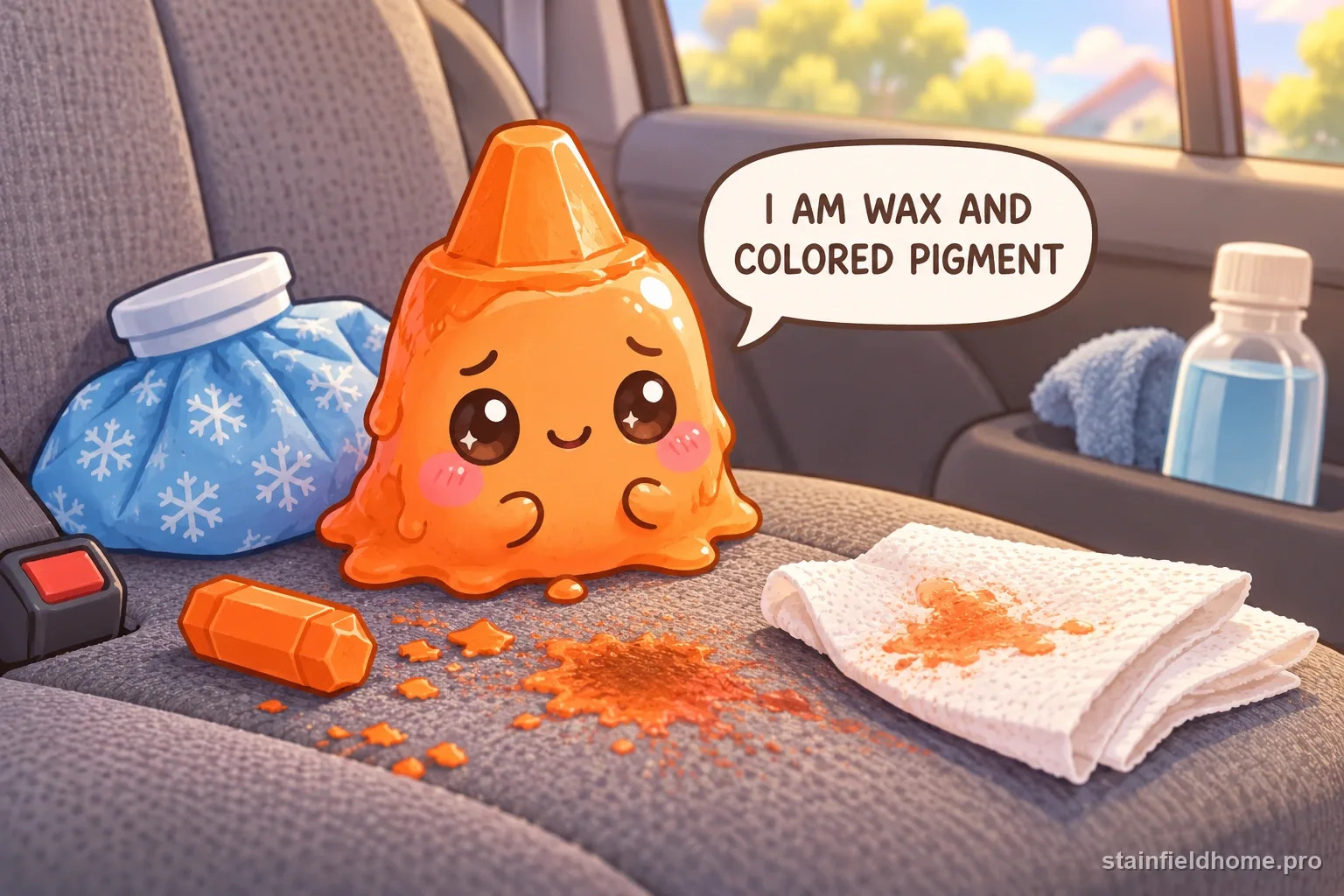
Chill it before you touch it
A crayon that softened in a hot car is smeared and greasy, and scraping it warm just spreads pigment. Press an ice pack or a bag of ice over the mark for 10 to 15 minutes until the wax is hard and brittle.
Then work the raised wax off with a dull knife or an old credit card held nearly flat, lifting flakes rather than digging. On woven cloth, brush across the weave gently to pop wax out from between the threads. Get off everything that will come off cold before adding any heat.
Heat-transfer the wax out of cloth
Do not use this heat-transfer method on a fixed vehicle seat unless its owner manual explicitly allows it. Direct heat can affect synthetic upholstery, foam, wiring, adhesives, and nearby airbag systems. For a removable washable fabric cover, check its care label first; only if the maker permits low heat, place absorbent paper over the mark and warm briefly with a hair dryer held well back, checking continuously for wax transfer.
Move to a clean section of paper every time you see wax transfer, and stop if the fabric warms significantly, changes sheen, or the paper picks up dye. Do not iron a fixed seat or place a hot iron inside a car. If the manual does not authorize this method, scrape away what is raised while cold and use the approved upholstery cleaner or professional detailer instead.
Treat the colored oily shadow
Crayon is wax plus pigment plus a little oil, so after the wax is gone you are left with a faint greasy stain. Work a drop of clear dish soap into it with a damp white cloth, let it sit two minutes, and blot with clean damp cloth. Dish soap is built to cut the oily carrier.
On a fixed cloth seat, skip rubbing alcohol unless the vehicle maker explicitly approves it. Some owner manuals warn against solvents and strong detergents on seats that contain side airbags, and a solvent can also alter dye or finish. Use an approved automotive upholstery cleaner exactly as labeled, applied to a cloth rather than sprayed toward a seat seam; blot and remove residue as directed.
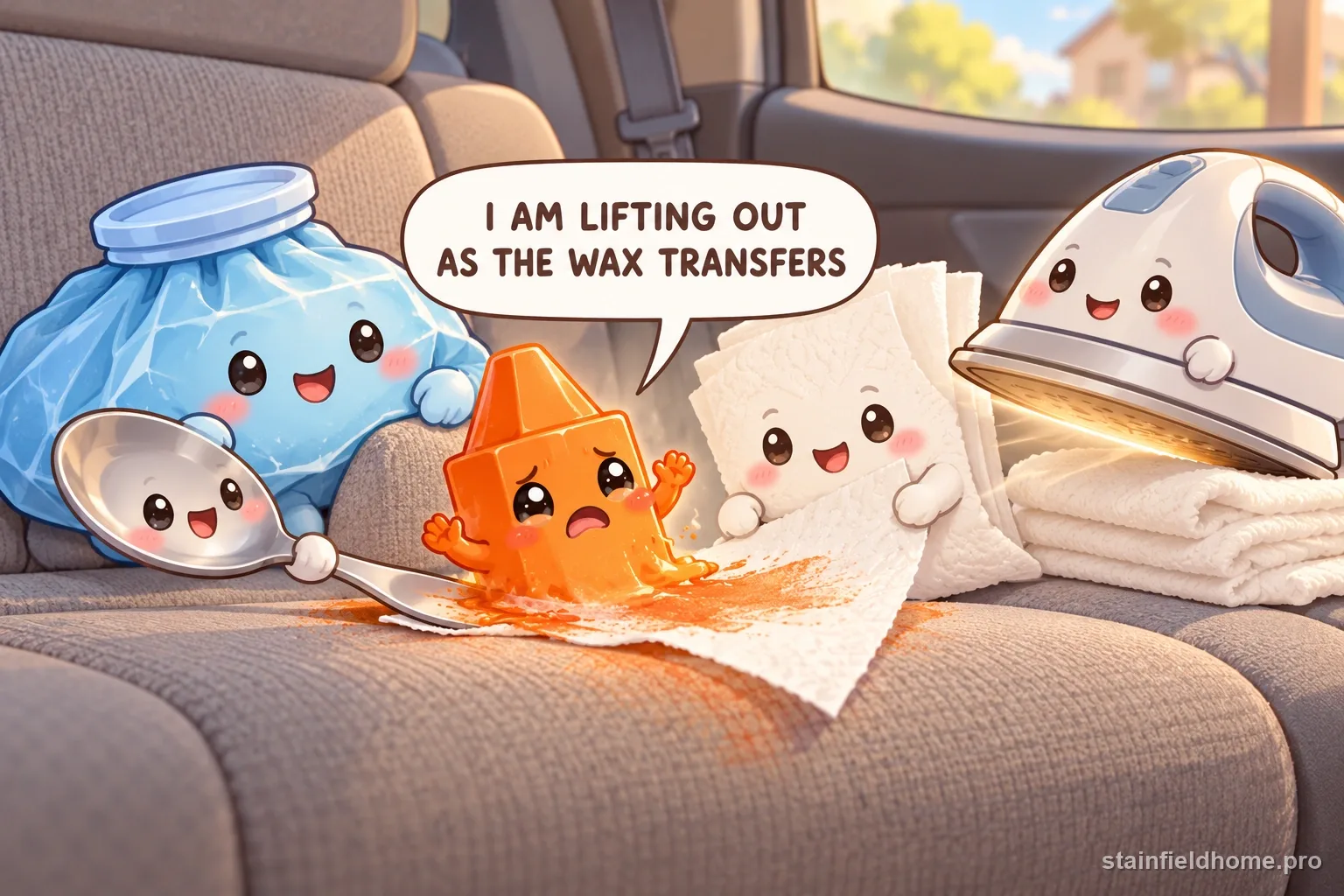
Leather and vinyl seats, done safely
After the cold-scrape, do not apply heat or solvent. Wipe the mark repeatedly with a cloth wrung out in warm water with a drop of dish soap, following the grain, letting the mild warmth and soap soften and float the wax slowly.
Finish with a leather or vinyl upholstery cleaner made for automotive interiors, then a conditioner on leather to replace what the cleaning removed. A faint tint may remain in the grain of light leather; that is preferable to the cracking and discoloration that heat or alcohol would cause.
If it baked in over a long hot day
Crayon that melted, spread, and then re-hardened over a full summer afternoon has driven pigment deep into cloth fibers. Repeat the full cycle, chill and scrape, heat-transfer, dish soap, alcohol, more than once; each pass takes out another layer. Vacuuming between passes clears loosened wax crumbs.
For a large melted area on fixed upholstery, do not repeat heat and solvent cycles. A qualified auto detailer can assess the seat material and work around airbags, sensors, and heated elements; share the vehicle manual and the crayon brand. If the crayon reached a child restraint, ask that restraint's manufacturer whether the seat remains safe and how to clean it.
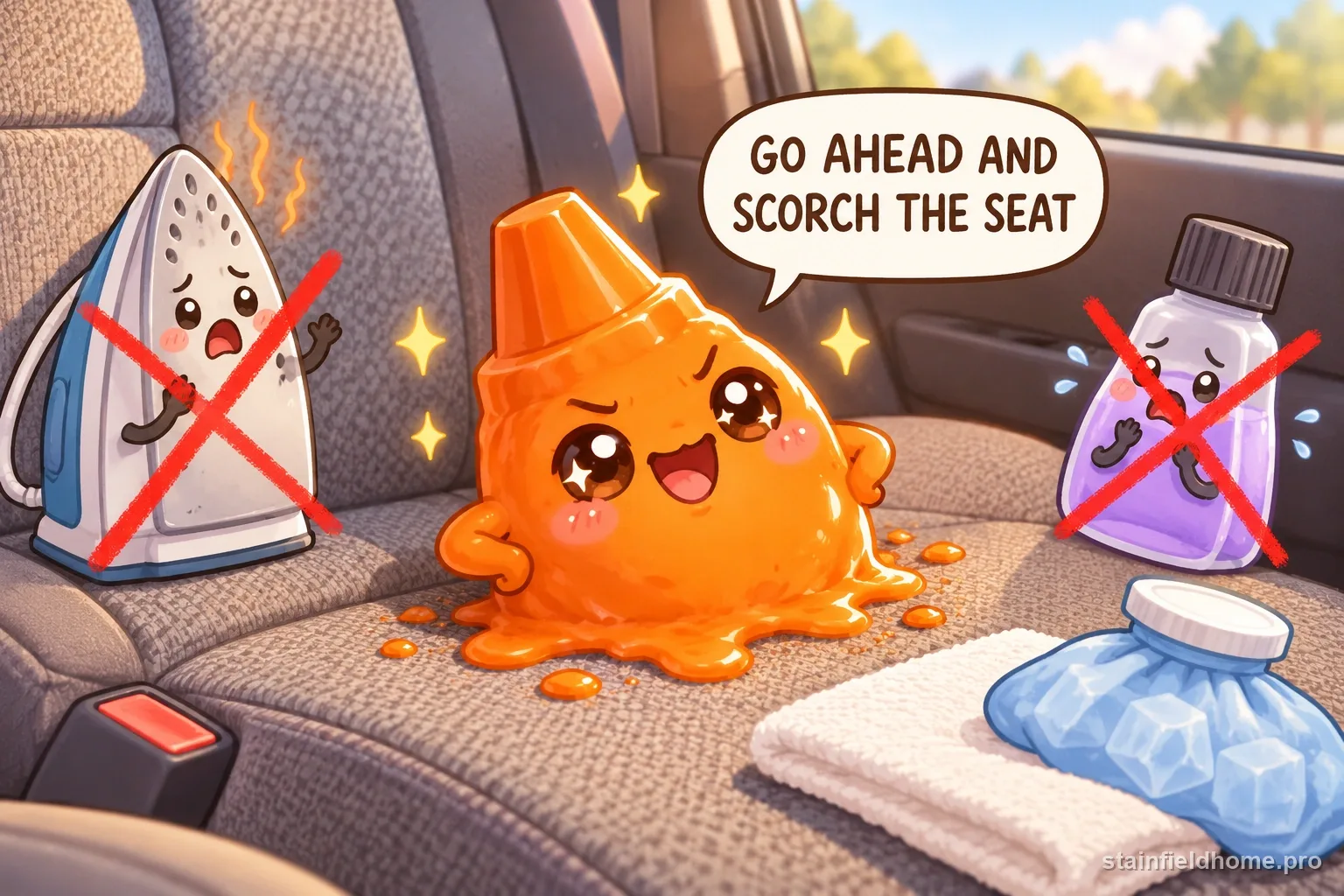
Heat, solvent, and pressure mistakes
- Do not use an iron or hair dryer on a fixed vehicle seat unless the vehicle maker specifically allows it.
- Do not use acetone, paint thinner, rubbing alcohol, or bug-and-tar remover unless the vehicle maker approves that cleaner for the exact upholstery.
- Do not scrub a warm, soft crayon mark; chill it first every time.
- Do not use alcohol on leather or vinyl seats.
Common questions
FAQ
The whole car got crayon on it after a hot day. Where do I start?
Start with the ice-and-scrape step on the worst mark to remove bulk wax, then heat-transfer on cloth areas. Work one panel at a time. A crayon that melted and spread widely usually needs two or three full cycles per area, and an auto detailer is a fair option for a badly covered seat.
Can I just wash the car seat cover?
If the cover is removable and machine washable, scrape off the hardened wax and heat-transfer the bulk of it into paper first, then wash on the warmest setting the label allows with detergent. Washing without removing the wax first tends to spread pigment and can leave wax in the machine.
Will WD-40 remove crayon from a car seat?
It can dissolve the wax, but it leaves its own oily residue that then needs a full dish-soap cleanup, and it is not made for upholstery. On cloth, the paper-towel heat-transfer method plus dish soap does the same job without adding a new stain. On leather, stay with warm soapy water and a leather cleaner.
Can I use this method on a child's car seat?
Do not use a generic upholstery method on a child restraint. Check its manual for whether the cover can be removed and how it can be washed; harnesses, buckles, and foam may have strict cleaning limits. Never use solvents, bleach, or heat on a harness unless the manufacturer explicitly directs it. Contact the car-seat maker if wax is on a safety-critical part.
What about wax on a seat with a side airbag?
Read the vehicle owner's manual and avoid spraying any cleaner directly at the seat side. Some automakers warn that solvents or strong detergents can contaminate the side-airbag system. Apply only an approved product to a cloth, keep moisture minimal, and use a professional detailer if wax is embedded near the airbag seam.
Is it safe to use a heated extractor on a vehicle seat?
Use an extractor only if the vehicle maker permits it for that seat and the operator knows how to avoid over-wetting electronics, heaters, sensors, and airbag seams. A child-restraint cover has its own rules and should not be treated like vehicle upholstery. When the manual is unclear, choose a detailer who can identify the seat construction before cleaning.
Why should I clean beyond the exact wax spot?
Some vehicle upholstery manuals warn that isolated spot treatment can leave a water ring. If the maker permits damp cleaning, use a lightly damp cloth and blend the treatment across the panel as directed, without soaking it. Keep cleaner away from side-airbag seams and electrical controls, and dry the area fully before using the seat.
Why does crayon leave color after the wax is gone?
Crayon is a mixture of wax and pigment. Removing the softened wax can leave colored particles in the textile, but rubbing hard may push them deeper or abrade the fabric. Use an approved cleaner in small blotting passes, changing cloth sections as color transfers. If the mark is close to a seam, perforation, or airbag label, stop and ask an automotive detailer who knows the seat model.
Sources reviewed
Keep reading
Related guides
Coffee on Car seat
How to Remove Coffee Stains From a Car Seat
Coffee on a car seat is tannin, plus milk and sugar if you take it that way. Lift the brown with soap, break down the dairy with enzymes, and keep the foam under the fabric from getting soaked.

Slime on Carpet
How to Remove Slime From Carpet Without Damaging the Fibers
Lift dried or fresh slime out of carpet fibers with an ice-and-scrape method plus a vinegar or rubbing alcohol rinse, without soaking the backing or bleaching the color.

Essential oil and reed-diffuser oil on Finished wood furniture
How to Remove Essential Oil and Diffuser Stains From Wood Furniture
Blot a diffuser-oil spill on finished wood, use a cautious absorbent step, and recognize when the finish needs a furniture repair professional.

Pumpkin (carving, decorating, or puree) on Carpet
How to Remove Pumpkin Stains From Carpet
Remove pumpkin pulp and treat any remaining orange mark on carpet with a careful, low-moisture sequence that follows the carpet maker's guidance.