
The quick answer
Blot coffee immediately with clean white towels, working from the edge toward the center, and keep added moisture extremely low. Jute and sisal can brown, swell, distort, or form water rings when saturated, so use the rug maker's approved spot cleaner or a barely damp mild-soap cloth and dry the area quickly with moving air.
What you’ll need
- white absorbent towels
- dull spoon
- vacuum
- manufacturer-approved natural-fiber spot cleaner
- mild soap if permitted
- small fan
- dry absorbent powder system if recommended
Why water is the enemy, not the coffee
Jute and sisal are unspun or lightly spun plant fibers. They are hygroscopic — they drink water fast — and when they get wet they swell, the weave distorts, the natural lignin in the fiber releases a tan-brown color (cellulosic browning), and the latex backing can bubble or delaminate. A big wet spot often dries into a stiff, rippled patch with a brown ring larger than the original spill.
So the coffee stain is a secondary problem. The primary rule for these rugs is minimum moisture, maximum blotting, fast drying. A dry rug with a faint coffee shadow is a far better outcome than a water-damaged one.

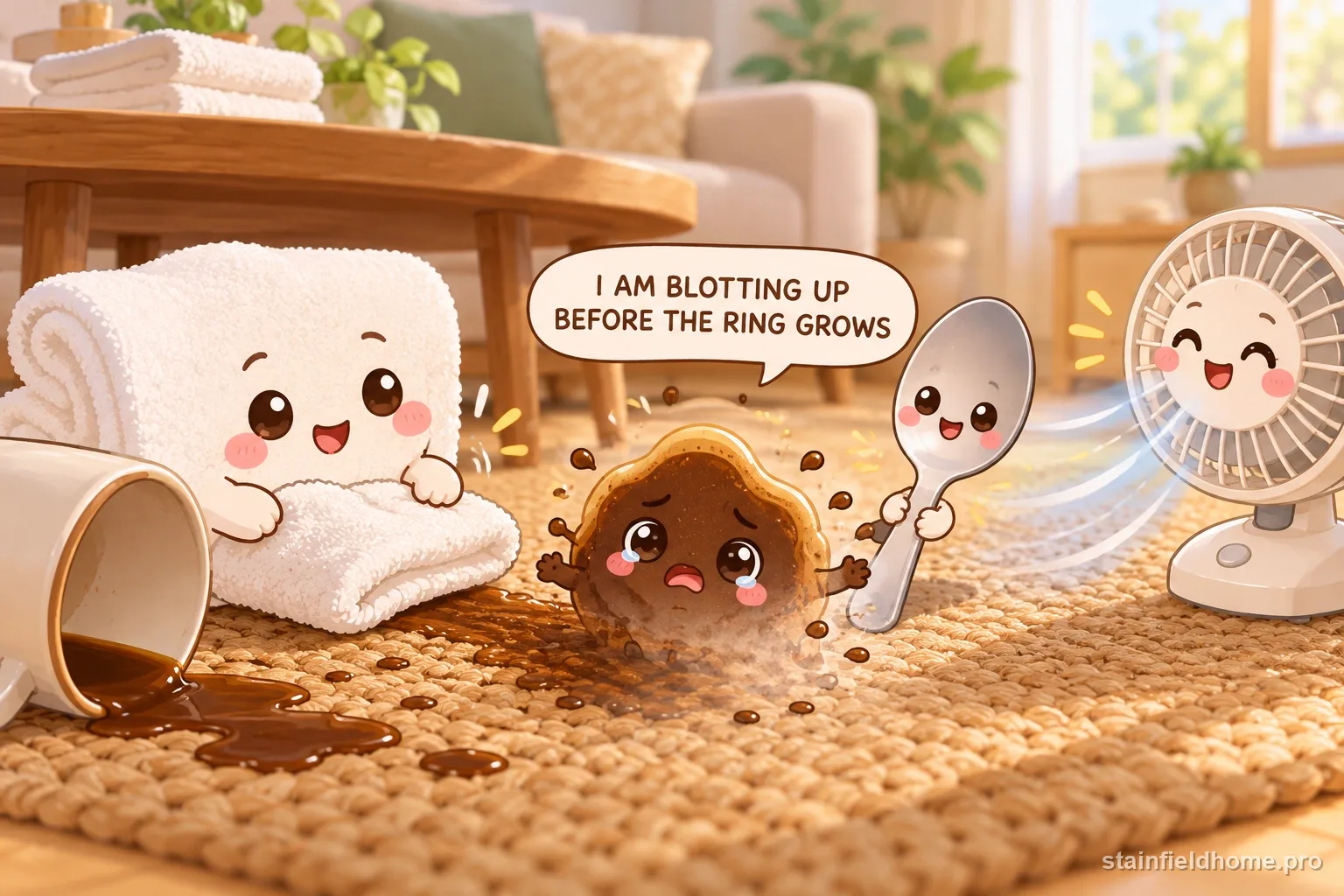
Blot fast, blot dry
- 01
Lift any grounds or foam with a spoon.
- 02
Fold a white towel, press it straight down on the spill, and stand on it for ten seconds to wick coffee up out of the weave.
- 03
Move to a dry section of towel and repeat until almost nothing transfers.
- 04
Only if a mark remains, lightly mist — do not pour — a barely-there mild soap solution, or dab it on with a wrung cloth, working edge to center so you do not grow the ring.
- 05
Blot again with dry towels, then put a fan on the spot until the fiber is bone dry.
The dry-first approach
For natural-fiber rugs, many specialists (and brands like Sisal Rugs Direct) recommend trying dry methods before any liquid. Sprinkle cornstarch or a dry carpet-cleaning powder over a blotted coffee mark, let it sit an hour to pull residual moisture and some color, then vacuum thoroughly.
This will not remove a dark stain completely, but it often lightens a blotted coffee mark enough that you can leave the rest alone rather than risk water.
If you must use liquid
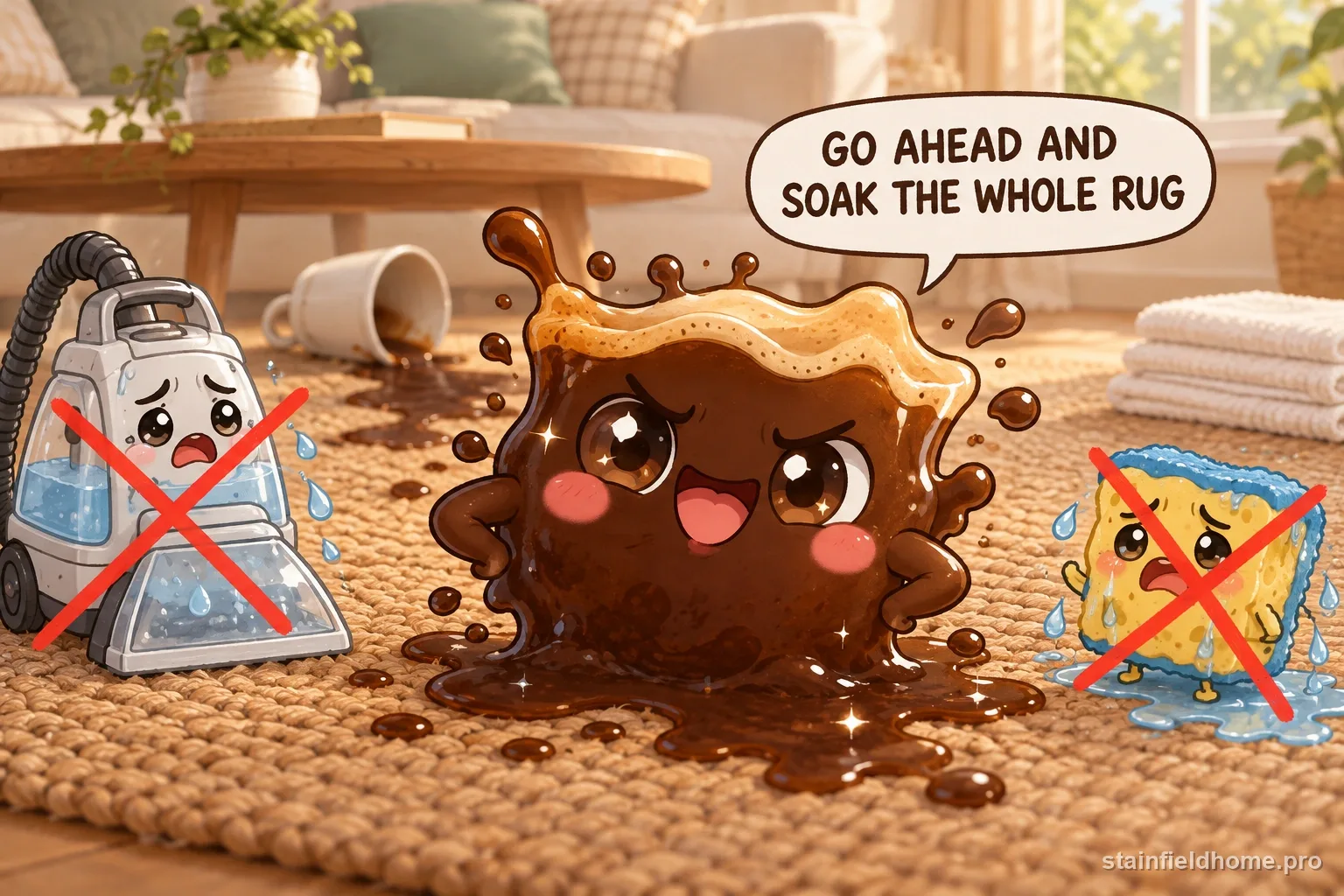
Use the least you can, keep it to the tips of the fibers, and never let it reach the backing. A cloth wrung nearly dry with a few drops of mild dish soap in cool water, dabbed and immediately blotted, is the ceiling. Rinse the same way with a barely-damp clean cloth so soap does not stay behind and attract dirt.
Work in from the edges of the stain. Then dry aggressively with a fan or a hair dryer on cool held well back — the goal is to get the fiber dry before the color can wick outward into a ring.
Browning rings and how to avoid them
If a brown halo appears as the rug dries, that is cellulosic browning from the fiber itself, not leftover coffee. It is caused by slow drying. The prevention is speed: the faster a damp jute rug dries, the less it browns.
A browning ring that has already formed sometimes responds to a light re-clean and very fast drying, but it can be permanent. This is the single best reason to keep these rugs away from anything that spills and to blot rather than wash.
Keeping coffee off a natural-fiber rug
- Do not put a jute or sisal rug where drinks are carried — hallways to the kitchen, under a coffee table used daily.
- Treat a new rug with a natural-fiber protector spray if the maker offers one.
- Deal with spills in seconds; a blotted fresh spill usually leaves nothing, a soaked-in one leaves a shadow.
- For anything more than a small spot, or any pet accident, call a rug cleaner who handles natural fiber rather than wetting it yourself.
Common questions
FAQ
Can I steam-clean or shampoo a jute rug?
No. Steam and hot-water extraction saturate the fibers, cause the weave to distort and brown, and can delaminate the backing. Natural-fiber rugs are blot-and-dry-clean only; for a large or deep stain, use a professional rug cleaner experienced with jute and sisal.
A brown ring appeared after the rug dried. What is that?
That is cellulosic browning — color released by the plant fiber itself when it dries too slowly, not remaining coffee. Prevent it by drying any damp spot fast with a fan. An existing ring sometimes lightens with a careful re-clean and rapid drying, but it can be permanent.
The coffee left a faint shadow. Should I keep treating it?
No. Repeated wetting risks browning, weave distortion, and backing damage that look far worse than a light shadow. Blot it dry, try a dry cornstarch or powder treatment, and then leave it. On a textured natural rug a faint mark is barely visible once it is dry.
Sources reviewed
Keep reading
Related guides

Coffee on Car seat
How to Remove Coffee Stains From a Car Seat
Coffee on a car seat is tannin, plus milk and sugar if you take it that way. Lift the brown with soap, break down the dairy with enzymes, and keep the foam under the fabric from getting soaked.

Coffee on Granite countertop
How to Remove a Coffee Stain From a Granite Countertop
Clean fresh coffee from granite, tell a surface spill from a penetrated stain, and avoid acidic cleaners that can harm nearby stone or sealer.

Spills and body oils on Bouclé sofas and chairs
How to Clean a Bouclé Sofa or Chair Without Flattening the Texture
Spot-clean a bouclé sofa or chair by its cleaning code, protect the looped pile from matting, and know which spills need a dry solvent instead of water.

Burnt-on grease and food residue on Air fryer basket
How to Clean Burnt-On Grease From an Air Fryer Basket
Break down baked-on grease in an air fryer basket with a soak and baking-soda paste, without scratching the nonstick coating or getting water near the heating element.