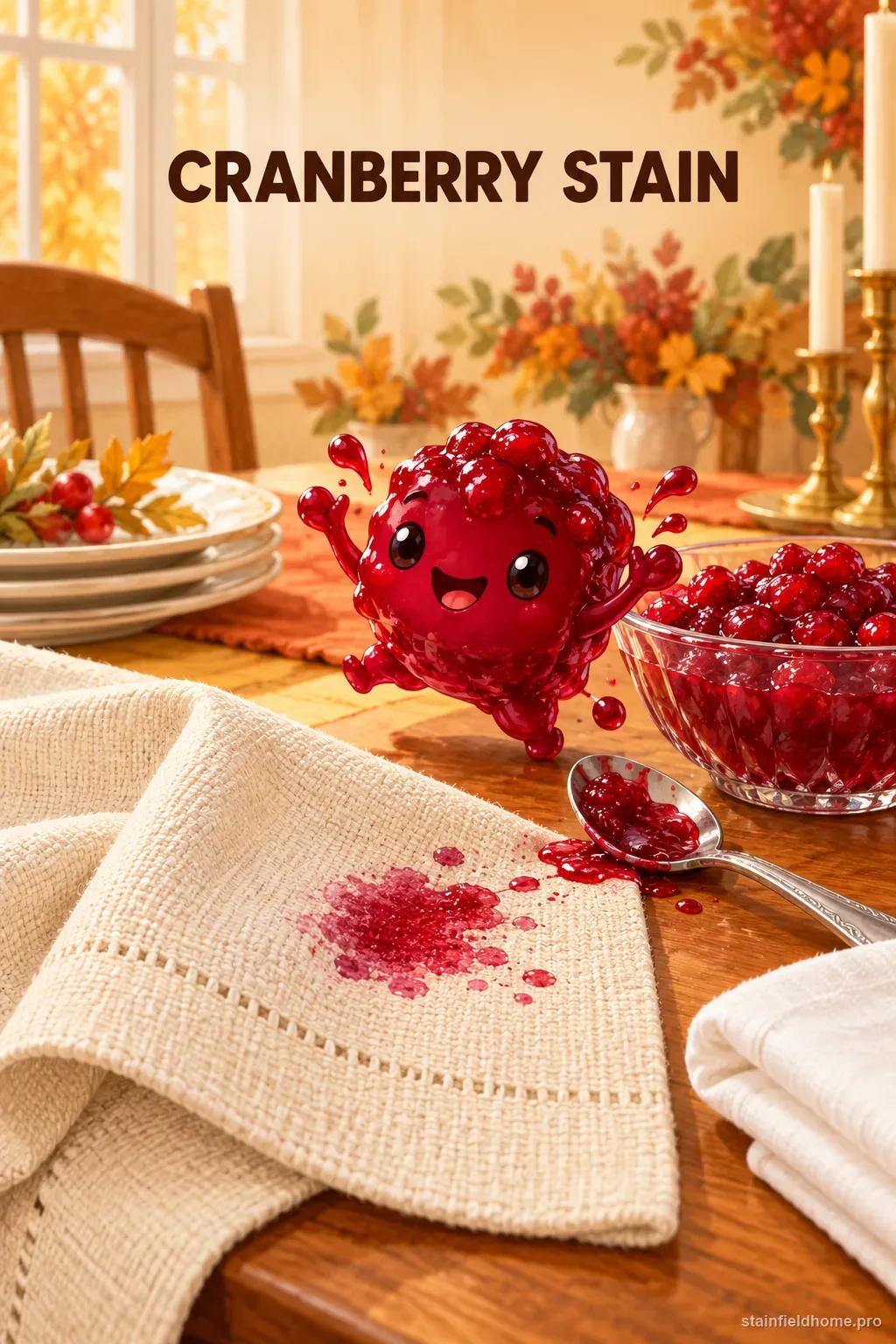
The quick answer
Lift sauce solids with a spoon and blot without rubbing. Check the care label and test a hidden hem. On washable linen, rinse from the back with cool water, soak briefly in diluted laundry detergent, and rinse well. Repeat once if needed, then wash as directed. Air-dry and inspect before using heat. Stop for antique, embroidered, dry-clean-only, or dye-bleeding napkins.
What you’ll need
- Dull spoon
- Clean white absorbent cloths
- Cool water
- Liquid laundry detergent
- Basin
- White towel
Check the linen and identify what spilled
Cranberry sauce can leave a red-purple berry mark, but the sauce may also contain sugar, citrus, spices, or oil from a recipe. The red color is the part you see first; a glossy or greasy outline can remain after it fades. Treat the visible solids and the liquid stain separately, and work gently so you do not drive either one deeper into the fibers.
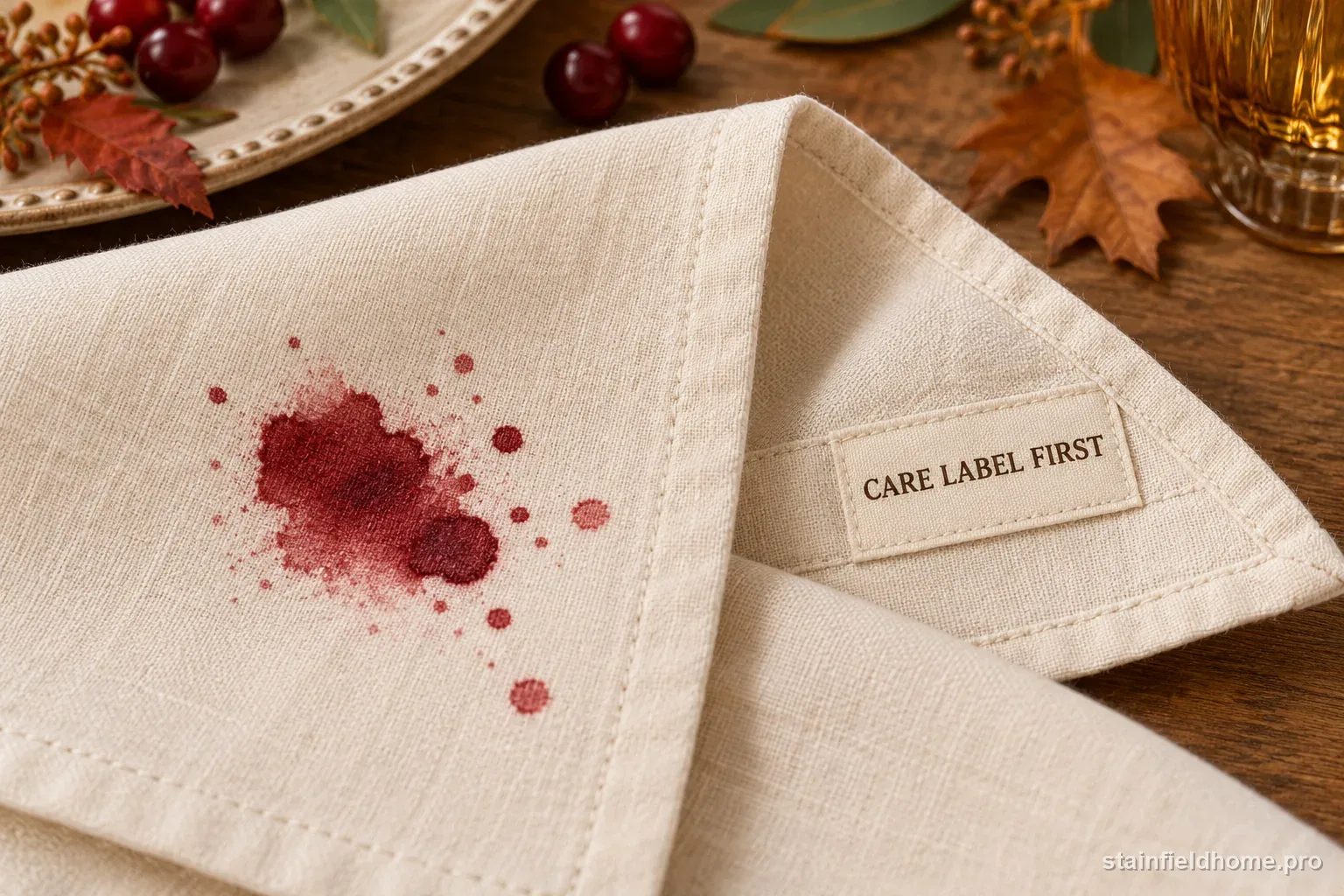
Before adding water, read the napkin's care label. Plain washable linen can often be treated at home, but an antique piece, delicate embroidery, a metallic thread, a colored border, a lining, or a dry-clean-only label changes the risk. Linen is strong when wet, yet it can crease, shrink, abrade, or lose unstable dye. If the napkin is valuable or its construction is uncertain, photograph the stain and ask a textile cleaner before spot treating it.
Use this method only if the label allows washing. Separate the napkin from other laundry, especially pale pieces, until the stain is gone. Do not begin with hot water, chlorine bleach, a stiff brush, or a vigorous scrub. Heat can make some food color harder to remove, bleach can damage fibers or dye, and friction can fuzz the surface or enlarge the mark.
Lift excess sauce and blot the fresh stain
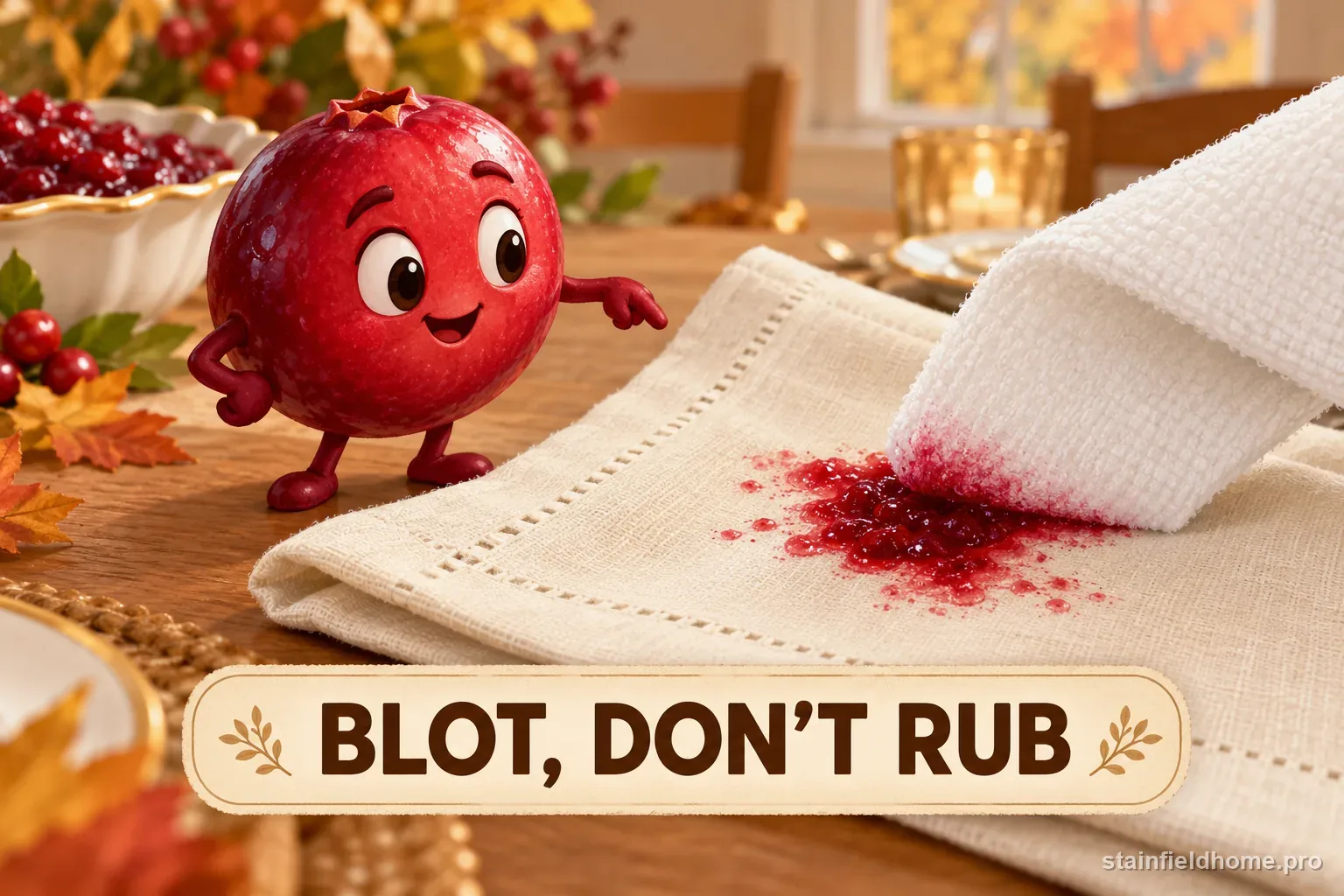
Blotting limits how much pigment and sauce travel through the weave. A white cloth also makes it easier to see whether the red is still lifting. Colored paper towels or printed napkins can transfer dye, so use plain white absorbent material.
- 01
Use the edge of a dull spoon to lift any cranberry pieces from the surface. Work from the outside of the spill toward its center, and wipe the spoon clean between passes.
- 02
Place a clean white cloth under the stained area. Press another white cloth straight down on top to absorb liquid, then lift it. Rotate to a clean section of cloth as it picks up color.
- 03
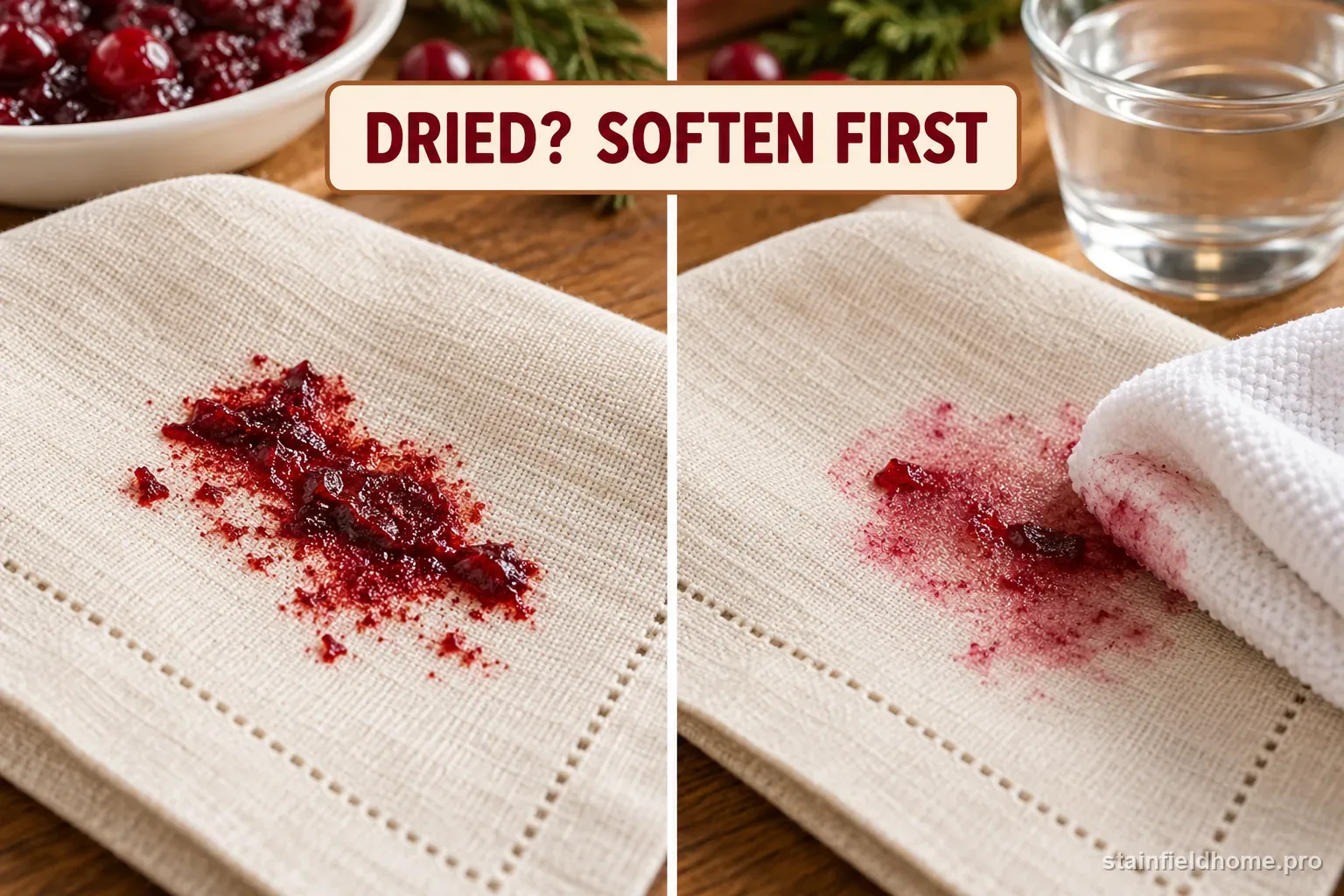
Do not rub back and forth or press so hard that the napkin stretches. If the sauce is still wet, continue blotting until little liquid transfers. If it has dried, skip scraping at the fibers and move to the softening step below.
- 04
If the sauce contains visible oil or butter, gently lift that residue too, but do not spread it across a wider patch. Keep oily cloths away from heat until laundered.
Test a hidden area, then rinse from the back
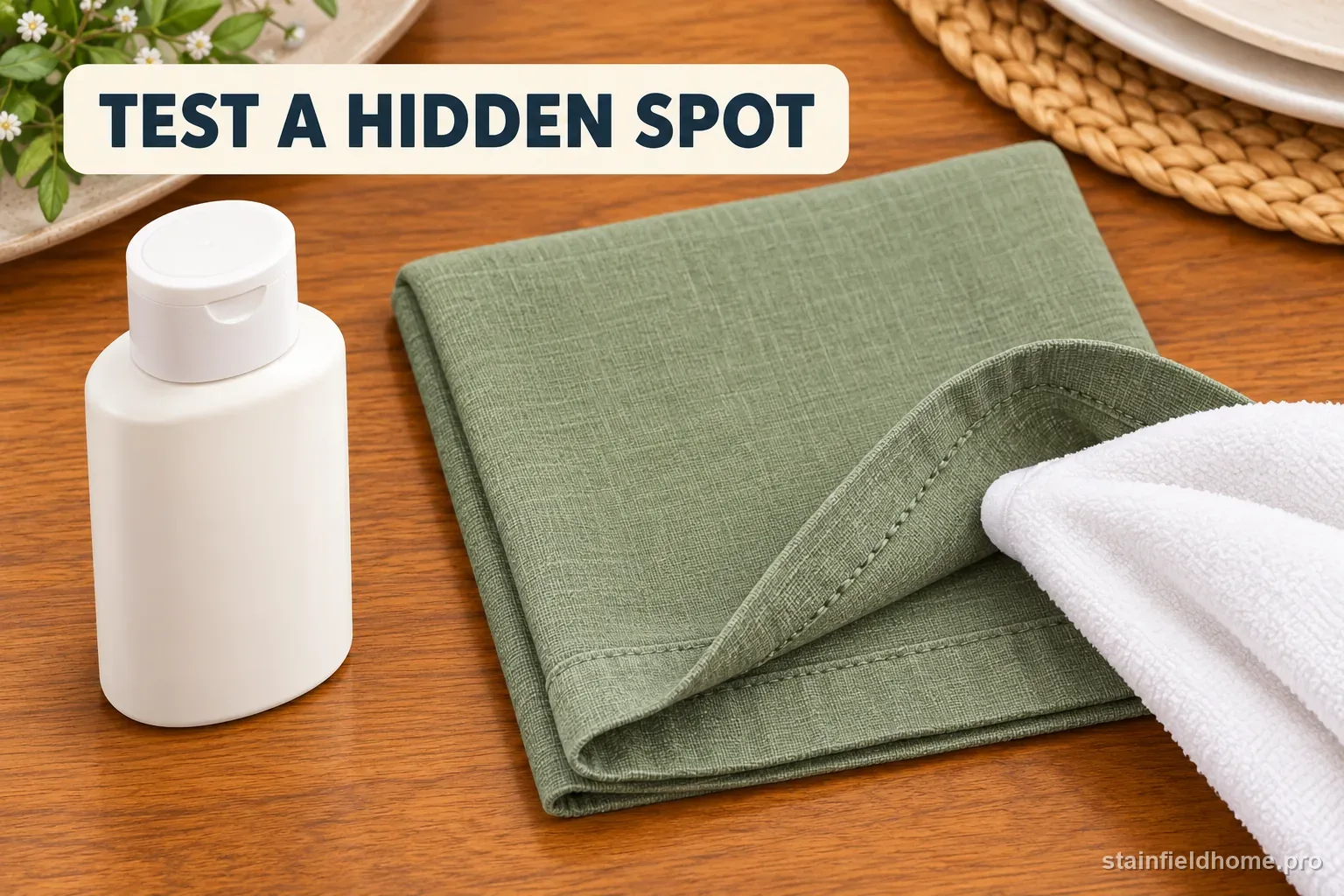
Wet a hidden seam or hem with cool water and press it with a white cloth. Check for color transfer, puckering, surface change, or a ring. Let the test area dry if the napkin is colored or decorated; a wet test can hide a change that becomes visible later. Stop if the cloth picks up the napkin's own dye or if the fabric changes texture.
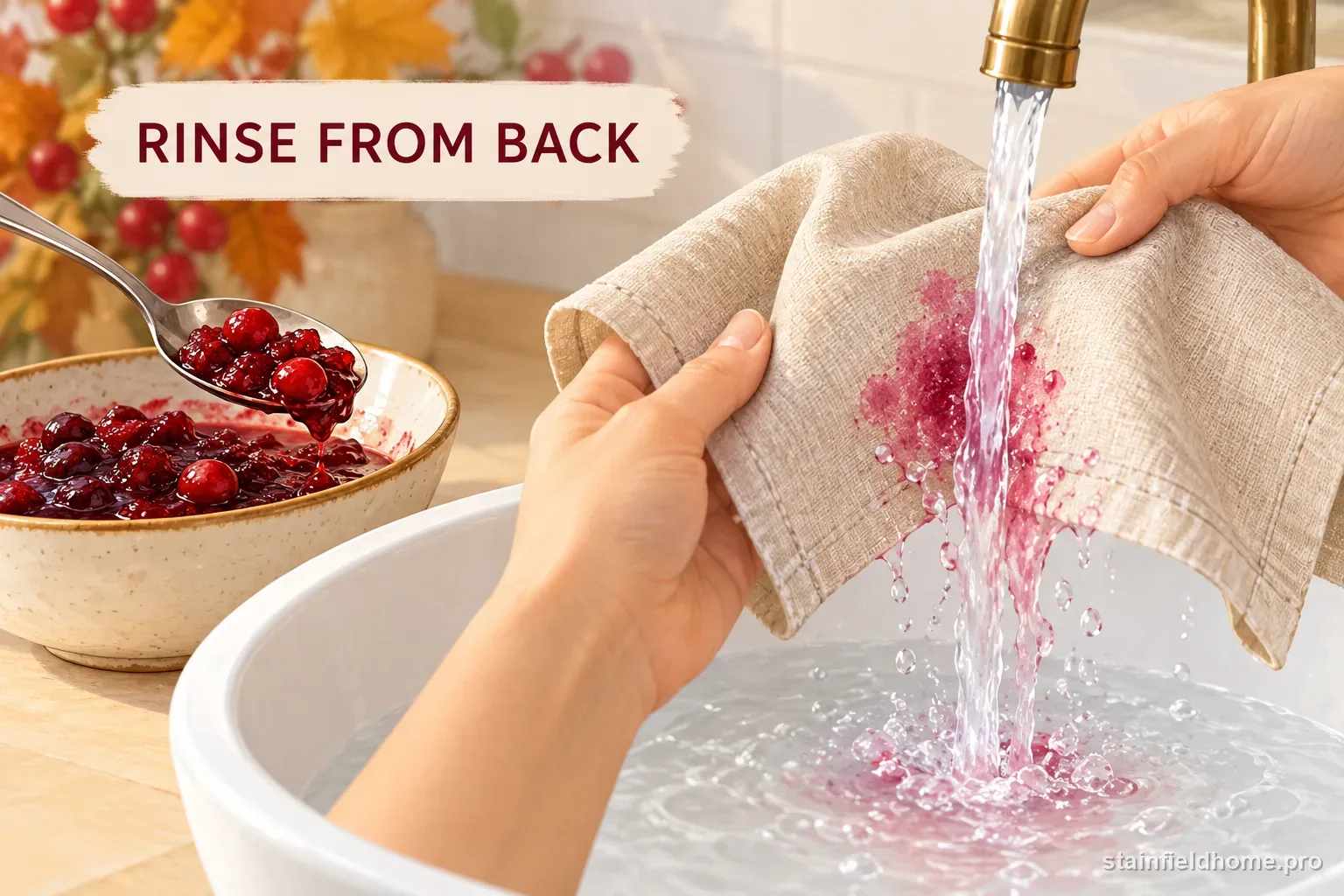
For a washable napkin that passes the test, hold the stained section with the reverse side facing up over a clean basin. Run a small stream of cool water through the back of the stain so it carries loosened color out the way it entered. Avoid a hard spray that could distort the weave. Keep rinsing until the water runs clearer, then blot with a clean towel.
- 01
Put the stain against the flow, with the clean reverse side toward the water source.
- 02
Rinse with cool water for a short interval, checking whether red color moves into the basin.
- 03
Turn the napkin and look at both faces. If the spot remains, proceed to a detergent soak rather than rubbing it.
Soak with detergent and reassess the stain
The American Cleaning Institute's berry guidance recommends a cool-water detergent treatment followed by a rinse, with additional stain treatment only if the mark remains. For a washable linen napkin, mix a small amount of liquid laundry detergent into cool water according to the product label. Submerge only if the care instructions permit soaking. Keep the water cool and the solution mild; concentrated detergent can be difficult to rinse from a dense weave.
Let the stained area soak for 15 to 30 minutes, checking it partway through. If the napkin has a contrasting border or embroidery, keep those areas out of the solution when practical. Lift the cloth from the basin and gently press the stain between your fingers. Do not twist or wring it. Rinse thoroughly with cool water and inspect the front and back in good light.
A dried stain may need more time to soften, but a longer soak is not automatically better. Begin with a short cool-water soak and check the label before extending it. If the cloth becomes limp, distorted, or starts to release its own color, remove it and rinse. Avoid leaving a folded napkin in concentrated detergent or a warm basin; uneven contact can leave a tide line that looks like a second stain.
If red color is still visible, repeat the cool detergent soak once with fresh solution. A second measured pass is safer than escalating immediately to a strong chemical. If the mark is fading but not gone, keep the cloth damp while you decide whether another treatment is appropriate; do not let a detergent patch dry on the fibers.
| What you see | Safer next step | Avoid |
|---|---|---|
| Fresh red sauce | Lift solids, blot, rinse cool from the back | Rubbing or hot water |
| Greasy halo | Use label-approved detergent, then rinse | Pouring dish soap directly onto linen |
| Dried red mark | Soften with cool water, then repeat a mild soak | Scraping or ironing the spot |
| Dye transfer or delicate trim | Stop and consult a textile cleaner | Bleach or untested solvent |
Treat a remaining red or oily shadow carefully
ACI's berry-stain instructions describe an alcohol step for persistent berry color on washable items after a detergent treatment. That advice is not a blanket approval for every linen napkin. Alcohol can affect some dyes, finishes, prints, and decorative details. Consider it only if the napkin is plain, washable, colorfast in the hidden test, and the garment or product care directions do not prohibit it. Test first and keep the amount small.
Dampen a white cloth with a little rubbing alcohol rather than pouring it onto the linen. Dab the remaining red area from the outside toward the center, using a clean part of the cloth each time. Stop if color transfers from the napkin, the weave changes, or the stain does not lighten after a few gentle dabs. Rinse the treated area thoroughly with cool water, then wash out any remaining product according to its label. Keep alcohol away from flames and heat, and do not mix it with other cleaners.
For an oily ring, follow the laundry detergent label for pretreating washable fabric, then rinse completely. Do not combine vinegar, dish detergent, bleach, peroxide, and stain remover in one improvised mixture. Mixing products can produce irritating vapors or damage fabric, and multiple wet treatments make it harder to tell which one helped. If the mark persists after two careful rounds, a professional can choose a treatment based on the fiber, dye, and sauce ingredients.
Cranberry relish can include whole berries or citrus peel that leave small particles after the red liquid has rinsed away. Lift these pieces individually with a spoon or the edge of a clean cloth. Do not pick at threads with a fingernail or tweezers, since a pulled linen yarn can create a snag. Once the solids are gone, repeat the same measured detergent treatment instead of adding a harsher product.
Wash, air-dry, and inspect before putting the napkin away
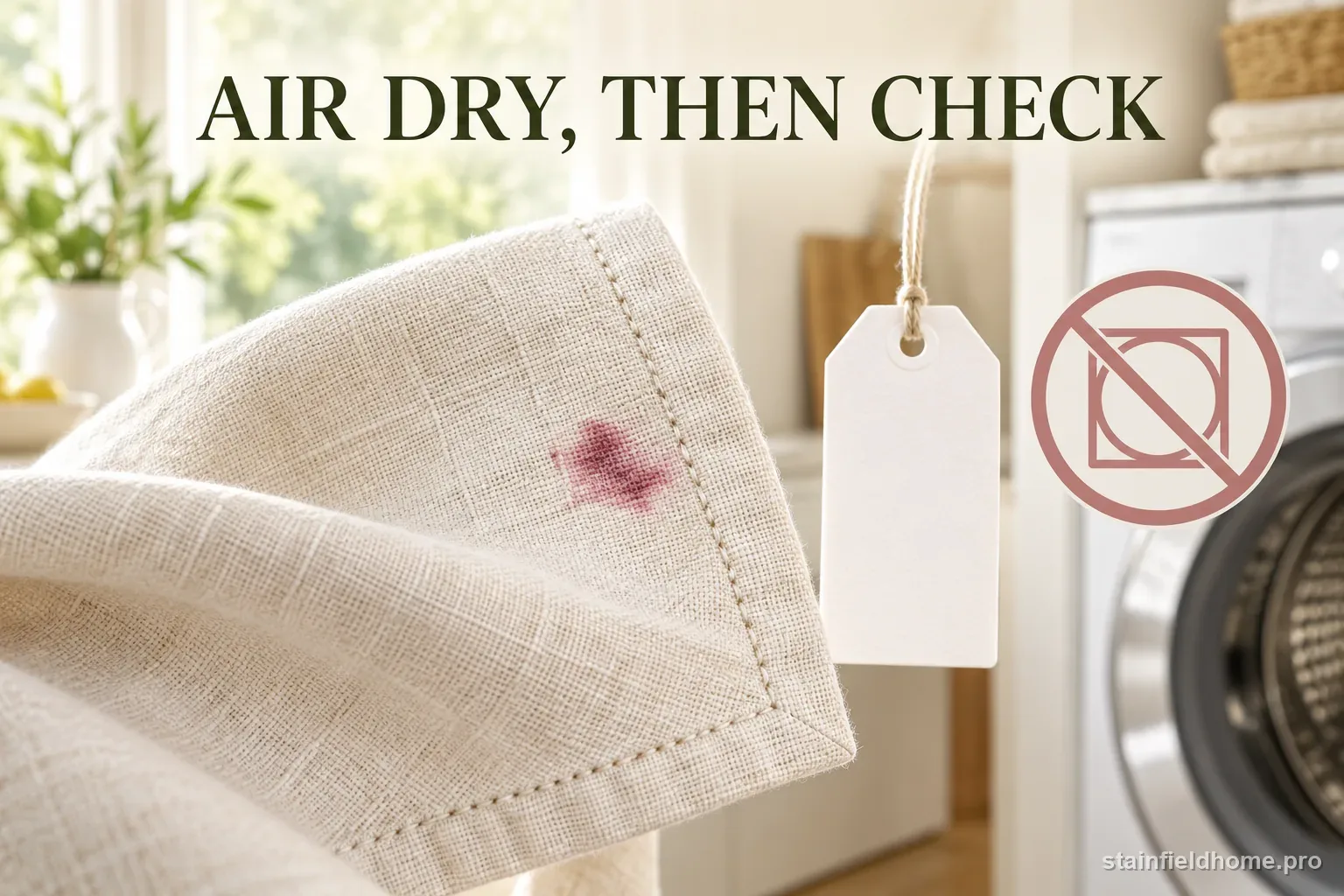
Purex's linen-care guidance emphasizes checking the care label and avoiding dryer heat until a stain is out. That check matters because heat can make a residual mark more difficult to remove. Air-drying also lets you inspect the cloth before it is stored with other linens. Do not leave a damp napkin crumpled in a laundry basket; spread it out with airflow to reduce odor and creasing.
Inspect under more than one kind of light if the napkin is white or pale: a berry shadow can be easier to see near a window than under warm kitchen bulbs. Look at the reverse as well as the face, because color can remain between threads even when the top looks clean. If you see any tint after air-drying, return to a mild, label-approved treatment before pressing or storing it.
- 01
Wash the napkin by itself or with similar colors using the cycle and water temperature on its care label. Use the recommended amount of detergent; more is not a stronger stain treatment.
- 02
When the cycle ends, check the stain while the fabric is still damp. Examine both sides in daylight and compare it with the surrounding linen.
- 03
If any red, yellow, or oily shadow remains, do not tumble-dry or iron the napkin. Repeat the mild treatment only if the label allows, or take it to a cleaner.
- 04
If the stain is gone, smooth the napkin and air-dry it. Follow the label for any later pressing.
When to stop and call a textile professional
Stop home treatment if the napkin is antique, heirloom, hand-embroidered, printed with unstable color, lined, marked dry-clean-only, or made from a linen blend with special care instructions. Also stop if dye moves onto the white test cloth, the fabric puckers, threads loosen, or the stain spreads despite blotting. A textile cleaner can test the material and choose a controlled process that is less likely to alter the whole napkin.
Seek help when the stain remains after two gentle detergent rounds, when the spill covers a large area, or when cranberry sauce has dried for a long time. Tell the cleaner whether the recipe included butter, oil, wine, or added dye and what products you used. That information helps distinguish berry color from a greasy residue and avoids repeating a treatment that already failed.
Do not try to rescue a stubborn mark with chlorine bleach, a hot iron, boiling water, or an unlabelled solvent. A faded patch, weakened thread, or permanent crease can be worse than a small remaining spot. Pause as soon as the napkin's own color or surface begins to change.
Prevent the next cranberry stain from setting
At the table, lift a spill promptly and blot it with a plain white napkin. Keep the stained linen separate until it can be rinsed. If you cannot wash it right away, remove any solids and keep the spot damp with cool water if the care label permits; avoid leaving a wet, folded napkin in a warm bag for hours.
Before serving, check which napkins can be machine-washed and which need special care. Use washable everyday linen for saucy meals, and keep delicate or heirloom pieces for occasions when a quick rinse is practical. After laundering, inspect every napkin before drying or ironing so a faint stain does not become a permanent reminder of dinner.
Common questions
FAQ
Do cranberry stains come out of linen?
Fresh cranberry sauce often lifts from washable linen when you blot, rinse from the back with cool water, and use a mild detergent soak. Old or dyed linen may need professional care.
Can I use vinegar and dish soap on a linen napkin?
Do not improvise a mixed cleaner. Start with a hidden-area test and a label-approved laundry detergent. Vinegar and dish soap can affect dyes or finishes, and neither is a universal linen treatment.
Should I use hot water on cranberry sauce?
Begin with cool water. It lets you flush berry residue without applying unnecessary heat; follow the napkin's care label for the later wash temperature.
What if the cranberry stain has dried?
Soften the spot with cool water, then use a mild detergent soak if the napkin is washable. Repeat once, inspect before drying, and stop if dye transfers or the fabric changes.
Can I put the napkin in the dryer after washing?
Only after the stain is completely gone and the care label allows machine drying. Air-dry first so you can inspect the front and back in good light.
Sources reviewed
Keep reading
Related guides
Candle wax on Linen tablecloth
How to Remove Candle Wax From a Linen Tablecloth
Remove candle wax from a linen tablecloth by hardening and lifting it first, then address oily or colored residue without scorching the fibers.

Tomato sauce on White cotton shirt
How to Remove Tomato Sauce From a White Cotton Shirt
Remove tomato sauce from a white cotton shirt by treating oil and red color in order; keep the stain out of heat until it has lifted.

Berry juice on Clothes
How to Remove Berry Juice Stains From Clothes
Treat berry juice on washable clothes with cold water and stain care for pigment and tannin; keep heat off until the mark is gone.
Blood on Cotton sheets
How to Remove Blood From Cotton Sheets, Fresh or Dried
Remove fresh or dried blood from cotton sheets with cold water and a care-label-safe soak before heat sets the stain.