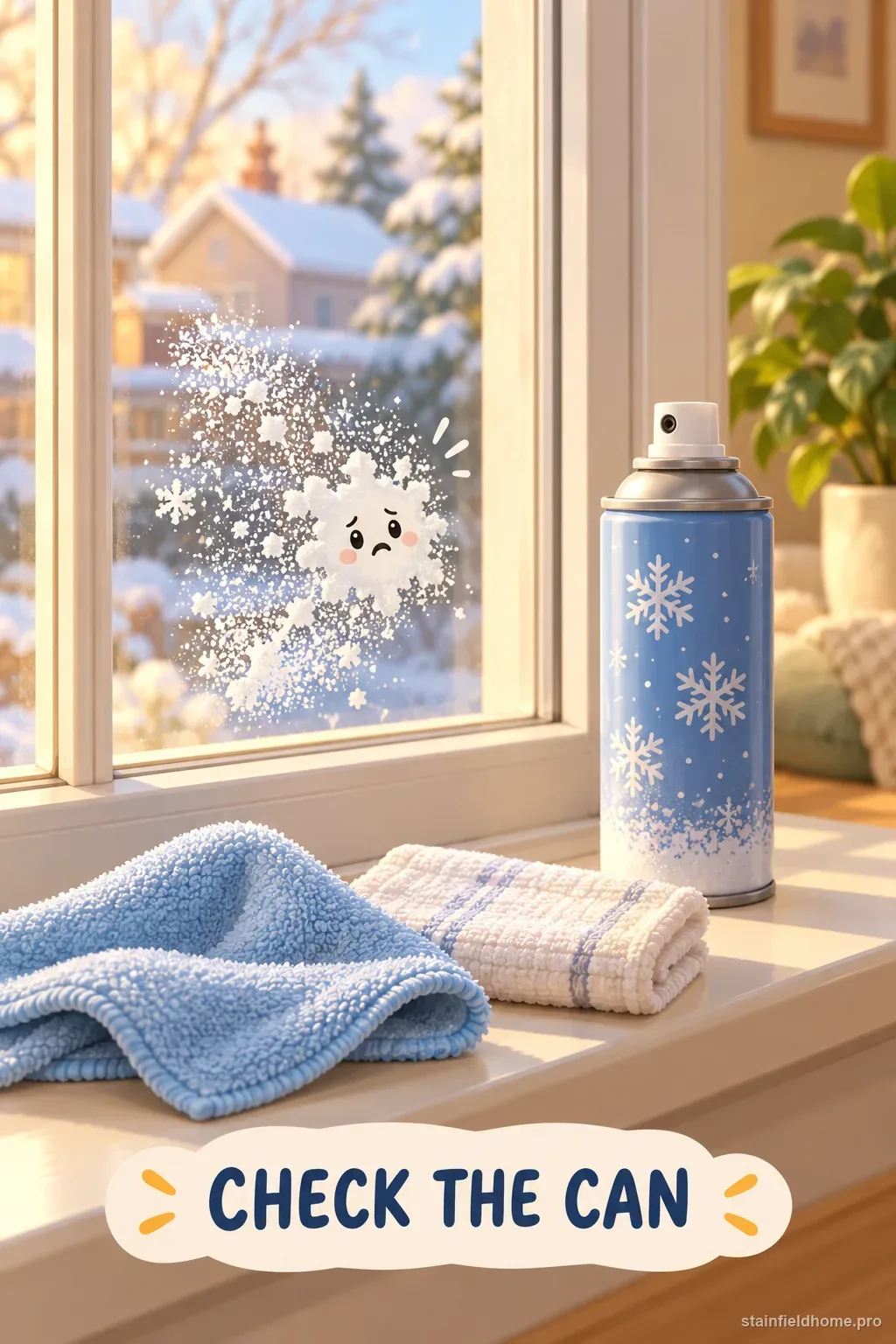
The quick answer
Check the snow-spray can for cleanup directions and confirm the pane is ordinary glass, not acrylic, filmed, or specially coated. Remove loose flakes with a soft dry cloth, protect the sill, then test the labeled cleaner on a small corner. Let it soften the residue and wipe gently with microfiber. Avoid metal blades, abrasive pads, and mixed cleaners. Stop if the coating, frame finish, or film changes.
What you’ll need
- Product can or label
- Soft dry cloth
- White microfiber cloths
- Small bowl
- Label-approved cleaner
- Towels to protect sill
- Gloves if directed on the label
Identify the product and the window surface
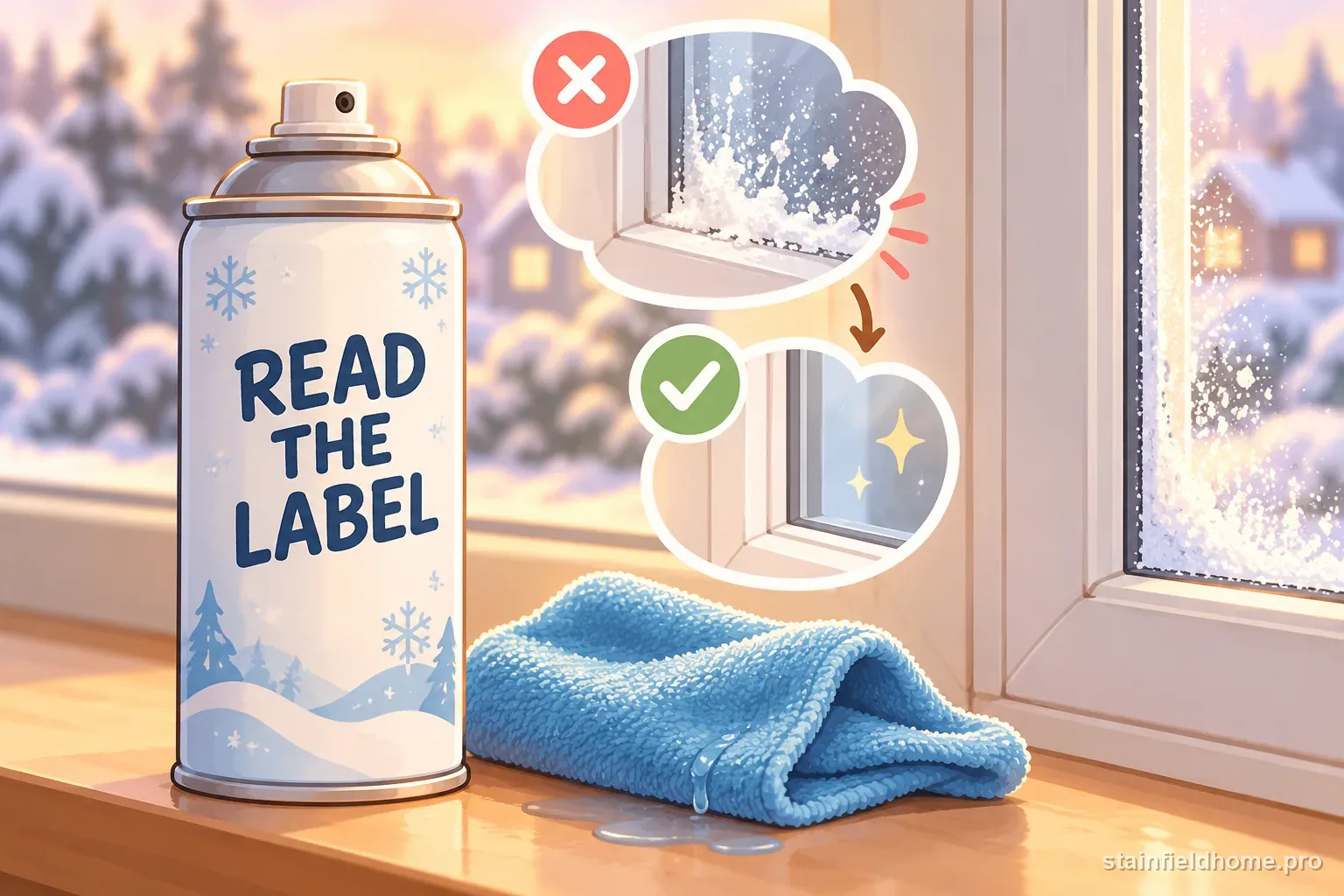
The white patch may be temporary flocking, a water-soluble holiday snow, or a fast-drying decorative spray. Those products can look alike after a few weeks on a pane, but their cleanup directions may differ. Read the can, look for the product name, and find the cleanup or removal instructions before wetting the window. If you still have the can, do not rely on a general internet recipe in place of its label.
Check what is actually in front of you as well. Ordinary glass, acrylic storm panels, removable window film, Low-E coated glass, decorative panes, and painted muntins do not all tolerate the same tools or cleaners. If you cannot tell whether a surface has a film or special coating, use only directions from the window maker. Avoid cleaning a sunny or hot pane, since liquid can dry quickly and leave streaks before you can wipe it away.
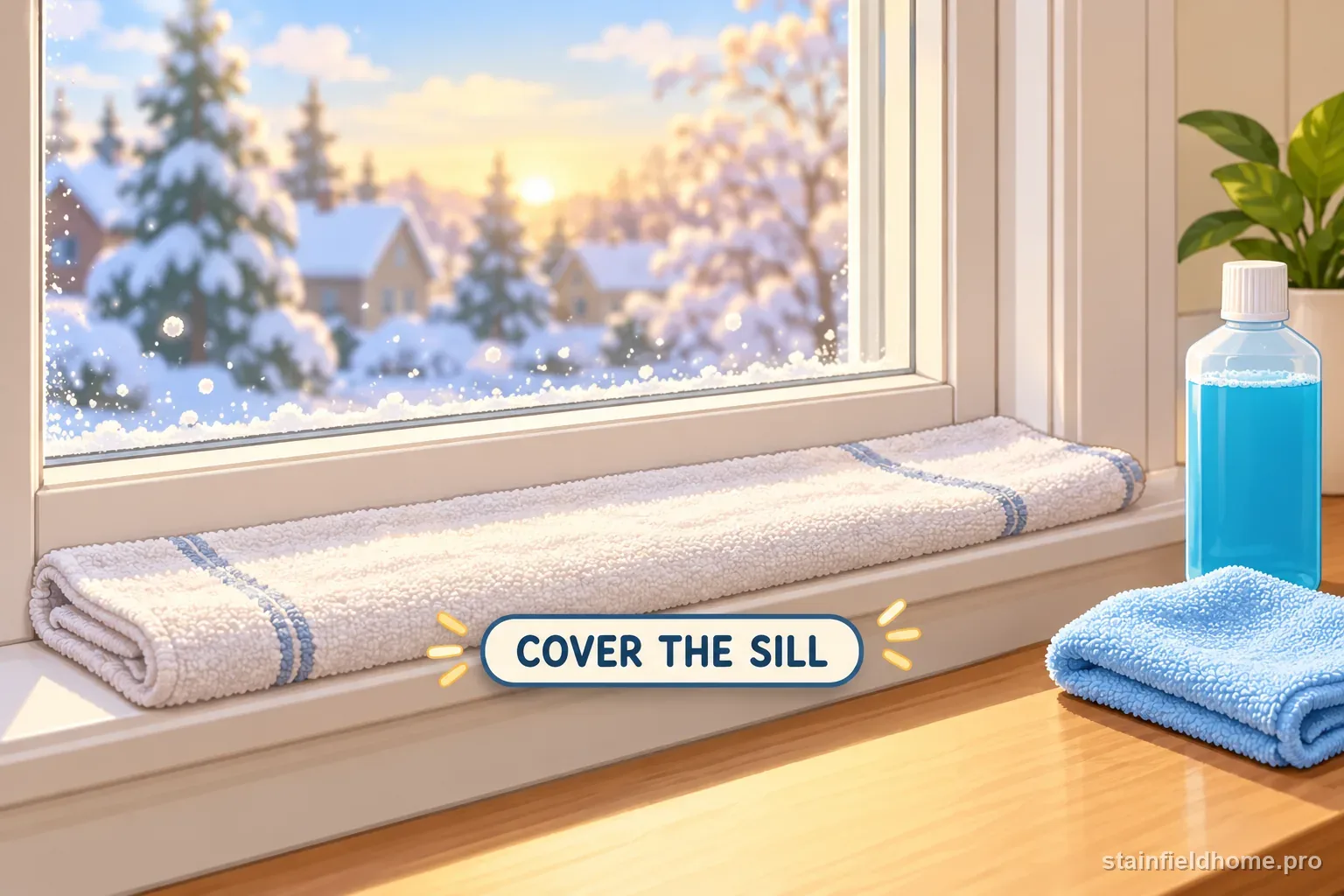
Look at the residue without touching it first. Loose powder or flakes can be lifted dry; a thin chalky film may soften with the labeled cleaner; a raised, rubbery, tacky, or paint-like layer may be a different formulation. Note whether the spray reaches the frame, caulk, wood sill, blinds, or floor. Set a towel underneath before treatment so loosened material and cleaner do not run onto surfaces that could stain or swell.
Clear loose flakes without grinding them into glass
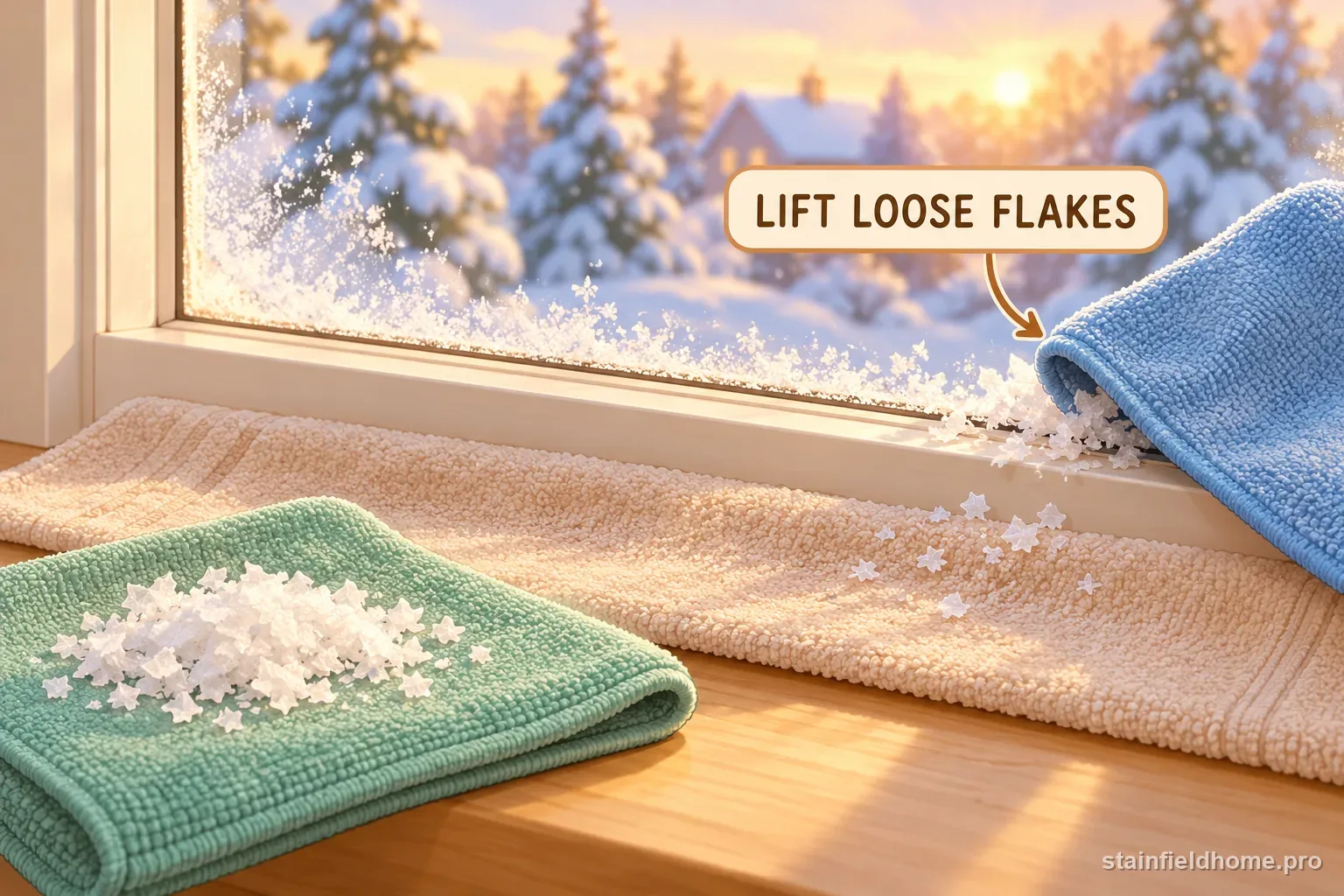
Start with the pane dry. Lay a towel over the sill and floor, then gently lift loose snow with a clean, soft microfiber cloth. Use a light touch and turn to an unused section as the cloth gathers powder. You can use a vacuum with a clean soft brush attachment on loose material if the vacuum maker permits it and you can keep the nozzle from bumping the glass. Keep the vacuum body and hard plastic fittings away from the pane.
Do not sweep dry flakes across the pane with a stiff broom, abrasive sponge, paper towel with grit, or rough sleeve. Any dust or grit trapped in the snow can drag over a coating as you wipe. On a multi-pane window, work one small area at a time and keep the dry cloth separate from the later damp cloth so you do not move loosened residue back onto clean glass.
Collect the particles from the sill and floor with the soft brush or a damp disposable towel, depending on the surface. Do not push flakes into a screen, track, or weather strip. If the material has formed a hard crust, leave it in place for now instead of picking at it with a fingernail or tool. The next step is to confirm which cleaner is allowed and see whether a small patch releases safely.
Choose a cleaner from the can and protect nearby finishes
Use the cleanup product named on the snow spray label, following its dilution, ventilation, glove, and contact-time directions. For example, Krylon lists a regionally compliant cleaner for its Faux Snow product. That is a product-specific instruction, not evidence that the same cleaner is right for every can of artificial snow. If the label is missing or unreadable, contact the product maker or choose a window-care professional instead of guessing at a solvent.
Many window manufacturers recommend mild soapy water and a soft cloth for routine glass care, and they warn that abrasive materials or metal blades can damage some Low-E coatings. That guidance can help with ordinary compatible glass, but it does not replace a snow-spray label. Do not add vinegar, ammonia, rubbing alcohol, acetone, or household glass cleaner to a stronger product unless both labels allow it. Never combine cleaners, especially bleach with ammonia or acids.
Cover wood, painted trim, wallpaper, blinds, hardware, and the sill with towels or a plastic sheet that will not touch the treated area. If spray has reached a porous frame or a specialty finish, keep cleaner off it until you have the frame maker's care instructions. Open a window for ventilation only if the product label recommends it and the window can be operated safely. Keep children and pets away while the area is wet and until the label's re-entry directions are met.
| What you see | Safer next step | Avoid |
|---|---|---|
| Loose flakes | Lift dry with a soft cloth | Broom or gritty wipe |
| Film, can available | Follow label cleanup directions | Substituting an unlisted solvent |
| Ordinary glass, label permits | Test a small damp microfiber corner | Flooding the sill or frame |
| Film, acrylic, Low-E, unknown | Check pane maker instructions | Blade, abrasive, or guessed cleaner |
| Tacky or paint-like patch | Pause and ask product maker | Scraping or repeated chemical swaps |
Test a small corner before cleaning the whole pane
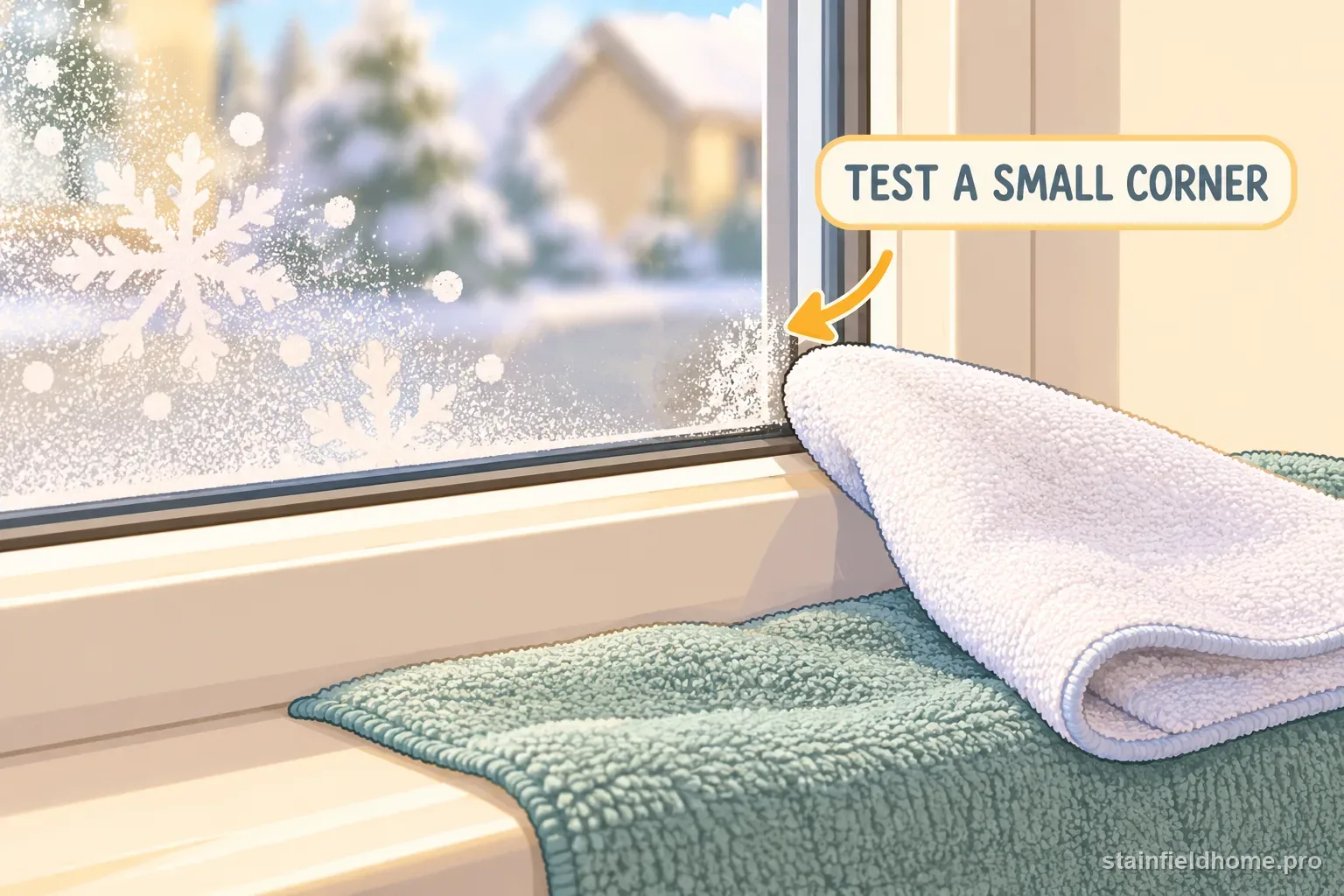
Choose a low, inconspicuous corner of the glass, away from an edge seal, decorative grille, and frame. Dampen a white microfiber cloth with the approved cleaner rather than spraying broadly. Hold it to the patch for only the label's stated contact time. Check whether the residue softens and transfers to the cloth without changing the glass, film, paint, caulk, or nearby finish. A white cloth makes it easier to see what is being lifted.
If the cleaner leaves a haze, rainbow sheen, discoloration, tackiness, or a change in the frame finish, stop and blot the area with a clean cloth as the product directions allow. Do not interpret a fresh wet streak as proof that the coating is damaged; let the test dry fully and compare it with untouched glass in indirect light. If you cannot determine whether a change is residue or damage, avoid expanding the test and ask the window manufacturer.
A product label may direct you to use a specific solvent or a regionally compliant cleaner. Those products can have flammability, ventilation, and material restrictions. Keep them off skin and away from ignition sources as directed. Do not mix the cleaner with soap, vinegar, bleach, ammonia, or a second spray. If a cleaner is not labeled for indoor use on glass, do not apply it to an interior window just because the pane appears resistant.
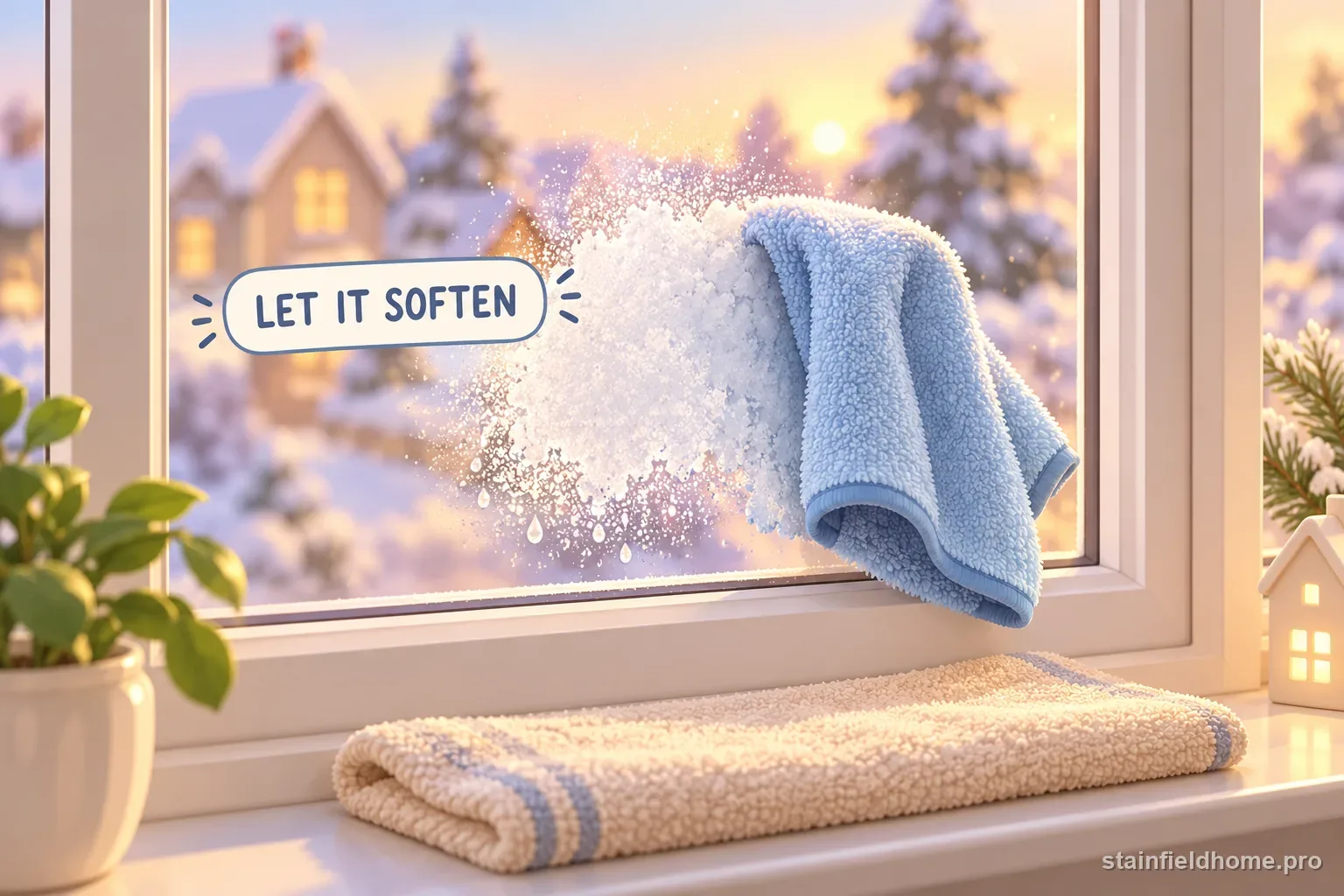
Soften and wipe the residue in short sections
Once the test patch passes, work in an area no larger than you can wipe before the cleaner dries. Apply the label-approved cleaner to a cloth or to the snow residue as its directions specify. Let it sit for the stated interval; do not assume that longer soaking is better. If the label gives no dwell time, use a small amount and follow up promptly rather than leaving a wet patch to run down the pane.
Wipe with light pressure using straight, overlapping passes or the motion specified by the product maker. Keep the cloth flat and do not bear down with a fingernail. As residue transfers, refold the cloth to a clean face. If white material smears, pause and rinse or replace the cloth according to label directions rather than scrubbing harder. Use a separate clean cloth to lift remaining cleaner from the glass.
Repeat one small pass if the spot is clearly softening and the pane remains unchanged. Reapply the approved solution to the cloth instead of letting cleaner pool around the frame. For a large picture window, work top to bottom and keep a dry towel below the active area. Do not stand on furniture or lean outside; use suitable access equipment or arrange a window cleaner for high exterior panes.

Clean the edges, frame, and sill separately
When the pane is clear, clean its edges without forcing liquid into the glazing gasket, sash joints, locks, or drainage openings. Use only a barely damp cloth around the frame, and follow the window maker's instructions for vinyl, painted wood, aluminum, or composite material. A cleaner that is acceptable for glass can dull paint or leave marks on a finish, so use a separate cloth and keep the frame treatment simple.
Pick up drips from the sill immediately. If liquid reached wood or painted trim, blot rather than rub and check the finish for a change. Do not pour water into a window track or try to dissolve residue by flooding the channel. For dried spray on caulk, weather stripping, screens, or porous wood, ask the product or window maker before applying solvent; these parts can be more sensitive than the pane itself.
After the residue and cleaner are removed, dry the glass with a fresh lint-free cloth or squeegee that has no grit on its edge. Rinse a reusable cloth before using it on another pane. Look across the glass at an angle in indirect daylight. A remaining white streak may be cleaner residue, while a patch that feels raised or catches the cloth may still be product. Recheck it only with the same approved method, not a succession of stronger household chemicals.
Handle stubborn, old, or already-scraped snow spray
Old spray can dry into a more persistent film, especially if several decorative coats were applied. Confirm the exact product first, then repeat only the approved softening step once if the first pass loosened some residue without a surface change. Keep the contact area small and use a fresh cloth. Do not switch from soap to vinegar, then alcohol, then solvent in the same session; mixed residues make it harder to identify what is affecting the pane.
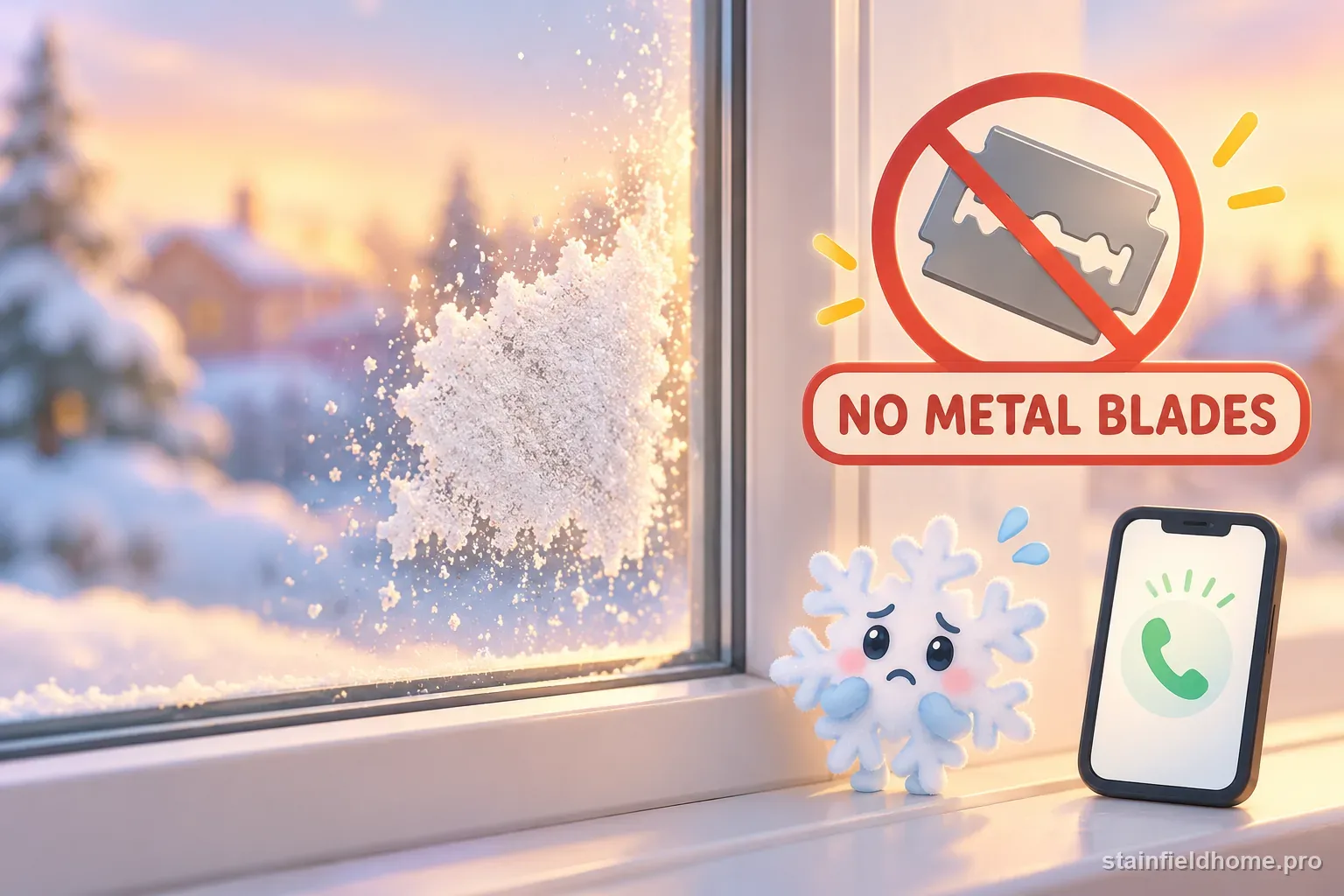
Do not use a razor blade, metal scraper, steel wool, scouring pad, powdered cleanser, or abrasive melamine sponge on coated or unknown glass. Andersen and Pella warn against metal blades for some window glass because they can scratch or damage coatings. Even a plastic card can scratch if it has a sharp corner or picks up grit, and the spray maker may prohibit scraping altogether. Use a scraper only if both the product and window makers explicitly allow that tool for your exact surface.
If the label is gone, the coating is unknown, or residue does not soften after one careful label-directed pass, stop. Contact the faux-snow maker or the window company with the product name, window model, and a photo. A professional glass cleaner can assess whether the film is removable or whether it has bonded to a coating. A small remaining patch is safer than permanent scratching or a damaged Low-E layer.
Prevent residue and know when to call for help
Before next season, read the can for surfaces and cleanup before spraying. Apply artificial snow only where the product maker permits it, protect the floor and sill, and use a removable panel if you want to avoid decorating the window itself. Keep the can and instructions until cleanup is complete. Avoid spraying directly onto frames, caulk, screens, locks, or blinds unless the label identifies those materials as compatible.
Stop home cleaning if the glass has a film, Low-E coating, decorative surface, acrylic insert, or unknown treatment and the maker's directions are unavailable. Also stop for a rainbow patch that remains after drying, a scratch, peeling film, softening paint, swollen wood, damaged seal, or residue that will not release with the approved cleaner. Do not keep wetting the same spot while deciding what to do.
If artificial snow got onto an interior film, antique pane, stained-glass detail, or high exterior window, ask a qualified window cleaner or the manufacturer. Tell them the spray brand, approximate age, cleaner already used, and whether you attempted scraping. That information helps them choose a compatible method and avoids repeating a treatment that may have left solvent or detergent on the surface.
Common questions
FAQ
Does fake snow spray wash off glass windows?
Some products soften with water or glass cleaner; others specify a particular cleanup product. Check the can and test the exact cleaner before treating the full pane.
How do I remove dried snow spray without scratching glass?
Lift loose flakes dry, then soften a small patch with the product's approved cleaner and wipe using a clean microfiber cloth. Do not use a blade on coated or unknown glass.
Can I use vinegar and dish soap on fake snow spray?
Only if the snow-spray and window-care instructions allow them. Do not mix cleaners or assume a homemade recipe is safe for every spray, film, frame, or coating.
Can I use a razor blade on snow spray on a window?
Avoid metal blades unless both the product maker and window maker explicitly approve one for that specific pane. Some Low-E coatings can be scratched or damaged.
What if fake snow spray got on the window frame?
Blot drips and check the frame maker's care directions before using a cleaner. Painted wood, vinyl, caulk, and weather stripping may react differently from glass.
Sources reviewed
Keep reading
Related guides
Skunk spray odor on Washable dog bed
How to Get Skunk Smell Out of a Dog Bed
Neutralize skunk odor trapped in washable dog-bed fabric and stuffing, then rinse and dry deeply enough to prevent a lingering smell.

Self-tanner on White bath towels
How to Remove Fake Tan Stains From White Bath Towels
Remove fake-tan and bronzer marks from white bath towels with a soak and wash that targets dye before heat sets the stain.
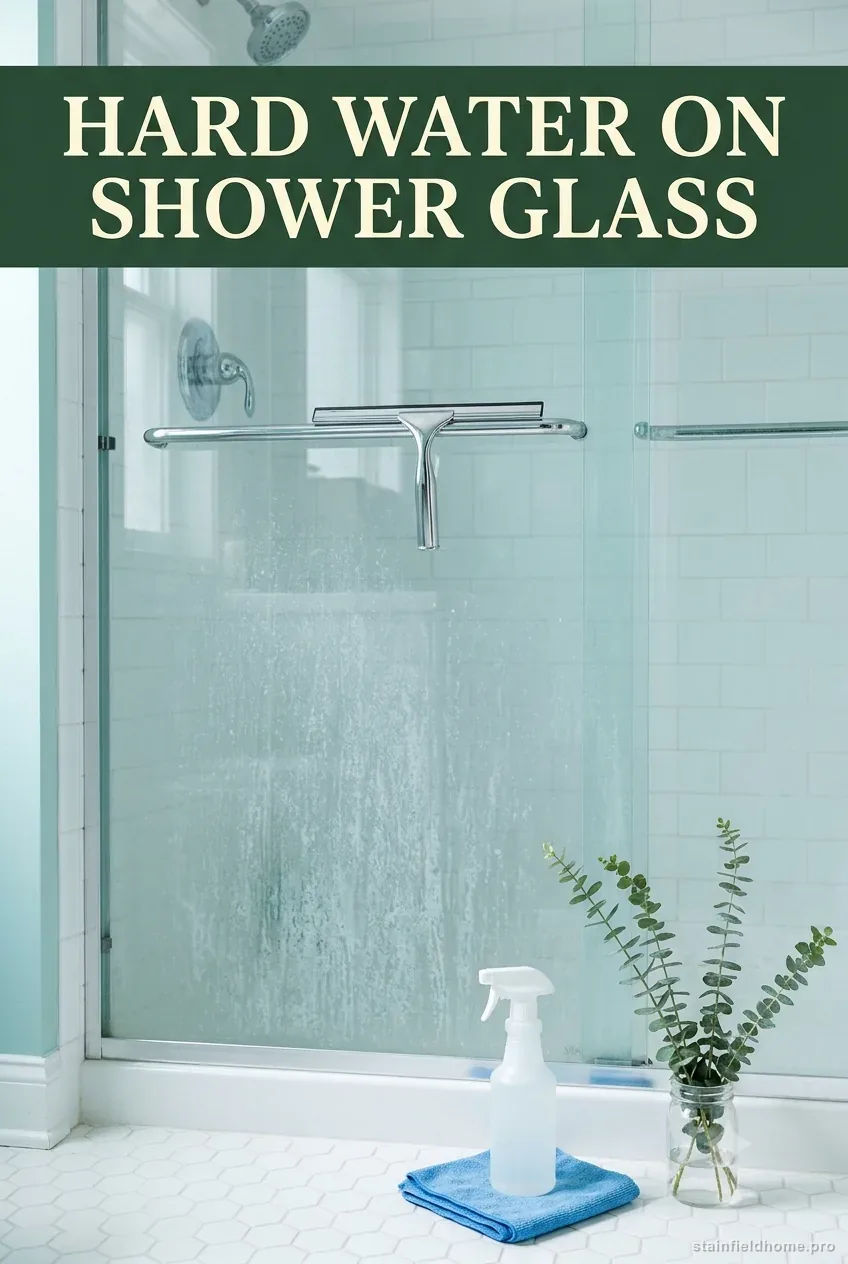
Hard water deposits on Glass shower doors
How to Remove Hard Water Spots From Glass Shower Doors
Clear mineral spots and soap film from glass shower doors with a non-scratch method; learn when deposits have etched the glass instead.

Melted plastic on Ceramic-glass stovetop
How to Remove Melted Plastic From a Glass Stovetop
Remove melted plastic from a ceramic-glass cooktop with the right scraper and temperature, without gouging the glass surface.