
The quick answer
Turn the affected burner off and follow your cooktop manufacturer's melted-plastic procedure. On many ceramic-glass cooktops, the safest chance to remove fused plastic is while the surface is still warm or hot enough for the plastic to move, using an oven mitt and an approved razor scraper held at a shallow angle; push the residue toward a cool area. Never touch hot plastic with bare skin, and stop using a pitted or cracked cooktop.
What you’ll need
- cooktop manual
- oven mitt
- new single-edge razor scraper approved for ceramic glass
- ceramic cooktop cleaner
- paper towels
- soft cloth
The temperature window is the whole trick
Once plastic melts onto ceramic glass and cools, it grips hard, and cold plastic shatters into little welded flecks when you scrape it. GE and Whirlpool both say the same thing: your best chance is to remove it while it is still warm and pliable — hot enough to lift as a soft mass, not so hot it is smoking or you cannot work near it.
That means acting fast, with heat protection, not walking away to let it cool. If it has already cooled and hardened, you can gently warm just that spot with the burner on low for a short time to soften it again — watch it constantly and turn the burner off before it smokes.
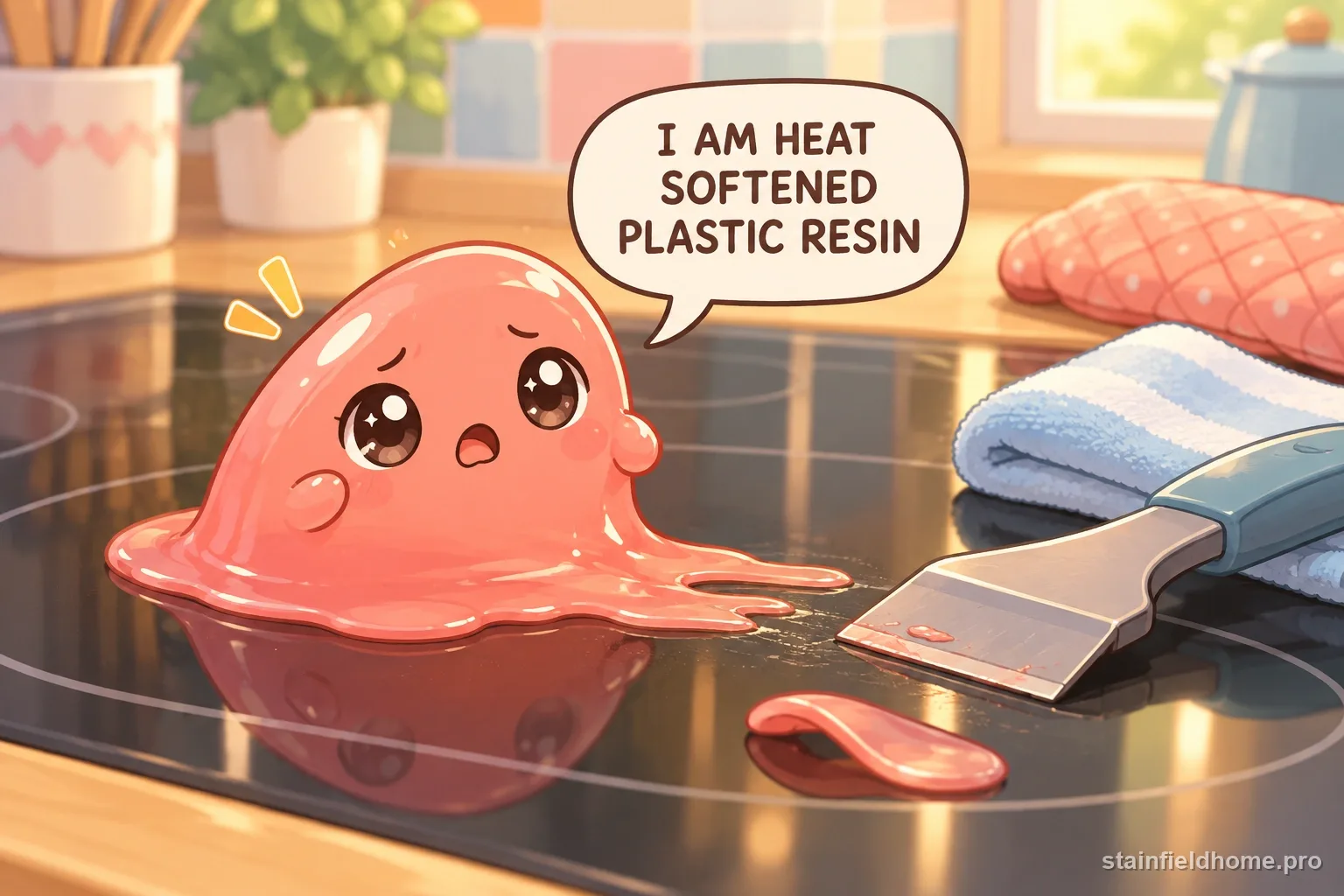
Removing warm, soft plastic
- 01
Turn the burner off. Put on an oven mitt.
- 02
Hold an approved single-edge razor scraper at a low angle, almost flat to the glass — 30 degrees or less.
- 03
Slide it under the edge of the plastic and push the soft mass ahead of the blade toward a cooler part of the cooktop.
- 04
Lift the gathered plastic off with a wad of paper towel; do not let it re-adhere.
- 05
Repeat while the residue is still soft; re-warm briefly on low if it stiffens.
- 06
Let the cooktop cool completely, then clean the area with ceramic cooktop cleaner and a soft cloth.
Thin fused film and melted-on foil or bag
A thin smear or a bit of a bread bag often will not lift as a mass. For that, cool the cooktop fully, apply a thick layer of ceramic cooktop cleaning cream, let it sit several minutes to soften the residue, then work the razor scraper flat across it in short strokes.
Aluminum foil and some metallic bag liners can leave a grey mark that is metal transfer, not plastic. The same cooktop cream and scraper usually take it off; a cooktop-safe cleaner formulated for metal marks handles the rest.
What not to use
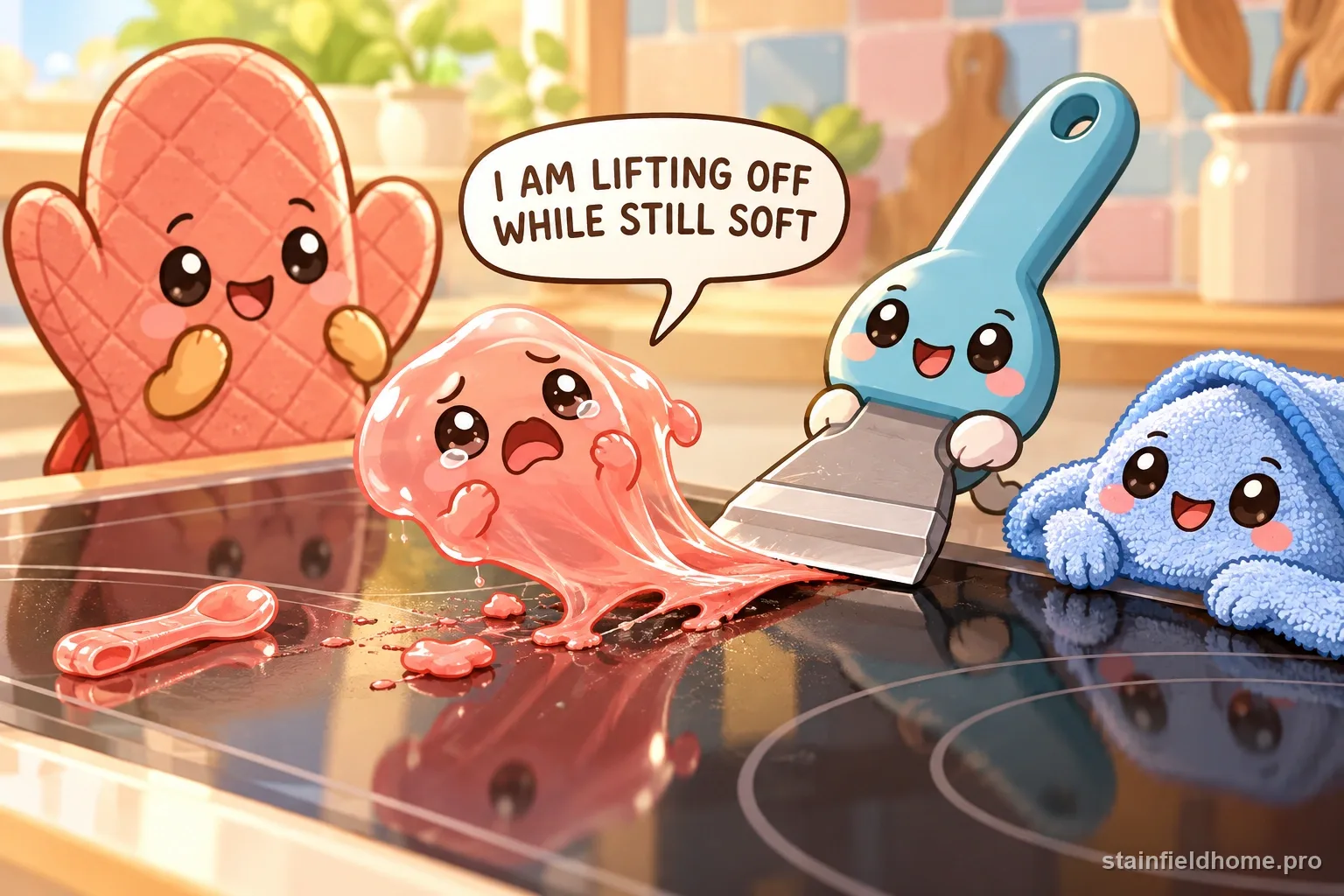
- A knife, metal spatula, steel wool, or a green scrub pad — all scratch ceramic glass permanently.
- Oven cleaner, drain cleaner, or other caustic products — they damage the cooktop surface and its printed markings.
- Bare fingers or a plastic tool on hot plastic — burn risk, and the plastic tool melts too.
- Abrasive powders like Comet — fine scratches build into a permanently dull patch.
Check the surface before you cook on it again
After the plastic is gone, look at the glass in raking light. A shallow discoloration or a faint etched shadow where the plastic sat is cosmetic and safe to use. A visible pit, gouge, chip, or any crack is not — a compromised ceramic-glass cooktop can fail under heat, and manufacturers say to stop using it and arrange service or replacement.
Melting also happens with a burner element that will not turn off properly; if the burner ran hot enough to melt a pot handle or a utensil, have the control checked.
Keeping plastic off the cooktop
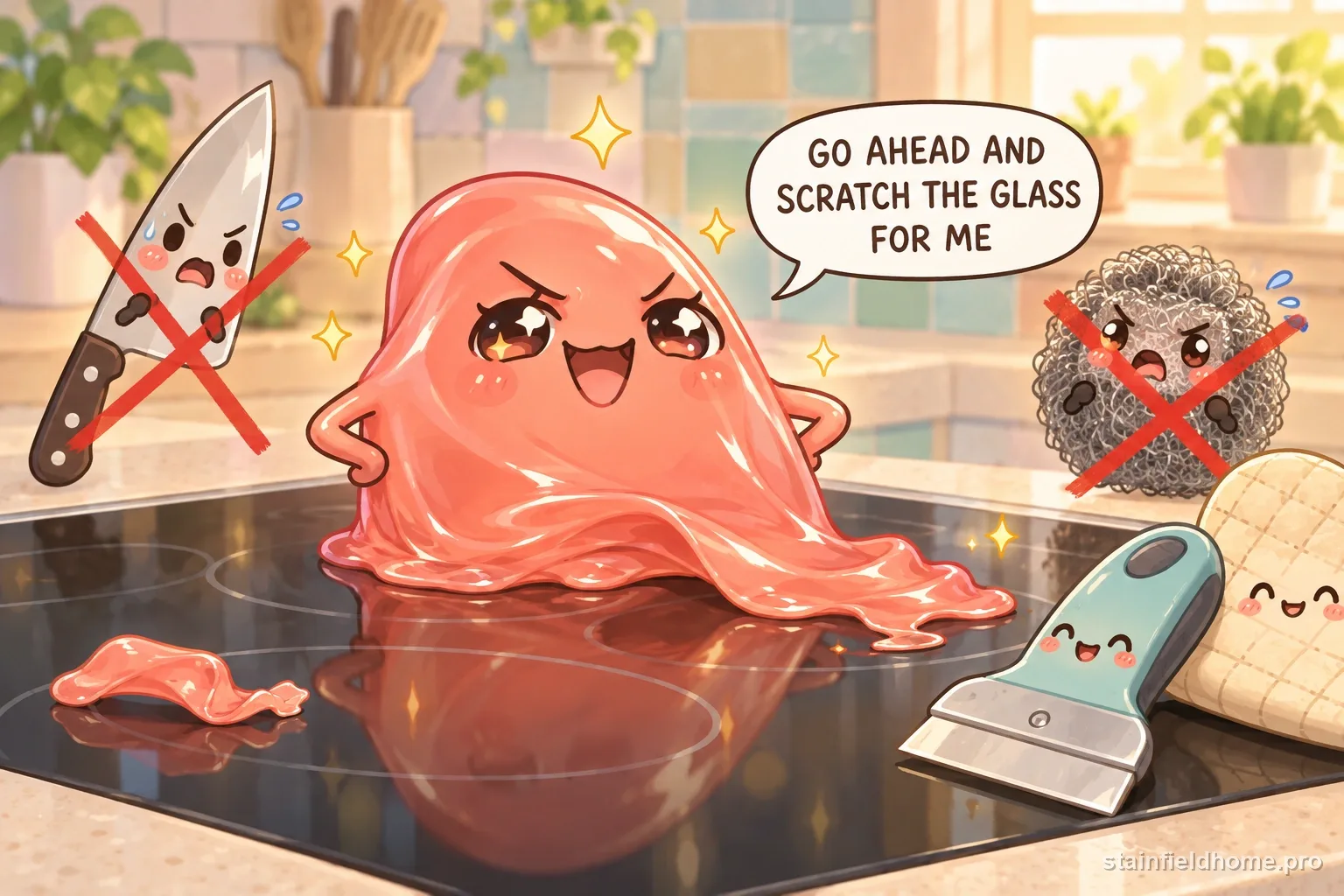
- Never use the cooktop as counter space — bread bags, utensil crocks, and packaging end up on a residually hot burner.
- Keep plastic-handled tools and cutting boards away from the back burners.
- Let the surface cool fully before setting anything on it; ceramic glass holds heat long after the light goes off.
- Store the razor scraper with the cooktop cleaner so it is there when you need it fast.
Common questions
FAQ
Should I let the plastic cool before scraping it off?
No — cold plastic grips the glass and shatters into welded flecks. Manufacturers recommend removing it while it is still warm and pliable, using an oven mitt and a flat-held razor scraper. If it has already hardened, warm just that spot briefly on low heat to soften it, watching it constantly.
Can I use a metal spatula or steel wool?
No. Anything metal or abrasive — spatula, knife, steel wool, green pads, scouring powder — scratches ceramic glass permanently, and the scratches build into a dull patch. Use only a single-edge razor scraper approved for glass cooktops, held nearly flat, plus a ceramic cooktop cleaning cream.
There is a cloudy mark where the plastic was. Is the cooktop ruined?
A faint discoloration or etched shadow is cosmetic and safe to keep using. A pit, gouge, chip, or crack is not — a damaged ceramic-glass cooktop can fail under heat, so stop using it and contact the manufacturer for service or replacement.
Sources reviewed
Keep reading
Related guides

Spills and body oils on Bouclé sofas and chairs
How to Clean a Bouclé Sofa or Chair Without Flattening the Texture
Spot-clean a bouclé sofa or chair by its cleaning code, protect the looped pile from matting, and know which spills need a dry solvent instead of water.

Burnt-on grease and food residue on Air fryer basket
How to Clean Burnt-On Grease From an Air Fryer Basket
Break down baked-on grease in an air fryer basket with a soak and baking-soda paste, without scratching the nonstick coating or getting water near the heating element.

Permanent hair dye on Bathroom countertop
How to Remove Box Hair Dye From a Bathroom Countertop
Get permanent hair color off quartz, laminate, cultured marble, or sealed stone before it sets, using the mildest method the surface allows and never an abrasive pad.
Yellowed tape adhesive on Painted wall
How to Remove Yellowed Tape Residue From a Painted Wall
Take aged, hardened tape adhesive off painted drywall without pulling the paint, using warm heat, an oil to soften the gum, and the gentlest possible scrape.