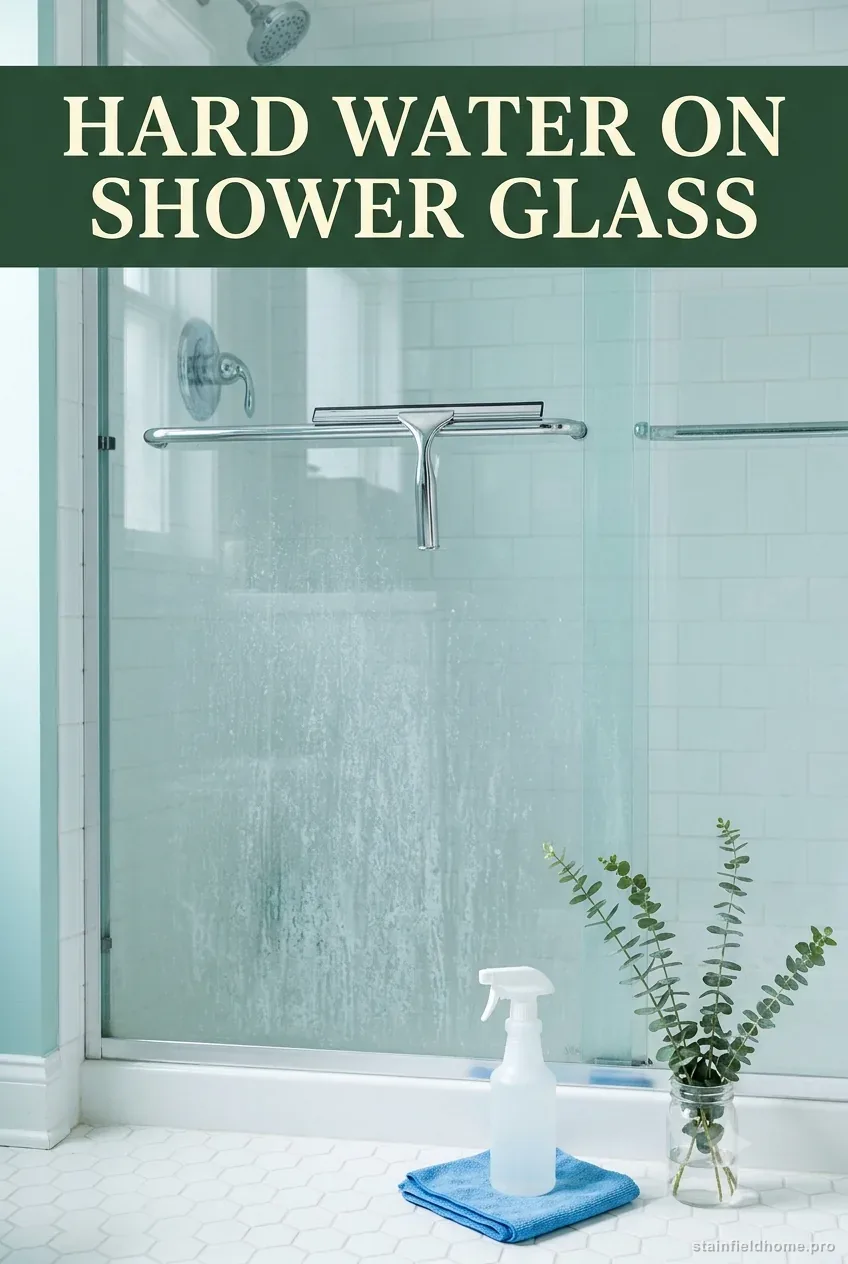
The quick answer
Wet the glass with warm water, spray on distilled white vinegar or a cleaner made for soap scum and lime, and let it dwell 5 to 15 minutes without drying out. Work it with a non-scratch pad or microfiber cloth, rinse, and repeat for heavy film. Dry the glass fully and squeegee after every shower from now on. If cleaning no longer changes a hazy or rough area, the glass is etched, and only a glass polish or replacement will help.
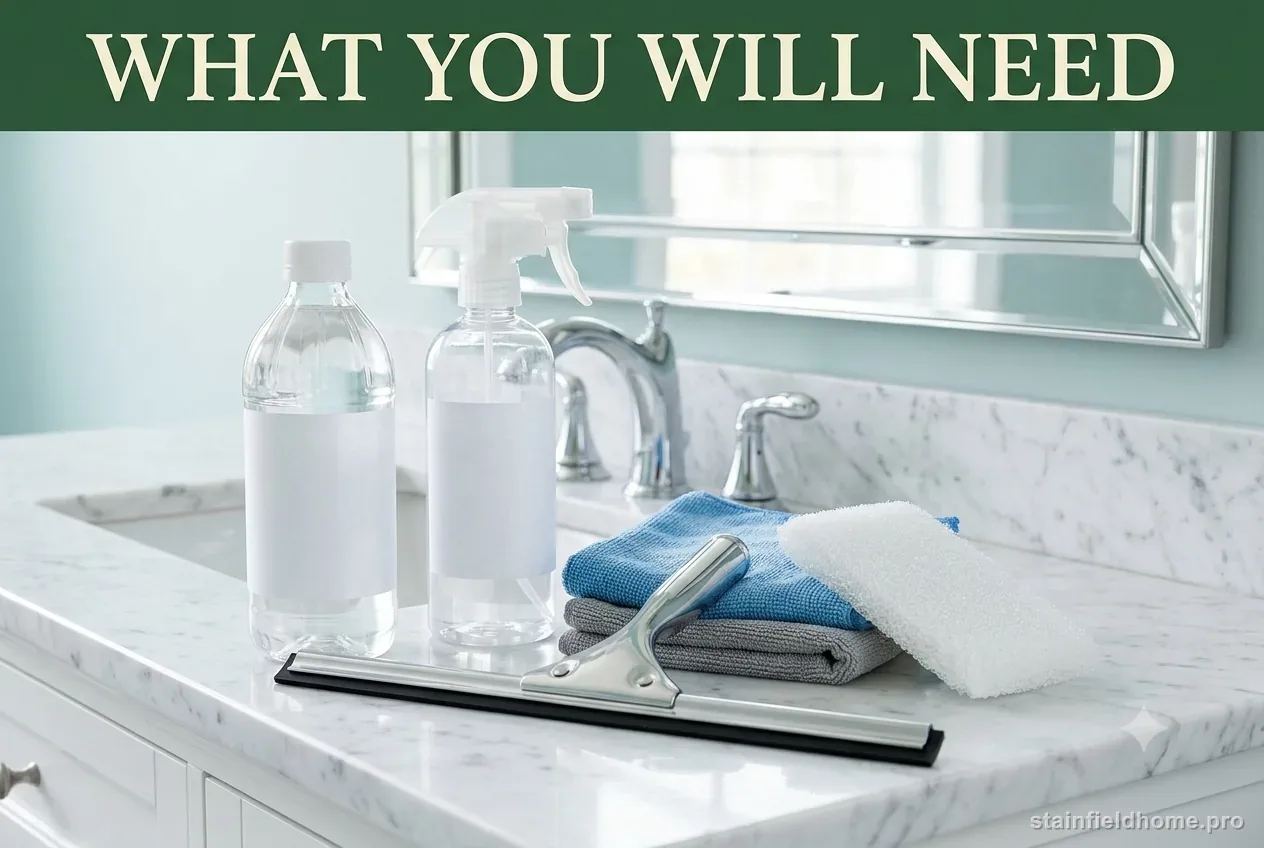
What you’ll need
- Distilled white vinegar, or a commercial soap-scum and lime cleaner rated safe for glass
- Spray bottle
- Non-scratch (white) nylon pad or microfiber cloths
- Squeegee
- Warm water for rinsing
- Cerium-oxide glass polish for etching (optional, for later)
What the cloudy film is, and when it stops being removable
Hard water carries dissolved calcium and magnesium—the U.S. Geological Survey defines water hardness by the amount of those two minerals present. Every time the shower dries, the water evaporates and the minerals stay behind as a thin, chalky layer. Add the fatty residue from soap and body wash and you get soap scum, a tougher, waxier film that traps more minerals against the glass with each shower.
Caught early, that layer sits on top of the glass and a mild acid dissolves it. Left for months or years it does more than sit there. As one shower-glass supplier puts it, hard water can slowly eat away at glass, leaving permanent weak spots and low points, and staining and etching at that stage cannot be removed with cleaning. The practical takeaway: treat buildup while it is still a film, and do not expect any cleaner to fix glass that already feels rough or looks permanently hazy.
Before you start
Check what your enclosure is made of. Plain tempered glass tolerates brief contact with a mild acid like vinegar. Some coated easy-clean glass, and any antique or decorative mirrored panel, can be dulled by acid—read the maker's care instructions, and if the glass has a factory coating use only the cleaner they recommend.
Ventilate the bathroom, wear gloves, and never combine an acid cleaner with any product containing bleach or ammonia. Work on cool glass, not hot.
The core method for mineral film and soap scum
- 01
Rinse the glass with warm water first. This softens the film and washes away grit that could scratch during scrubbing.
- 02
Spray on distilled white vinegar, or a commercial lime and soap-scum cleaner labeled safe for glass, covering the whole panel top to bottom.
- 03
Let it dwell 5 to 15 minutes—the longer end for heavy white spots. Re-spray if it starts to dry; the acid only works while it is wet.
- 04
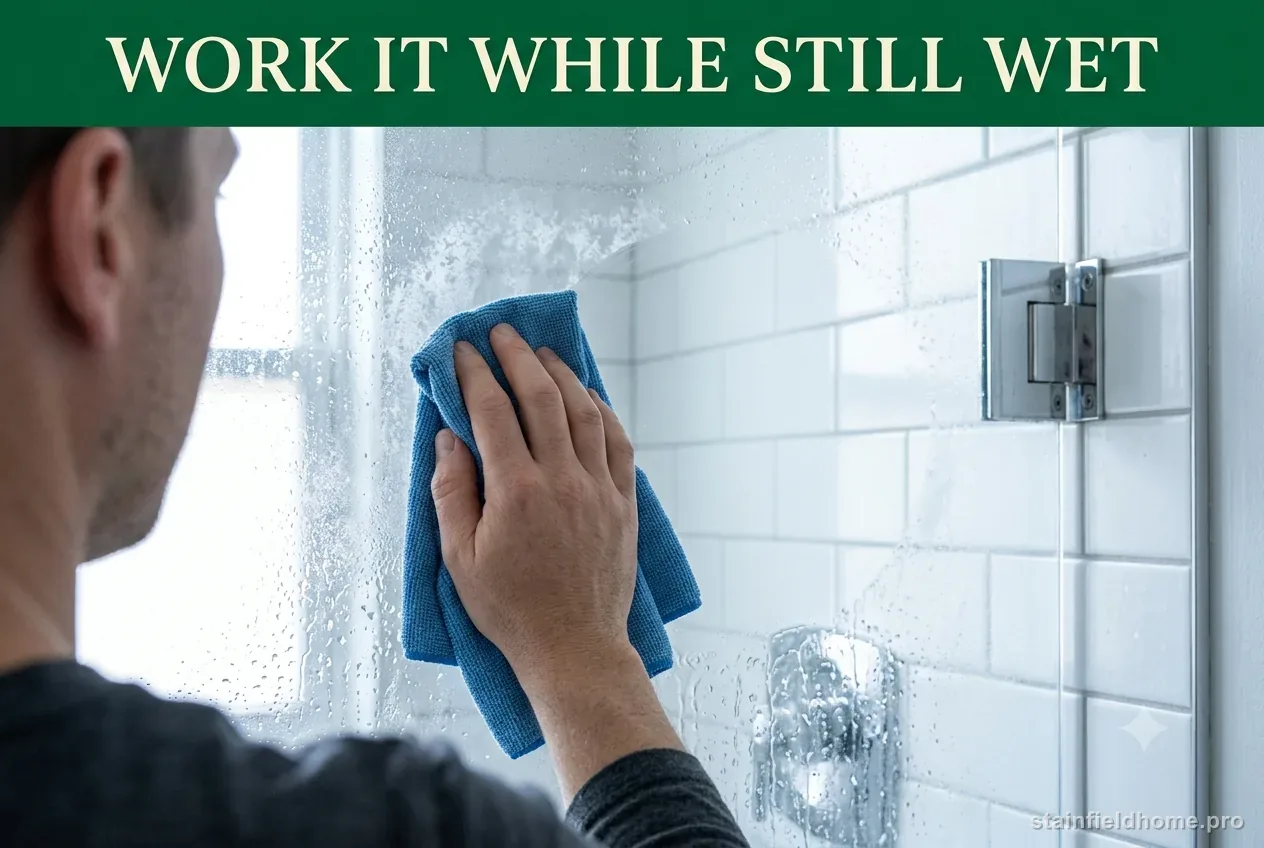
Work the surface with a damp non-scratch nylon pad or a folded microfiber cloth in small circles, keeping the glass wet the whole time.
- 05
Rinse thoroughly with warm water and check the glass in good light. Repeat the whole cycle once or twice for stubborn film rather than scrubbing harder.
- 06
Squeegee the glass dry, then buff any remaining streaks with a clean dry microfiber cloth.
Heavier buildup that one pass won't clear
For thick, crusty deposits, lay vinegar-soaked paper towels or cloths flat against the glass so the acid stays in contact for 20 to 30 minutes without running off, then work and rinse as above. A paste of baking soda and a little water, applied with a soft cloth after the acid step, gives gentle mechanical help on soap scum without scratching.
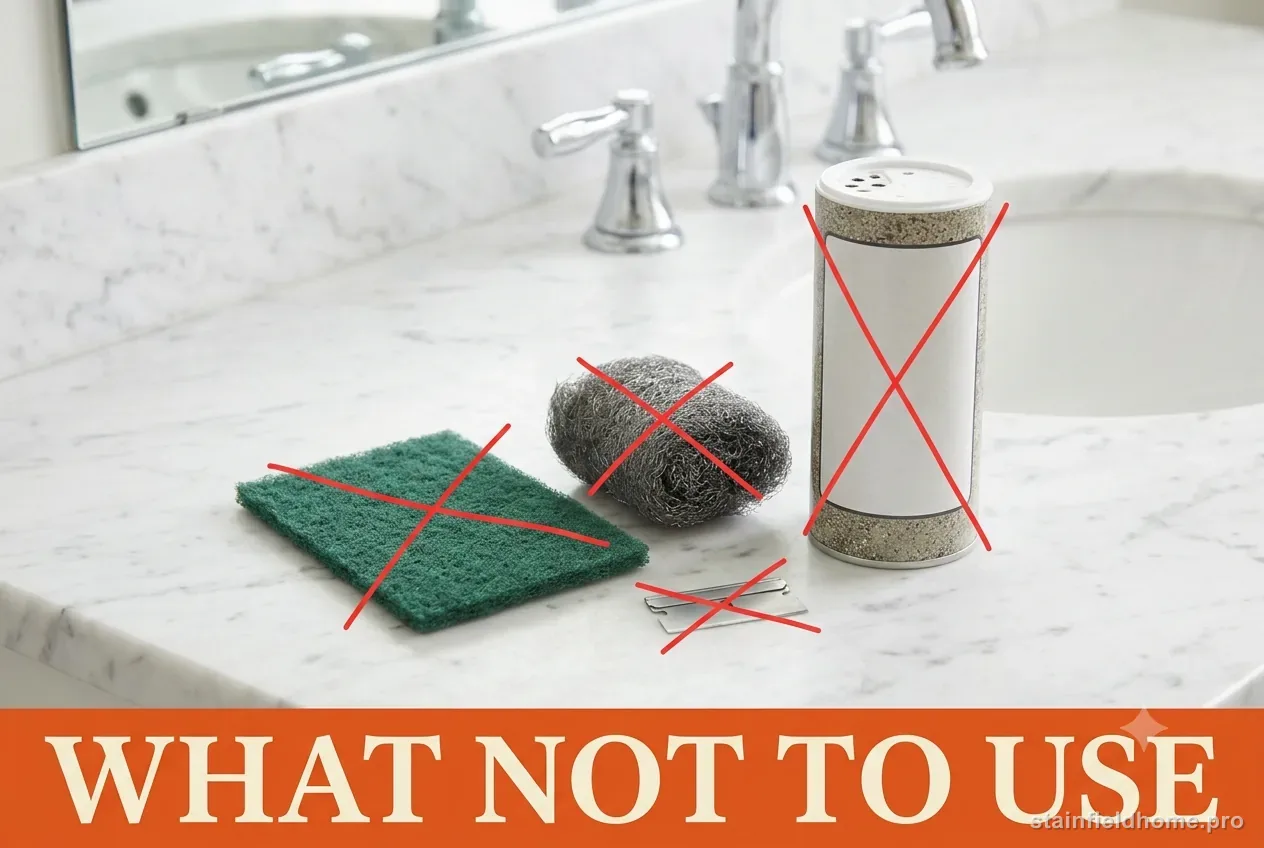
Keep the tools soft. A white non-scratch pad, a microfiber cloth, or a plastic scraper held flat are safe. A green scouring pad, steel wool, a razor blade, or scouring powder will put fine scratches in the glass that look like haze and cannot be undone—the same visual problem you are trying to fix.
If, after two full treatments, an area still looks cloudy or feels rough under a fingertip, that is etching or scratching, not deposit. A glass polishing compound (cerium oxide) worked with a felt pad can improve mild etching; deep damage means living with it or replacing the panel.
Frames, seals, and hardware
Metal frames and hinges are usually anodized aluminum or plated steel. A brief wipe with the same mild cleaner is fine, but do not let vinegar pool against them—extended acid contact can discolor the finish. Rinse and dry metal parts right after the glass.
The rubber sweep along the bottom of the door and the seals at the edges collect pink or black mildew as well as scale. Clean these with a soft brush and the same cleaner; if they are cracked or permanently stained, replacement sweeps are inexpensive and improve how the door seals.
Silicone caulk lines respond to a soft brush. If mildew is growing behind clear silicone rather than on it, cleaner will not reach it and the caulk needs to be cut out and redone.
What scratches or etches the glass
- Abrasive pads, steel wool, scouring powders, or a razor blade on the glass—they scratch, and scratches read as permanent haze
- Letting acidic cleaner sit on coated easy-clean glass or on metal frames for long periods
- Mixing vinegar or an acid cleaner with any bleach- or ammonia-based product
- Assuming a cleaner will restore glass that already feels rough—that is etching, and it is permanent
- Scrubbing dry glass; always keep the surface wet so grit cannot grind in
- Skipping the squeegee afterward, which lets a fresh mineral layer start the same day
Keep the glass clear
Squeegee the glass after every shower. It takes under a minute and is the single most effective habit—no standing water means no evaporated minerals. A daily spray-and-leave shower spray, or a quick wipe with a microfiber cloth, does the same job when a squeegee is not handy.
A hydrophobic glass sealant, reapplied every few weeks to months, makes water sheet off before it can deposit anything. If your water is very hard, a whole-house or shower-head softening filter reduces the mineral load at the source and cuts down every cleaning task in the bathroom.
Common questions
FAQ
Why won't vinegar remove the cloudiness on my old shower glass?
If a mild acid and a non-scratch pad make no difference after two thorough treatments, the haze is almost certainly etching—the minerals have physically corroded the glass surface. That cannot be cleaned away; only a cerium-oxide glass polish or panel replacement helps.
Is it safe to use vinegar on shower glass?
On plain tempered glass, brief contact with distilled white vinegar followed by a thorough rinse is fine. On factory-coated easy-clean glass it can dull the coating, so use the manufacturer's recommended cleaner instead. Keep acid off metal frames beyond a quick wipe.
How do I stop hard water spots from coming back?
Squeegee the glass after every shower so no mineral-laden water is left to dry on it. A hydrophobic glass sealant and, if your water is very hard, a softening filter reduce buildup further. Regular quick cleaning beats occasional heavy scrubbing.
Sources reviewed
Keep reading
Related guides
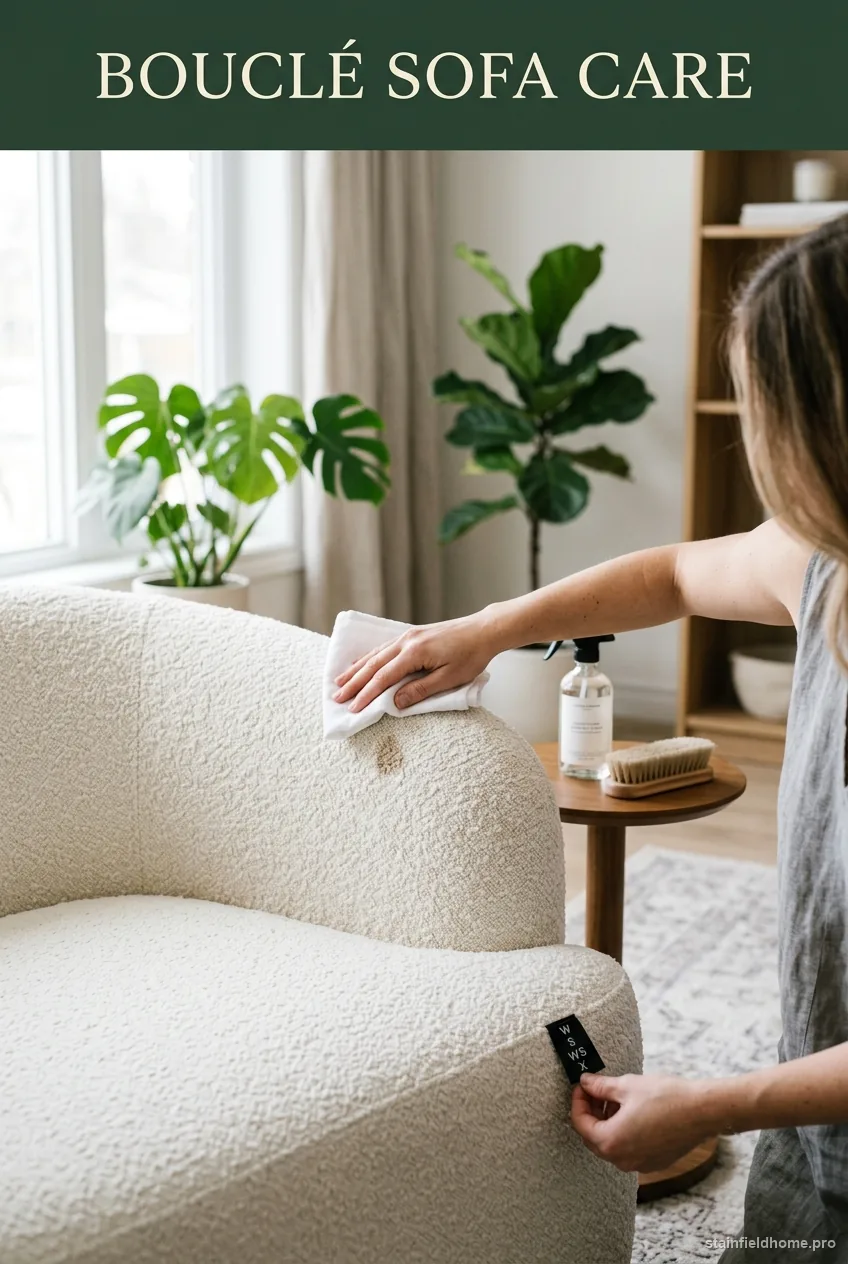
Spills and body oils on Bouclé sofas and chairs
How to Clean a Bouclé Sofa or Chair Without Flattening the Texture
Spot-clean a bouclé sofa or chair by its cleaning code, protect the looped pile from matting, and know which spills need a dry solvent instead of water.
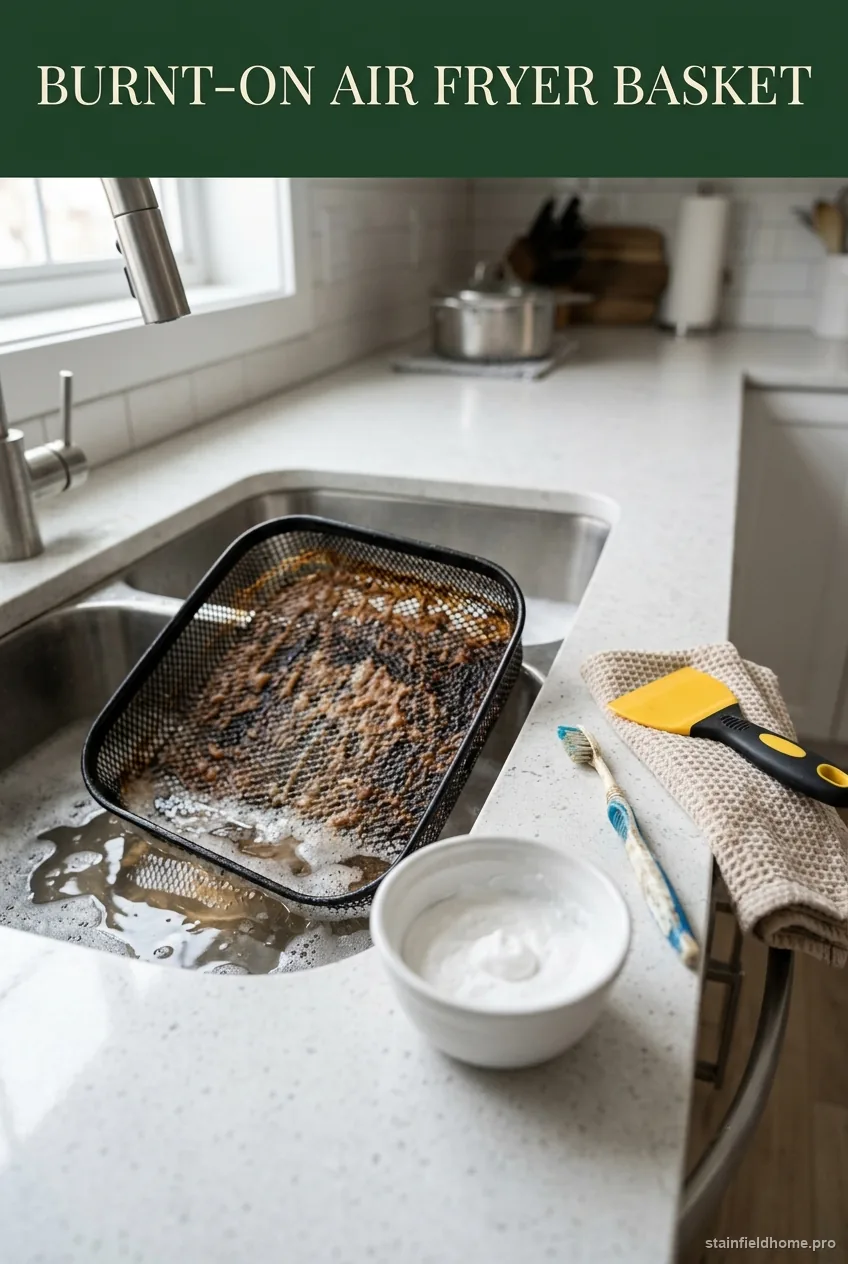
Burnt-on grease and food residue on Air fryer basket
How to Clean Burnt-On Grease From an Air Fryer Basket
Break down baked-on grease in an air fryer basket with a soak and baking-soda paste, without scratching the nonstick coating or getting water near the heating element.

Permanent hair dye on Bathroom countertop
How to Remove Box Hair Dye From a Bathroom Countertop
Get permanent hair color off quartz, laminate, cultured marble, or sealed stone before it sets, using the mildest method the surface allows and never an abrasive pad.
Yellowed tape adhesive on Painted wall
How to Remove Yellowed Tape Residue From a Painted Wall
Take aged, hardened tape adhesive off painted drywall without pulling the paint, using warm heat, an oil to soften the gum, and the gentlest possible scrape.