
The quick answer
Remove coffee and ink as two separate stain problems. Blot coffee with cool water and detergent; for ink, follow a textile-safe ink treatment and test for dye transfer first. Before any soaking or machine washing, read the tote's care label — heavy structured canvas bags such as L.L.Bean's Boat and Tote are labeled spot clean rather than machine wash.
What you’ll need
- tote care label
- white towels
- cool water
- liquid laundry detergent
- textile-safe ink stain remover
- cotton swabs
- soft brush
- dry towels
Check what kind of canvas tote you have
There are two very different bags people call a canvas tote. A soft, unstructured cotton tote (the tote-bag-as-freebie kind) is basically a garment and usually machine-washable. A structured heavyweight canvas bag — L.L.Bean Boat and Tote, a waxed-canvas bag, a printed designer tote with leather trim — has a stiffener, often a coated or waxed layer, and frequently leather handles, and those are spot-clean only.
Machine-washing the second type shrinks the canvas around its stiffener, cracks a wax finish, and ruins leather trim. Read the tag, and when in doubt treat it as spot-clean.
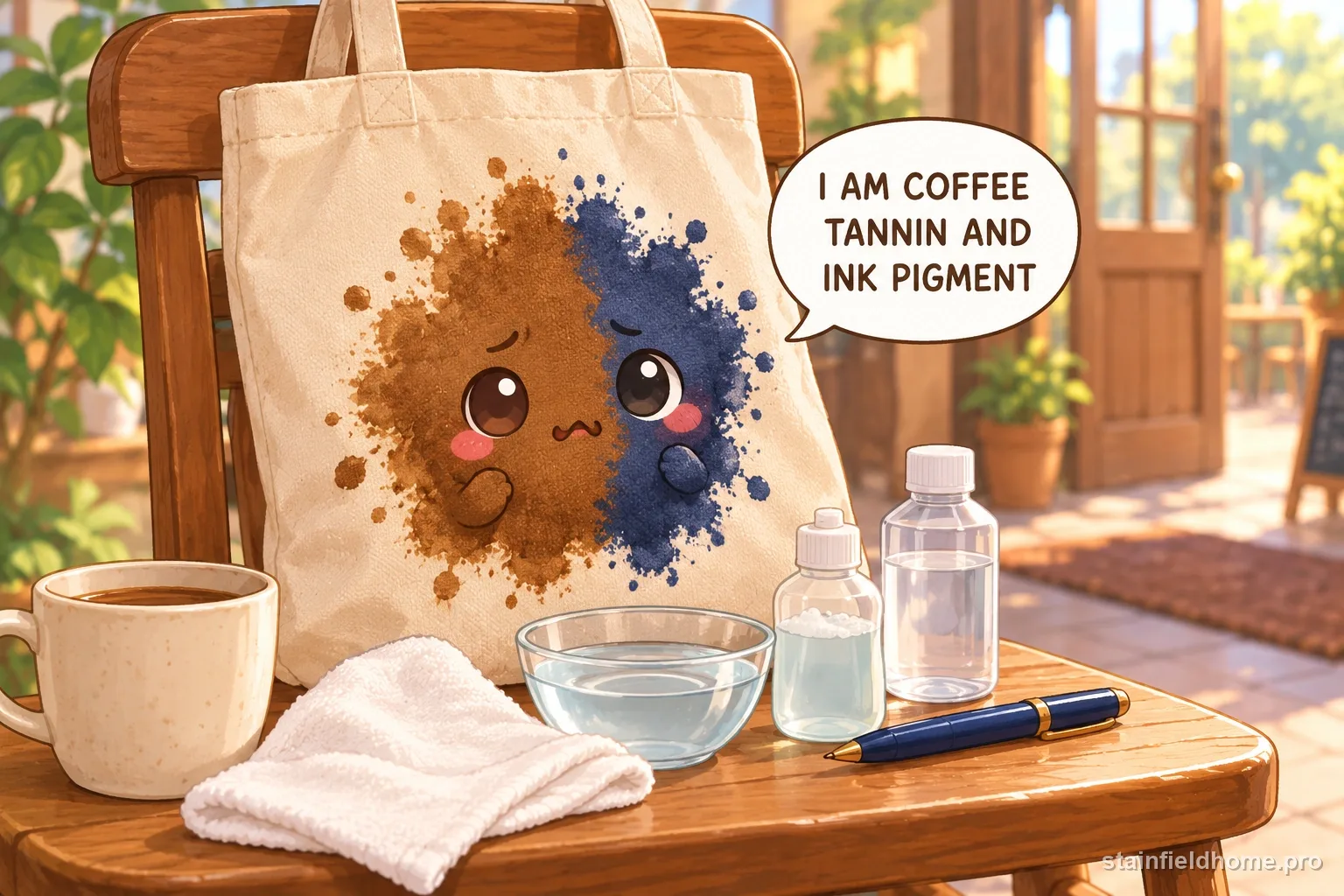
Coffee first — it is the easy one
- 01
Blot up all the liquid coffee with a dry white towel; press, do not rub.
- 02
Dab the mark with a cloth dampened in cool water, working from the edge inward.
- 03
Put a drop of liquid detergent on the damp cloth and work it into the stain, then blot with a clean damp cloth to lift it.
- 04
Lay a dry towel under the fabric and a damp one on top and press to draw the stain out of the weave.
- 05
Air-dry. Repeat once if a tan shadow remains before moving on.
Ink — identify it and test
Ballpoint ink often responds to isopropyl (rubbing) alcohol, while some washable inks may release with water and detergent; permanent-marker formulas vary. If you do not know the pen type, start with a dry blot and a hidden colorfastness test, not a large alcohol application. Use a textile ink remover or solvent only when its label allows the tote's material and the test shows no dye transfer.
Test on an inside seam or the bottom hem first: some canvas totes, especially colored or printed ones, are not colorfast and the alcohol will pull dye. If the test cloth picks up the bag's color, stop and use only water-based detergent methods.
Treating an ink mark
- 01
Put a folded white towel or a stack of paper towels directly under the ink so it has somewhere to go.
- 02
Dampen a cotton swab or the corner of a white cloth with rubbing alcohol.
- 03
Dab — do not scrub — the ink from the outside toward the center, lifting and moving to a clean part of the cloth as it picks up ink.
- 04
Change the towel underneath as ink transfers to it, so you are not pressing dissolved ink back in.
- 05
When no more ink lifts, wash the area with a little detergent and cool water to remove the alcohol, then blot dry.

Keep coffee and ink treatments separate
Coffee is a water-based tannin stain; ink may be dye, pigment, or an oil-based ballpoint formulation. If both are on the same panel, finish and rinse the coffee treatment first, let the area settle, then spot-test the ink method somewhere hidden. Working both stains at once can spread dissolved ink into the wet coffee ring or make it impossible to tell which cleaner is lifting the tote's own dye.
For a fresh coffee spill, blot first and use cool water with a small amount of detergent on a washable plain-cotton tote. Do not use heat to speed drying. If the coffee contained milk or cream, treat the oily/protein residue with detergent after flushing the tannin; if it had syrup or flavored additives, rinse until the cloth stops feeling tacky. A brown outline that appears as the bag dries is often a tide line, so re-dampen the panel evenly with plain water and blot from its outer edge inward rather than scrubbing just the ring.
Choose ink treatment by pen and print, not by guess
A cotton swab is a small test tool, not a reason to start with alcohol on every unknown mark. Blot the edge of the ink with a dry white cloth first. If the mark is a washable water-based pen, water and detergent may lift it; for a ballpoint or permanent ink that resists that step, use a textile ink remover or rubbing alcohol only if the label permits it and the hidden test shows no color loss. Ink formulas vary, and a solvent that lifts pen ink may also dissolve a screen print or pull dye out of colored canvas.
Place absorbent paper beneath the stained layer, work from the back when the bag's construction allows, and change the paper as it picks up color. Keep the solvent away from leather, waxed finish, rubberized lining, and printed graphics. If the tote's own color transfers, stop immediately, blot with plain cool water, and accept partial removal or consult a cleaner; repeated solvent passes can leave a pale patch much larger than the original ink mark.
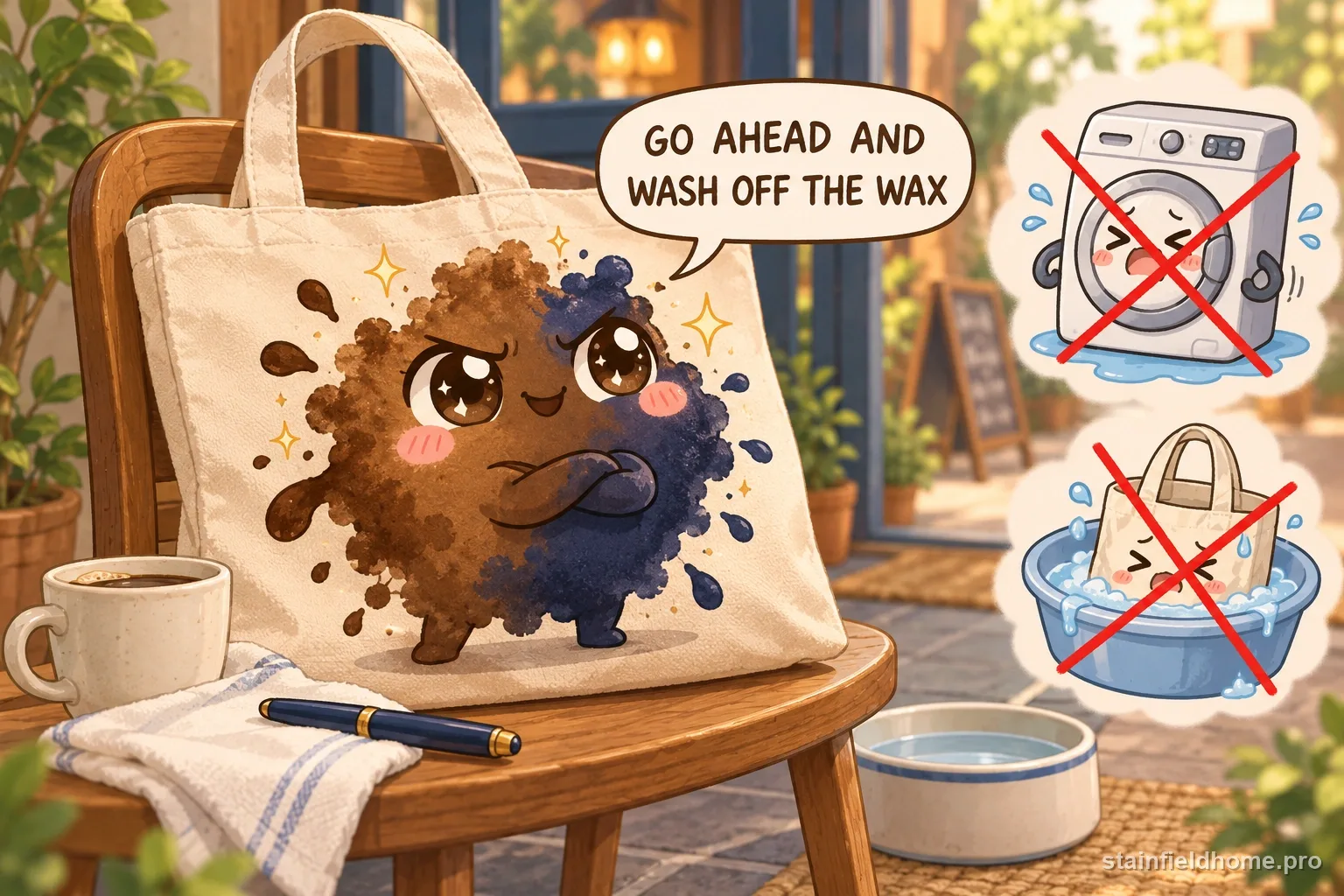
For dried coffee, ink, or a water ring
A dried coffee stain can often be softened with a damp cloth and mild detergent, but a structured tote should stay spot-treated rather than fully soaked. Work across a whole seam-to-seam panel with gradually smaller amounts of moisture to avoid a sharp boundary. Support the bag in its natural shape while it air-dries, with a clean towel inside to absorb moisture without stretching the handles.
Dried ink is more difficult because pigment can lodge between canvas yarns. Repeat a label-approved spot treatment only while color is visibly transferring to the white towel, then rinse the area as directed. If two careful passes stop lifting ink, do not scrub harder: a faint shadow is safer than roughened fibers, a faded logo, or a solvent halo. Keep the bag out of direct heat until you have inspected it dry in daylight.
If the tote is machine-washable
For a soft cotton tote with a washable label, pretreat both stains as above, then wash cold on gentle, inside a mesh bag if it has straps that could tangle. Air-dry — the dryer shrinks cotton totes and can warp any printed design.
Never machine-wash a bag with a cardboard or plastic stiffener, a waxed finish, or leather parts. The wash destroys the structure that makes it a useful bag.
Waxed canvas and leather-trimmed totes
Waxed-canvas totes (Filson-style, waxed grocery totes) must not be washed or soaked — water strips the wax and leaves permanent pale blotches. Spot-clean coffee with a barely-damp cloth and cold water only, let it dry, and re-wax the area with the maker's wax bar if it looks dull. Treat ink on waxed canvas with a swab of alcohol, minimally, then re-wax.
For a tote with leather handles or a leather base, keep every wet treatment off the leather. Clean leather trim separately with a barely-damp cloth and a dab of leather conditioner, and never let the canvas cleaning water pool against a leather seam — it darkens and stiffens leather as it dries.
Keeping a tote presentable
- Carry pens capped and in a pouch, not loose in the bottom of the bag.
- Use a spill-proof cup lid for coffee carried in a tote.
- Spot-treat stains the same day; set-in coffee and ink are much harder later.
- Re-wax a waxed-canvas tote periodically instead of washing it — washing strips the finish that makes it water-resistant.
Common questions
FAQ
Can I machine-wash my L.L.Bean Boat and Tote?
L.L.Bean labels the Boat and Tote as spot clean, not machine wash, because washing shrinks the heavy canvas around its structure and can distort the bag. Spot-treat coffee with detergent and water and ink with rubbing alcohol (after a colorfastness test), then air-dry.
Rubbing alcohol is pulling color off my printed tote. What do I do?
Stop using it — the bag is not colorfast. Switch to water-based methods only: blot the ink with a detergent-and-water solution and a clean white cloth, changing the towel underneath as ink transfers. You may not get all of it out, but you will not bleach the bag.
The coffee left a faint brown outline. How do I remove the ring?
A ring means the stain wicked outward as it dried. Re-dampen the whole panel evenly with cool water and a little detergent so there is no hard edge, blot from outside in, then dry it quickly with a fan. On heavy canvas a faint shadow may remain and is usually not very visible once dry.
Sources reviewed
Keep reading
Related guides

Spills and body oils on Bouclé sofas and chairs
How to Clean a Bouclé Sofa or Chair Without Flattening the Texture
Spot-clean a bouclé sofa or chair by its cleaning code, protect the looped pile from matting, and know which spills need a dry solvent instead of water.

Burnt-on grease and food residue on Air fryer basket
How to Clean Burnt-On Grease From an Air Fryer Basket
Break down baked-on grease in an air fryer basket with a soak and baking-soda paste, without scratching the nonstick coating or getting water near the heating element.

Permanent hair dye on Bathroom countertop
How to Remove Box Hair Dye From a Bathroom Countertop
Get permanent hair color off quartz, laminate, cultured marble, or sealed stone before it sets, using the mildest method the surface allows and never an abrasive pad.

Yellowed tape adhesive on Painted wall
How to Remove Yellowed Tape Residue From a Painted Wall
Take aged, hardened tape adhesive off painted drywall without pulling the paint, using warm heat, an oil to soften the gum, and the gentlest possible scrape.