The quick answer
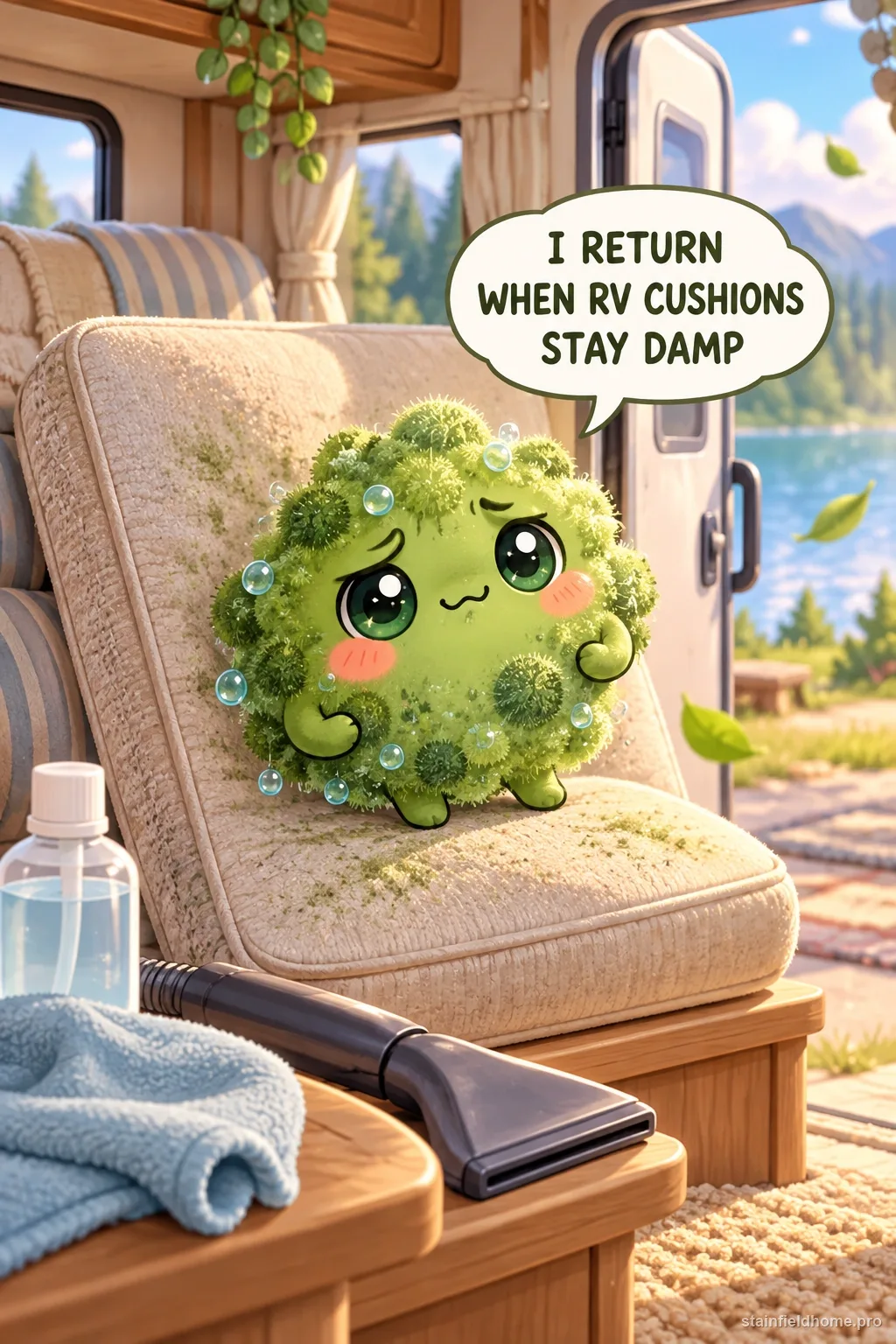
Vacuum dry surface debris, identify the upholstery material from the RV manual, and use the mildest cleaner approved for that fabric or vinyl. Keep moisture low, extract or blot cleaner thoroughly, and dry cushions with strong airflow before closing the RV. If mildew returns, fix the leak, condensation, or storage humidity that is feeding it rather than repeatedly bleaching the fabric.
What you’ll need
- RV owner manual
- HEPA vacuum if appropriate
- white cloths
- mild manufacturer-approved cleaner
- soft brush if allowed
- fan
- dehumidifier
- gloves
In an RV, the mildew is a symptom
Upholstery mildew in a camper is almost never just a cleaning problem. RVs are small, poorly ventilated boxes that swing through big temperature changes, so moisture from cooking, breathing, wet gear, a window left cracked in the rain, or a slow roof or plumbing leak condenses on cool surfaces and soaks into cushions and the fabric against the walls.
You can clean the visible mildew, but if you do not find and fix the moisture source it will be back within weeks — and repeated bleaching wears the fabric out fast. So this job is half cleaning, half moisture detective work.
Clean the fabric — gently first
- 01
Take cushions outside on a dry, breezy day. Do the work outdoors so spores are not spread through the cabin.
- 02
Vacuum all surfaces to lift loose spores and dust before adding any liquid.
- 03
Check the manual or the cushion tag for the cleaning code (W, S, WS, or X) and the material.
- 04
Start with the mildest option: a little mild soap in water on a cloth for coded-W fabric, or a marine-vinyl mild cleaner for vinyl.
- 05
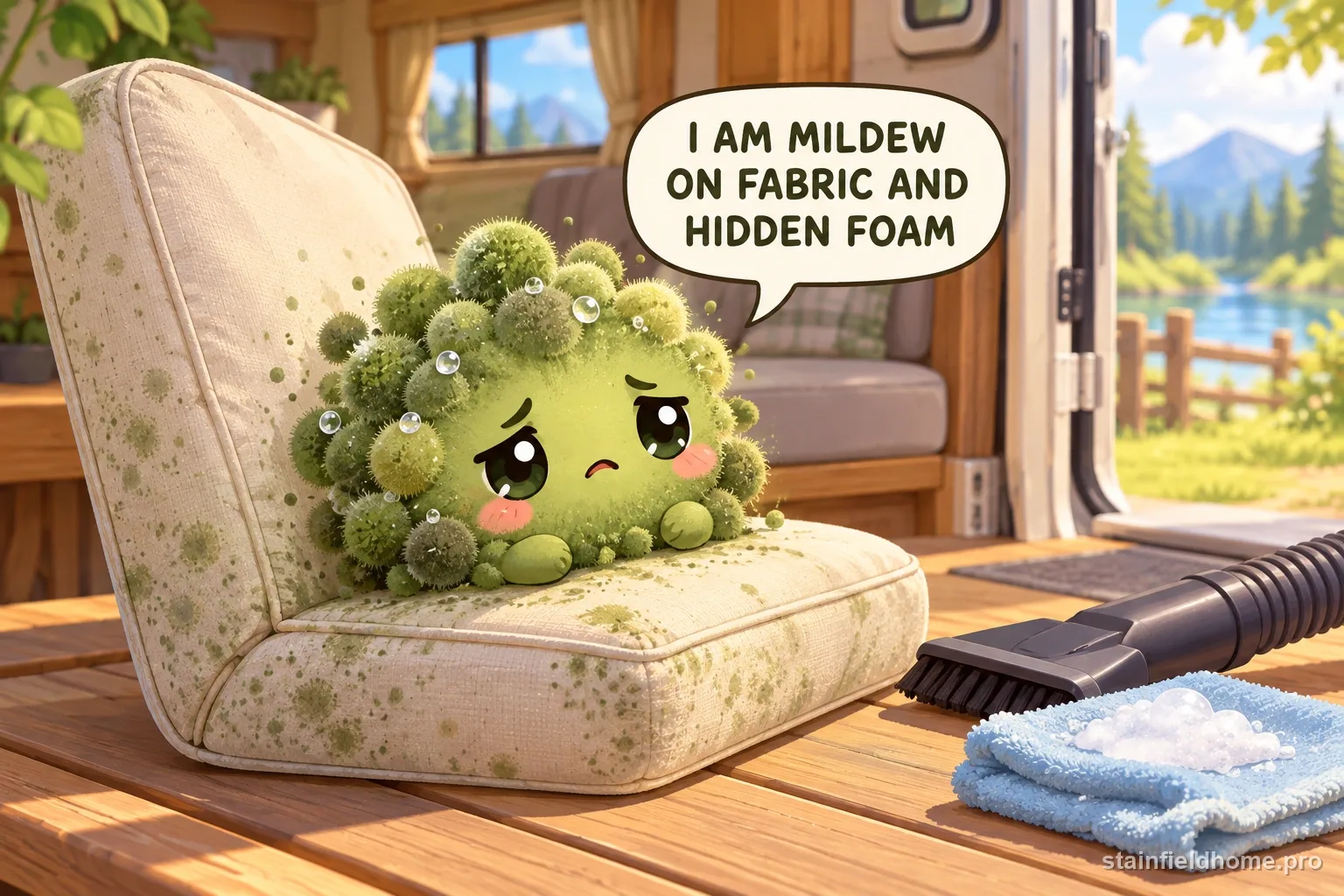
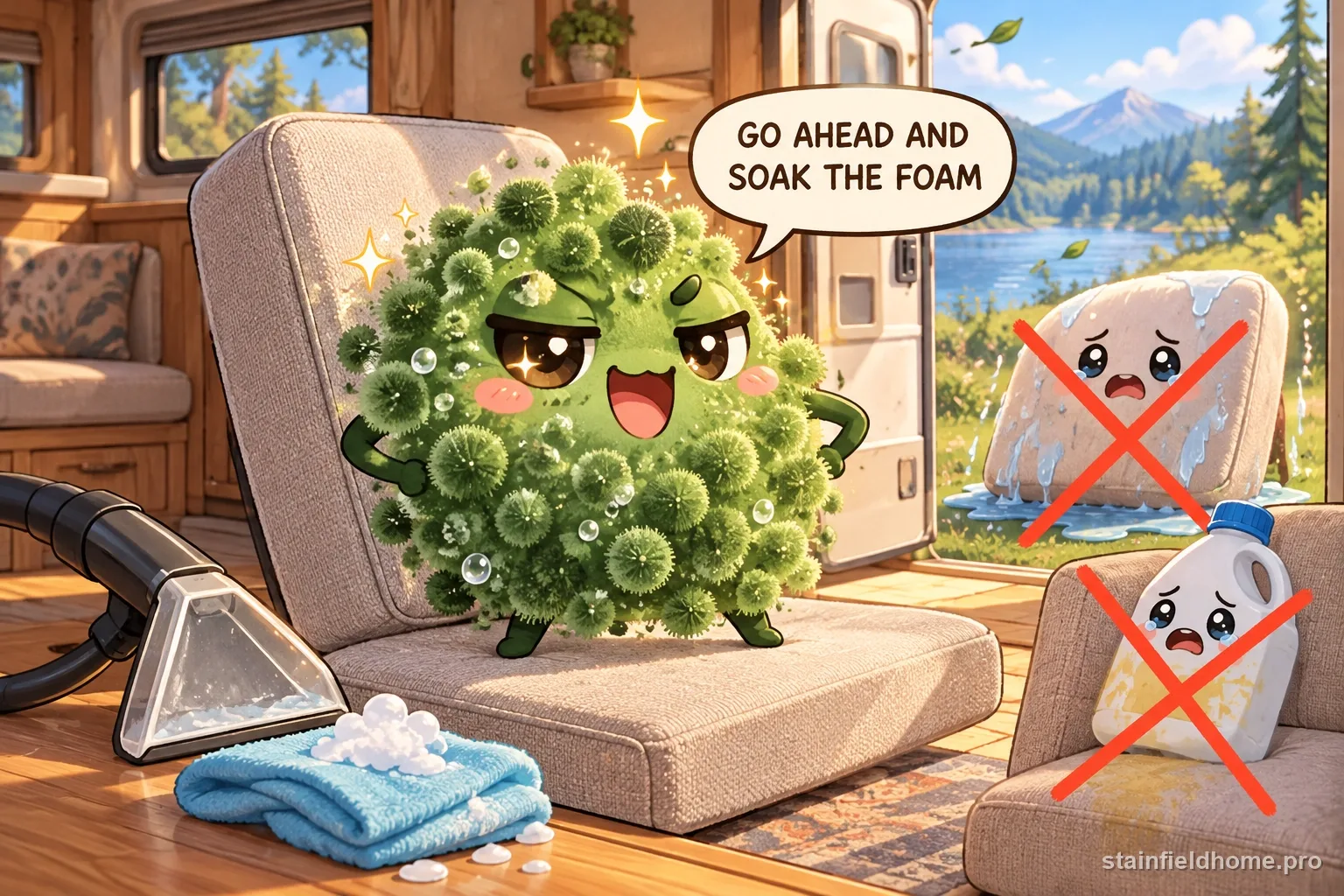
Work from the outside of the patch inward, blot the loosened soil onto a white cloth, and do not soak the foam.
- 06
If mild cleaning fails, step up only to a product rated for that material — a fabric-safe mildew stain remover, or the diluted-bleach ratio the vinyl maker publishes.
Read the upholstery code and clean only that material
RV cushions may use woven fabric, coated vinyl, faux leather, or a removable outdoor textile, and their safe cleaners differ. Use the cushion tag or owner's manual as the authority. A W code generally allows a water-based upholstery cleaner; S calls for a solvent cleaner; WS allows either; and X means vacuum-only professional care. Codes can vary by manufacturer and are not a license to soak a cushion. Test the selected cleaner on a hidden seam, wait until it dries, and check for color transfer, stiffness, or a tide mark before expanding the treatment.
For a removable cover, unzip it only if the tag permits removal and check the zipper and lining before laundering. Marine or solution-dyed acrylic fabrics have their own care instructions: Sunbrella's guidance, for example, uses mild soap, thorough rinsing, and air drying, with a specific bleach dilution for stubborn mildew. That instruction applies to the named fabric, not automatically to adjacent vinyl, foam, backing, or another RV upholstery brand. Never apply bleach to a mixed-material cushion based only on a general web recipe.
Handle visible growth and protect the cabin
- 01
Wear gloves and avoid dry brushing or shaking a cushion indoors; vacuum loose dry debris with a suitable filter before damp cleaning.
- 02
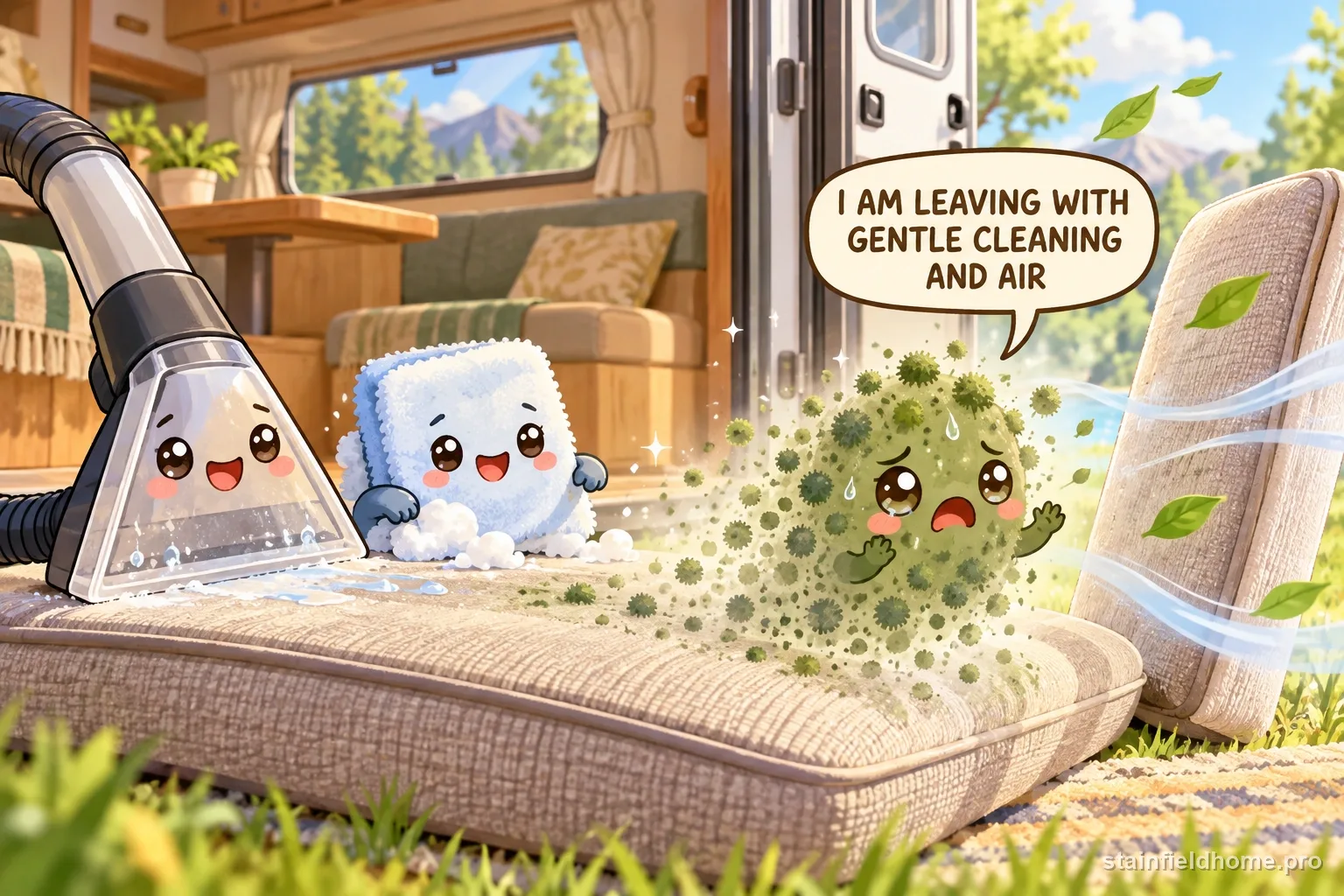
Move the cushion outside when practical, away from children and pets, and work in airflow rather than spreading debris through the RV.
- 03
Clean a small section at a time, using the minimum liquid needed to lift the surface soil. Blot with separate white cloths so you can see whether material or color is transferring.
- 04
Rinse or extract cleaner residue only as the fabric maker permits, then dry the front, back, seams, and foam fully before closing the RV.
- 05
If an area is large, keeps returning, or sits over soft wallboard or a leak, stop cosmetic cleaning and arrange a moisture inspection; the hidden source needs repair.
- 06
Do not combine bleach with ammonia, vinegar, or other household cleaners, and never spray a bleach mixture into a closed RV cabin. If the fabric maker authorizes bleach, mix only its exact recipe, ventilate the space, protect nearby metal and colored surfaces, rinse thoroughly, and keep the treated cushion out until fully dry.
After cleaning, watch for a returning damp spot
A clean-looking cushion is not proof that the problem is solved. Mark the affected area with a removable note and check it again after a dry day and after the RV has been closed overnight. A returning musty smell, cool damp feel, or fresh spotting suggests water is still entering or condensing behind the upholstery. Inspect the corresponding wall, window, roof seam, plumbing line, and underside of the cushion rather than applying another round of cleaner to the face fabric.
If the wall panel is soft, swollen, delaminating, or stained beyond the cushion footprint, avoid removing large upholstery panels yourself; wiring and hidden water damage may be present. Document the location and conditions, ventilate the RV, and have an RV service professional check for intrusion. A targeted repair and complete drying are more effective than treating visible mildew repeatedly, and they reduce the chance that a replacement cover will be stained again.
The foam inside is the real reservoir
Cushion foam that has been damp holds spores and smell no matter how clean the cover looks. Unzip the covers and check the foam. Lightly affected foam can be sprayed with a fabric-safe antimicrobial, pressed with clean water to rinse, and then dried hard — days of sun and wind, or a fan blowing directly on it indoors.
Foam that is stained through, crumbling, or still smells musty after drying should be replaced. New RV cushion foam is inexpensive compared to the health nuisance of sleeping on moldy foam.
Find the moisture source
- Run a hand along the base of walls, under windows, around roof vents and the AC shroud, and under the mattress and dinette cushions for damp spots or a musty smell.
- Check roof seams, skylight and vent gaskets, and window seals for cracked sealant — the most common RV leak points.
- Look for condensation lines on single-pane windows and metal window frames on cold mornings.
- Check the plumbing bay, water heater, and under the sink for slow drips.
- In storage, a closed RV with no airflow will grow mildew from ambient humidity alone.
Drying and prevention
After cleaning, get everything bone dry before the cushions go back and the RV is closed. Use a fan, open opposite windows for cross-flow, and run a dehumidifier in the cabin if you have power. Do not reinstall a cushion that feels even slightly cool or heavy.
For ongoing prevention: use a roof vent fan when cooking or showering, keep a dehumidifier or moisture absorbers (DampRid-type) in the cabin, crack a vent in storage or use a breathable cover, and pull cushions off the beds and stand them on edge during long storage so air moves around them.
When to bring in help
- Mildew that keeps returning in the same spot after you have cleaned and dried — there is a hidden leak; get the RV to a service center for a water-intrusion check.
- A large area of the wall board (luan) behind the upholstery that is soft or stained — that is water damage, not a surface issue.
- A strong musty smell you cannot locate — an RV detailer with a moisture meter can find it.
Common questions
FAQ
Can I use regular household bleach on RV upholstery?
Only on vinyl, and only at the dilution the vinyl manufacturer publishes, rinsed thoroughly. On RV fabric, bleach weakens fibers and removes color; use a fabric-safe mildew stain remover instead. Whatever you use, the mildew comes back unless you also fix the moisture source.
The mildew keeps coming back on the same cushion. Why?
There is a moisture source feeding it — most often a cracked roof-vent or window seal above that spot, condensation on a cold wall, or the foam never fully dried. Clean and dry it once, then find and fix the leak or humidity problem; repeated cleaning alone will not stop it.
Is it worth saving mildewed RV cushion foam?
Lightly affected foam that dries out completely and no longer smells is fine. Foam that is stained through, crumbling, or still musty after a hard dry should be replaced — replacement RV foam is cheap relative to sleeping on mold, and the cover can usually be reused.
Sources reviewed
Keep reading
Related guides

Mildew on Marine vinyl boat seat
How to Remove Mildew Stains From Boat-Seat Vinyl
Clean mildew from marine vinyl seats without stripping protective topcoats, overusing bleach, or trapping moisture in seams and foam.

Spills and body oils on Bouclé sofas and chairs
How to Clean a Bouclé Sofa or Chair Without Flattening the Texture
Spot-clean a bouclé sofa or chair by its cleaning code, protect the looped pile from matting, and know which spills need a dry solvent instead of water.

Burnt-on grease and food residue on Air fryer basket
How to Clean Burnt-On Grease From an Air Fryer Basket
Break down baked-on grease in an air fryer basket with a soak and baking-soda paste, without scratching the nonstick coating or getting water near the heating element.
Permanent hair dye on Bathroom countertop
How to Remove Box Hair Dye From a Bathroom Countertop
Get permanent hair color off quartz, laminate, cultured marble, or sealed stone before it sets, using the mildest method the surface allows and never an abrasive pad.