The quick answer
Start boat-seat mildew cleaning with the vinyl manufacturer's mild-soap method, using a soft cloth or soft brush, then rinse and dry completely. For stubborn staining, step up only to cleaners and bleach dilutions specifically approved for that marine vinyl. Avoid full-strength bleach, abrasive pads, pressure washing, and leaving cushions damp in storage.
What you’ll need
- marine-vinyl care guide
- mild non-bleach dish soap
- warm water
- soft white cloths
- soft-bristle brush
- manufacturer-approved mildew cleaner if needed
- clean rinse water
- dry towels
- fan
Mildew stains versus the vinyl's own topcoat failure
Marine vinyl has a clear protective topcoat over the color layer. Mildew grows on the surface, feeding on skin oil, sunscreen, pollen, and salt film rather than on the vinyl itself — so caught early it wipes off. What people mistake for 'set-in mildew' is often the topcoat breaking down from UV and harsh cleaning, which leaves a permanently dull, sticky, or cracked patch that no cleaner fixes.
This distinction drives the whole approach: clean gently and often, because the aggressive cleaning that finally removes a deep stain is frequently what destroys the coating that was protecting the seat.
Start with mild soap and a soft brush
- 01
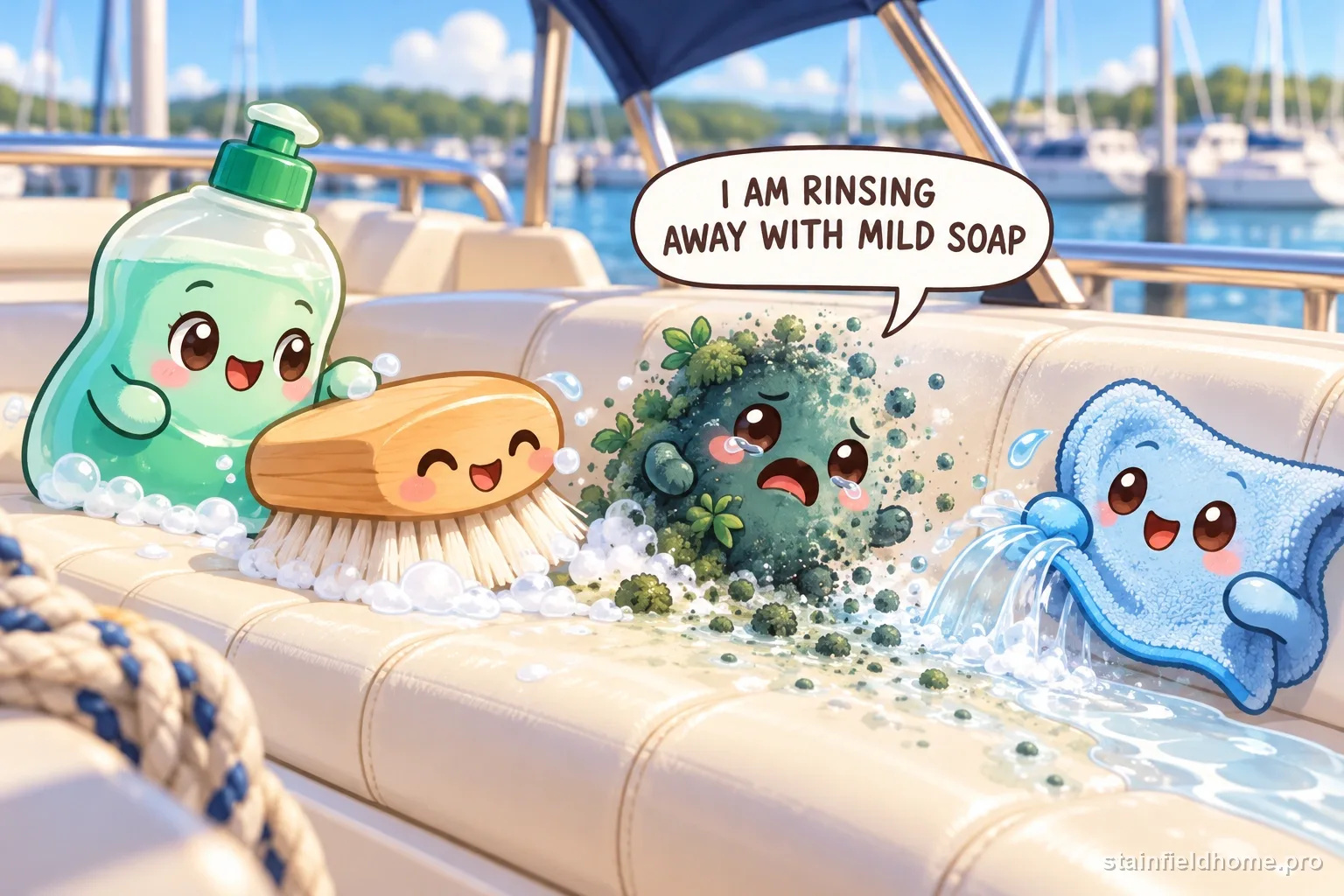
Brush off loose debris and rinse the seat with clean water.
- 02
Mix a mild non-bleach dish soap with warm water.
- 03
Work it in with a soft cloth or soft-bristle brush, following the grain of any texture.
- 04
Let it dwell a few minutes on stained areas — do not let it dry.
- 05
Rinse thoroughly with clean water; leftover soap film feeds the next bloom.
- 06
Towel off and let the seat air-dry completely with the cushions propped open.
Stepping up: only approved cleaners and bleach dilutions
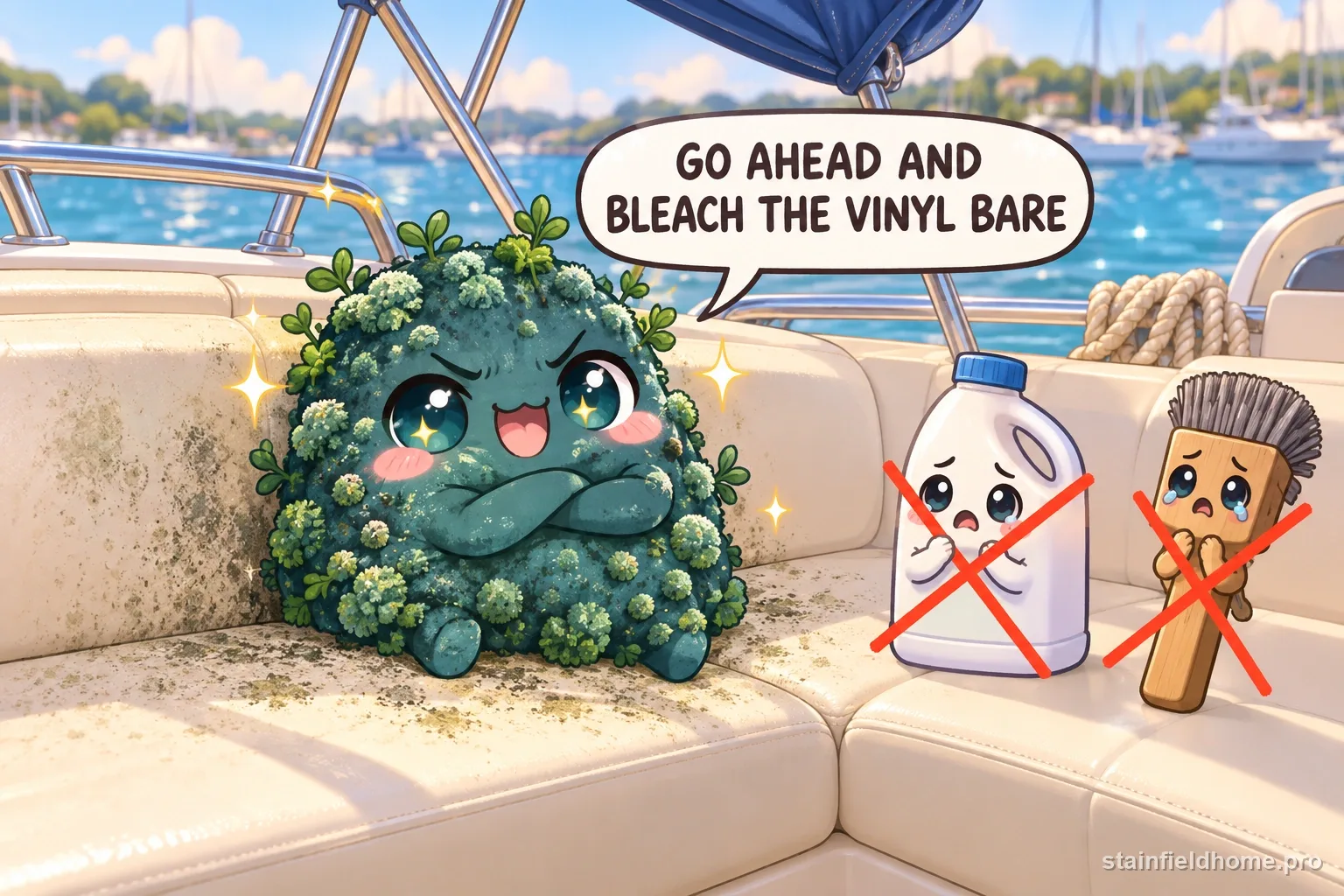
If mild soap does not clear the spots, the next step is a marine-vinyl-specific mildew cleaner (brands like 3M, Star brite, and IOSSO make them) or the exact diluted-bleach ratio your vinyl maker publishes — Spradling and Morbern, for example, give specific dilutions and contact times.
Apply, wait the stated time, agitate gently, then rinse very thoroughly and dry. Never go stronger than the published ratio and never leave bleach solution to dry on the seat: concentrated bleach degrades the plasticizers that keep vinyl flexible, so the seat cracks a season later.
Pink staining is not mildew
A pink or purple discoloration that seems to come from under the surface is microbial pink staining, caused by a bacterium (Streptoverticillium) that produces a dye which migrates into the vinyl. Scrubbing and bleaching do not remove it because it is below the topcoat.
It needs a product formulated for pink stain, and even then results vary. The realistic fix for advanced pink staining is reupholstery. Preventing it — keeping seats dry and clean — is far easier than removing it.
Seams, stitching, and the foam underneath
Mildew loves the stitching channels and the piping where water sits. Use a soft brush there and rinse well, but do not soak the seams — water that gets past the stitching into the foam cushion is what makes a seat smell and re-bloom no matter how clean the surface looks.
If a cushion is already waterlogged and musty, it needs to come off the boat, drain, and dry for days in the sun and wind, or the foam itself needs replacing. A dry foam core is the real key to a mildew-free seat.
Why it always comes back in storage
Mildew returns because a covered boat in humid storage is a greenhouse: condensation forms under the cover every night, drips onto the seats, and cannot evaporate. A seat cleaned in April is blooming again by June under those conditions.
The fix is airflow and dryness under the cover, not more frequent bleaching. Bleaching every few weeks just wears out the vinyl faster.
Off-season and between-trips storage that prevents it
- Dry seats completely before covering the boat; never cover damp vinyl.
- Use a vented cover or support poles that create a peak so water runs off and air moves.
- Put a moisture absorber or a small solar vent fan in an enclosed cockpit.
- Apply a marine-vinyl protectant with UV inhibitor after cleaning — it makes the surface easier to wipe and slows topcoat breakdown.
- Crack cushions open, or stand them on edge, during long storage so both faces breathe.
Common questions
FAQ
Can I use full-strength bleach on boat seats?
No. Concentrated bleach strips the plasticizers that keep marine vinyl flexible, so the seat stiffens and cracks within a season, and it can damage the stitching. Use only the diluted ratio and contact time your vinyl manufacturer publishes, rinse thoroughly, and never let bleach solution dry on the surface.
There are pink stains coming from under the surface. How do I remove those?
Pink staining is caused by a bacterium whose dye migrates below the topcoat, so ordinary cleaning and bleaching will not reach it. Try a product made specifically for vinyl pink stain, but be realistic: advanced cases usually require reupholstery. Keeping seats dry and clean is the only reliable prevention.
The mildew keeps returning every spring. What am I missing?
Almost always moisture under the boat cover — nightly condensation drips onto the seats and cannot dry. Improve airflow with a peaked or vented cover, add a moisture absorber or solar vent, dry seats fully before covering, and check whether the foam cushions themselves are waterlogged and need to dry out or be replaced.
Sources reviewed
Keep reading
Related guides
Mildew on RV or camper upholstery
How to Remove Mildew From RV Upholstery
Clean mildew from RV or camper upholstery while controlling moisture in cushions, walls, and closed-season storage so it does not return.

Spills and body oils on Bouclé sofas and chairs
How to Clean a Bouclé Sofa or Chair Without Flattening the Texture
Spot-clean a bouclé sofa or chair by its cleaning code, protect the looped pile from matting, and know which spills need a dry solvent instead of water.

Burnt-on grease and food residue on Air fryer basket
How to Clean Burnt-On Grease From an Air Fryer Basket
Break down baked-on grease in an air fryer basket with a soak and baking-soda paste, without scratching the nonstick coating or getting water near the heating element.
Permanent hair dye on Bathroom countertop
How to Remove Box Hair Dye From a Bathroom Countertop
Get permanent hair color off quartz, laminate, cultured marble, or sealed stone before it sets, using the mildest method the surface allows and never an abrasive pad.