The quick answer
Stop the leak and keep oil away from the street drain. On fresh oil, cover the spill with an absorbent such as clay litter or an oil-absorbent product, let it work, then sweep it into a container for local disposal guidance. For the remaining mark, test a concrete-safe driveway degreaser in a hidden area and follow its label with the smallest amount of water needed. Capture and dispose of oily rinse water and used absorbent properly; do not hose motor oil into a gutter, storm drain, lawn, or soil.
What you’ll need
- Oil-absorbent granules or clay-based litter
- Stiff broom and dustpan
- Gloves and eye protection
- Concrete-safe driveway cleaner or degreaser
- Absorbent pads and a sealable container
Contain the spill before cleaning the stain
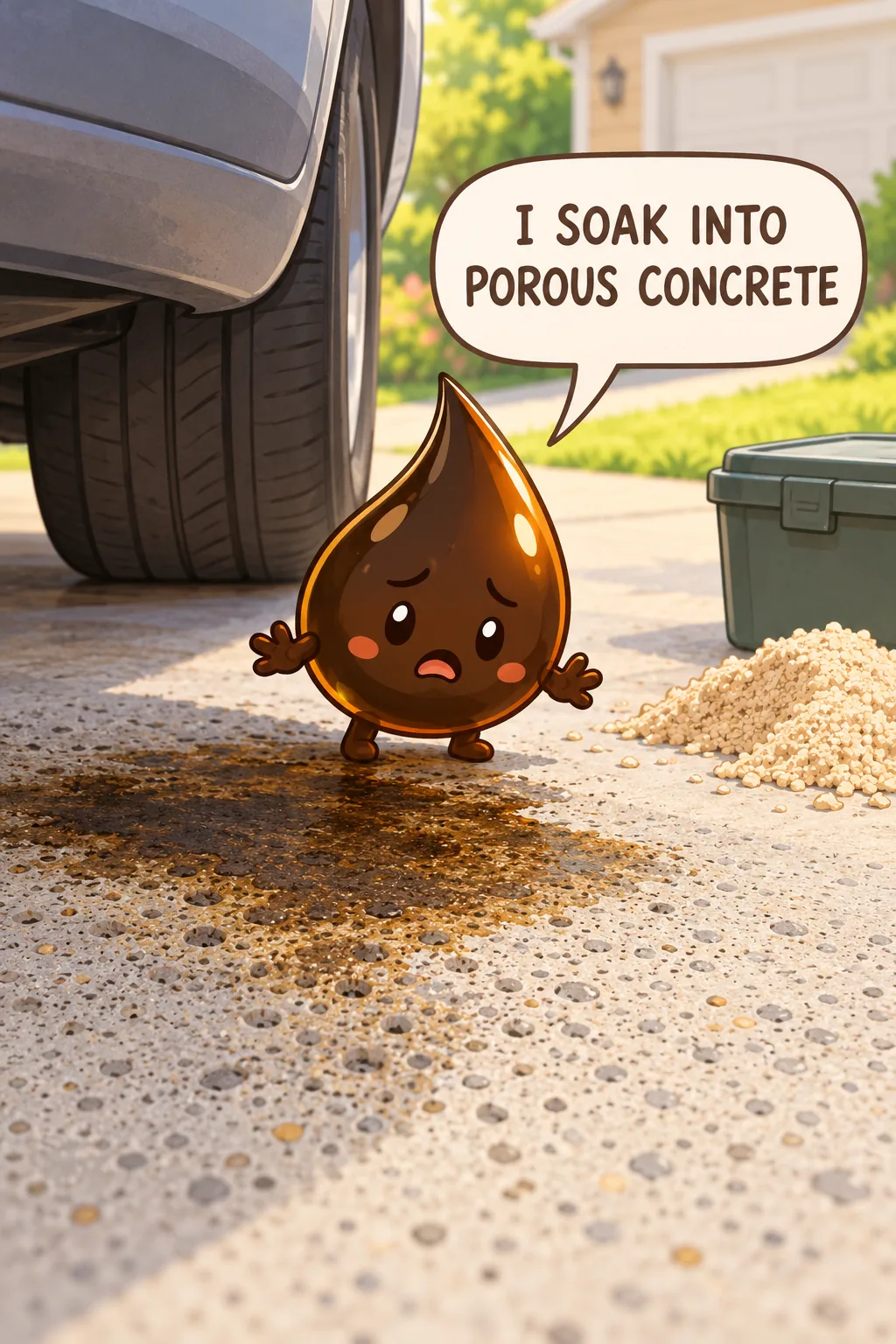
Concrete is porous, so fresh motor oil can soak below the surface before it spreads visibly. First stop the leak if you can do so safely: park the vehicle elsewhere, turn off equipment, and stabilize a leaking container. Keep children and pets away. If the spill is large, still flowing, reaches a waterway, or creates a fire or slip hazard, contact local emergency or environmental services rather than treating it as a routine spot.
Check where rain and wash water would travel from the spill. A driveway may slope directly toward a curb inlet. EPA homeowner guidance says to absorb automotive-fluid spills with material such as kitty litter or sand and not rinse them into a nearby storm drain. Put absorbent barriers around the downhill edge before adding any liquid cleaner.
Absorb fresh oil and collect the residue
Absorbent removes free oil near the surface, but it may not pull out oil that has already entered the pores. That does not mean it failed; it is the first step that limits additional spread and simplifies the later treatment. Do not use a leaf blower or compressed air on powdery absorbent, since it can disperse oil-contaminated dust.
- 01
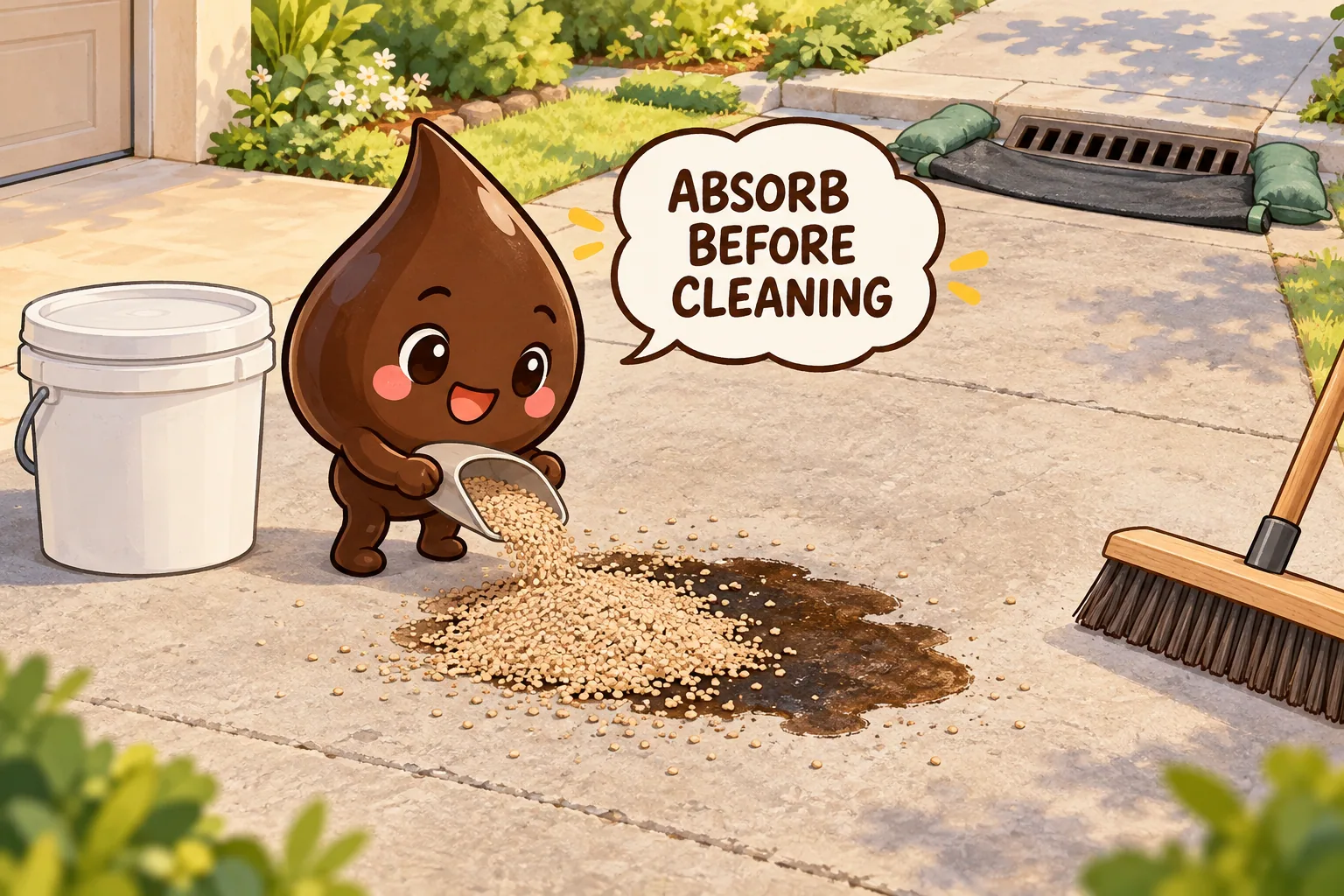
Wear gloves and eye protection. Sprinkle a generous layer of clay-based litter or a product labeled for oil absorption over the fresh spill without grinding it into the concrete.
- 02
Allow the absorbent to sit according to its label. For a small spill, gently press it with a broom so it contacts the oil; avoid scattering dry powder into the air.
- 03
Sweep the saturated material into a sturdy container. Repeat with clean absorbent if the surface still looks wet or glossy.
- 04
Keep the collected material contained and follow your local solid-waste or household-hazardous-waste instructions. Do not wash it down a drain or leave it where rain can carry it away.
Choose a product made for concrete and oil stains
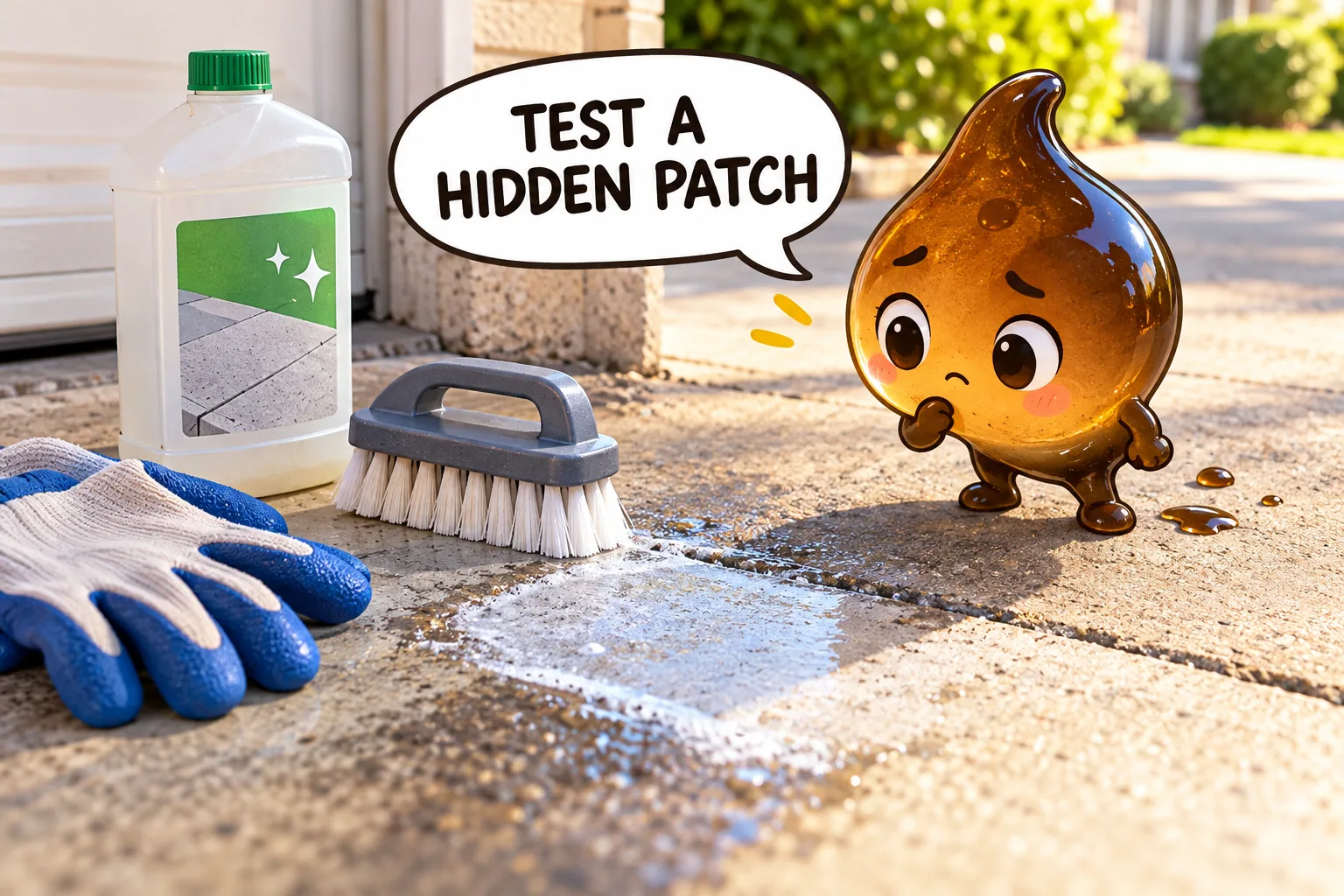
Once loose oil has been collected, read the concrete and cleaner labels. Unsealed concrete is absorbent, while sealed, painted, or decorative concrete may react differently. Choose a driveway or concrete degreaser whose label specifically covers motor oil and your type of surface. Test it on an inconspicuous area, especially on colored, sealed, stamped, or polished concrete.
Avoid improvised solvent recipes, strong acids, and products that the concrete manufacturer does not approve. Highly alkaline degreasers can irritate skin and eyes; follow the label for gloves, ventilation, dilution, contact time, and rinsing. Never mix products. If the label says not to use near a storm drain or on a particular finish, obey that restriction rather than substituting more product.
Treat the remaining dark mark without sending runoff downhill
A garden hose can carry detergent, oil, and grit directly to a storm drain, where it may reach a waterbody untreated. EPA guidance recommends keeping household chemicals and automotive fluids out of storm drains. If you cannot capture the wash water, use a low-moisture cleaner or ask a professional concrete-cleaning service with runoff recovery equipment.
- 01
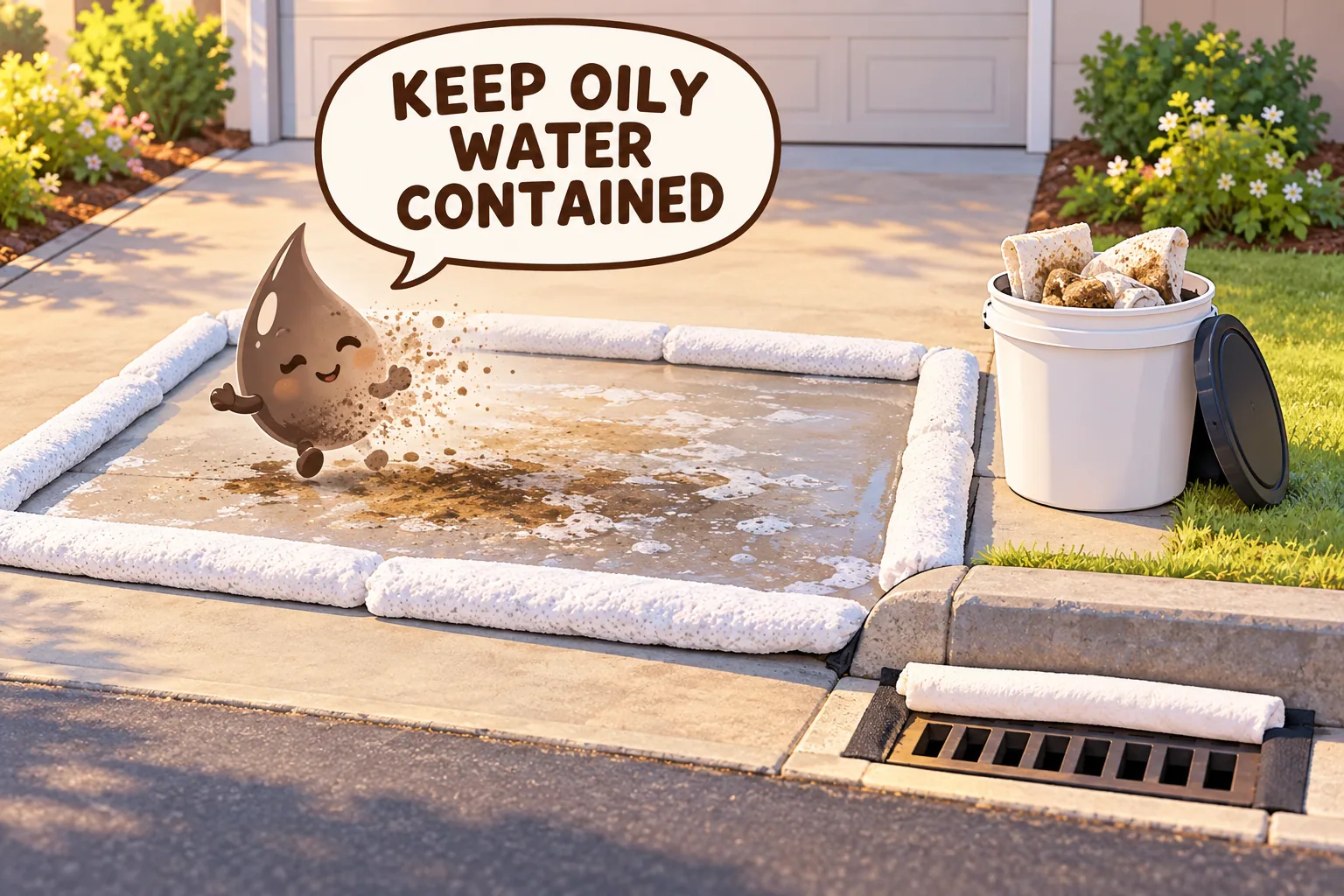
Place absorbent socks or pads around the cleaning area, especially along the edge closest to the street or drain.
- 02
Apply the labeled cleaner at the exact dilution and amount directed. Work only the stained area with a stiff nylon brush if the product label allows it.
- 03
Let the cleaner dwell for the stated time. Do not allow it to dry on the surface, and do not scrub so aggressively that concrete paste or a decorative finish is damaged.
- 04
Collect loosened oily liquid with absorbent pads or a wet vacuum designed for the product. Rinse only as directed, using a controlled amount of water and capturing the runoff.
- 05
Repeat only if the product label permits another treatment and the first application has not damaged the surface.
What to expect from an old oil stain
A dark patch that remains after the surface is dry may be oil embedded below the concrete surface. Older stains can require repeated product-label treatments or professional poultice cleaning, and no method can promise that every discoloration will disappear. The stain may fade as oil is lifted from the pores, but aggressive acid washing or grinding can permanently alter the driveway’s texture and color.
If a spill keeps reappearing after rain, additional oil may still be migrating upward from the concrete. Avoid repeatedly flooding the spot; each wash risks moving contaminants farther downhill. A concrete specialist can assess whether a poultice, mechanical treatment, or localized repair is appropriate.
Dispose of cleanup materials and prevent another leak
For the final check, wait until the spot dries and inspect from the driveway edge. If oil has reached a drain, soil, or a neighboring property, contact local authorities for cleanup and reporting guidance rather than hosing it away.
A small stain from a passenger vehicle is still a contamination source even when it looks like a cosmetic problem. Keep a simple spill kit in the garage with absorbent, a broom, gloves, eye protection, and a lidded pail. Use it only for minor, contained drips; a larger release, unknown liquid, or spill entering a drain calls for local professional guidance. Never put oily absorbent into a recycling cart unless your local program explicitly accepts it.
- Keep oil-soaked absorbent sealed and follow local disposal rules; used oil is a material EPA lists among household hazardous wastes.
- Do not pour used oil, degreaser, or oily water onto soil, into a gutter, or down a storm drain.
- Do not use gasoline or an open flame to dissolve or burn away the stain.
- Place a drip pan under a vehicle that is awaiting repair and fix leaks promptly.
- Store oil in closed, labeled containers on a secondary tray away from rain and floor drains.
Plan a low-runoff treatment for porous or sealed concrete
Before wet cleaning, identify the surface and the path that water would take. Bare concrete has pores that can hold oil below the visible surface; a sealed or painted driveway can be more sensitive to abrasion and strong degreasers. Check the sealer or concrete maker’s maintenance guidance and the cleaner label, then test a discreet patch that is similar in finish to the stained area. Let the test dry fully before judging for color change, dulling, or a sticky surface. A product that performs well on bare concrete is not automatically suitable for a decorative coating.
Set absorbent socks or pads downhill from the work area and around nearby drain openings before adding cleaner. Keep the treatment area small enough that you can collect all liquid as it loosens. Use a trigger bottle, sponge, or cloth to apply a measured amount if the product permits it; spraying broadly can create drift and make runoff harder to contain. If the label requires a rinse, use only the directed amount and collect it with absorbent material or suitable recovery equipment. Never assume a storm drain leads to a wastewater plant.
After cleanup, allow the concrete to dry before deciding whether another treatment is useful. A lighter brown shadow can remain even after free oil has been removed, while an area that looks clean when wet may darken again as it dries. Photograph the dry patch and note the product and dilution used so a later attempt does not repeat an ineffective or damaging treatment. For large areas, repeated seepage, or oil near a curb inlet, stop DIY work and contact a local spill-response or professional cleaning service that can manage recovered wash water.
Common questions
FAQ
Does kitty litter remove an old motor-oil stain from concrete?
It can absorb fresh surface oil, but it usually cannot pull all oil that has penetrated porous concrete. Collect the saturated litter and use a concrete-safe product for the remaining mark.
Can I hose an oil-stained driveway into the street?
No. Oil and detergent runoff can enter a storm drain and reach waterways. Contain the spill and collect oily absorbent and rinse water for disposal according to local guidance.
Will a pressure washer remove motor oil from concrete?
It may spread oil and contaminated water beyond the stain if runoff is not captured. Use a labeled treatment and controlled rinse, or hire a service that recovers wash water.
Can I use bleach on a concrete oil stain?
Bleach is not a degreaser and may not remove oil; it can also harm nearby plants and surface finishes. Use a product labeled for oil on your concrete and follow its directions.
Sources reviewed
Keep reading
Related guides
Cooking oil on Laminate countertop
How to Remove Cooking Oil From a Laminate Countertop
Remove a fresh spill or sticky cooking-oil film from laminate without flooding seams, scratching the texture, or changing the countertop sheen.

Essential oil and reed-diffuser oil on Finished wood furniture
How to Remove Essential Oil and Diffuser Stains From Wood Furniture
Blot a diffuser-oil spill on finished wood, use a cautious absorbent step, and recognize when the finish needs a furniture repair professional.

Sweat and body oil on Backpack shoulder straps
How to Clean Sweat From Backpack Shoulder Straps
Lift sweat, salt, body oil, and grime from backpack shoulder straps without damaging foam padding, coatings, webbing, or structure.

Yellow sweat and body oil on Down comforter
How to Remove Yellow Stains From a Down Comforter
Treat yellow sweat and body-oil marks on a down comforter without flattening the fill or leaving it damp; check the care label before washing.