
The quick answer
For sweaty backpack straps, brush off dry dirt, then wash or spot-clean with lukewarm water and a small amount of mild or pH-neutral soap according to the pack maker's instructions. Squeeze soapy water through padded straps gently rather than machine-washing or wringing them, rinse thoroughly, and air-dry out of direct sun.
What you’ll need
- backpack care instructions
- mild or pH-neutral soap
- lukewarm water
- soft nylon brush
- clean sponge
- white towels
- bathtub or basin if the maker allows hand washing
- drying hanger
Why straps get stiff, salty, and dark
The dark, crusty look on a well-used strap is dried sweat salts plus sebum (skin oil) plus sunscreen and everyday grime, all held in the foam and the brushed fabric facing. Sweat is slightly acidic and salty; as the water evaporates it leaves the salt behind, which is what makes the strap feel crunchy and look white-edged.
None of that needs aggressive chemistry — it needs a surfactant (soap) to lift the oil and enough rinsing to carry the salt away. The risk is not the stain; it is soaking the foam and coatings and never getting them dry, or scrubbing off a printed logo or a DWR finish.

Most packs are hand-wash only
Osprey, Deuter, Fjallraven, and JanSport all steer you toward hand cleaning: empty the pack, brush it off, then sponge it with lukewarm water and a little mild soap, focusing on the straps and back panel. A washing machine can tear seams, crush foam, damage frame sheets, and strip coatings; if a maker allows a machine at all, it is a front-loader on gentle with the pack in a pillowcase and all straps buckled.
Check for a leather logo patch, suede accents, or a hip belt with electronics pockets before you wet anything, and undo those areas from the cleaning plan.
Working soap through padded straps
- 01
Brush the dry straps with a soft nylon brush to knock off surface grime and loose salt.
- 02
Mix a few drops of mild soap into lukewarm water.
- 03
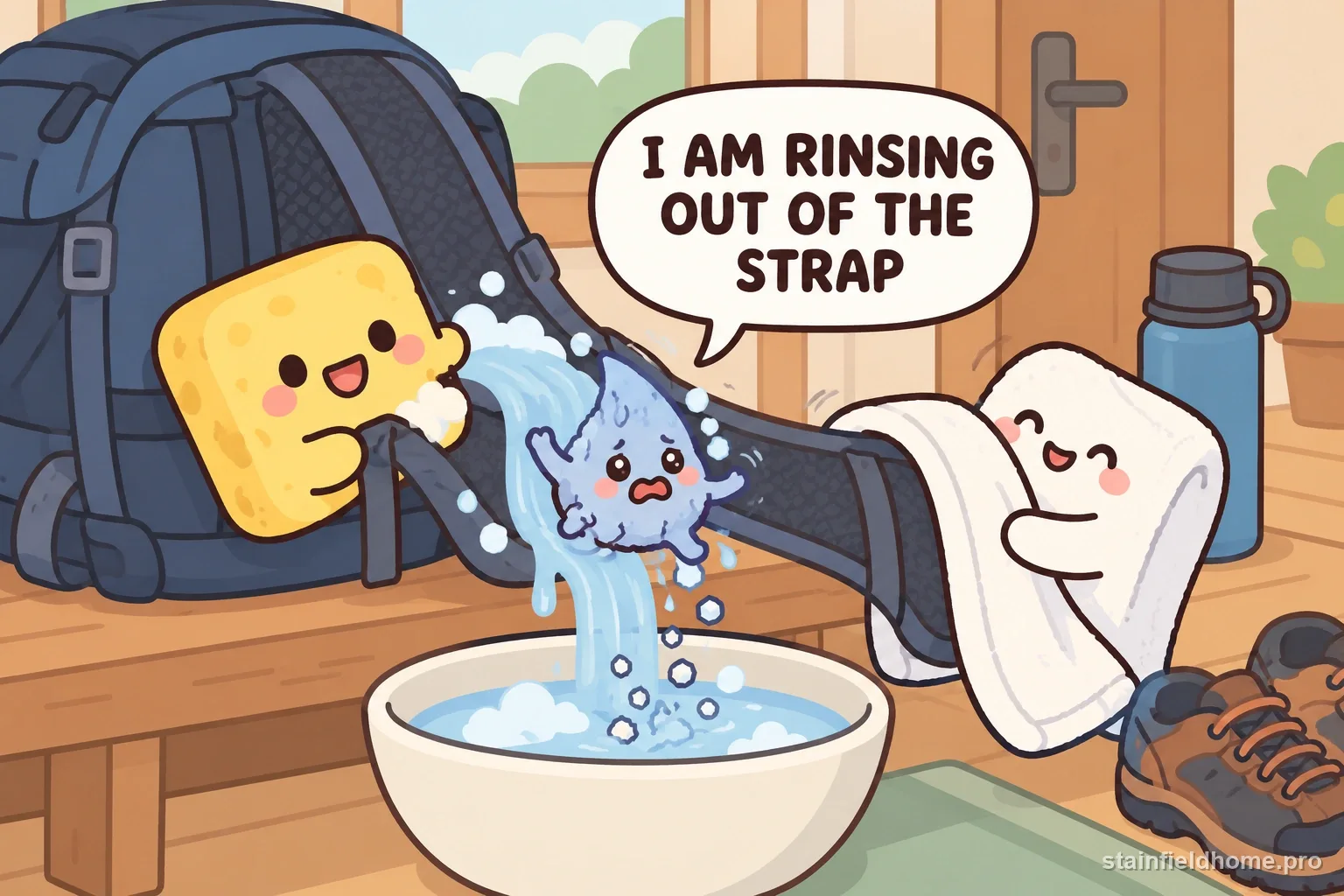
Dip a sponge, press it against the strap, and gently squeeze so soapy water moves through the foam, then release; repeat along the strap.
- 04
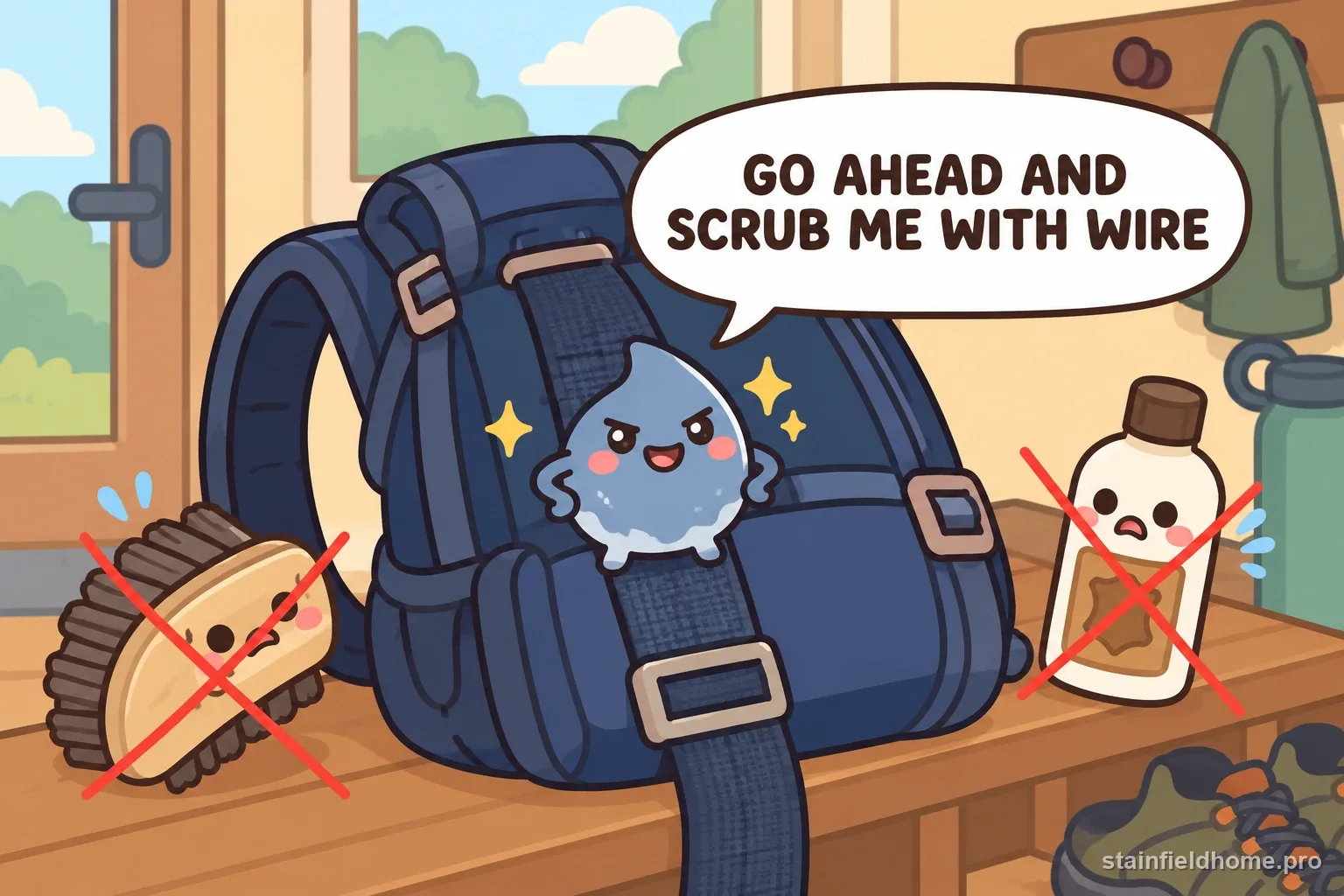
Work the brushed fabric face with light circular strokes from the sponge, not a stiff brush.
- 05
Rinse the same way with clean water — squeeze clean water through until no suds come out.
- 06
Roll the strap in a dry towel to pull out moisture, then hang the pack to dry away from direct sun and heat.
Salt crust and white tide lines
If white lines keep reappearing at the edge of a damp spot, that is salt still in the foam moving to the surface as it dries. The fix is more rinsing, not more soap: flush clean lukewarm water through the padding several times until a dried test patch stays clean.
For a heavy crust, a longer soak of just the strap area in plain lukewarm water before you add soap dissolves the salt so it rinses out instead of migrating.
Odor that survives washing
Smell that comes back when the strap warms up is bacteria feeding on leftover oil. After a normal wash, wipe the straps with a cloth dampened in a very dilute white-vinegar solution (about one part vinegar to four parts water), let it sit a few minutes, then rinse-blot — vinegar is safe on most pack nylon but test a hidden spot first and keep it off leather.
Then dry the pack fully in moving air. Odor that keeps returning usually means the foam never dried all the way through; give it a full day somewhere warm and ventilated.
Leather or suede strap accents change the rules
Fjallraven Kanken-style packs and many heritage bags have leather bottom corners, and some straps have suede or leather pulls. Keep soap and water off those. Clean leather accents separately with a barely-damp cloth and a leather-safe conditioner, and let them dry away from heat.
If the strap itself is leather rather than webbing-and-foam, none of the squeeze-through method applies: wipe only, condition, and never soak.
Slowing the buildup
- Wipe the straps and back panel with a damp cloth weekly if you carry the pack daily.
- Let a sweaty pack air out fully before it goes in a closet or car trunk.
- Apply sunscreen and let it absorb before putting the pack on, so less transfers.
- A thin, washable strap cover or a folded bandana over the shoulder takes most of the sweat on hot days.
Common questions
FAQ
Can I machine-wash my backpack to clean the straps?
Usually no. Most makers specify hand cleaning because a machine can tear seams, crush foam padding, and strip coatings. If your maker allows a machine at all, use a front-loader on gentle, cold, with the pack inside a pillowcase and every strap and buckle fastened, then air-dry.
The straps still smell after washing. What works?
Wipe them with a dilute white-vinegar solution (1 part vinegar to 4 parts water), let it sit a few minutes, rinse-blot, and then dry the pack completely in moving air. Returning odor almost always means the foam padding never fully dried — give it a warm, ventilated 24 hours.
White marks keep coming back on the straps. Why?
That is dried sweat salt still held in the foam, surfacing as the strap dries. Flush clean lukewarm water through the padding repeatedly — or soak the strap area in plain water before soaping — until a dried test patch stays clean. More rinsing fixes it; more soap does not.
Sources reviewed
Keep reading
Related guides

Spills and body oils on Bouclé sofas and chairs
How to Clean a Bouclé Sofa or Chair Without Flattening the Texture
Spot-clean a bouclé sofa or chair by its cleaning code, protect the looped pile from matting, and know which spills need a dry solvent instead of water.

Burnt-on grease and food residue on Air fryer basket
How to Clean Burnt-On Grease From an Air Fryer Basket
Break down baked-on grease in an air fryer basket with a soak and baking-soda paste, without scratching the nonstick coating or getting water near the heating element.

Permanent hair dye on Bathroom countertop
How to Remove Box Hair Dye From a Bathroom Countertop
Get permanent hair color off quartz, laminate, cultured marble, or sealed stone before it sets, using the mildest method the surface allows and never an abrasive pad.

Yellowed tape adhesive on Painted wall
How to Remove Yellowed Tape Residue From a Painted Wall
Take aged, hardened tape adhesive off painted drywall without pulling the paint, using warm heat, an oil to soften the gum, and the gentlest possible scrape.