The quick answer
Vacuum the mesh, blot fresh liquid immediately, and use the chair manufacturer's approved cleaner based on whether the stain is water- or oil-based. Apply cleaner to a cloth or sponge, use several light passes, rinse residue with a cool-water-damp cloth, and avoid scrubbing or oversaturating the open mesh. Let the chair dry thoroughly before use.
What you’ll need
- chair care guide
- vacuum upholstery attachment
- white absorbent cloths
- mild warm soapy solution for water-based stains if approved
- approved dry-cleaning solution for oil stains if specified
- cool rinse water
- fan
Mesh is suspended, not padded
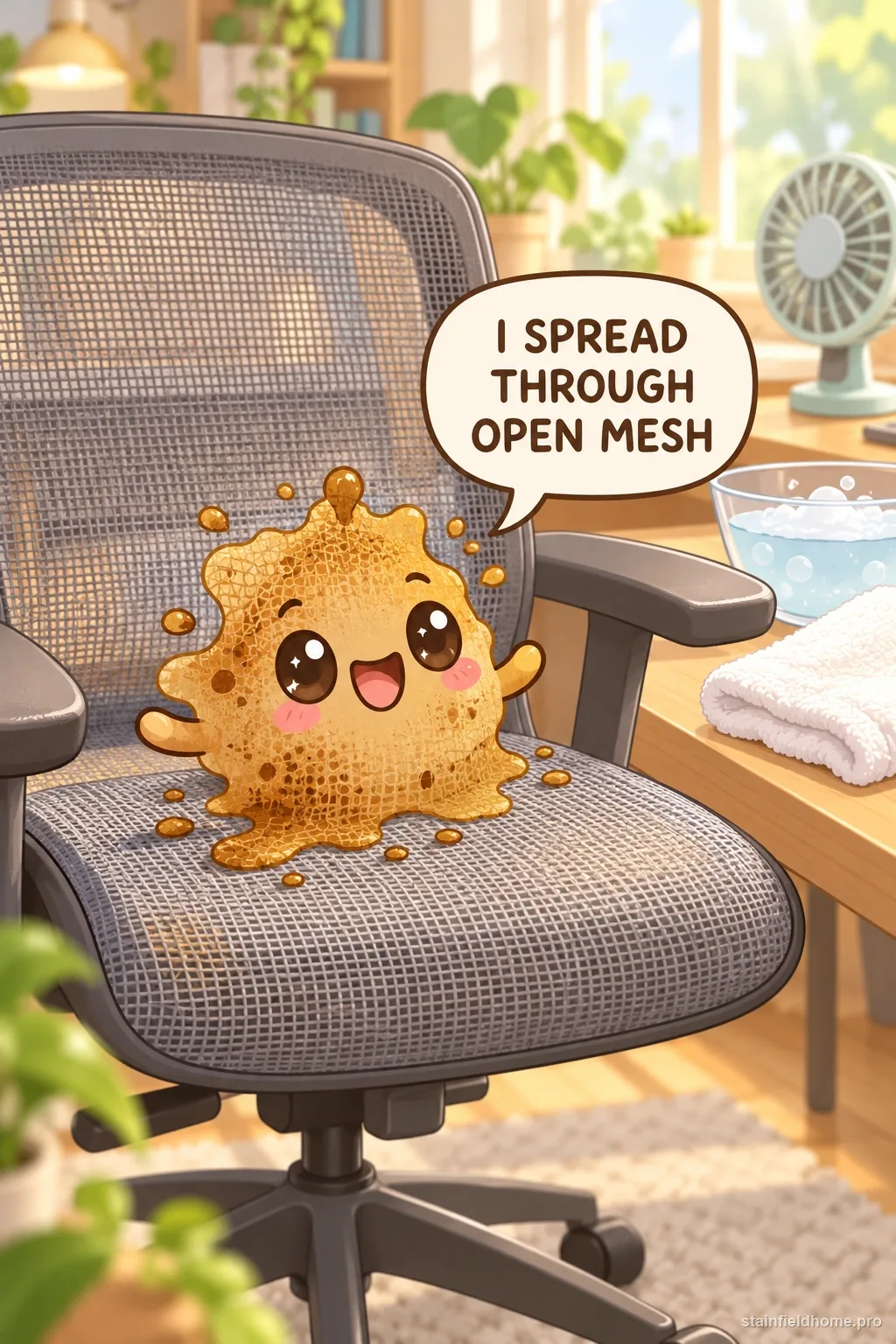
A mesh seat or back is a woven elastomeric fabric stretched over a frame with nothing behind it. That changes two things. First, whatever you spray goes straight through to the floor or the mechanism under the seat, so flooding it is pointless and messy. Second, there is no foam to hold cleaner, so light repeated passes work better than one soaking.
Herman Miller, Steelcase, and other makers publish material-specific care — Herman Miller's Aeron uses a Pellicle mesh with its own guidance — so check your chair's sheet for the exact approved cleaner before you start.
First response to a spill
- 01
Blot immediately with a dry white cloth, pressing from both sides of the mesh to pull liquid out of the weave.
- 02
Keep blotting with dry sections until almost nothing transfers — most of a fresh spill comes out this way.
- 03
Do not rub; rubbing forces the stain sideways along the fibers and can pill the mesh.
- 04
Vacuum any crumbs or dried residue from the weave with an upholstery tool.
Water-based stains: coffee, tea, juice, soda
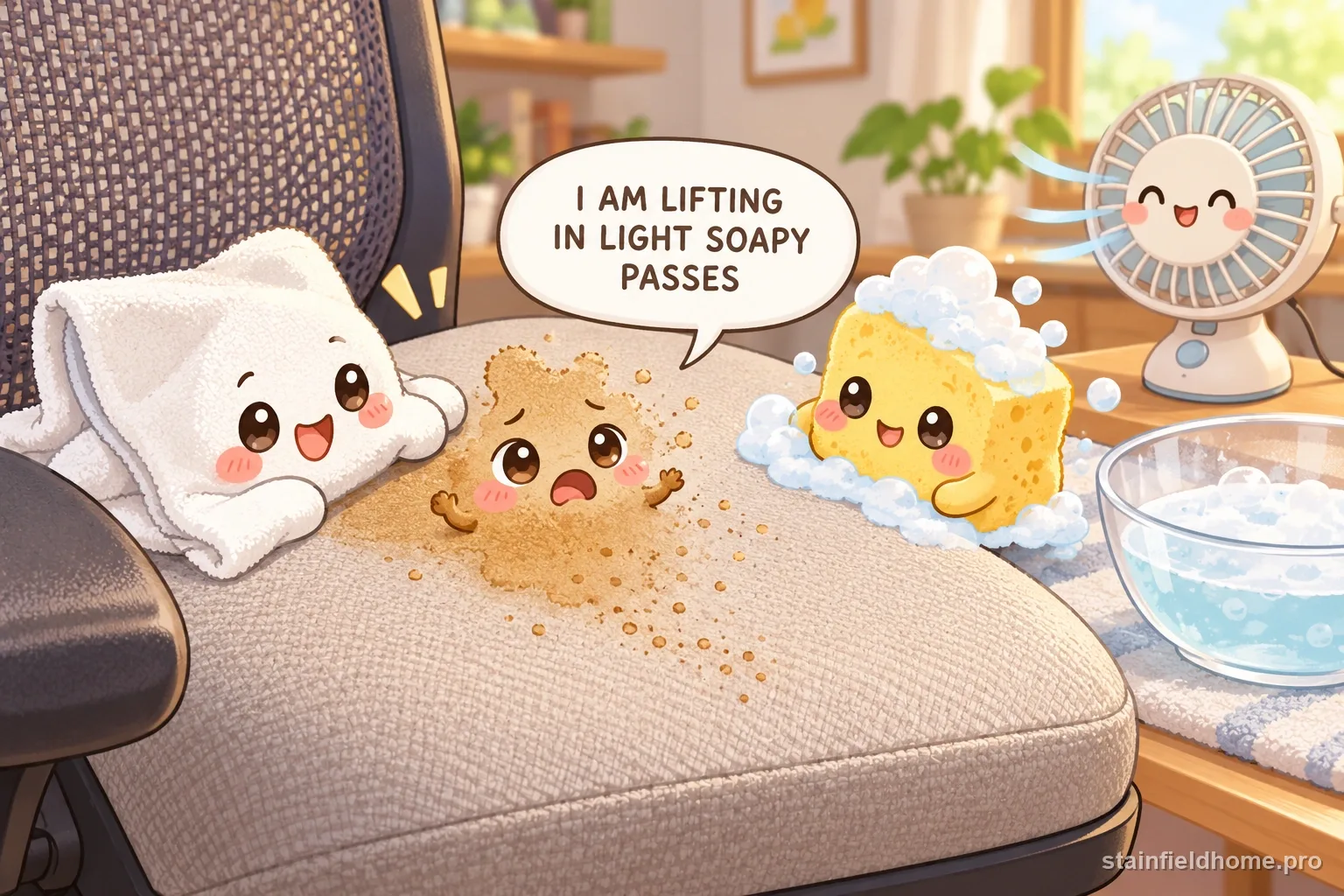
Mix a few drops of mild dish soap into warm water and whip up suds. Dip a cloth or soft sponge into just the foam, wring it well, and wipe the stained area in light passes, following the weave direction.
Rinse by wiping with a second cloth dampened in cool clean water, two or three times, so no soap film stays to attract dust. Blot with a dry towel and let the chair air-dry with a fan — mesh dries fast because air moves through it.
Oil-based stains: salad dressing, hand cream, hair product
Grease needs a solvent, not just soap. Check whether your chair maker approves a water-free dry-cleaning solution (code S) for the mesh. If so, apply a little to a white cloth, not directly to the chair, and blot the grease mark, working inward, changing to a clean part of the cloth as it lifts.
Follow with the mild-soap wipe and a cool rinse to remove any solvent residue. If the maker does not approve solvents, a repeated light dish-soap treatment is the safe fallback, though it may not fully clear a heavy oil mark.
Pen ink, denim dye transfer, and scuffs
Ballpoint ink on mesh responds to a cotton swab barely dampened with rubbing alcohol, dabbed lightly — test an inconspicuous spot first, since some mesh coatings are affected by alcohol. Blot, do not drag.
Blue-grey haze on a light mesh seat is usually dye transferred from dark jeans. It is stubborn; a gentle soap wipe lifts some, but it tends to be permanent on pale mesh. Prevention (see below) matters more than treatment here.
The chair that smells when it warms up
A mesh chair that develops a faint sour or musty smell after a spill may still have residue in the weave. Follow the chair maker's approved cleaner rather than assuming vinegar is safe for the mesh coating or frame. Apply it to a cloth, wipe lightly, rinse with a separate cool-water cloth if the instructions call for it, and dry with a fan.
If the maker approves an enzyme upholstery cleaner for the mesh, that can help with a protein spill like milk or a pet accident. Keep the treatment localized, protect the floor and mechanism beneath the chair, and do not sit on the seat until it has dried fully on both sides. If odor returns after drying, hidden residue may remain or the material may need professional attention.
Keeping the chair clean
- Vacuum or wipe the mesh every couple of weeks so dust and skin oil do not build into a grey film.
- Keep drinks on the desk, not the armrest or seat edge.
- A machine-washable seat cover protects a light-colored mesh from denim dye and food.
- Deal with spills the same day — dried coffee and set grease are far harder on mesh than on padded upholstery.
Read the upholstery code before choosing a cleaner
A chair may combine mesh with a different textile on its seat pad, a foam layer, and plastic or metal controls. Treat each piece as its own surface. The upholstery label or maker's material guide takes priority over a generic stain recipe; Steelcase, for example, directs owners to its material-specific cleaning instructions and warns that unapproved products can damage fabrics and finishes. If the chair has a power control, disconnect it before wiping nearby and keep liquid out of openings.
Do not assume that the common fabric cleaning codes apply to every open mesh. A water-safe code can support a mild damp treatment; a solvent-only code calls for the approved dry-cleaning fluid; and a surface with no legible care information should get only a hidden test with a barely damp cloth until the maker confirms more. Never use bleach, ammonia, disinfectant, or a steam cleaner simply because it is marketed for upholstery. A chair maker's warranty may exclude chemical damage.
Treat rings, old stains, and color changes realistically
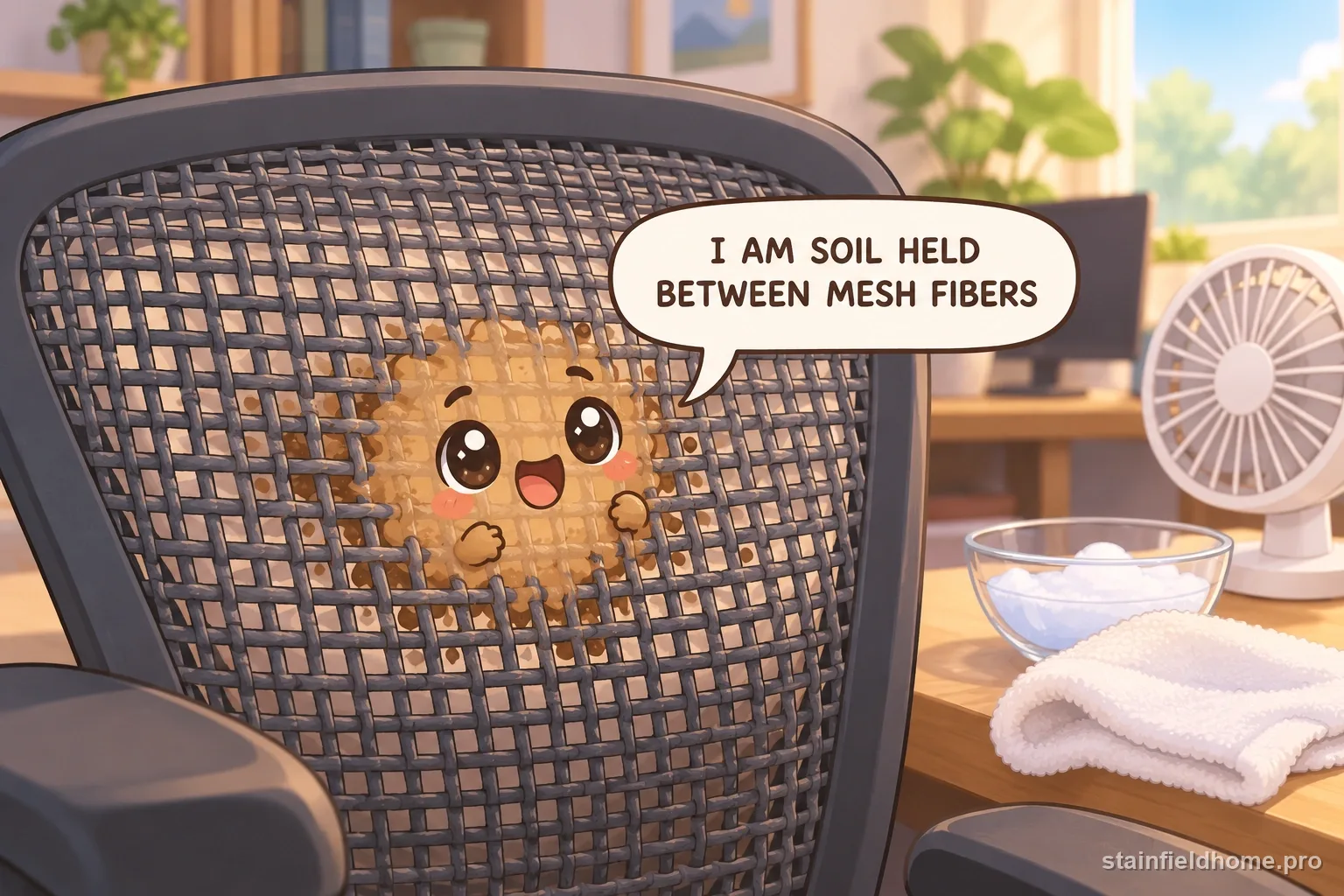
If a small treatment leaves a visible halo, do not keep wetting only the center. Soil and cleaner can migrate through the mesh and dry at the edge. Instead, if the manufacturer permits water cleaning, feather the mild solution over the full mesh panel with a wrung cloth, then wipe the whole panel with a separate cool-water cloth and dry it evenly. A wet-dry vacuum is useful only when the maker allows it and the nozzle can be held without stretching the weave.
Old yellowing, permanent dye transfer, and sun-faded areas are not always removable stains. Compare the mark with an unexposed underside: a color shift that remains after gentle cleaning may be a changed fiber or dye rather than dirt. Stop if the mesh snags, gets fuzzy, loses tension, turns tacky, or transfers its own color to the cloth. At that point, more chemistry is likely to damage the seat rather than restore it; ask the chair maker about a replacement mesh panel.
A weekly routine prevents embedded grime
Vacuum with low suction and a soft upholstery attachment, moving slowly over both sides where accessible. Keep the nozzle from catching the mesh edge or pulling at a loose strand. Wipe the frame, arms, and control levers with a separate cloth so oily grime from those parts does not transfer back onto the seat. For pet hair, lift it with a soft brush rather than an adhesive roller that can pull the weave.
After a spill, leave the chair unused until the mesh is fully dry on both sides. A fan aimed across the panel helps without heat. Do not sit on a damp mesh surface: body weight can stretch wet fibers, and pressure can transfer damp cleaner to clothing. These small steps are more reliable than periodic soaking or spraying the chair with a deodorizer.
Common questions
FAQ
Can I spray cleaner directly onto the mesh?
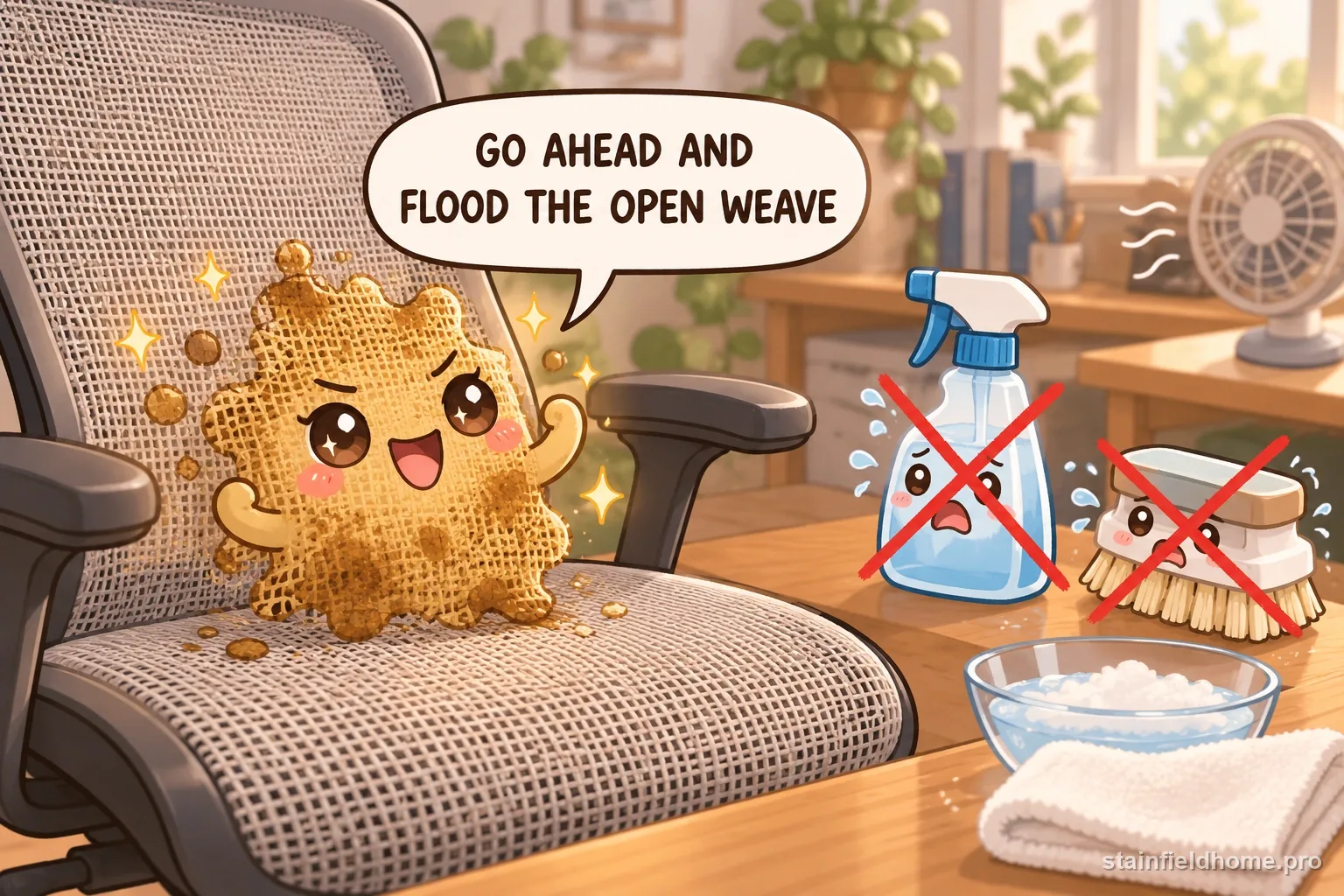
No. It goes straight through to the floor and the seat mechanism, and it oversaturates the weave. Apply cleaner to a cloth or sponge instead, wring it well, and use several light passes. Mesh has no foam to hold cleaner, so flooding it does nothing useful.
How do I get jean dye off a light-grey mesh seat?
Denim dye transfer is one of the hardest marks on pale mesh and is often permanent. Try a gentle dish-soap wipe followed by a cool rinse, repeated a few times, to lighten it. Going forward, a washable seat cover is the real fix — the dye keeps transferring every time you sit in dark jeans.
The mesh still looks dingy after cleaning one spot. Why?
Cleaning one area against a background of built-up skin oil and dust leaves an obvious clean patch. Wipe the whole seat and back, not just the stain, with the mild-soap solution, then rinse and dry the entire surface so it looks even.
Can I use a disinfectant wipe or steam cleaner on the chair?
Only if the chair and mesh manufacturer explicitly approves that product and method. Disinfectants and heat can damage mesh coatings, dyes, or adjacent plastic and foam. For routine soil, a soft vacuum and lightly damp cloth are usually enough; disconnect powered features before cleaning around them.
What if the mark does not lighten after a few gentle passes?
Stop rather than escalating to bleach, acetone, or hard brushing. A persistent mark may be denim dye, faded color, or damaged mesh rather than removable soil. Check the maker's care guide and ask about replacement upholstery if the weave or finish has changed.
Sources reviewed
Keep reading
Related guides

Spills and body oils on Bouclé sofas and chairs
How to Clean a Bouclé Sofa or Chair Without Flattening the Texture
Spot-clean a bouclé sofa or chair by its cleaning code, protect the looped pile from matting, and know which spills need a dry solvent instead of water.

Burnt-on grease and food residue on Air fryer basket
How to Clean Burnt-On Grease From an Air Fryer Basket
Break down baked-on grease in an air fryer basket with a soak and baking-soda paste, without scratching the nonstick coating or getting water near the heating element.

Permanent hair dye on Bathroom countertop
How to Remove Box Hair Dye From a Bathroom Countertop
Get permanent hair color off quartz, laminate, cultured marble, or sealed stone before it sets, using the mildest method the surface allows and never an abrasive pad.
Yellowed tape adhesive on Painted wall
How to Remove Yellowed Tape Residue From a Painted Wall
Take aged, hardened tape adhesive off painted drywall without pulling the paint, using warm heat, an oil to soften the gum, and the gentlest possible scrape.