The quick answer
Warm the glass with a hair dryer or hot soapy water to soften the adhesive, then push the residue into little rolls with a plastic scraper or an old card. Wipe the remaining film with rubbing alcohol, a dab of cooking oil, or a citrus adhesive remover, and finish with glass cleaner. Skip razor blades on coated or tempered glass, and keep oils and solvents off nearby plastic, paint, and rubber trim.
What you’ll need
- A hair dryer, or a cloth soaked in hot soapy water
- A plastic scraper or an old plastic card
- Rubbing alcohol, cooking oil, or a citrus adhesive remover
- White cloths or paper towels
- Glass cleaner, or dish soap and water
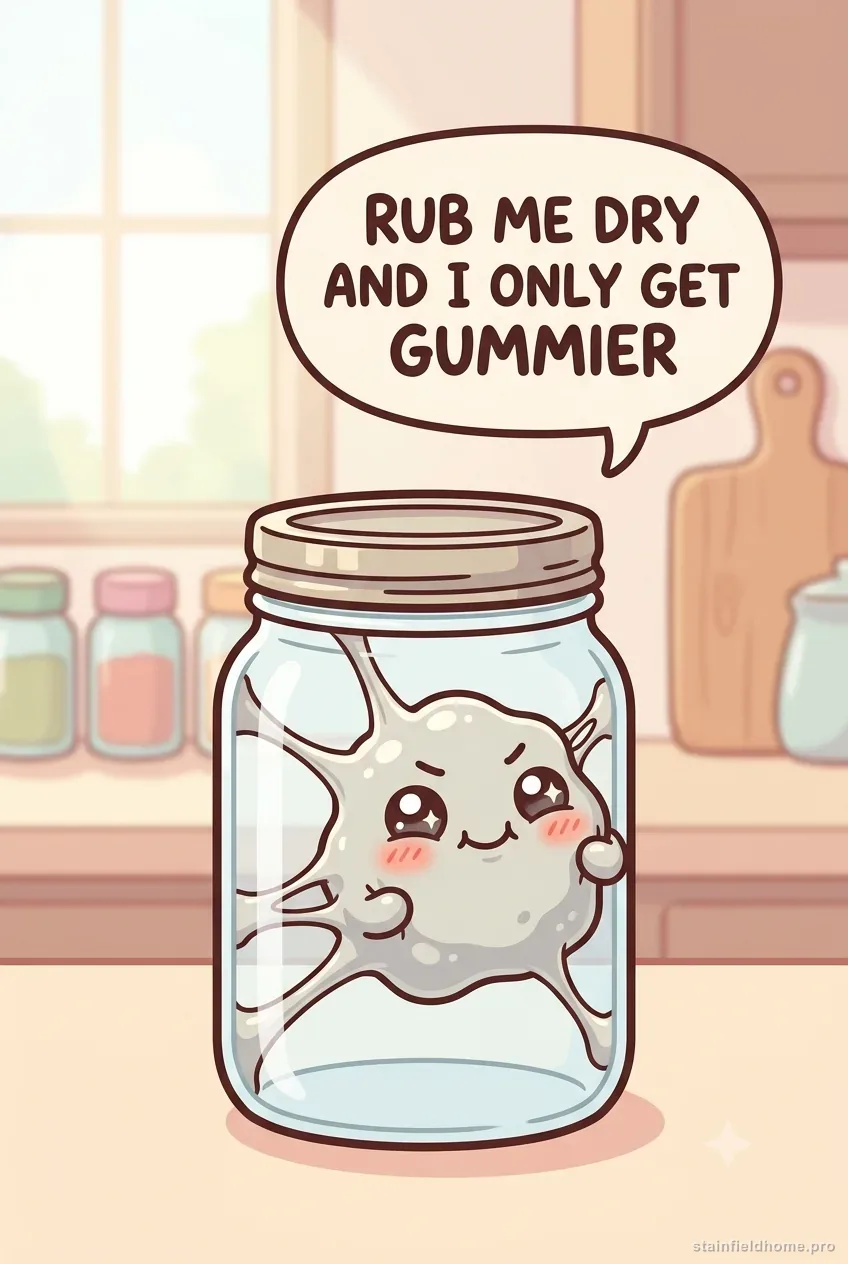
Hi. I'm the sticker gunk left on your glass.
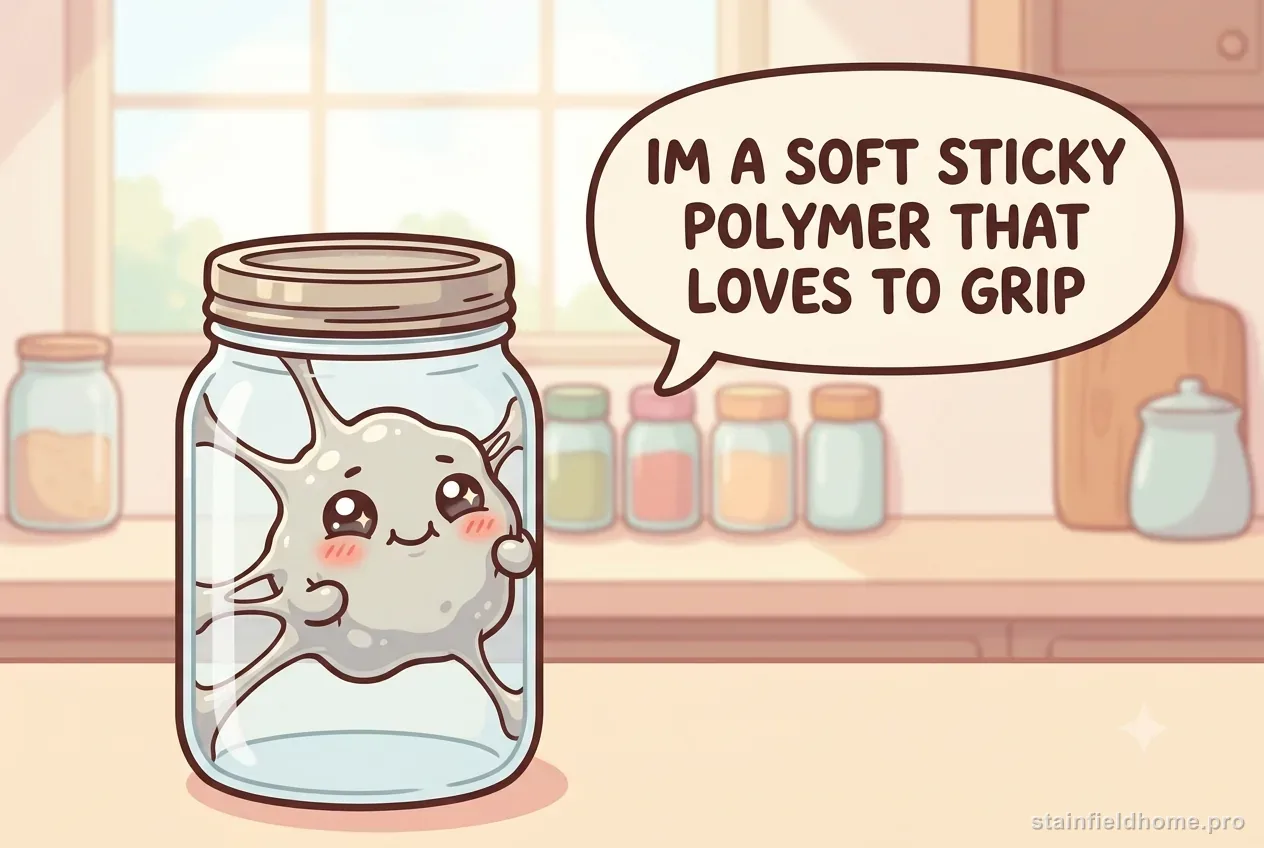
The label peeled off; I stayed. I'm the adhesive layer, a soft, tacky polymer designed to grip.
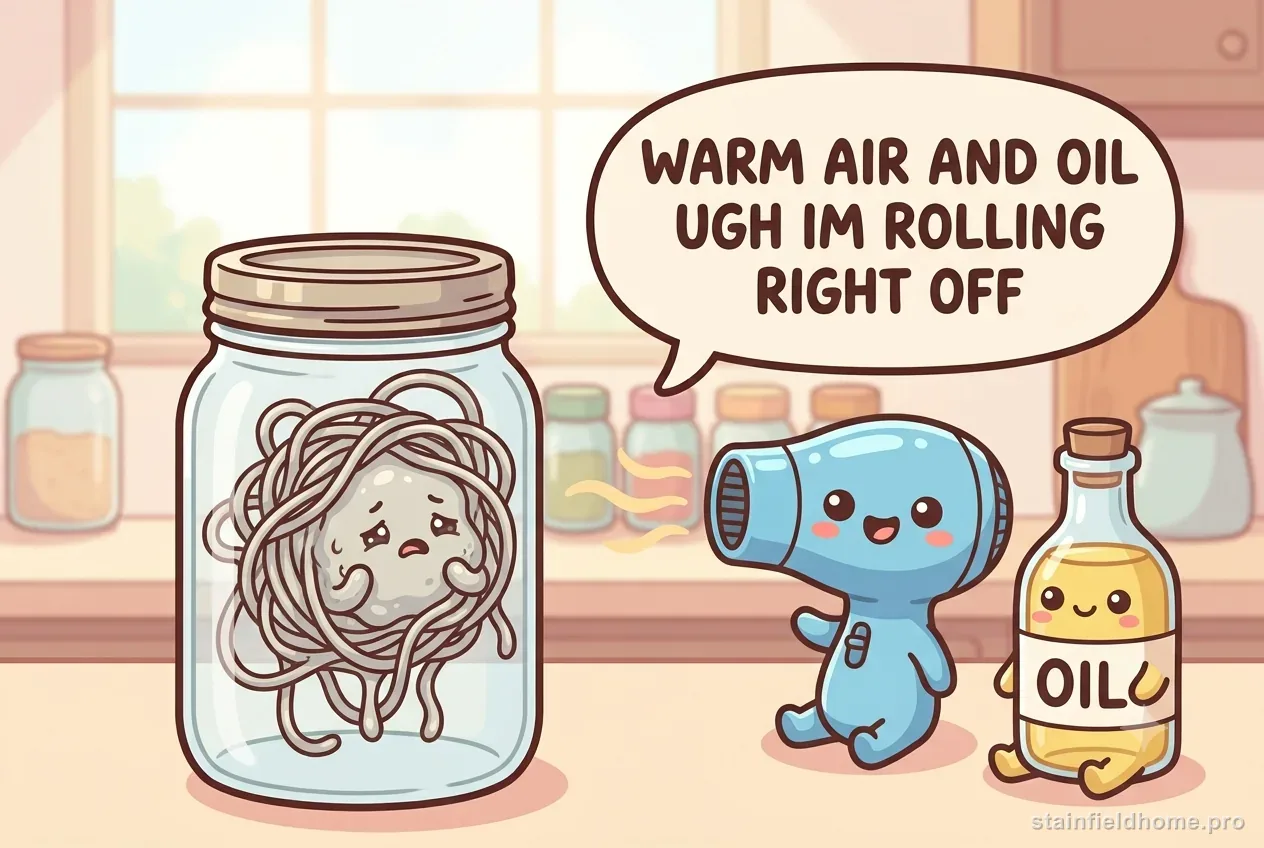
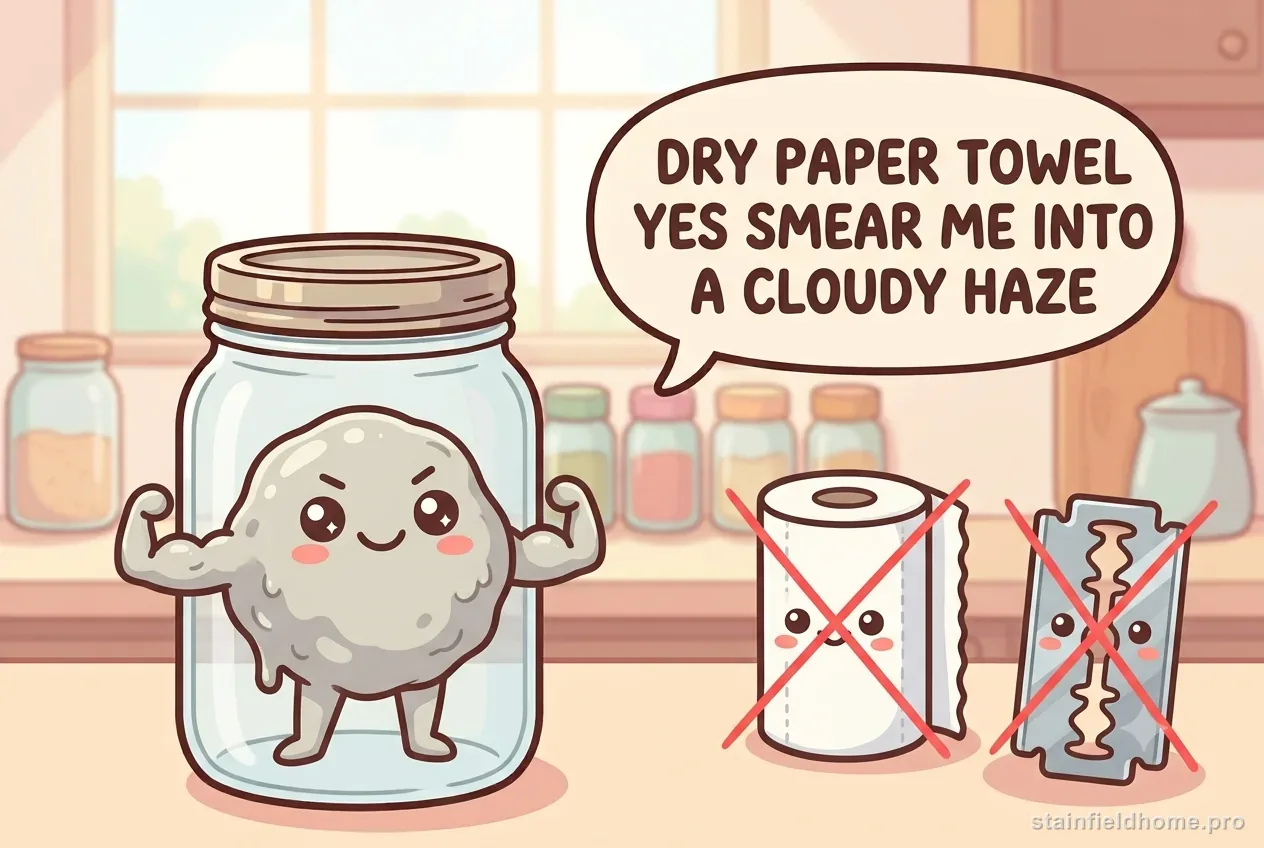
Here's my weakness and my trick at once: I get softer with warmth and I dissolve in certain oils and solvents, but if you just rub me with a dry finger I ball up, grab lint, and spread into a hazy smear. Soften me first, lift me in pieces, then wipe away what is left.
Look at what I am stuck to
Plain window and jar glass takes almost anything. Be careful with three things: tempered glass and coated low-e or privacy glass can be scratched or clouded by a razor blade; tinted glass and anything with a printed pattern can be damaged by strong solvents; and the plastic, painted, or rubber parts around the glass can be marred by oil and alcohol.
Keep your treatment on the glass, and test a solvent on a hidden corner if the glass is anything other than plain.
How to lift me off
- 01
Warm me up. Run a hair dryer over the residue for a minute, or press a cloth soaked in hot soapy water against me for a few minutes.
- 02
Hold a plastic scraper or an old card nearly flat and push me forward. I will roll up into small gummy strands you can pick off.
- 03
For the thin film that stays, choose one: rubbing alcohol on a cloth, a small amount of cooking oil, or a citrus adhesive remover. Work in a circle over the film.
- 04
Give an oil or citrus remover a few minutes to dissolve me, then wipe firmly with a clean cloth.
- 05
Wash the area with glass cleaner, or dish soap and water, to remove the oil or solvent and any last haze.
- 06
Dry with a clean cloth and check in raked light for a remaining outline; repeat the wipe if you see one.
If a hazy outline stays
A faint cloudy ring after cleaning is usually solvent or oil residue that dried, not adhesive. Re-wash with dish soap and warm water, rinse, and buff dry with a fresh cloth.
If the haze is under the surface and will not wipe away, a razor blade held flat can shave dried adhesive from plain annealed glass, but never from tempered, coated, or tinted glass, where it leaves permanent scratches that look exactly like the haze you are trying to remove.
What smears me around
- Rubbing me dry with a fingertip or a paper towel, which balls me up and spreads a smear
- A razor blade or metal scraper on tempered, coated, or tinted glass; permanent scratches
- Letting oil or solvent run onto nearby paint, plastic trim, or rubber seals
- Strong acetone on printed or tinted glass, which can lift the pattern or film
- Skipping the final soapy wash, which leaves an oily film that attracts dust
- Scrubbing hard with an abrasive pad, which scratches the glass
Plain glass, coated glass, painted glass
On a plain glass jar you want to reuse, hot soapy water and a plastic scraper usually finish the job with no solvent at all. On a car windshield or side window, use alcohol or a citrus remover and keep both off the dashboard, the tint film on the rear glass, and the rubber gasket.
On a glass cooktop, warm it slightly, lift the residue with a plastic razor made for cooktops, then use the cooktop cleaner. On a mirror, keep liquid off the edges; solvent that wicks behind the glass can damage the silver backing.
What the sticker was changes how stubborn I am. A paper price label leaves a light, sugary adhesive that hot soapy water usually dissolves on its own. A vinyl decal or bumper sticker leaves a thicker rubbery layer that needs heat plus oil or a citrus remover and some patient scraping. Packing tape and shipping labels leave a stringy adhesive that responds best to warmth and rubbing alcohol. Duct and gaffer tape are the worst: their adhesive oxidizes into a hard brown film, so plan on several rounds of oil or citrus remover, and accept that a faint shadow may stay on textured glass.
Peeling labels cleanly next time
Peel labels slowly and at a low angle while the item is warm, from the dryer, the dishwasher, or a sunny sill, and most of me comes away with the paper.
If you know you will remove a sticker later, a strip of painter's tape over it first gives you a clean pull. For price stickers on gifts, a quick warm-up with a hair dryer before peeling stops me from forming at all.
Common questions
FAQ
What is the safest thing to remove sticker residue from glass?
Warm, soapy water and a plastic scraper handle most residue with no risk. If a film stays, rubbing alcohol or a dab of cooking oil on a cloth is safe on plain glass. Save razor blades for plain annealed glass only, held flat, and never on tempered, coated, or tinted glass.
Will a razor blade scratch my glass?
On plain annealed window or jar glass, a blade held flat and used on a wet surface usually will not. On tempered glass such as shower doors, oven doors, and car windows, and on any coated or tinted glass, it can leave fine permanent scratches. When in doubt, use heat and a solvent instead.
The residue is gone but the glass looks cloudy. Why?
That is dried oil or solvent, not adhesive. Wash the spot again with dish soap and warm water, rinse, and buff with a dry microfiber cloth. If it still will not clear and feels rough, the glass may have been scratched by an earlier scraping.
Sources reviewed
Keep reading
Related guides
Spills and body oils on Bouclé sofas and chairs
How to Clean a Bouclé Sofa or Chair Without Flattening the Texture
Spot-clean a bouclé sofa or chair by its cleaning code, protect the looped pile from matting, and know which spills need a dry solvent instead of water.
Burnt-on grease and food residue on Air fryer basket
How to Clean Burnt-On Grease From an Air Fryer Basket
Break down baked-on grease in an air fryer basket with a soak and baking-soda paste, without scratching the nonstick coating or getting water near the heating element.
Permanent hair dye on Bathroom countertop
How to Remove Box Hair Dye From a Bathroom Countertop
Get permanent hair color off quartz, laminate, cultured marble, or sealed stone before it sets, using the mildest method the surface allows and never an abrasive pad.
Yellowed tape adhesive on Painted wall
How to Remove Yellowed Tape Residue From a Painted Wall
Take aged, hardened tape adhesive off painted drywall without pulling the paint, using warm heat, an oil to soften the gum, and the gentlest possible scrape.