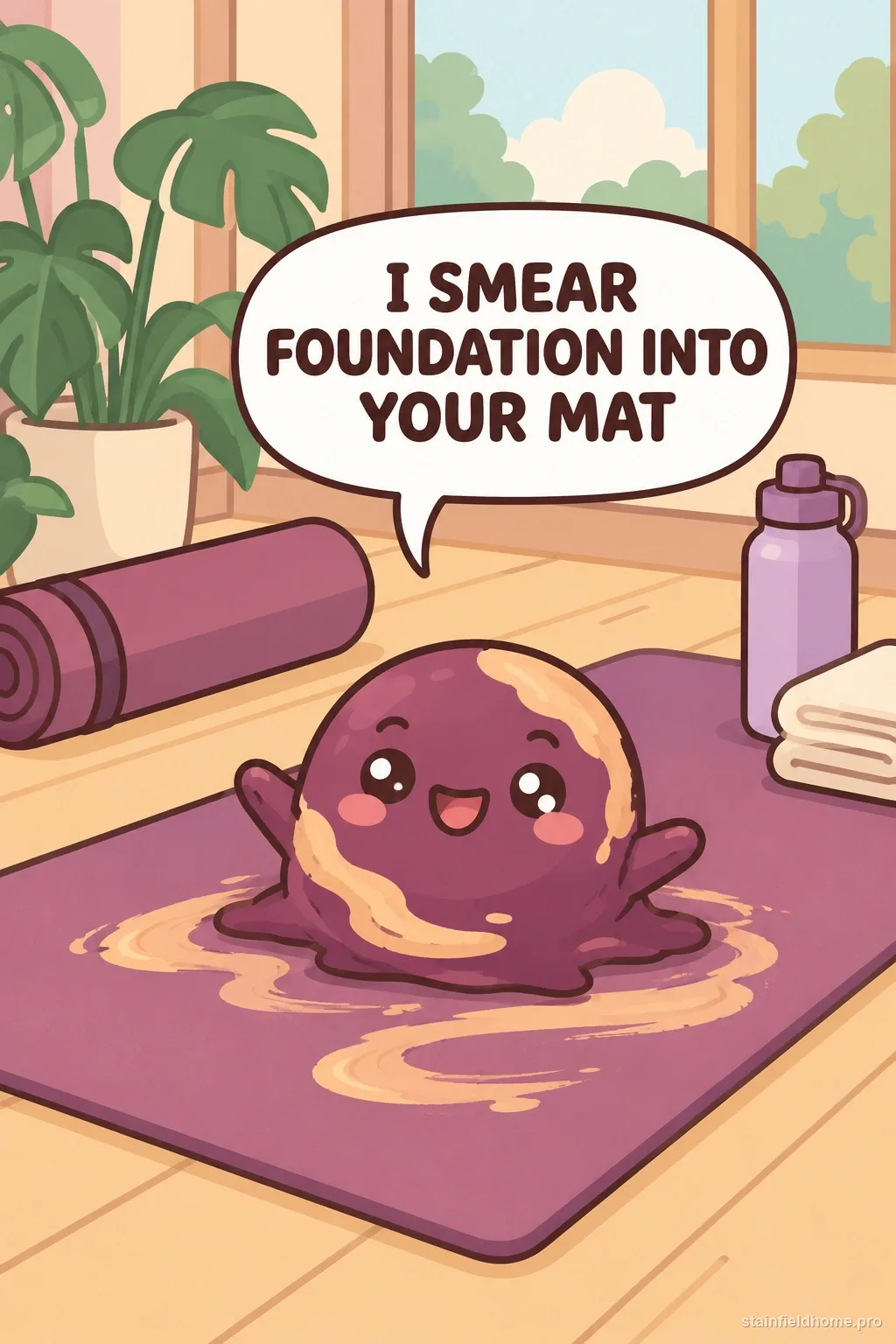
The quick answer
Wipe sweat and makeup from a yoga mat with the gentlest cleaner approved for that mat's material, usually a damp cloth plus a very small amount of mild soap or the maker's mat cleaner. Avoid soaking, machine washing, oils, harsh disinfectants, and direct-sun drying unless your mat brand specifically allows them. Let the mat dry flat and completely before rolling it.
What you’ll need
- mat manufacturer care instructions
- soft lint-free cloths
- clean water
- mild non-abrasive soap if approved
- manufacturer-approved mat cleaner
- soft sponge
- dry towel
Find your mat's material first — it decides everything
The right method depends entirely on what the mat is made of. PVC mats (Gaiam, many studio mats) are closed-cell and tolerate a damp soapy wipe. TPE mats are more sensitive to soap residue. Natural rubber mats (Manduka eKO, Jade) hate oils, citrus, alcohol, and long sun exposure. Polyurethane-topped mats (Liforme, Manduka GRP) have an absorbent top layer that grips when slightly moist but stains readily and must never be soaked or scrubbed hard.
Check the label or the brand's care page before you pick a cleaner. Using an alcohol wipe on natural rubber or a citrus spray on polyurethane is how people permanently kill a mat's grip.
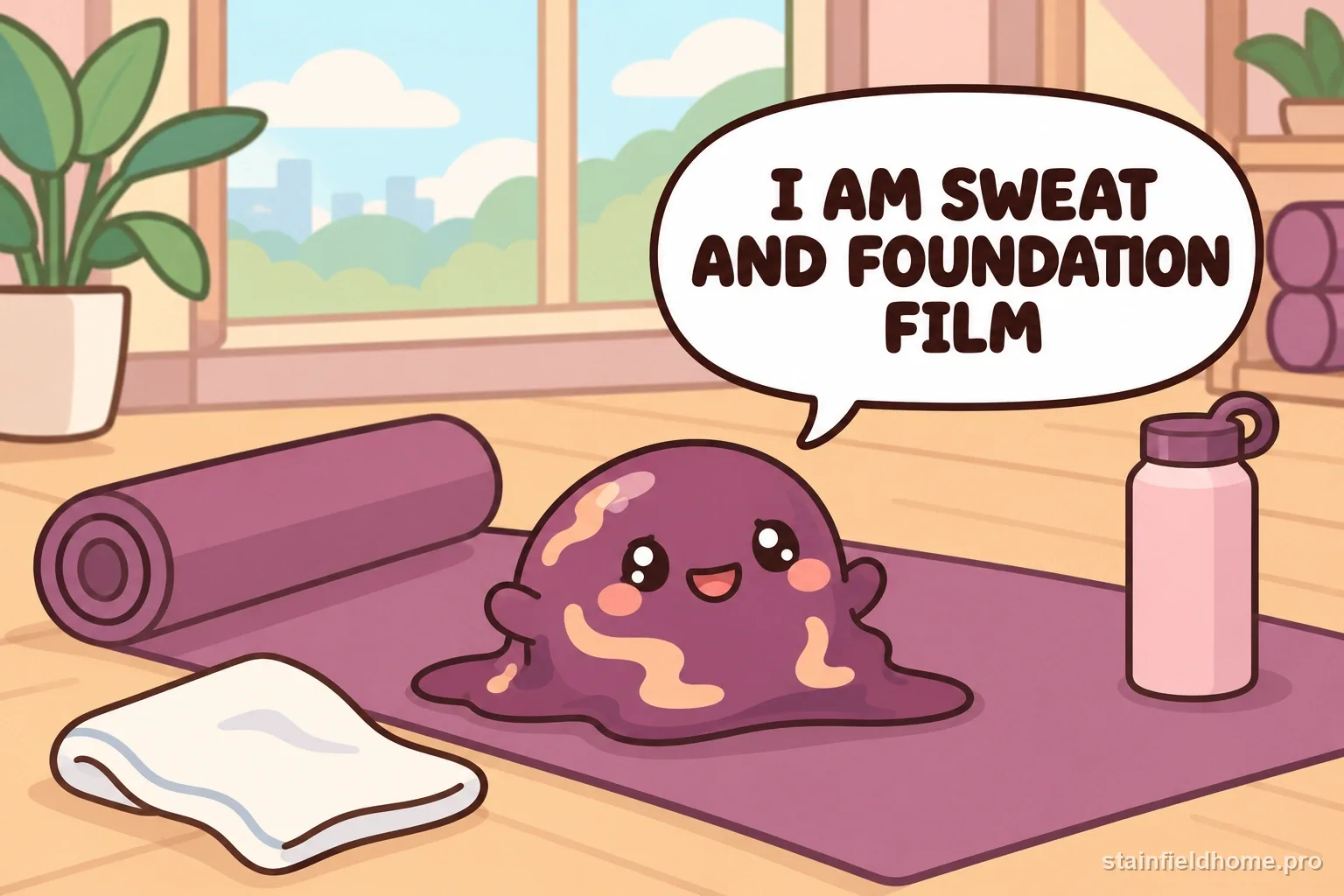
Open-cell versus closed-cell mats
Closed-cell mats (most PVC) have a sealed surface: liquid sits on top, so a wrung-out cloth cleans them and they dry quickly. Open-cell mats (polyurethane tops, some natural rubber) draw moisture in, which is why they grip sweaty hands — and also why sweat, foundation, and bacteria soak in and why they take much longer to dry.
For an open-cell mat, use the least liquid that works, blot rather than rub, and never leave it damp rolled up. For a closed-cell mat you have more room to wipe firmly, but still avoid pooling water at the edges where it can seep into the core.
The daily wipe-down
- 01
After practice, wipe the whole mat with a cloth lightly dampened in plain water or the maker's spray.
- 02
Hit the hand and foot zones and any spot where your face was near the mat.
- 03
Wipe with a second, drier cloth to pick up the loosened film.
- 04
Hang or lay the mat flat until fully dry before rolling — rolling a damp mat is the main cause of that sour smell.
Deep-cleaning sweat and foundation without killing the grip
For a monthly clean, mix a few drops of mild dish soap into a bowl of water, dip a soft cloth or sponge, wring it well, and wipe the mat in sections. For makeup specifically — foundation, concealer, tinted sunscreen — those are oil-and-pigment, so let the soapy cloth dwell on the mark for a minute before wiping, and repeat rather than scrubbing.
Rinse by wiping with a clean damp cloth two or three times; leftover soap is slippery and attracts dirt. Lay the mat flat to dry, textured side up, out of direct sun.
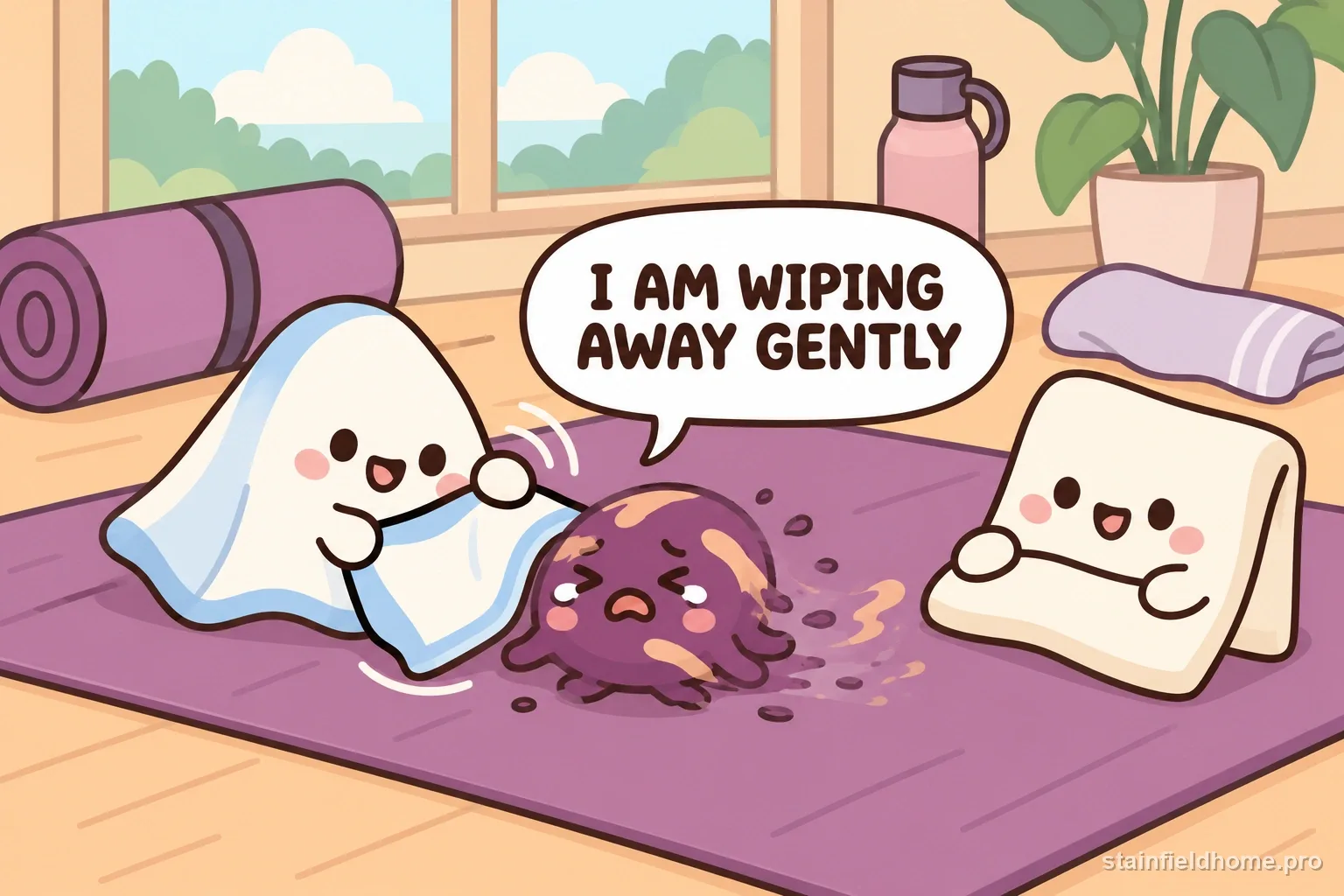
What ruins a mat
- Soaking or machine-washing — water gets into the core, breaks down foam, and never fully dries (Manduka and Liforme both prohibit this).
- Essential oils and oil-based cleaners — they leave a permanent slick and degrade rubber.
- Alcohol, vinegar in strength, and citrus on natural rubber or polyurethane — they strip grip.
- Direct sun and hot cars — UV and heat make rubber crack and PVC brittle.
- Baby wipes — many contain lotion and oil that build up and make the mat slick.
Drying a mat so it does not sour
The smell people blame on 'old mat' is almost always bacteria in trapped moisture. After any wet cleaning, dry the mat fully flat or over a shower rail — a polyurethane-top mat can take several hours to a full day.
Only roll or fold it once both sides feel completely dry. If a mat already smells, a wipe with a well-diluted vinegar solution (test first, avoid on rubber) followed by a thorough dry helps, but a mat that has been stored damp repeatedly may not fully recover.
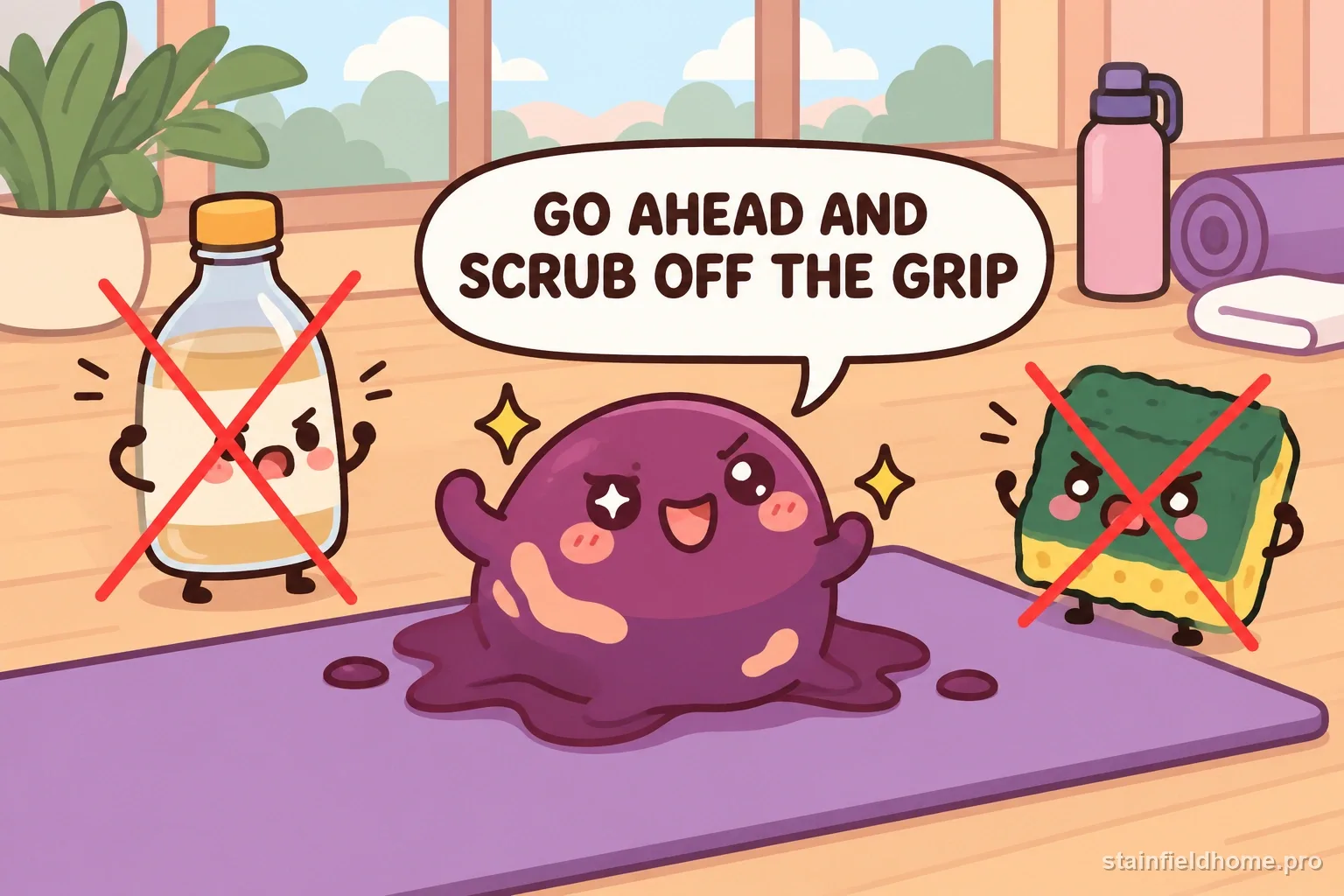
Sweat management on the mat
- Use a cotton yoga towel over the mat for hot classes; wash the towel, not the mat.
- Wash your hands and feet before practice to cut the oil and lotion load.
- Let makeup and sunscreen fully absorb before class, or skip face products on hot-yoga days.
- Wipe the mat the same day every time — dried-in sweat film is what forces deep cleans.
Common questions
FAQ
Can I put my yoga mat in the washing machine?
Most makers say no. Water penetrates the core, breaks down foam or rubber, distorts the mat, and takes days to dry, which invites mildew. Manduka and Liforme specifically prohibit machine washing. Wipe-cleaning with a wrung-out cloth is the intended method for nearly every mat.
Cleaning made my mat slippery. Can I fix it?
Usually it is soap residue — wipe the mat several more times with a clean damp cloth and let it dry fully. If you used an oil-based cleaner, essential oils, or a lotioned baby wipe, the slick can be permanent because it has soaked into the surface. On a polyurethane-top mat, a light break-in period and plain-water wipes help restore grip.
How do I get foundation and concealer out of the surface?
Treat it as an oil-and-pigment stain: hold a cloth with a few drops of mild dish soap on the mark for a minute, then wipe, and repeat. Do not scrub hard, especially on an absorbent polyurethane top. A faint tint may remain on a light-colored mat; stop before you damage the texture chasing it.
Sources reviewed
Keep reading
Related guides

Spills and body oils on Bouclé sofas and chairs
How to Clean a Bouclé Sofa or Chair Without Flattening the Texture
Spot-clean a bouclé sofa or chair by its cleaning code, protect the looped pile from matting, and know which spills need a dry solvent instead of water.

Burnt-on grease and food residue on Air fryer basket
How to Clean Burnt-On Grease From an Air Fryer Basket
Break down baked-on grease in an air fryer basket with a soak and baking-soda paste, without scratching the nonstick coating or getting water near the heating element.
Permanent hair dye on Bathroom countertop
How to Remove Box Hair Dye From a Bathroom Countertop
Get permanent hair color off quartz, laminate, cultured marble, or sealed stone before it sets, using the mildest method the surface allows and never an abrasive pad.
Yellowed tape adhesive on Painted wall
How to Remove Yellowed Tape Residue From a Painted Wall
Take aged, hardened tape adhesive off painted drywall without pulling the paint, using warm heat, an oil to soften the gum, and the gentlest possible scrape.