The quick answer
Rinse or wash a urine-soiled mattress protector promptly according to its care label, usually with cool or warm water and normal detergent. Use an enzyme stain remover only if the protector manufacturer permits it, and avoid chlorine bleach and high dryer heat when the waterproof membrane care instructions prohibit them. Make sure odor is gone before drying, then use low heat or air drying as directed.
What you’ll need
- protector care label
- laundry detergent
- enzyme laundry product if permitted
- washer
- white towels
- drying rack or low-heat dryer
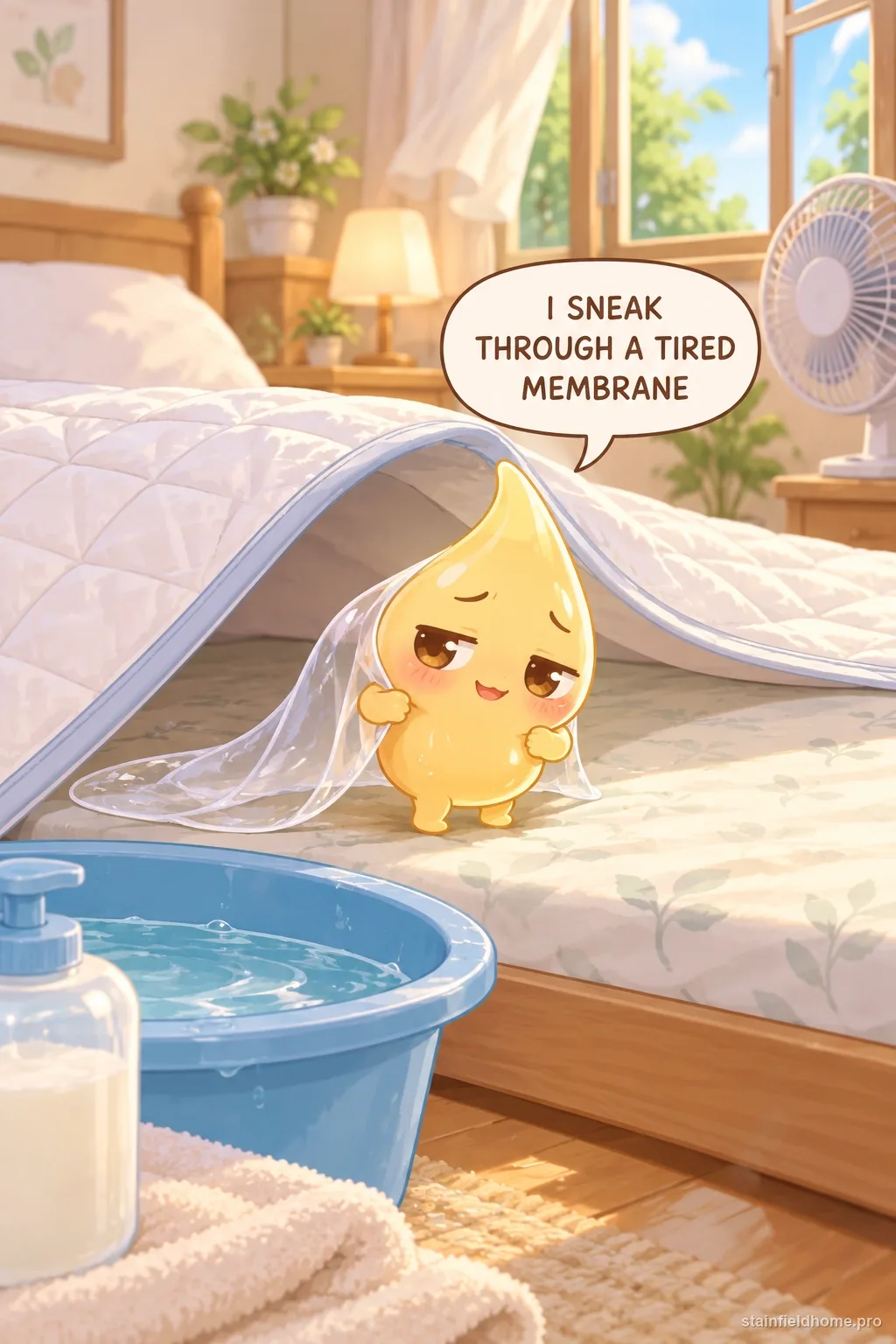
The membrane is what you are protecting
A waterproof mattress protector is a fabric layer laminated to a thin polyurethane (TPU) film. That film is the whole point of the product, and it is what bleach, hot water, high dryer heat, and fabric softener damage — they crack, stiffen, or delaminate it, and then the protector leaks silently onto the mattress.
So urine on a protector is a routine wash, but with guardrails: prompt attention, moderate temperature, the right stain product, and gentle drying. Get those right and the protector lasts years; get the heat or bleach wrong once and it is done.
Deal with it promptly
- 01
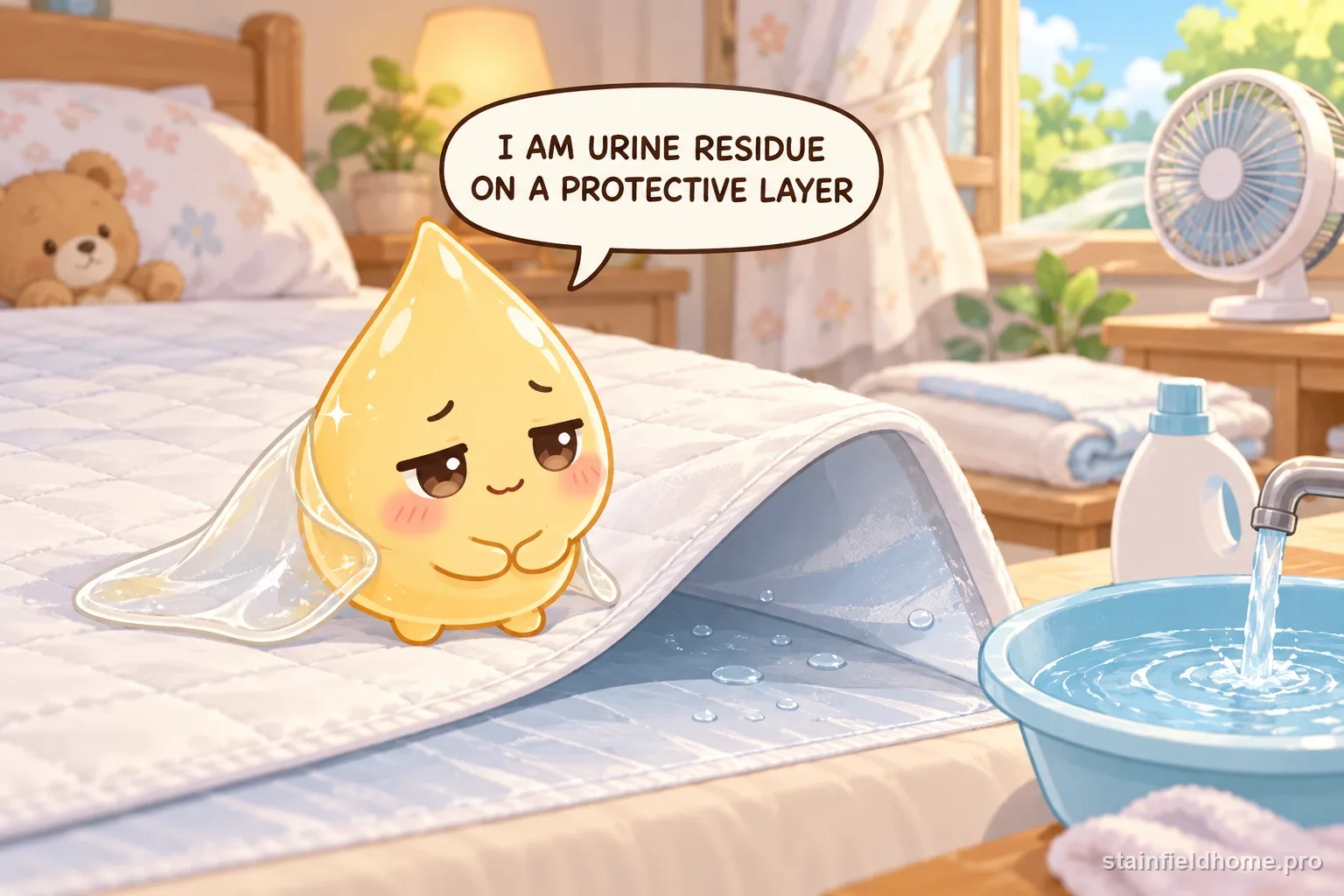
Strip the bed and rinse the wet area of the protector under cool running water, from the back, to flush most of the urine out before it dries.
- 02
If you cannot wash it immediately, at least rinse it and hang it — do not leave it wadded in a hamper, where the smell sets and bacteria multiply.
- 03
Pretreat the area with a little detergent, or an enzyme stain-and-odor remover if the maker allows enzymes.
- 04
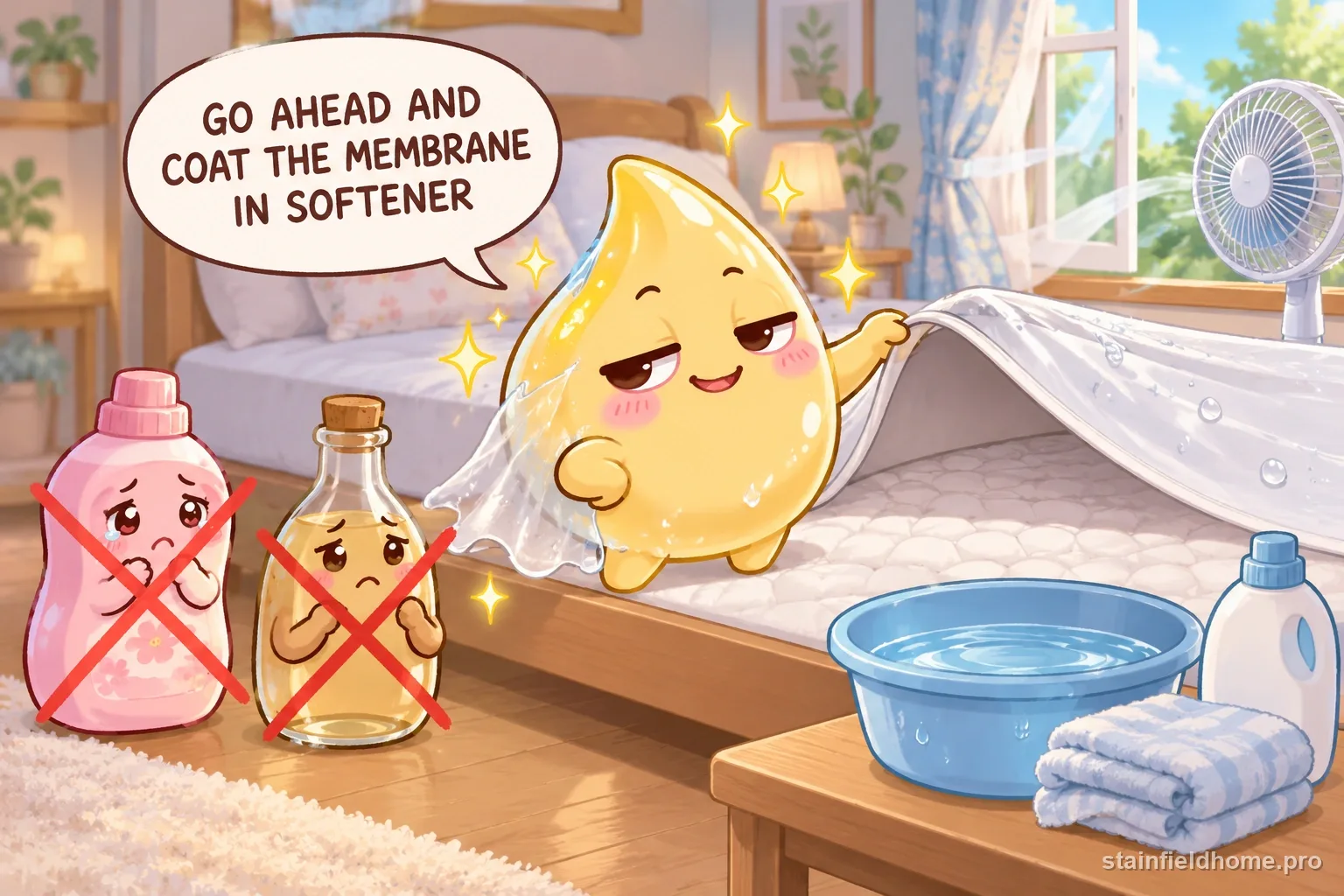
Wash on the warm or cool setting the label specifies, with normal detergent and no fabric softener.
- 05
Add a cup of baking soda to the wash for odor; skip the vinegar unless the maker approves it.
Enzyme cleaners: check first
Enzyme urine removers (Nature's Miracle, Rocco and Roxie) are the most effective at destroying the uric-acid crystals that cause recurring smell. But some protector manufacturers — SafeRest is one to check — restrict or advise against enzyme and bleach products because they can degrade the membrane over time.
If enzymes are allowed, use them as a pretreat and rinse well. If they are not, rely on prompt washing, baking soda, and a second wash for odor, and accept that a heavily soaked protector with set-in odor may need replacing.

Get the odor out before it goes in the dryer
Heat sets urine odor permanently. Before drying, smell the washed protector while it is damp. If there is any ammonia note left, wash it again — do not dry it and hope.
Once it is genuinely odor-free, dry on low heat or air-dry as the label directs. Many protectors say tumble low or line dry and specifically warn against high heat and ironing. A protector that comes out of a hot dryer feeling stiff or crinkly on the film side has already been damaged.
The mattress underneath
If the protector did its job, the mattress is dry and only needs airing. If urine got past a worn protector, treat the mattress separately: blot, apply an enzyme cleaner made for mattresses, blot again with clean water, and dry it hard with a fan and open windows for a day before re-covering.
A recurring wet-through means the protector membrane has failed its test — replace it.
Identify the face fabric and membrane care first
Waterproof protectors differ: the sleeping surface may be cotton terry, polyester knit, or another fabric bonded to polyurethane, and the wash instructions vary by model. Read the label before treating a urine accident. A care page for one brand is a useful example, not permission to use the same temperature, bleach alternative, or enzyme soak on every protector. If the tag is missing, contact the maker with the product name or use the gentlest short wash that the available product guidance supports.
Before washing, check the film side for peeling, cracks, holes, sticky patches, or a strong plastic odor. A compromised membrane can let liquid through even if the top fabric looks clean. Cleaning can remove urine from an intact cover, but it cannot restore a failed barrier; replace a protector that is visibly damaged or no longer keeps the mattress dry.
After washing, rinse and inspect before drying
Use only the detergent amount and cycle recommended by the protector maker. Excess detergent may remain in the knit face, while an overloaded drum can twist the elastic skirt or snag it on zippers and hooks. Wash the protector by itself if its instructions call for space around it; otherwise secure fasteners and keep rough items out of the load. Run an extra rinse if suds remain or the cloth still feels slippery.
When the cycle ends, inspect both sides in bright light. Check the urine area for a lingering yellow edge, odor, or a damp spot that may indicate a leak through the barrier. If odor remains and the maker permits another wash, repeat with the approved method before using the dryer. Let the protector cool and relax before checking for changes in texture; a stiff, cracked, or delaminated film is a replacement issue, not a stain to scrub harder.
Treat the mattress only if urine passed the barrier
If the mattress is dry, do not spray it with vinegar, peroxide, or enzyme cleaner as a precaution. Remove the protector, let the mattress surface air, and confirm that the underside is dry before remaking the bed. If liquid reached the mattress, follow the mattress maker's instructions separately; foam and pillow-top materials can be damaged by saturation, and a mattress is not laundered like a removable protector.
Blot fresh liquid without rubbing, use a small amount of a mattress-approved cleaner only where needed, and keep airflow moving until the core is dry. If the urine soaked deeply, the stain returns, or odor persists inside foam, contact the mattress maker or a professional cleaner. Avoid wetting the mattress to the same depth as the accident unless the care instructions explicitly support that method.
Rinse seams and elastic without twisting the protector
Urine can remain in a bound edge, fitted corner, or quilted channel even when the center panel looks clean. During the pre-rinse, turn the wet area so water passes through the fabric face and out of the same panel, then blot excess liquid with a clean towel. Do not wring or twist the elastic skirt; stretching it while wet can distort the fit and stress seams around the barrier.
If the protector has a zipper or is a full encasement, close the zipper before machine washing when its care guide recommends it, and check that the wet area has been rinsed from both sides. A removable top panel may have different instructions from the side skirt or zipper tape. Keep the product's construction intact and avoid aggressive brushing that can abrade the fabric layer above the waterproof film.
Reducing the load on the protector
- For a child in the potty-training years, add a washable absorbent pad on top of the protector — it takes the hit and washes easily.
- Keep a second protector so the bed can be remade instantly and the soiled one gets a proper same-day wash.
- Wash the protector every 2-4 weeks even without accidents; sweat and body oil degrade the membrane too.
- Never use fabric softener or dryer sheets on it — they leave a coating that reduces breathability and can harm the film.
Common questions
FAQ
Can I use bleach on a urine-stained mattress protector?
Usually not. Chlorine bleach degrades the waterproof polyurethane membrane, and several manufacturers specifically prohibit it. Use normal detergent, baking soda for odor, and an enzyme remover only if your protector's care label allows enzymes. Check the label before choosing any strong product.
The protector still smells faintly after washing. What now?
Do not dry it — heat locks urine odor in permanently. Wash it again with detergent plus baking soda, or an enzyme product if permitted. Only once it is completely odor-free while damp should you dry it, on low heat or by air.
Can I put the protector in a hot dryer to sanitize it?
No. High heat cracks and stiffens the waterproof film, and many protectors are labeled tumble-low or line-dry only. If the film side comes out stiff or crinkly, the protector is damaged and will start leaking. Dry on low, and replace the protector if you need reliable waterproofing.
Sources reviewed
Keep reading
Related guides

Spills and body oils on Bouclé sofas and chairs
How to Clean a Bouclé Sofa or Chair Without Flattening the Texture
Spot-clean a bouclé sofa or chair by its cleaning code, protect the looped pile from matting, and know which spills need a dry solvent instead of water.

Burnt-on grease and food residue on Air fryer basket
How to Clean Burnt-On Grease From an Air Fryer Basket
Break down baked-on grease in an air fryer basket with a soak and baking-soda paste, without scratching the nonstick coating or getting water near the heating element.
Permanent hair dye on Bathroom countertop
How to Remove Box Hair Dye From a Bathroom Countertop
Get permanent hair color off quartz, laminate, cultured marble, or sealed stone before it sets, using the mildest method the surface allows and never an abrasive pad.
Yellowed tape adhesive on Painted wall
How to Remove Yellowed Tape Residue From a Painted Wall
Take aged, hardened tape adhesive off painted drywall without pulling the paint, using warm heat, an oil to soften the gum, and the gentlest possible scrape.