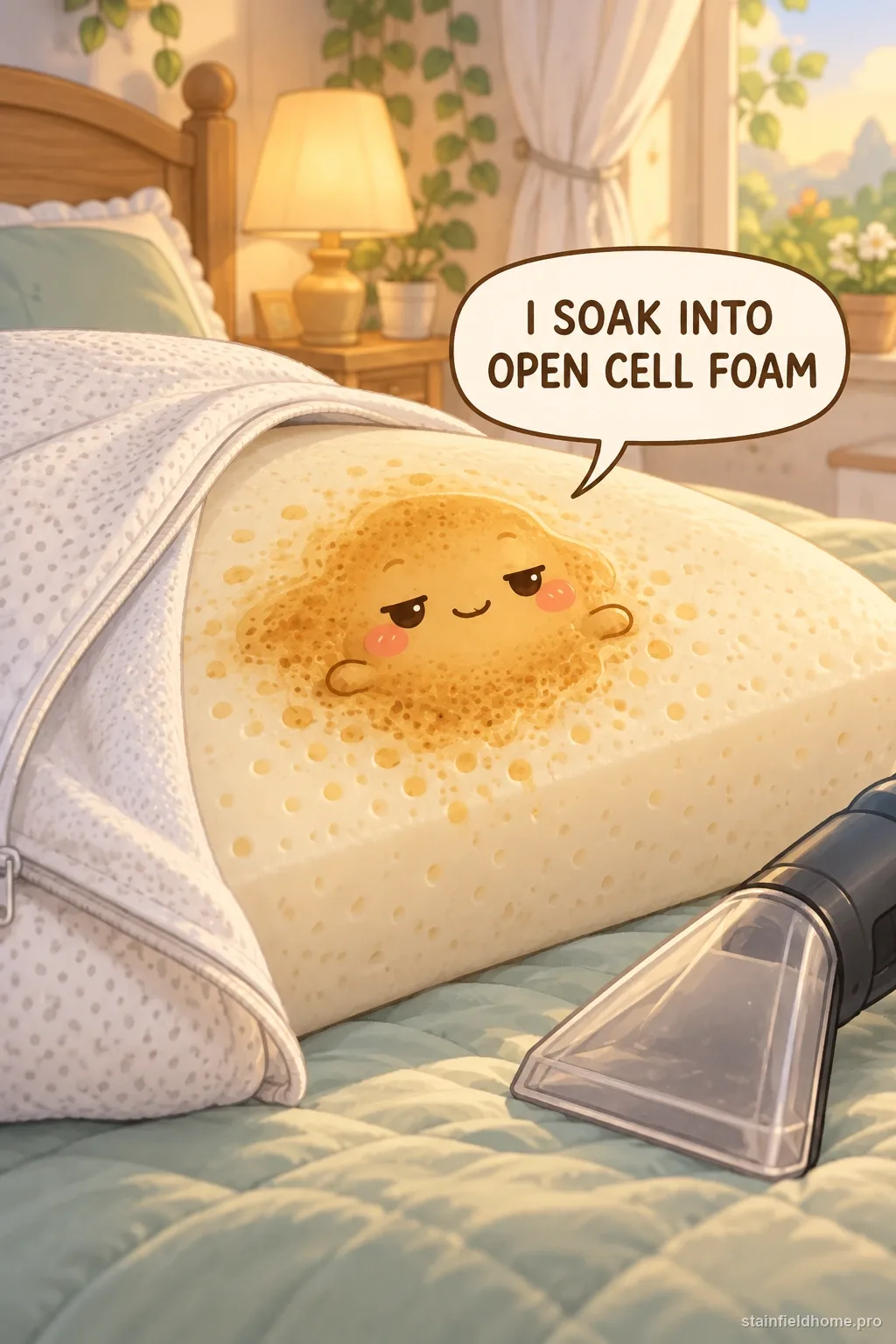
The quick answer
Remove and wash the pillow cover separately, then spot-clean the memory foam only if the pillow's care instructions allow liquid contact. Use minimal moisture, blot instead of saturating, and let the foam dry completely with strong airflow before covering it again. Never machine-wash or submerge memory foam that the manufacturer says must stay dry.
What you’ll need
- pillow care label
- vacuum with upholstery tool
- white cloths
- small bowl of water
- mild detergent if the manufacturer permits spot cleaning
- fan
- washable pillow protector
Memory foam and water do not mix
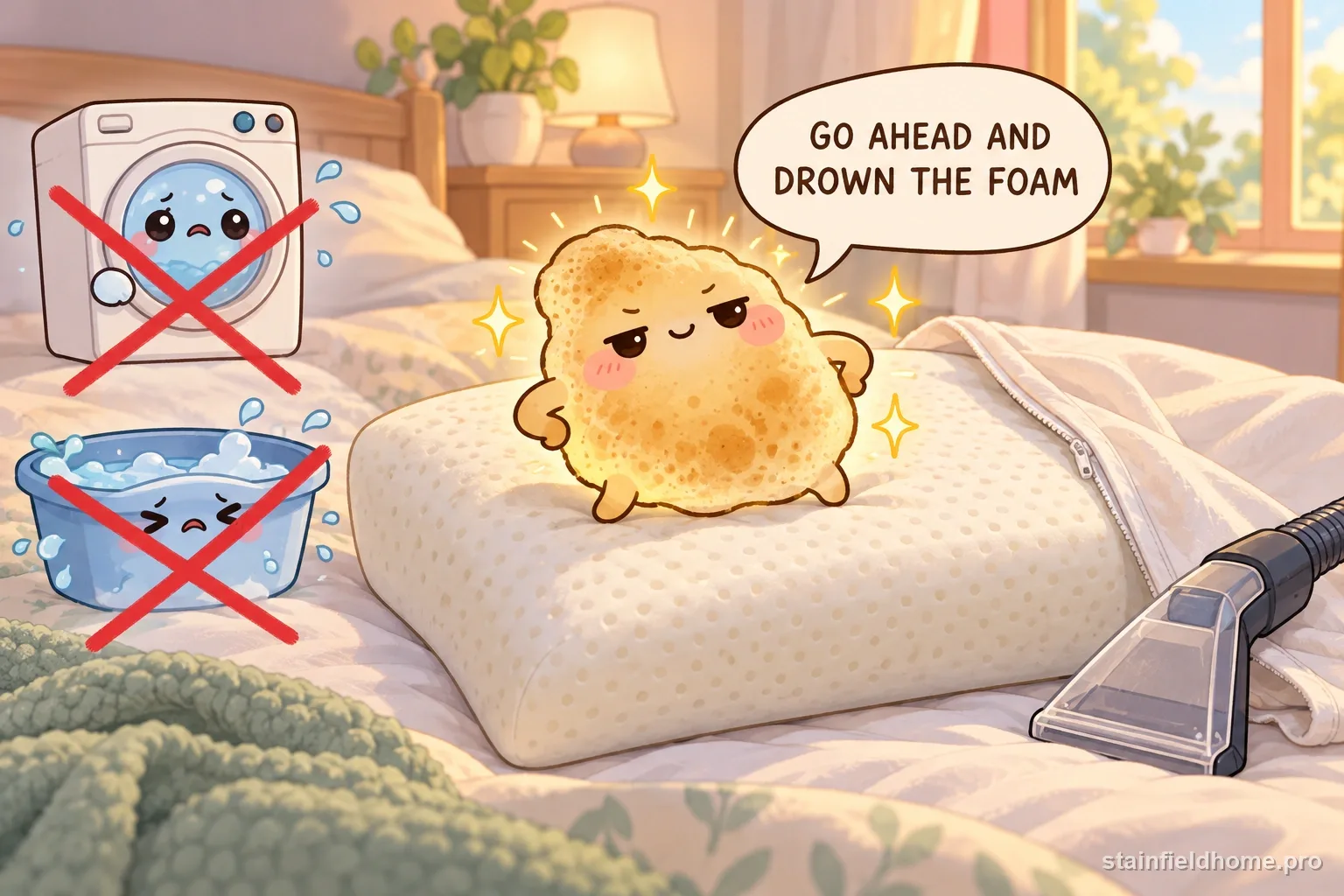
Memory foam is a dense open-cell polyurethane. Wring it or run it through a wash cycle and it tears; soak it and water fills thousands of tiny cells that take days to dry, and until they do, the warm damp interior grows mildew you cannot see. Tempur-Pedic and most brands state plainly: do not wash or submerge the foam.
So a yellow sweat stain on memory foam is managed, not laundered. The realistic goal is to lighten it and kill the odor with as little liquid as possible, while accepting that a deep even-yellow discoloration may not fully clear.
The cover does most of the work
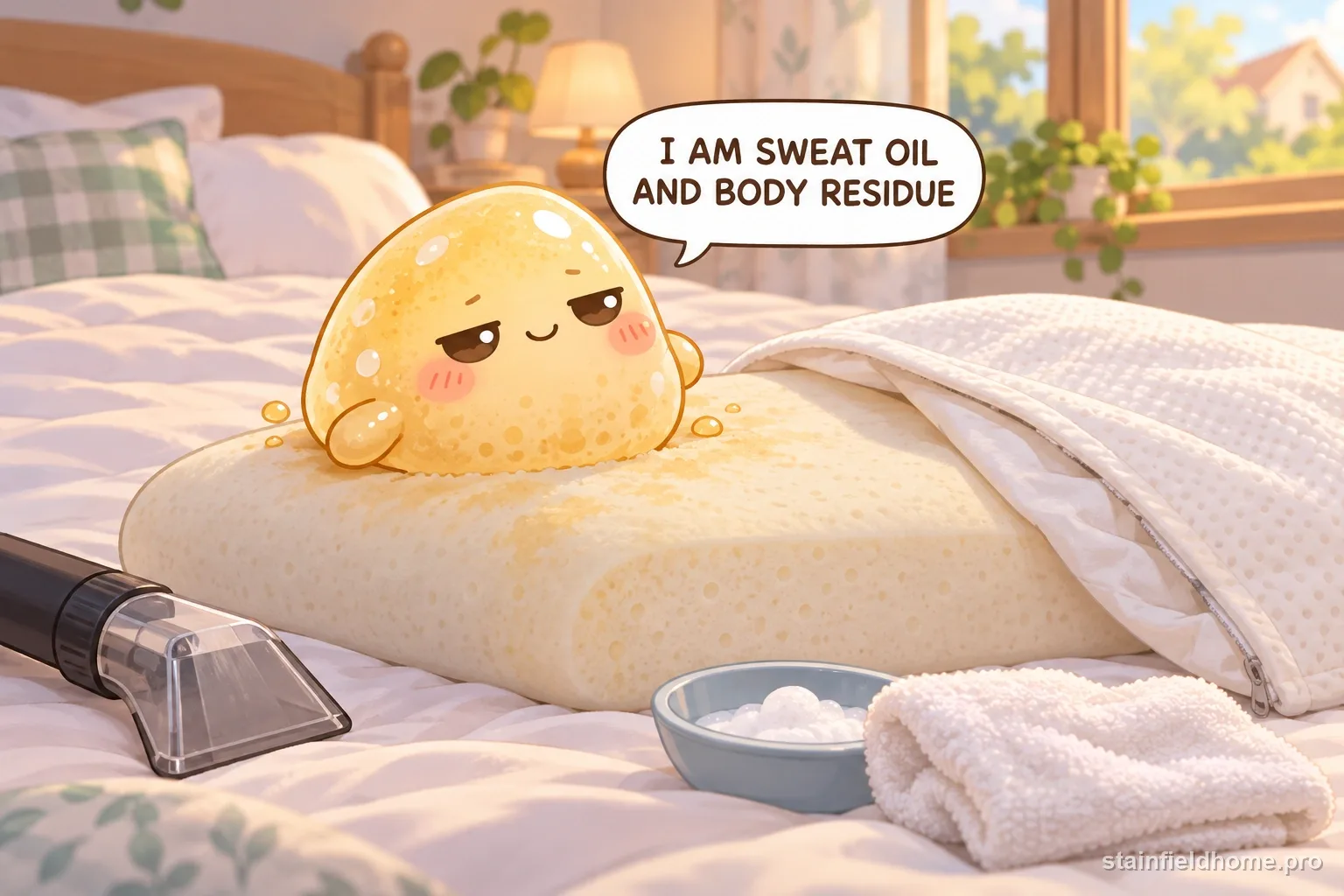
Almost every memory foam pillow has a zip-off cover, and that cover — not the foam — is what your skin and sweat actually touch most. Take it off and wash it on the care-label setting; oxygen bleach in the wash is usually fine for a white cover.
Nine times out of ten, a freshly washed cover plus a light airing of the foam is all the pillow needs. Only treat the foam directly if the yellowing is clearly on the foam itself.
Spot-cleaning the foam with almost no moisture
- 01
Vacuum the foam with an upholstery tool to lift dust and dead skin.
- 02
Mix a few drops of mild detergent into a small bowl of water and make suds.
- 03
Dip a cloth in only the foam/suds, not the water, and wring it so it is barely damp.
- 04
Dab — do not rub — the yellowed area, working the suds in lightly.
- 05
Wipe with a second cloth dampened in plain water to lift detergent, still barely damp.
- 06
Press a dry towel firmly over the spot to pull moisture back out.
Why the pillow yellowed in the first place
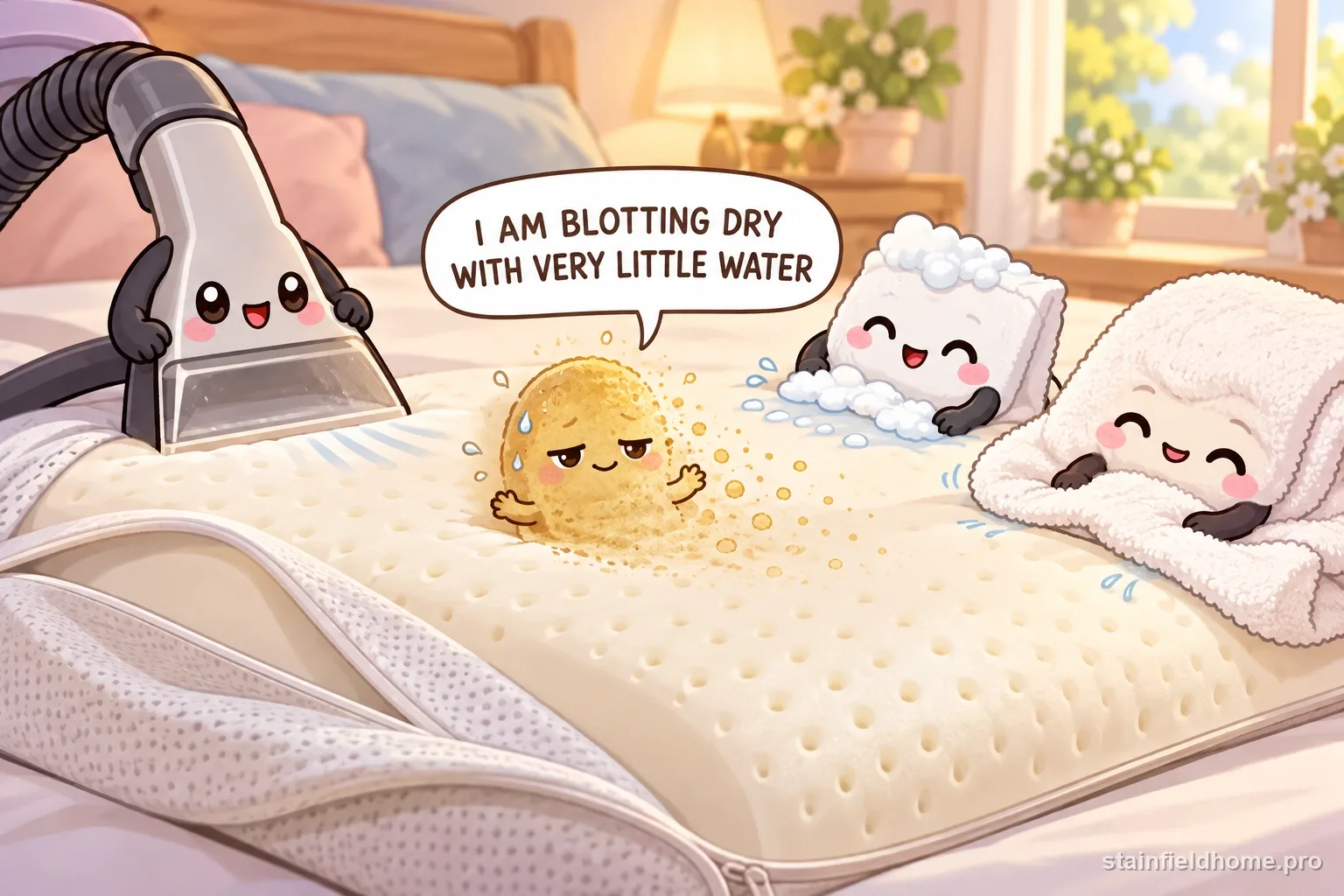
The yellow is mostly oxidized body oil (sebum), plus sweat and, for some people, hair product and night-cream residue. It builds up through a thin or unwashed cover over months. It is not dirt you can fully scrub away because the oil has soaked in and chemically changed.
This is why prevention beats treatment here: once memory foam is evenly yellowed, you are looking at a cosmetic condition of an item near the end of its life (most memory foam pillows are rated for about 2-3 years anyway).
Drying foam completely — the step people skip
This is the part that ruins pillows. After any damp treatment, set the foam on a rack or two chairs so air reaches all sides, aim a fan at it, and leave it 24 hours or more. Do not put it back in its cover, on the bed, or in a pillowcase until it is completely dry all the way through — squeeze the center; it should not feel cool or damp.
Never use a hair dryer, radiator, or the clothes dryer on memory foam — heat degrades the foam and can create a scorched smell that never leaves. Sunlight can yellow it further and make it crumbly, so dry it in a bright airy room rather than in direct sun.
When a yellowed pillow is just done
If the foam is uniformly yellow-brown, smells of old oil even after airing, or has lost its spring and stays compressed in the morning, cleaning will not bring it back. Replace it.
A pillow you sleep on 2,500 hours a year is not worth risking mildew inside the foam to save. Recycle the old foam if your area accepts it and start the new one with a proper protector.
Keeping the next pillow white
- Use a zippered, washable pillow protector under the pillowcase and wash it every two weeks.
- Wash the pillowcase itself weekly, more in summer.
- Let hair dry and let night creams absorb before bed, or use an older case on heavy-product nights.
- Air the foam in a breezy room for an hour every few weeks — dry foam yellows slower.
- Replace memory foam pillows every 2-3 years; that is their working life regardless of care.
Common questions
FAQ
Can I put a memory foam pillow in the washing machine?
No. The agitation tears open-cell memory foam, and the water saturates cells that take days to dry, growing mildew inside where you cannot see or reach it. Tempur-Pedic and most brands specifically prohibit washing or submerging the foam. Wash the cover; spot-clean the foam with minimal moisture only.
The yellow will not come out. Is the pillow ruined?
If it is an even yellow-brown cast, that is oxidized body oil that has soaked into and changed the foam — spot-cleaning lightens surface residue but will not fully reverse it. If the foam also smells of old oil after airing or stays compressed in the morning, it is at the end of its life (about 2-3 years) and should be replaced.
How do I dry memory foam without a machine?
Set it on a rack or across two chairs so air circulates on every side, point a fan at it, and leave it a full day or more. Squeeze the center before reusing it — any coolness or dampness means keep drying. Never use a hair dryer, radiator, dryer, or direct sun, which damage the foam.
Sources reviewed
Keep reading
Related guides
Yellow sweat and body oil on Down comforter
How to Remove Yellow Stains From a Down Comforter
Treat yellow sweat and body-oil stains on a down comforter without flattening the fill or leaving the interior damp enough for mildew.

Spills and body oils on Bouclé sofas and chairs
How to Clean a Bouclé Sofa or Chair Without Flattening the Texture
Spot-clean a bouclé sofa or chair by its cleaning code, protect the looped pile from matting, and know which spills need a dry solvent instead of water.

Burnt-on grease and food residue on Air fryer basket
How to Clean Burnt-On Grease From an Air Fryer Basket
Break down baked-on grease in an air fryer basket with a soak and baking-soda paste, without scratching the nonstick coating or getting water near the heating element.
Permanent hair dye on Bathroom countertop
How to Remove Box Hair Dye From a Bathroom Countertop
Get permanent hair color off quartz, laminate, cultured marble, or sealed stone before it sets, using the mildest method the surface allows and never an abrasive pad.